

Parkinson's Caregiver Burnout Help: Proven Strategies to Reclaim Your Peace
Parkinson's Caregiver Burnout Help Starts With Sharing the Work
If you feel worn down caring for a parent with Parkinson's, start by making room for a break. Ask someone you trust to cover one specific task this week, such as a meal, a ride, or a two-hour care visit. Keep your own health appointment. If exhaustion or low mood persists, tell your doctor and ask about counseling or a caregiver support group.
Burnout is more than a hard day. It can build when care needs keep growing and you have too little time to recover. For adult children balancing work and caregiving in Utah Valley, even a short, planned break can be a first step toward a more sustainable routine.
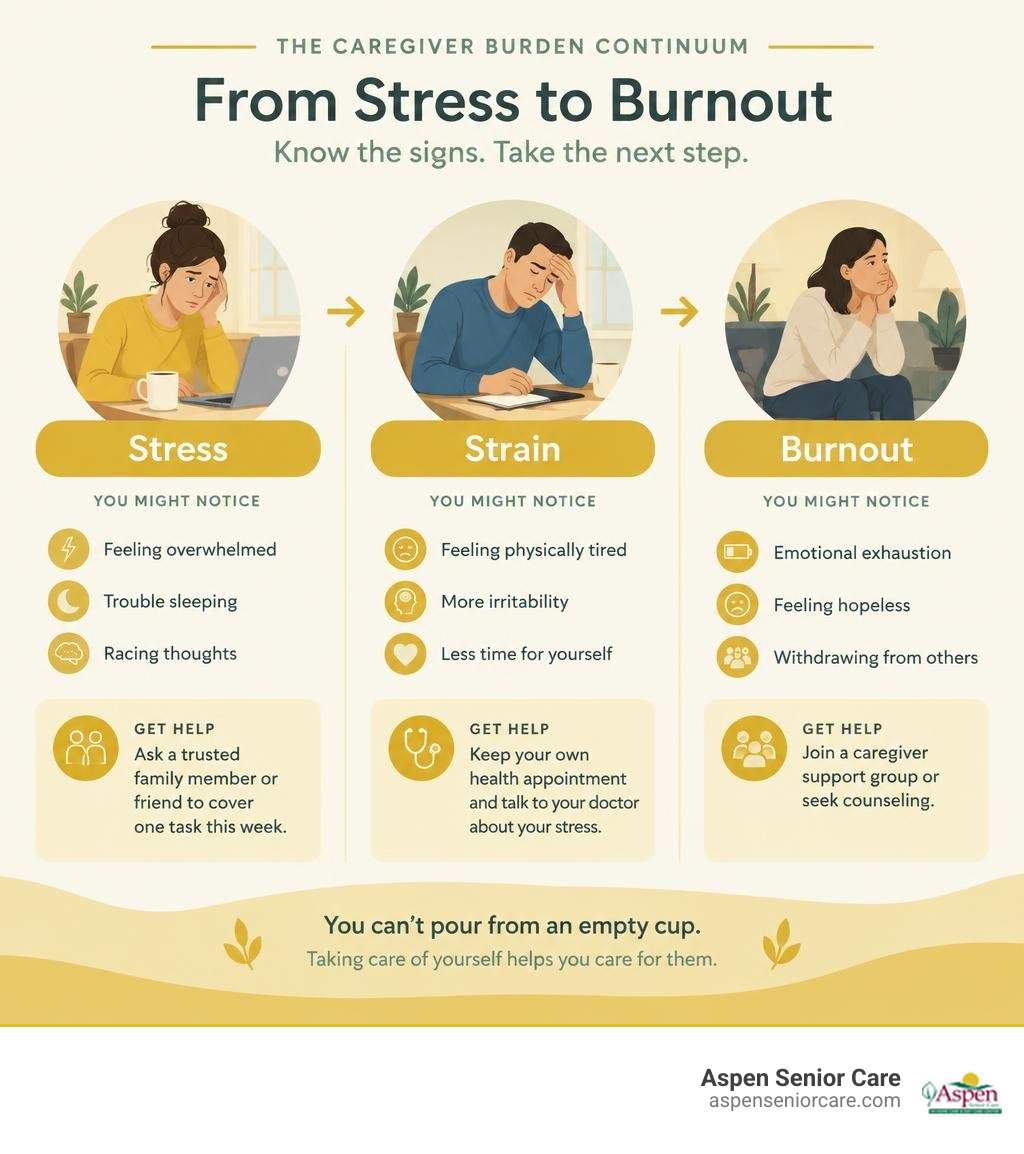
As of 2026, unpaid family caregiving touches millions of households. Studies show that between 40 and 70 percent of caregivers experience extreme stress, and nearly half of those meet the clinical criteria for depression. When you provide an average of 22 unpaid care hours each week—often alongside full-time employment and personal family responsibilities—the relentless physical exertion and emotional depletion can catch up with anyone. Finding actionable parkinson's caregiver burnout help is not an admission of defeat; it is the single most vital step you can take to safeguard your own health and sustain the quality of care your loved one deserves.
Understanding the Parkinson's Caregiver Burden Continuum
Caregiving is rarely an all-or-nothing event. It unfolds along a gradual continuum, starting with acute daily stressors, shifting into persistent strain, and ultimately spiraling into full-blown caregiver burnout if interventions are not put in place.
Understanding where you land on this spectrum helps you intervene before exhaustion damages your physical health or personal relationships. The Michael J. Fox Foundation explores dealing with Parkinson's disease caregiver stress and burnout, emphasizing that chronic fatigue and emotional exhaustion must be tackled through proactive strategies. At Aspen Senior Care, we focus heavily on caring for the caregiver because no one can pour from an empty cup.
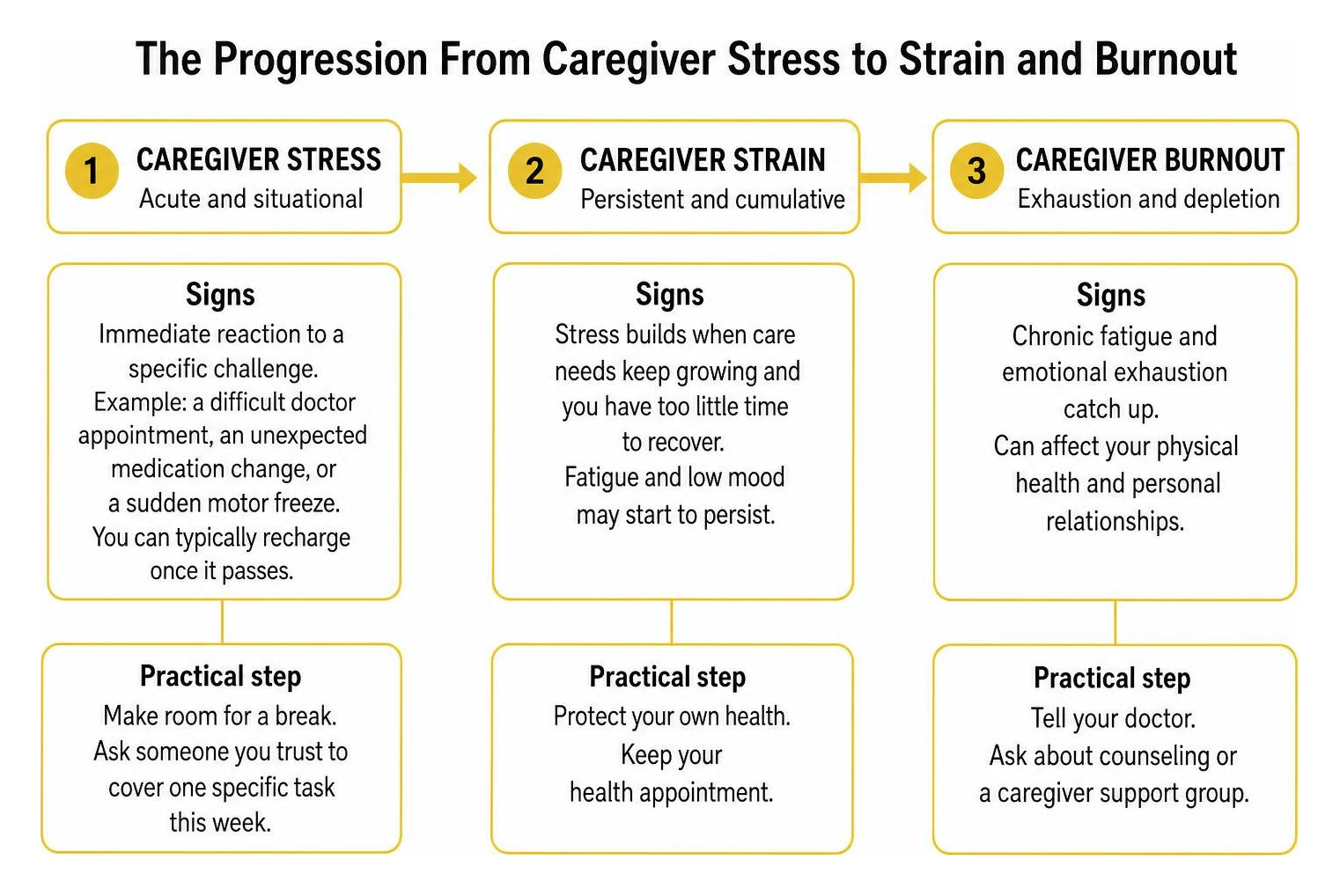
Stress vs. Strain vs. Burnout: Knowing the Differences
To protect your well-being, it is helpful to recognize the distinct milestones along the burden continuum:
Caregiver Stress: This is the immediate, situational reaction to a specific challenge—such as a difficult doctor appointment, an unexpected medication change, or a sudden motor freeze. Stress is acute, meaning you can typically recharge once the situation passes.
Caregiver Strain: When acute stressors occur day after day without adequate recovery time, stress solidifies into strain. You may start feeling constantly drained, experience regular tension headaches, or notice that small caregiving obstacles trigger deep frustration.
Caregiver Burnout: Burnout represents a state of total emotional, physical, and mental exhaustion. At this stage, chronic overload causes emotional depersonalization, profound apathy, physical illness, and a severely reduced capacity to provide compassionate care.
As highlighted in clinical resources on caregiver burnout signs and causes, reaching burnout does not mean you care any less about your family member. Rather, it indicates that your daily responsibilities have outpaced your internal resources and external support systems.
Physical, Mental, and Emotional Warning Signs
Parkinson's caregiving places intense physical and cognitive demands on your body. Research indicates that more than 26% of PD caregivers report secondary musculoskeletal conditions, while others face elevated rates of respiratory, cardiovascular, and metabolic issues resulting from long-term stress (Aamodt et al., 2024).
Our comprehensive Caregiver Support Guide 2026 outlines the common warning flags you should monitor:
Category | Early Stress & Strain Symptoms | Advanced Caregiver Burnout Indicators |
|---|---|---|
Physical | Occasional tension headaches, mild fatigue, neck stiffness | Chronic insomnia, debilitating exhaustion, frequent illness, unmanaged pain |
Emotional | Irritability, occasional worry, feeling rushed | Pervasive anxiety, numbness, feelings of hopelessness, severe resentment |
Cognitive | Misplacing items, mild forgetfulness | Brain fog, difficulty making routine care decisions, chronic detachment |
Behavioral | Postponing personal hobbies, skipping workouts | Total social withdrawal, neglecting own medical care, reliance on unhealthy coping habits |
Why Parkinson's Disease Caregiving Creates Unique Strain

Caring for someone with Parkinson's disease introduces challenges distinct from many other progressive conditions. Research published on caregiving for Parkinson's disease reveals that the fluctuating nature of the illness requires constant vigilance, medication precision, and physical adaptability (Aamodt et al., 2024).
Gender disparities also surface: female care providers are twice as likely as male care providers to report severe exhaustion and lasting damage to their personal health. When combined with underlying medical conditions of your own, the physical and emotional load can quickly become unmanageable without structured assistance.
Motor Fluctuations and Disease Progression Demands
The motor symptoms of Parkinson's—including tremors, rigidity, bradykinesia (slowness of movement), and postural instability—evolve across the classic 5 stages of PD.
One of the greatest sources of daily caregiver strain is managing medication timing. As levodopa therapy progresses, patients frequently experience unpredictable "off" periods where medication wears off before the next dose is due. During these windows, motor freezing, stiffness, and fall risks surge.
Caregivers of individuals experiencing regular "off" periods report significantly lower productivity at work, higher rates of missed workdays, and greater lost income. Recognizing the evolving signs and symptoms of advanced Parkinson's disease is vital for adapting your care plan before physical transfers, nighttime turning, and mobility assistance lead to acute caregiver injuries.
Non-Motor Complications, Cognitive Decline, and Ambiguous Grief
While tremors and mobility challenges are the most visible aspects of Parkinson's, clinical studies demonstrate that non-motor complications often drive the highest levels of caregiver burden (Aamodt et al., 2024). These non-motor symptoms include:
Nocturnal Sleep Disruptions: REM sleep behavior disorder, vivid nightmares, and frequent nighttime bathroom trips keep both the care recipient and the caregiver awake, leading to cumulative sleep deprivation.
Mood and Behavioral Shifts: Anxiety, apathy, and depression in the care recipient place an immense emotional drain on the household.
Cognitive Changes and Psychosis: In later stages, hallucinations, delusions, and Lewy body dementia can manifest, necessitating a specialized Parkinson's dementia care plan.
Watching a loved one's personality, executive function, and independence slowly alter can evoke ambiguous grief—the painful sensation of mourning someone who is still physically present but psychologically changed. Seeking specialized in-home cognitive support provides a reliable buffer, ensuring your loved one receives patient, compassionate engagement while you take necessary personal space to rest and process these transitions.
How to Access Parkinson's Caregiver Burnout Help and Assess Strain
Recognizing that you need help for Parkinson's caregiver burnout is a sign of resilience, not failure. Because caregiving duties escalate gradually, many family members normalize excessive fatigue until they reach a crisis point.
Regularly assessing your stress levels ensures you make proactive adjustments before burnout damages your well-being. The Parkinson's Foundation offers extensive guidance on caring for the care partner, urging families to track their mental and physical strain consistently.
Self-Assessment Tools to Measure Caregiver Burden
Clinicians and social workers rely on several validated inventories to measure caregiver stress. You can use simplified versions of these tools at home:
Modified Caregiver Strain Index (MCSI): A 13-question survey assessing financial, physical, psychological, and social strain.
Zarit Burden Interview (ZBI): A widely recognized assessment that evaluates subjective feelings of burden, personal guilt, and loss of control over your schedule.
Ask yourself these quick baseline questions:
Am I sleeping less than six uninterrupted hours most nights due to caregiving duties?
Have I skipped my own doctor, dental, or therapy appointments in the past six months?
Do I feel regular irritability, anger, or resentment toward my loved one or other family members?
Do I lack a reliable backup person who can step in for 24 hours if I become ill?
If you answered "yes" to two or more of these questions, it is time to integrate targeted Parkinson's caregiving tips and professional support into your weekly routine.
Finding Professional Help for Parkinson's Caregiver Burnout
When stress transitions into clinical anxiety or depression, informal coping mechanisms may not suffice. Evidence-based interventions show remarkable success in reducing caregiver burden (Aamodt et al., 2024):
Cognitive Behavioral Therapy (CBT): Both individual counseling and telehealth CBT programs help caregivers reframe intrusive guilt, establish emotional boundaries, and develop practical problem-solving strategies.
Psychoeducational Programs: Structured training programs that teach Parkinson's disease management significantly reduce anxiety by demystifying symptom progression.
Palliative Care Consultation: Introducing palliative care early in the disease trajectory helps manage complex symptom loads, coordinates multidisciplinary medical care, and provides structured emotional counseling for the entire family.
Mental Health Support Networks: As discussed in global perspectives on caregiver mental health support, professional therapy provides a non-judgmental space to navigate the complex family dynamics and ambiguous grief inherent in neurological disorders.
Practical Self-Care and Respite Strategies for Sustainable Caregiving

Self-care for a caregiver is not an indulgence—it is basic equipment maintenance. If you run your engine at maximum RPMs without an oil change, the motor will eventually seize.
By implementing daily micro-breaks, protecting your sleep hygiene, and scheduling planned respite, you can reclaim your mental equilibrium and provide higher quality care when you are on duty.
Daily Micro-Routines and Setting Sustainable Boundaries
You don't need two uninterrupted weeks at a remote spa retreat to begin resetting your nervous system. In fact, sustainable burnout prevention relies on brief, consistent daily habits:
The 15-Minute Micro-Break: Block out at least fifteen minutes of inviolable downtime each morning or afternoon. Step outside, practice deep breathing exercises, read a chapter of a book, or stretch.
Journaling and Emotional Grounding: Spend five minutes writing down your thoughts without self-censorship. Releasing feelings of frustration or grief onto paper prevents emotional build-up.
Sleep Hygiene Protection: Create an environment conducive to deep rest. If your loved one experiences nighttime wakefulness, consider alternating night duties with other family members or hiring night support so you can achieve restorative sleep.
Shedding the Guilt of Boundary Setting: Saying "no" to non-essential commitments is an act of care preservation. Communicate your limits clearly to extended family members regarding what you can and cannot handle.
Utilizing In-Home and Community Respite Care Options
Respite care is designed to step in before you hit your breaking point. Programs such as Australia's CARERS Carer Gateway support packages have proven how structured, planned respite markedly lowers caregiver depression and delays institutional placement.
Here in Utah Valley, families can leverage several forms of respite care tailored to their specific routines:
Adult Day Programs: Enrolling your loved one in a dedicated senior day center with Parkinson's programs gives them structured physical exercises, cognitive stimulation, and peer socialization under professional supervision while granting you a predictable multi-hour block to work or rest.
In-Home Caregiving Support: Bringing a trained caregiver into the home for a few hours each week handles bathing, mobility assistance, meal preparation, and companionship. We provide family-like, personalized care across Orem, Provo, Lehi, American Fork, and surrounding communities.
Dementia-Specific Respite: When non-motor symptoms involve cognitive decline, specialized respite care for dementia carers ensures your loved one stays safe and mentally engaged.
Overnight Respite Services: Arranging professional respite care overnight allows primary caregivers to get unbroken sleep or attend out-of-town family events knowing their loved one is in capable, 24/7 hands.
Building a Resilient Backup Care Team and Community Network
One of the most dangerous traps for any family caregiver is the belief that "no one else can care for them the way I do." While your bond is irreplaceable, relying solely on yourself creates a fragile care structure that collapses if you experience an unexpected injury or illness.
Building a collaborative backup team distributes the weight and provides peace of mind.
Coordinating Family, Friends, and Digital Care Tools
When friends or relatives ask, "How can I help?", avoid the default answer of "We're doing okay." Instead, maintain a ready list of specific, actionable tasks:
Picking up prescriptions from the pharmacy
Preparing and dropping off freezer-ready meals on Tuesday afternoons
Sitting with your loved one for two hours on Saturday so you can attend a church or community event
Providing transport to physical or speech therapy sessions
Helping with yard maintenance or basic household chores
Utilize free digital platforms like Lotsa Helping Hands, shared Google Calendars, or care coordination apps to track appointments, assign task requests, and keep everyone updated on medication adjustments. Holding periodic family care meetings—whether in person or via video call—ensures that financial, logistical, and emotional burdens do not fall solely on one individual.
Online Resources and Support Groups Offering Parkinson's Caregiver Burnout Help
Connecting with individuals who understand the realities of Parkinson's care is one of the most therapeutic steps you can take. Peer validation dispels the isolation that often accompanies progressive disease management.
Key resources for ongoing education and support include:
Parkinson's Foundation Helpline: Reach out to movement disorder specialists and licensed social workers by reviewing their answers to frequently asked helpline questions or calling 1-800-4PD-INFO.
Local Caregiver Support Groups: Participating in local caregiver support groups allows you to share coping strategies, vent frustrations safely, and exchange practical advice with peers walking the same path.
Community Senior Networks: Finding elder care support groups near me throughout Utah County connects you with local grassroots programs, transportation aids, and educational workshops tailored to older adults.
Frequently Asked Questions About Parkinson's Caregiver Burnout
What is the most immediate step to take when feeling completely overwhelmed by Parkinson's caregiving?
If you feel yourself reaching an emotional or physical breaking point, take an immediate 15-minute emergency pause. Ensure your loved one is in a safe, secure position (such as seated comfortably or resting in bed), step into another room or outside, take slow and deep breaths, and call a trusted friend, family member, or the Parkinson's Foundation Helpline (1-800-473-4636). If exhaustion is severe, contact a local home care provider to secure emergency respite coverage so you can rest.
How do Parkinson's 'off' periods specifically contribute to caregiver fatigue and lost work productivity?
During "off" periods, medication efficacy drops, causing severe muscle stiffness, freezing of gait, postural instability, and sudden loss of independence. Because these episodes can be unpredictable, caregivers must provide immediate, hands-on physical assistance and fall prevention. This unpredictability creates constant hypervigilance, disrupts remote or in-office work, causes missed meetings, and forces caregivers to reduce their working hours or leave the workforce entirely to provide supervision.
How do I overcome the guilt of using adult day programs or in-home respite services?
Remember the classic airline safety rule: put on your own oxygen mask first before assisting others. Utilizing respite is not an act of abandoning your responsibilities; it is an investment in your loved one's long-term safety and well-being. Furthermore, adult day centers and companion aides provide care recipients with fresh social interaction, specialized exercises, and cognitive stimulation that family members often cannot deliver when exhausted.
Conclusion
Caring for someone living with Parkinson's is a marathon with unpredictable terrain. While your dedication reflects deep love and compassion, self-preservation must be part of your daily caregiving plan. Taking steps to address exhaustion, build a backup network, and integrate professional respite ensures that both you and your loved one navigate this journey with dignity, safety, and mutual joy.
At Aspen Senior Care, we specialize in providing personalized, award-winning non-medical in-home care and adult day programs for families navigating neurodegenerative conditions throughout Utah Valley, including Orem, Provo, Lehi, American Fork, Pleasant Grove, and Spanish Fork. Whether you need a few hours of weekly companionship or comprehensive daily support, we are here to walk beside you.
To better anticipate your loved one's evolving needs and plan your caregiving strategies proactively, explore our detailed guide to understanding the progression of Parkinson's disease stages.
References
Aamodt WW, Kluger BM, Mirham M, Job A, Lettenberger SE, Mosley PE, Seshadri S. "Caregiver Burden in Parkinson Disease: A Scoping Review of the Literature from 2017-2022.." Journal of geriatric psychiatry and neurology, 2024. PMCID PMC10802092.