

Advanced Parkinson's Disease: A Caregiver's Guide to Late-Stage Symptoms
Understanding Hoehn and Yahr Stages 4 and 5
Clinicians use the Hoehn and Yahr scale to track Parkinson's progression. While early stages involve mild, one-sided movement difficulties, late-stage Parkinson's is defined by significant functional disability and a loss of physical independence.
Feature / Metric | Hoehn & Yahr Stage 4 | Hoehn & Yahr Stage 5 |
|---|---|---|
Mobility Level | Severe disability; able to walk and stand unassisted, but markedly incapacitated | Wheelchair-bound or bedridden unless aided |
Independence | Requires substantial daily assistance with basic Activities of Daily Living (ADLs) | Requires continuous 24/7 care for all movement and personal needs |
Fall Risk | Very high due to severe postural instability and freezing | Extreme; transfers require mechanical lifts or multi-person assistance |
Medication Response | Marked motor fluctuations; narrow therapeutic window; frequent "OFF" periods | Limited response to oral dopaminergic medications; high risk of drug side effects |
Primary Care Focus | Fall prevention, mobility aids, adaptive feeding, respite support | Skin integrity, aspiration prevention, contracture management, palliative comfort |
In Stage 4, a person can still stand or take steps independently, but their movements are unstable and exhausting. Gait freezing becomes frequent, and the risk of catastrophic falls increases dramatically. By Stage 5, extreme immobility takes over. Individuals typically require a wheelchair or remain in bed without dedicated hands-on help.
Reviewing the progression through the Parkinson's disease stages helps families plan ahead rather than react to emergencies. Understanding these stages also clarifies how the clinical characteristics of advanced stages shift from purely neurological movement hurdles into multisystem care challenges.
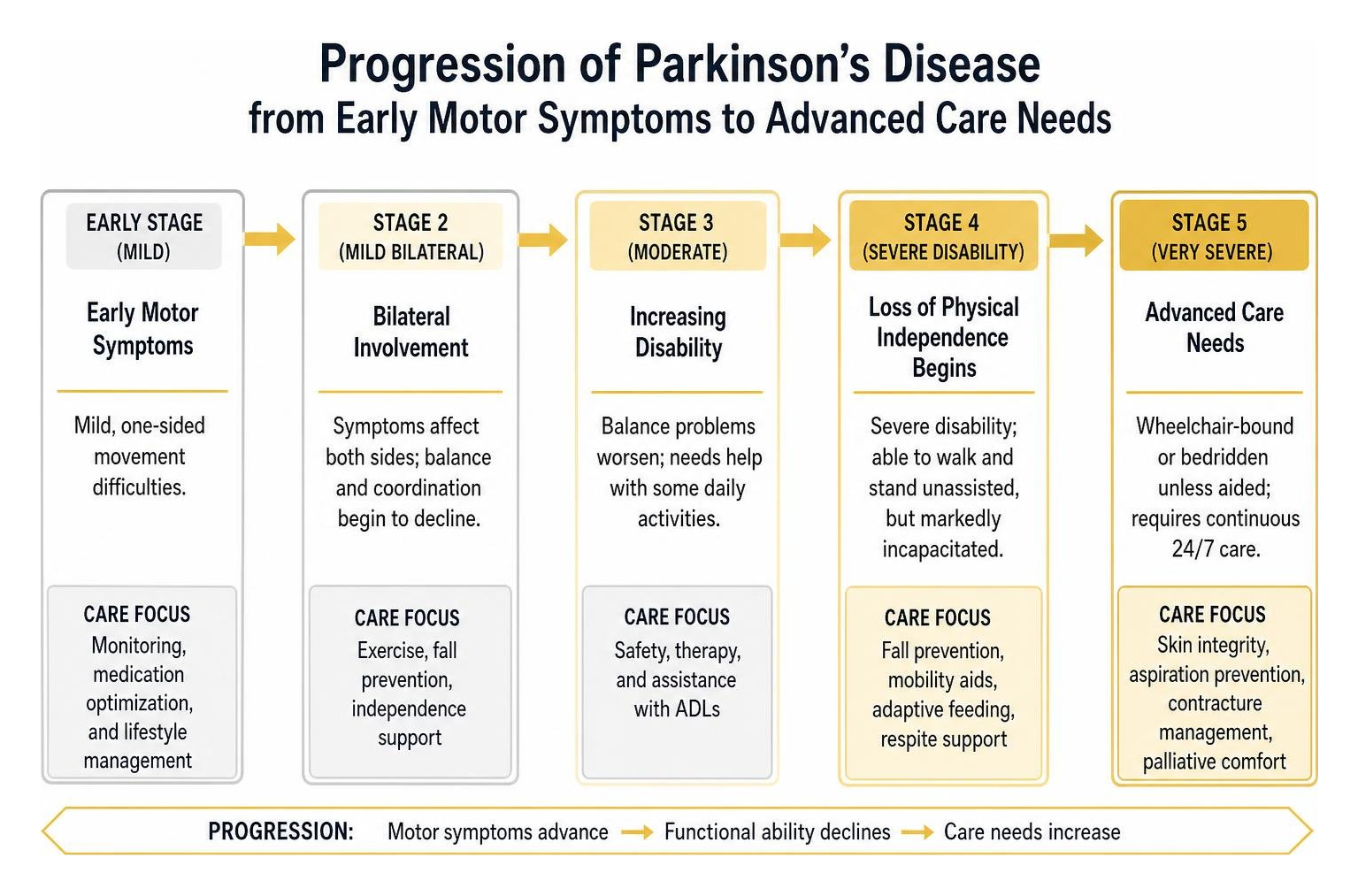
Primary Signs and Symptoms of Advanced Parkinson's Disease
As the condition advances, dopamine-producing neurons in the brain continue to decline, narrowing the window where oral medications work reliably. Family caregivers often find that a dose of carbidopa/levodopa which once provided hours of smooth mobility now wears off unpredictably after ninety minutes or fails to kick in at all.
During these sudden "OFF" periods, severe rigidity returns, leaving the person immobilized. Conversely, when medication levels peak, involuntary twisting or writhing movements (levodopa-induced dyskinesias) can become disruptive. To bypass digestive absorption issues in this phase, some physicians evaluate advanced delivery methods, such as continuous intestinal levodopa gel infusions.
Severe Motor Complications and Mobility Loss
Motor challenges in late-stage disease extend far beyond basic tremors. In fact, resting tremors may become less prominent as stiffness and postural instability take center stage.
Postural Instability and Frequent Falls: The body loses its innate reflexes to correct for balance shifts. A gentle pivot or leaning forward to reach a glass can cause a dangerous fall.
Severe Gait Freezing: Feet feel glued to the floor, particularly when navigating doorways, turning corners, or stepping into crowded rooms.
Profound Muscle Rigidity and Dystonia: Muscles lock in sustained contractions, causing painful cramping in the limbs, neck, or torso and making basic transfers painful.
Severe Hypokinesia and Akinesia: Extreme slowness makes simple actions—like buttoning a shirt or shifting positions in a chair—take extraordinary effort.
Using structured tools and mobility aids from our Parkinson's care guide can help caregivers manage these movement hurdles while keeping both the senior and the care team safe.
Non-Motor Signs and Symptoms of Advanced Parkinson's Disease
While motor problems are easier to see, non-motor complications often create the heaviest day-to-day burden for families. Comprehensive research on the lived experience of advanced Parkinson's shows that individuals frequently experience dozens of concurrent non-motor symptoms:
Orthostatic Hypotension: A sharp drop in blood pressure upon sitting or standing leads to lightheadedness, blurred vision, and fainting.
Sialorrhea (Excessive Drooling): Weakened swallowing reflexes cause saliva to pool in the mouth, increasing skin irritation and choking risks.
Dysphagia (Swallowing Difficulties): Weakened throat muscles make chewing and swallowing food, liquids, and pills difficult, which can trigger nighttime coughing or choking.
Severe Constipation and Gastrointestinal Slowing: Reduced gut motility causes chronic discomfort and can block the absorption of oral Parkinson's medications.
Urinary Incontinence and Nocturia: Bladder muscle dysfunction leads to urgency, frequent nighttime waking, and accidents.
Sensory Changes and Sleep Fragmentation: Chronic nerve and muscle pain, coupled with vivid dreams and insomnia, leave individuals and their caregivers exhausted.
Cognitive and Psychiatric Signs and Symptoms of Advanced Parkinson's Disease
Parkinson's disease affects more than movement; it alters brain circuits responsible for mood, perception, and memory. People with Parkinson's are about four times more likely to develop dementia than the general population. In fact, clinical studies show that approximately 2 in 5 individuals with Parkinson's develop dementia within a 5-year evaluation window, with that risk rising to nearly 59% among those showing early mild cognitive impairment.
Parkinson's Disease Dementia (PDD): Unlike Alzheimer's, which starts primarily with rapid short-term memory loss, PDD manifests as slowness in thinking, poor attention, executive dysfunction, and difficulty planning multi-step activities.
Visual Hallucinations and Delusions: Seniors may see people, animals, or shadows that aren't there, or develop ungrounded beliefs. These symptoms must be evaluated quickly, as cognitive decline and psychosis are independent predictors of decreased survival in Parkinson's.
Apathy and Depression: A neurochemical drop in dopamine and serotonin can cause deep emotional blunting, lack of motivation, and persistent low mood.
Severe Anxiety and Panic: Anxiety often spikes during motor "OFF" periods when physical control slips away.
For medical management, neurologists may prescribe rivastigmine (the primary FDA-approved medication for Parkinson's dementia) or consider pimavanserin for Parkinson's-related psychosis. Families managing these complex behavioral changes often rely on specialized cognitive support and structured dementia-specific home care to preserve daily routines in a calm, familiar home environment.
Managing Severe Complications and Medical Risks
Late-stage Parkinson's requires proactive medical vigilance. Complications arising from physical decline—rather than the disease itself—present the most acute health risks.
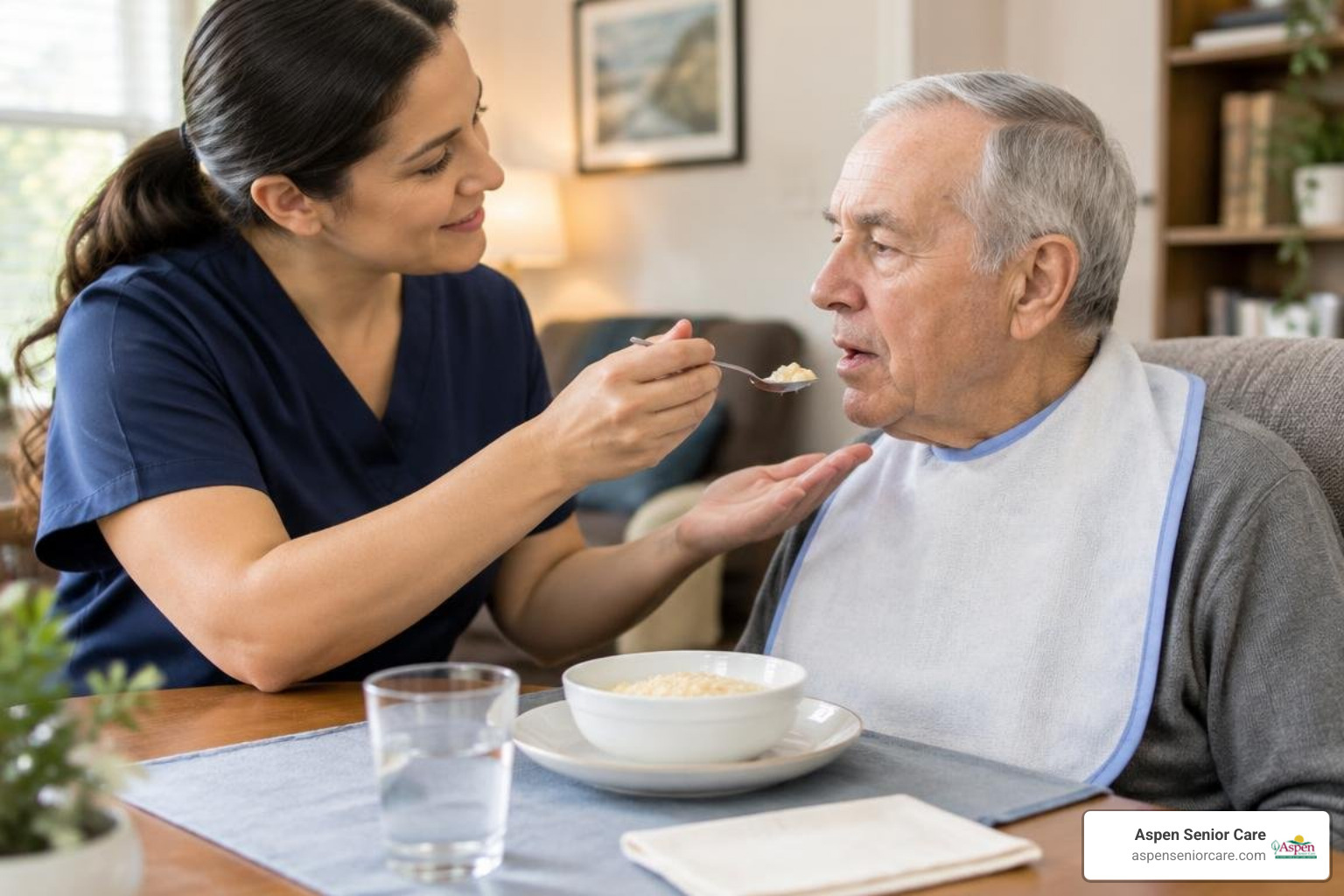
Aspiration Pneumonia: This occurs when food, liquid, or saliva slips past the vocal cords into the lungs. It is one of the leading causes of hospitalization and death in advanced Parkinson's. A speech-language pathologist can assess swallowing mechanics, recommend thickened liquids, and teach chin-tuck postures to keep mealtimes safe.
Pressure Ulcers (Bedsores): Due to limited mobility and rigidity, resting in one spot compresses skin over bony prominences. Caregivers should establish a strict two-hour turning schedule, apply barrier creams, and use pressure-relieving cushions or mattresses.
Urinary Tract Infections (UTIs): Incomplete bladder emptying allows bacteria to build up quickly. A sudden spike in confusion, agitation, or a rapid loss of balance is often caused by an underlying UTI rather than sudden disease progression.
Acute Delirium: Any systemic stress—an infection, constipation, dehydration, or an adverse medication reaction—can cause acute delirium.
Following validated management guidelines for advanced Parkinson's helps care teams spot treatable triggers before an avoidable emergency room visit occurs.
Palliative Care, Home Adaptations, and Caregiver Support
Palliative care is specialized medical care for people living with serious illnesses, focused on providing relief from symptoms and stress. It is not limited to end-of-life care; palliative support can begin at any stage of advanced Parkinson's to manage pain, nausea, autonomic symptoms, and emotional strain.
When medical treatments no longer manage decline and the focus turns entirely to comfort, hospice care provides specialized nursing, pain management, and holistic family support during the final months of life.

Practical steps to maintain safety, comfort, and caregiver well-being include:
Environmental Adjustments: Install sturdy grab bars, widen doorways for wheelchairs, remove throw rugs, install raised toilet seats, and use hospital-grade beds with adjustable height settings.
Advance Care Planning: Complete medical power of attorney documents, living wills, and clear instructions regarding feeding tubes and hospitalizations while your loved one can express their wishes.
Structured Caregiver Relief: Providing late-stage care alone is unsustainable. Utilizing respite care for family caregivers allows family members to rest and recharge.
Hands-On Assistance: When needs become continuous, bringing in 24-hour non-medical care support helps ensure safe transfers, diligent skin care, and timely medication delivery around the clock.
Implementing proven Parkinson's caregiving tips helps families avoid burnout while ensuring their loved one remains safe and comfortable.
Frequently Asked Questions About Late-Stage Parkinson's
What is the average life expectancy for someone in advanced Parkinson's disease?
Parkinson's disease itself is not directly fatal; rather, secondary complications—most notably aspiration pneumonia, systemic infections, and injuries from falls—shape prognosis. On average, individuals diagnosed around age 65 live approximately 7 years fewer than their peers without the disease. Survival in advanced stages (Hoehn and Yahr Stages 4 and 5) varies widely, ranging from several months to a few years depending on overall health, nutrition, respiratory care, and the quality of daily support.
Can symptoms of advanced Parkinson's disease deteriorate suddenly?
Yes. Classic Parkinson's progression is slow and steady. If you notice a sudden decline over 24 to 48 hours—such as acute confusion, severe lethargy, an inability to stand, or a spike in hallucinations—it is almost always triggered by an underlying medical issue. The most common culprits are urinary tract infections (UTIs), dehydration, pneumonia, constipation, or adverse drug interactions. Always contact your healthcare provider right away for an infection and medication screening.
When should palliative care or hospice be introduced for Parkinson's?
Palliative care should ideally be introduced as soon as motor fluctuations, non-motor symptoms, or cognitive changes begin impacting quality of life. It works alongside your existing neurology treatments. Hospice care is generally considered when treatments are no longer managing disease progression, the individual has reached Stage 5 with profound disability, and the primary goal shifts toward comfort and dignity.
Conclusion
Caring for a loved one with late-stage Parkinson's requires patience, empathy, and strong community support. By learning to identify emerging motor hurdles, psychiatric changes, and health risks like aspiration, you can make informed decisions that protect your loved one's comfort and dignity.
You don't have to navigate these demanding stages by yourself. For families across Utah County—including Orem, Provo, Lehi, American Fork, Spanish Fork, Pleasant Grove, and surrounding Utah Valley communities—our team at Aspen Senior Care provides personalized, family-like care. Whether you need respite care, cognitive support, or round-the-clock help, we are here to support your family.
Explore our guide to navigating Parkinson's disease stages to learn more about care planning, or reach out to our team to discuss your family's needs.