

A Practical Guide to Parkinson’s Care Options
Understanding Disease Progression and Stages of Parkinson’s Care
Effective Parkinson’s care involves a comprehensive, multidisciplinary approach combining pharmacological therapies, targeted physical and speech rehabilitation, strict medication timing, home safety modifications, cognitive support, and caregiver respite. Because Parkinson’s disease is a progressive neurodegenerative condition primarily caused by the loss of dopamine-producing neurons in the substantia nigra, dopamine depletion leads to classic physical motor symptoms alongside widespread non-motor challenges that evolve over time.
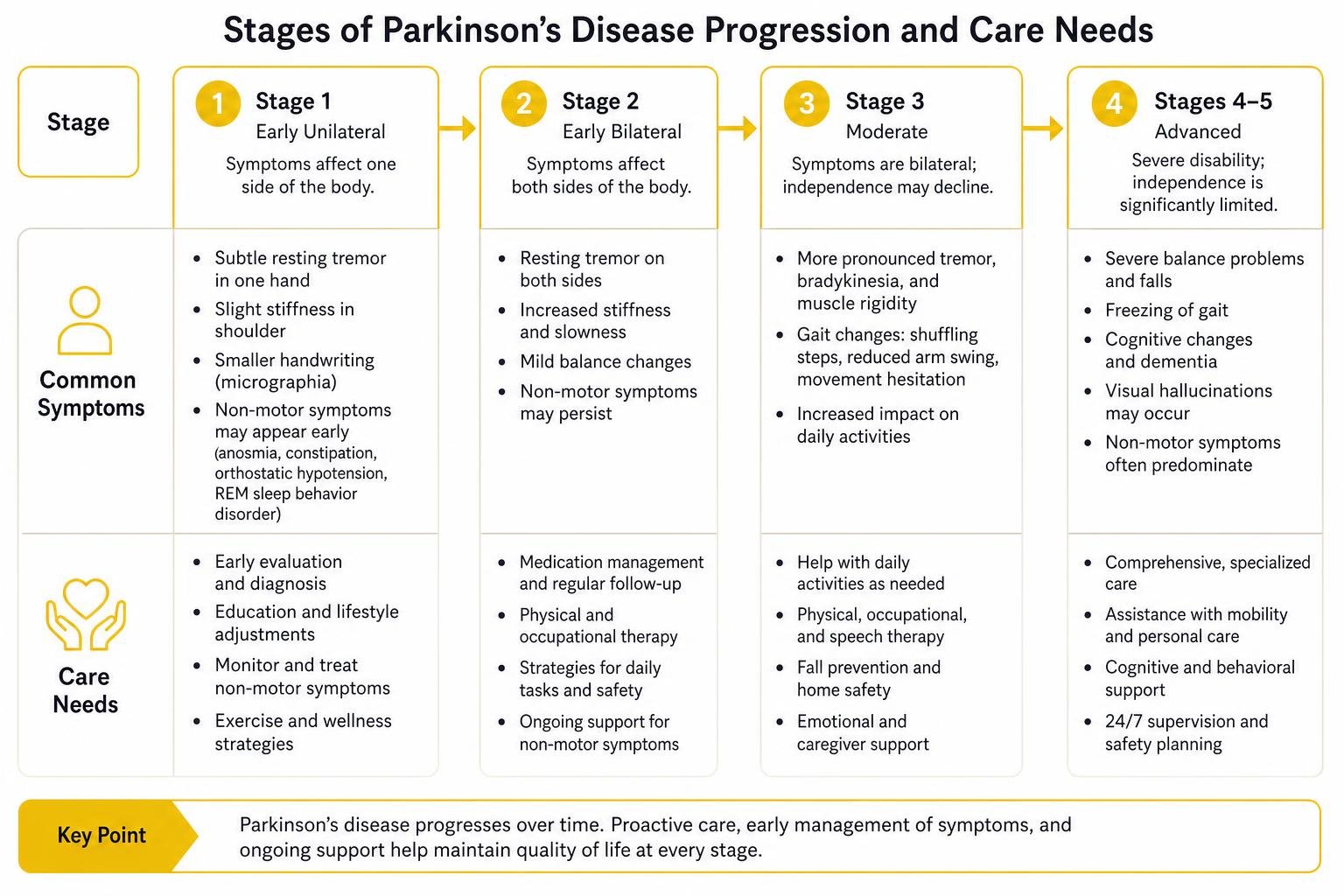
Clinicians frequently assess disease progression using the Hoehn and Yahr staging system, which categorizes the illness from early unilateral symptoms to advanced mobility limitations. Understanding parkinson's disease stages allows families to anticipate changes and adapt their care strategies proactively rather than reacting to sudden crises.
Early to Moderate Motor and Non-Motor Symptoms
In the initial stages (Hoehn and Yahr Stages 1 and 2), symptoms typically start unilaterally—affecting only one side of the body. An individual might notice a subtle resting tremor in one hand, slight muscular stiffness in a shoulder, or handwriting that becomes progressively smaller and tighter (micrographia).
As the condition advances into the moderate stage (Stage 3), symptoms become bilateral, affecting both sides of the body. Everyday motor challenges become more pronounced:
Resting Tremor: An involuntary shaking that occurs when limbs are at rest, often presenting as a classic "pill-rolling" motion between the thumb and forefinger.
Bradykinesia: A generalized slowness of movement that turns routine tasks like buttoning a shirt or standing up from a low chair into lengthy, deliberate efforts.
Muscle Rigidity: Persistent stiffness and resistance in the limbs or neck, often causing localized discomfort and a stooped posture.
Gait Changes: Shuffling steps, decreased arm swing while walking, and occasional hesitations when initiating movement.
Non-motor symptoms often emerge years before motor signs appear and can profoundly impact overall quality of life. Loss of smell (anosmia), chronic constipation, orthostatic hypotension (a sudden drop in blood pressure upon standing), and REM sleep behavior disorder (acting out vivid dreams during sleep) are common early indicators. Medical research outlined in evidence-based diagnosis and management guidelines emphasizes that addressing these non-motor manifestations early is vital for preserving long-term vitality.
Advanced Stage Complexities and Cognitive Decline
In advanced stages (Hoehn and Yahr Stages 4 and 5), individuals experience severe motor disability. Balance becomes severely compromised, leading to marked postural instability and frequent falls. Many individuals experience "freezing of gait," a sudden sensation where their feet feel magnetically glued to the floor, particularly when trying to step through narrow doorways or turn around.
Non-motor complexities often overtake motor limitations during these late stages. Cognitive changes become more prevalent, with Parkinson's disease dementia affecting an estimated 50 to 80 percent of people in the later phases of the condition. In addition, visual hallucinations—often involving seeing people, animals, or shadows that are not present—have a cumulative prevalence of up to 60 percent over 12 years of disease progression.
Navigating these challenges requires specialized approaches that balance physical comfort, behavioral management, and emotional reassurance, as highlighted in clinical frameworks for caring for advanced-stage Parkinson's disease.
Essential Medical Treatments and Multidisciplinary Clinical Care
Managing Parkinson’s disease requires a balanced combination of medical, surgical, and therapeutic approaches. While there is currently no cure, modern treatments can alleviate symptoms, preserve physical function, and enhance daily living.
Pharmacological Therapies and Advanced Interventions
Medications form the cornerstone of symptom management by restoring or mimicking dopamine activity in the brain. The most common pharmacological classes include:
Carbidopa-Levodopa: The gold standard of Parkinson’s treatment. Levodopa converts directly into dopamine in the brain, while carbidopa prevents it from breaking down prematurely in the bloodstream. It is available in immediate-release, extended-release, and orally disintegrating tablets.
Dopamine Agonists: Drugs that mimic dopamine by stimulating cellular dopamine receptors directly. While effective, they require careful monitoring because they can occasionally cause sudden daytime sleepiness or impulse control behaviors like compulsive shopping or gambling.
MAO-B and COMT Inhibitors: Medications that block specific enzymes responsible for metabolizing dopamine, helping prolong the effectiveness of each levodopa dose and smoothing out "wearing-off" periods.
Continuous Infusion Therapies: For individuals experiencing severe daily motor fluctuations despite oral medications, continuous subcutaneous infusions (such as foslevodopa) or enteral suspensions delivered directly into the small intestine provide steady drug delivery throughout the day.
Surgical Options (Deep Brain Stimulation): Deep Brain Stimulation (DBS) involves surgically implanting thin electrodes into targeted motor regions of the brain connected to a pulse generator in the chest. DBS helps reduce medication-resistant tremors, dyskinesias (involuntary writhing movements caused by long-term levodopa use), and motor fluctuations, as detailed in clinical treatments and surgical options.
Building an Interdisciplinary Team for Parkinson’s Care
Relying solely on a primary care physician is rarely enough to manage complex neurodegenerative symptoms. In fact, receiving specialized neurologist care saves about 4,600 lives each year in the United States alone by lowering complication risks and improving overall management.
Healthcare Specialist | Primary Focus & Clinical Role | Key Interventions & Outcomes |
|---|---|---|
Movement Disorder Specialist | Specialized neurologist with fellowship training in movement disorders | Accurate differential diagnosis, advanced pharmacological adjustments, DBS evaluation |
Physical Therapist (PT) | Mobility, balance, gait mechanics, and transfer safety | Targeted gait training, fall prevention exercises, amplitude-based movement therapies (e.g., LSVT BIG) |
Occupational Therapist (OT) | Daily living skills, home safety, fine motor coordination | Adaptive equipment recommendations, home accessibility assessments, energy conservation techniques |
Speech-Language Pathologist (SLP) | Vocal clarity, speech volume, and swallowing safety | Vocal strengthening programs (e.g., LSVT LOUD, SPEAK OUT!), dysphagia management, swallowing evaluations |
Registered Dietitian | Nutritional optimization and drug-nutrient interactions | High-fiber meal planning for constipation, protein redistribution for optimal levodopa absorption |
Targeted speech and voice retraining through programs like LSVT LOUD and SPEAK OUT! helps individuals overcome hypophonia (a quiet, muffled voice caused by bradykinesia), allowing them to maintain active conversations with family and friends.
Daily Home Safety, Nutrition, and Medication Management
Creating a safe, structured living environment is one of the most effective ways to preserve independence while reducing preventable accidents.
Fall Prevention and Mobility Adaptations at Home
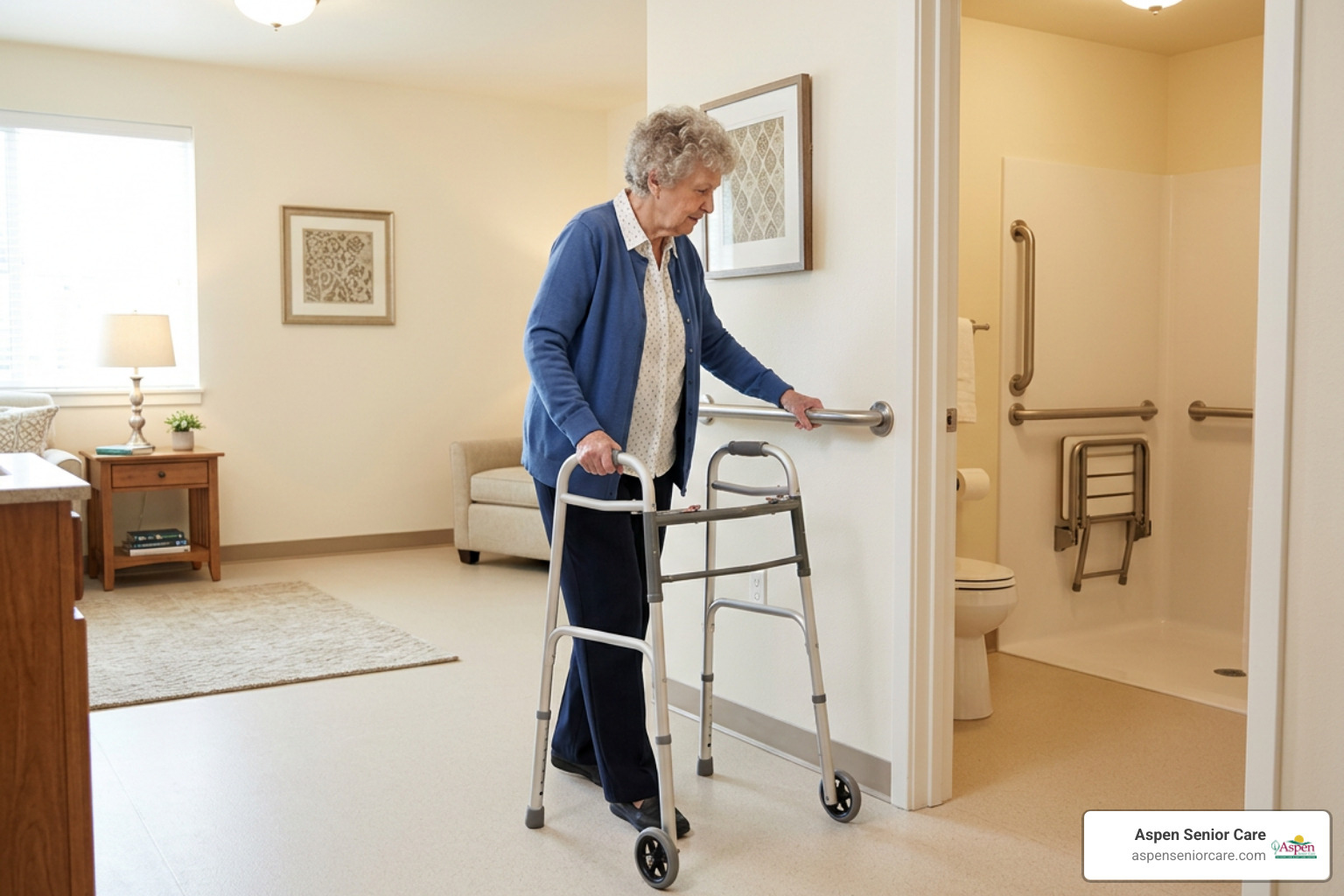
Falls represent one of the greatest health risks for someone living with Parkinson’s disease. Muscle stiffness, delayed balance reactions, and gait freezing create significant mobility hazards in an unmodified home. Practical modifications help minimize these risks:
Clear Walkways: Remove all throw rugs, loose floor runners, and clutter. Ensure cords and furniture arrangements do not obstruct main walking paths.
Bathroom Safety: Install professionally anchored grab bars inside showers, near bathtubs, and beside toilets. Use raised toilet seats and non-slip rubber mats.
Optimal Lighting: Place bright, glare-free LED lighting throughout hallways, staircases, and bathrooms, and install motion-activated nightlights along pathways between the bedroom and bathroom.
Proper Transfer Mechanics: Use transfer aids such as gait belts to assist your loved one when standing up. When walking, encourage them to land heel-first, look straight ahead rather than at their feet, and take wide, deliberate turns rather than pivoting on one foot. If gait freezing occurs, avoid pulling on their arms; instead, encourage them to stop, stand tall, take a breath, and imagine stepping over an imaginary line on the floor.
Critical Medication Timing and Swallowing Management
In Parkinson’s disease management, precise medication timing is critical. Dopamine receptors require consistent drug levels to maintain motor function. Caregivers should adhere to a strict 15-minute administration window (taking doses within 15 minutes of the scheduled time).
A delay of just 30 to 45 minutes can cause a sudden "off" state, leaving an individual frozen, rigid, or unable to swallow safely. Practical medication tips are detailed in the APDA patient handbook and management tips.
Nutritional strategies also play a major role in medication efficacy and health maintenance:
Protein Redistribution: Dietary protein uses the same intestinal transporters as levodopa, which can block medication absorption. If daytime doses seem ineffective, serve protein-rich foods (meat, dairy, eggs, legumes) during dinner and emphasize complex carbohydrates and vegetables during daytime meals.
Hydration and Fiber: Chronic constipation affects the vast majority of people with Parkinson’s. Ensure regular fluid intake (6 to 8 glasses of water daily) and increase soluble and insoluble dietary fiber to support gut motility.
Dysphagia Precautions: Swallowing difficulties (dysphagia) develop as throat muscles become uncoordinated. Because aspiration pneumonia is the leading cause of death in Parkinson's disease, mealtime safety is essential. Serve soft, moist foods, keep your loved one seated upright at a 90-degree angle during meals and for at least 30 minutes afterward, and consult a speech therapist if coughing or throat-clearing occurs during meals.
Navigating Mental Health, Dementia, and Palliative Support
While physical symptoms are readily visible, emotional and cognitive changes can be equally challenging for families to navigate.
Managing Emotional Well-Being and Cognitive Changes
Depression and anxiety are biological features of Parkinson’s disease resulting from neurochemical imbalances in serotonin, norepinephrine, and dopamine pathways—not simply emotional reactions to physical limitations. Regular mental health screenings and counseling can help individuals process these changes.
When Parkinson’s disease dementia or visual hallucinations occur, supportive communication techniques are vital:
Validate Rather Than Argue: If your loved one sees a benign hallucination (like an imaginary pet in the corner), avoid arguing or attempting to logically prove them wrong. Calmly acknowledge their experience, offer gentle reassurance, and gently redirect their attention to another activity.
Medication Safety Considerations: Typical antipsychotic medications (like haloperidol) must never be given to individuals with Parkinson’s because they block dopamine receptors and can trigger severe, life-threatening motor rigidity. When pharmacological support is needed for distressing hallucinations or delusions, physicians prescribe safe alternatives like pimavanserin or low-dose quetiapine.
Cognitive Engagement: Structured cognitive stimulation, engaging routines, and specialized in-home care cognitive support help maintain mental clarity and reduce agitation. For families seeking structured daytime social engagement, specialized memory care programs provide purposeful activities in an environment designed for safety and connection.
Integrating Palliative Support Throughout Disease Progression
There is a common misconception that palliative care is strictly synonymous with end-of-life hospice care. In reality, palliative care is an added layer of specialized medical support designed to alleviate symptom burden and improve quality of life at any age or stage of a chronic illness.
Despite its benefits, only 14 percent of hospitalized Parkinson's patients are referred to palliative care teams. Introducing palliative support early helps families navigate advance care planning, manage complex symptoms like chronic neurogenic pain—which affects more than two-thirds of individuals with Parkinson’s—and align medical treatments with personal values.
When cognitive decline makes communication difficult, palliative clinicians use tools like the PAINAD scale to identify non-verbal signs of discomfort (such as facial grimacing, groaning, or muscle tension) and ensure prompt relief.
Expanding Support: In-Home Help, Adult Day Services, and Caregiver Wellness
Caring for someone with advanced Parkinson’s can become overwhelming for a solo family caregiver. Recognizing when to seek outside help is essential for protecting your own health and your loved one's safety.

When to Transition to Professional In-Home and Community Programs
As care needs expand, professional support options can bridge the gap between independent living and specialized assistance:
Professional In-Home Care: In-home aides provide essential non-medical assistance with bathing, dressing, meal preparation, medication reminders, and safe mobility transfers. For seniors who feel isolated, companion care for seniors provides friendly interaction and social connection at home.
Adult Day Health Programs: Community-based day centers offer structured social activities, physical movement, and memory stimulation in a safe, supervised setting. Participating in senior day center dementia programs allows seniors to enjoy peer interaction while giving family caregivers reliable time to work, run errands, or rest.
Residential Assisted Living or Memory Care: When 24/7 physical transfers, intensive medical supervision, or severe wandering behaviors exceed what can be safely managed at home, transitioning to a specialized residential facility ensures around-the-clock safety and professional care.
Prioritizing Caregiver Resilience and Respite in Parkinson’s Care
Care partners of people with Parkinson's dementia experience significantly higher stress, burnout, and depression than those managing motor symptoms alone. Studies show that between 40 and 70 percent of Parkinson's caregivers experience extreme emotional stress.
To prevent burnout, caregivers should treat self-care as an essential part of their caregiving routine:
Utilize Scheduled Respite Care: Do not wait for physical exhaustion or an emotional crisis to ask for help. Scheduling regular respite care through in-home caregivers or day centers ensures you get predictable breaks to recharge.
Join Support Networks: Connecting with peer support groups—whether locally in Utah County or online—provides a safe space to share experiences, exchange practical tips, and combat feelings of isolation.
Access Crisis Helplines: If you feel overwhelmed, call the Parkinson's Foundation Helpline (1-800-4PD-INFO) or the Suicide & Crisis Lifeline (988) for immediate, confidential guidance.
Frequently Asked Questions About Parkinson’s Disease
Why is medication timing so strict in Parkinson's disease?
Medication timing must adhere to a strict ±15-minute window because dopamine receptors in the brain require steady stimulation. When levodopa levels drop even slightly between doses, the body can quickly enter an "off" state, causing sudden muscle stiffness, severe tremors, gait freezing, and swallowing difficulties. Furthermore, sudden interruptions or missed doses of dopaminergic medications can occasionally trigger neuroleptic malignant syndrome, a rare but life-threatening medical emergency.
When should palliative care be introduced for Parkinson's?
Palliative care should ideally be introduced shortly after diagnosis or as soon as non-motor symptoms begin affecting daily life, rather than waiting for end-stage illness. Early palliative involvement helps with symptom management (such as pain, sleep disturbances, and anxiety), facilitates advance care planning, and ensures that treatment goals remain aligned with the patient's personal wishes throughout the illness.
What is the leading cause of death in advanced Parkinson's?
Aspiration pneumonia is the leading cause of death in Parkinson’s disease. As the disease advances, bradykinesia and muscle rigidity impair the coordination of the throat muscles responsible for swallowing (dysphagia). This can allow food particles, liquids, or saliva to enter the lungs unintentionally (silent aspiration), leading to severe bacterial lung infections. Early evaluations and swallowing therapy with a speech-language pathologist significantly reduce this risk.
Conclusion
Managing Parkinson’s disease is a journey that changes over time. By establishing an interdisciplinary medical team, maintaining a strict medication schedule, making thoughtful home safety adaptations, and addressing emotional health, families can help their loved ones maintain comfort, dignity, and independence.
You do not have to walk this road alone. Aspen Senior Care provides compassionate, award-winning in-home caregiving and adult day services tailored to the unique physical and cognitive needs of seniors living throughout Utah Valley, including Provo, Orem, Lehi, American Fork, Pleasant Grove, and Spanish Fork.
Whether your family needs hands-on personal care at home or engaging day programs, exploring our senior day center parkinsons services can give your loved one meaningful social connection while giving you the respite and peace of mind you deserve. Reach out to our team today to learn how we can support your family's care journey.