

Why Companion Care for Seniors is the Ultimate Loneliness Cure
The Silent Crisis Affecting Aging Parents Right Now
Companion care for seniors is non-medical, in-home support that pairs an older adult with a trained caregiver for social connection, daily assistance, and emotional well-being.
Here's a quick snapshot of what it covers:
What it is: Regular visits from a caregiver focused on conversation, companionship, and light daily tasks
Who it's for: Seniors living alone, feeling isolated, or needing help with routines — but not yet requiring medical care
What's included: Meal prep, light housekeeping, transportation, medication reminders, errands, and friendly conversation
How much it costs: Around $21/hr on average nationally, though rates vary by provider and location
Key benefit: Reduces loneliness, lowers risk of depression and cognitive decline, and helps seniors stay safely at home longer
If you're a busy adult child in Utah Valley watching a parent spend more and more time alone, you already know something feels off. Maybe they're forgetting to eat. Maybe they've stopped calling friends. Maybe you're fielding three worried texts a day and still can't get across town fast enough.
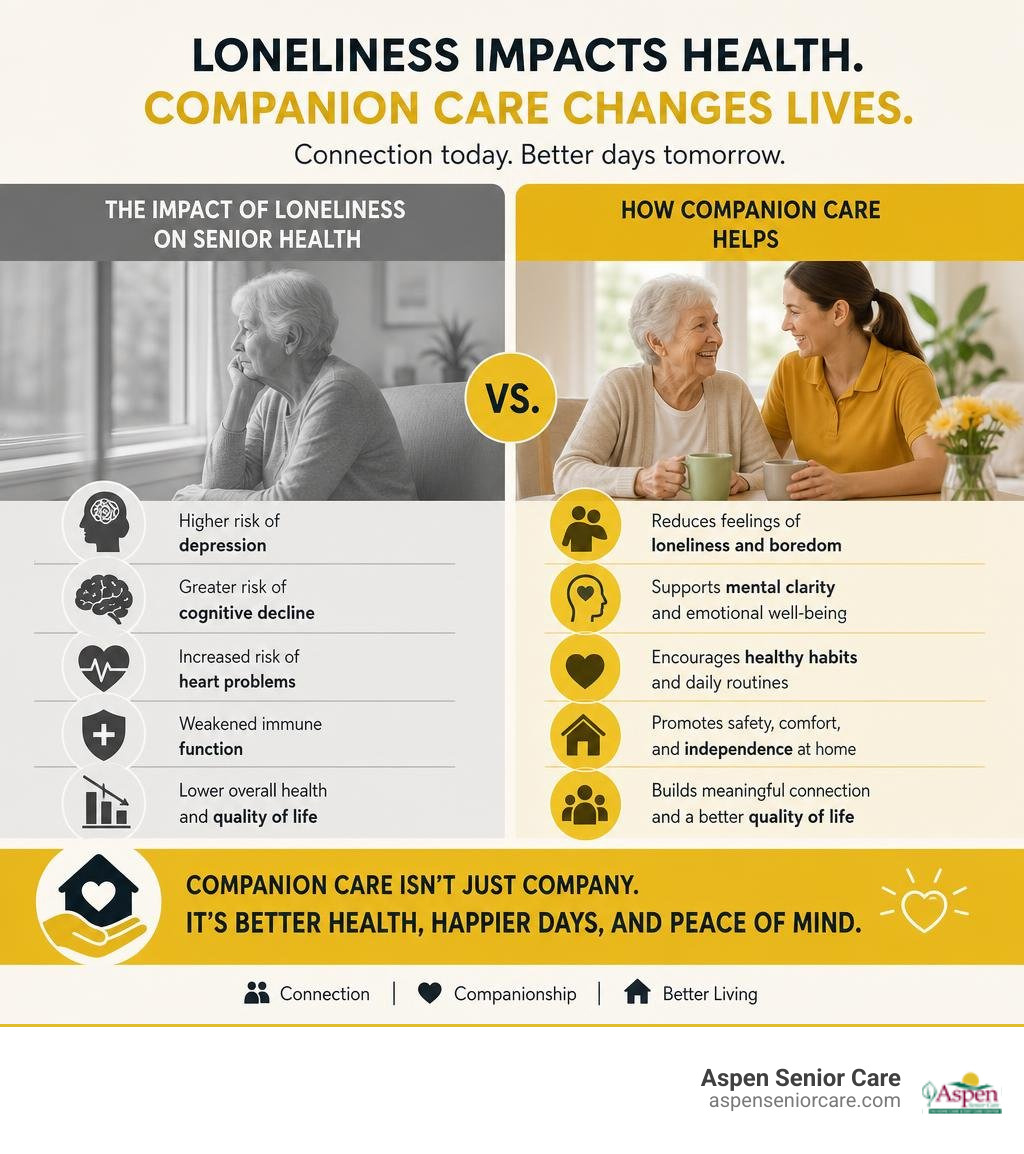
You're not imagining it. Loneliness is a genuine health risk for older adults.
Research shows that seniors who stay socially engaged have a lower tendency to develop depression and cognitive decline compared to those who are isolated. And yet, millions of aging adults spend most of their days without meaningful human contact.
Companion care exists to close that gap — not with medical equipment or clinical charts, but with something far more basic: a real person who shows up, listens, and helps.
This guide explains everything you need to know to decide if companion care is the right fit for your family.
What is Companion Care for Seniors?

At its core, companion care for seniors is about preserving independence through human connection. It is a non-medical service designed to support older adults who want to continue living in the comfort of their own homes but need a little extra help or social interaction to do so safely and happily.
Unlike clinical care, which focuses on medical treatments and physical therapy, companion care targets the psychological, emotional, and practical aspects of daily life. It is built on the philosophy of collaborative care—doing things with a senior rather than just for them. This approach keeps older adults actively engaged in their own lives, boosting their self-confidence and keeping their minds sharp.
Whether it is sharing a cup of coffee, working on a puzzle, or getting help with weekly grocery shopping, this supportive presence helps seniors manage their daily routines without feeling like they have lost their autonomy. For a complete look at how this fits into a broader support system, you can read our In-Home Care Complete Guide 2026 or explore our overview of In-Home Help.
Key Services Included in Companion Care
While every senior’s needs are unique, professional companion support generally covers a wide range of practical household tasks and social activities:
Friendly Conversation and Socialization: Sharing stories, discussing current events, playing board games, or reading aloud.
Meal Preparation and Nutrition Support: Cooking healthy meals together, ensuring proper hydration, and cleaning up afterward.
Light Housekeeping: Dusting, sweeping, taking out the trash, and doing laundry to maintain a safe, clean living space.
Transportation and Outings: Driving to doctor's appointments, community social events, or visiting family members.
Medication Reminders: Helping seniors stay on track with their doctor-prescribed routines by reading labels and prompting them when it is time for a dose.
Errands and Shopping: Picking up prescriptions, grocery shopping, or going to the local post office.
How Companion Care Differs from Personal Care
It is common for families to confuse companion care with personal care, but they serve two very different stages of the aging journey.
Companion care is strictly non-medical and does not involve hands-on physical assistance. Personal care, on the other hand, includes direct physical help with Activities of Daily Living (ADLs) such as bathing, toileting, dressing, and hands-on mobility assistance.
Feature Companion Care Personal Care Primary Focus Socialization, emotional support, and household help Physical safety, hygiene, and daily bodily function Hands-On Physical Help No (non-contact assistance) Yes (bathing, dressing, toileting) Key Activities Conversation, meal prep, light cleaning, errands, games Transferring, grooming, incontinence care, feeding Best For Seniors who are physically independent but isolated Seniors with limited mobility or advanced physical needs
By understanding these differences, you can choose a personalized care plan that matches your loved one’s exact abilities, ensuring they get the right level of support without feeling overmanaged.
The Mental and Physical Health Benefits of Companionship
The value of companion care goes far beyond having someone to help wash the dishes. Regular social interaction with other adults is imperative to staying happy and healthy as we age. People who live alone often experience intense feelings of loneliness, which can severely damage both their physical and mental health.
By bringing a dedicated companion into a senior’s life, we can directly address these risks. Studies show that consistent companionship can help improve symptoms of depression, ease feelings of isolation, and even reduce the risk of dementia. For seniors experiencing cognitive challenges, customized companion visits can provide vital Cognitive Support and specialized Dementia Care that keeps their minds active and engaged.
Combating Senior Isolation and Loneliness
Isolation can take years off an older adult's life. When a senior lives alone and no longer drives, their world can shrink rapidly. A professional companion acts as a bridge to the outside world.
Beyond home visits, companions can encourage seniors to participate in local community activities. For instance, a companion can provide the safe transportation and encouragement needed to attend events at the Senior Center | American Fork, UT - Official Website , turning a lonely afternoon into a joyful, socially active outing. This regular engagement directly lifts their spirits and dramatically improves their overall quality of life.
Promoting Independence and Preventing Falls
Did you know that most falls happen at home? Simple household hazards—like a cluttered hallway, a pile of laundry on the floor, or a hard-to-reach cupboard—can quickly turn into a medical emergency.
Companion care plays a major role in fall prevention. By helping with light housekeeping, keeping pathways clear, and assisting with light daily routines, a companion makes the home environment much safer. This proactive safety monitoring allows seniors to age in place with confidence. You can read more about how these safety measures fit into a broader care strategy in our In-Home Care Summary.
Costs, Programs, and Choosing a Companion Care Provider

Once you realize that your loved one could benefit from companion care, the next practical steps involve understanding the financial landscape, comparing how different care programs operate, and finding the right local provider in Utah Valley.
Average Cost of Companion Care for Seniors
The cost of companion care varies depending on where you live and the level of support required. On a national level, the average posted rate for companion care is approximately $21.00 per hour as of June 2026. However, private agency rates typically range higher depending on the caregiver's training, background checks, and the agency's licensing.
When planning your budget, it is helpful to look at local resources. For families in Utah County, you can research local independent caregiver rates and reviews using platforms like:
Best Companion Care Near Me in Orem, UT | Support for Seniors
Best Companion Care Near Me in Spanish Fork, UT | Support for Seniors
Most companion care is paid for out-of-pocket (private pay). However, some long-term care insurance policies may cover non-medical companion care if it is part of an approved plan of care.
How Structured Companion Care for Seniors Programs Operate
When exploring companion care, you will find a few different models. Some families use online matching registries to connect directly with independent caregivers. However, many families prefer working with a professional, licensed home care agency that provides structured care plans, ongoing oversight, and fully vetted staff.
In a professional agency model, the process is highly structured to ensure safety, consistency, and peace of mind:
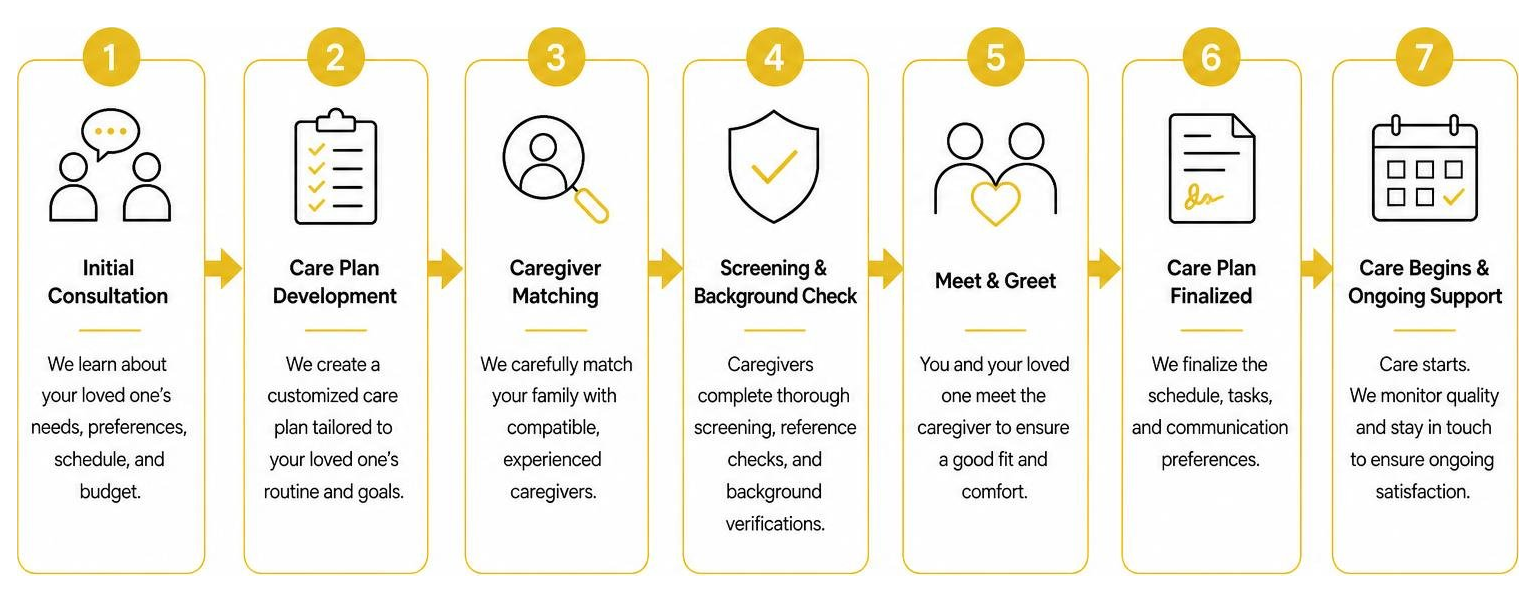
Many modern agencies also utilize digital family portals, giving long-distance family members real-time updates, photos, and visit notes after every shift so they always know how their parent is doing.
What Families Should Look for in a Caregiver
Hiring a caregiver is deeply personal. You aren't just hiring someone to check off a list of chores; you are inviting someone into your parent’s private space. When evaluating potential caregivers, look for these key traits:
Genuine Empathy and Warmth: Do they listen patiently and show real interest in your loved one's stories?
Strong Communication Skills: Are they proactive about sharing updates and coordinate well with the family?
Compatibility: Do they share similar interests, hobbies, or personality traits with your parent?
Professional Credentials: Look for caregivers who have clean background checks, CPR/First Aid certification, and specialized training (such as CNA licensing or dementia care training) for added peace of mind.
Finding Local Care in Utah Valley
If you live in Utah County, choosing a local, deeply rooted provider makes all the difference. A local agency understands the community, can easily coordinate with local doctor's offices, and can seamlessly blend in-home care with community-based programs.
For instance, some seniors thrive by combining in-home companion visits with daytime group activities. Exploring options like a Non-Medical Adult Daycare or a specialized Senior Day Center can give your loved one the best of both worlds: personalized, one-on-one attention at home and vibrant group socialization during the day.
Frequently Asked Questions About Companion Care
Deciding on the best path forward can bring up a lot of questions. Here are some of the most common questions families ask when exploring companion care. For more detailed answers, visit our complete list of FAQs.
Can companion care help seniors avoid nursing homes?
Yes, absolutely. For many older adults, the primary trigger for moving into a nursing home isn't a severe medical crisis, but rather a gradual decline in their ability to manage the home safely on their own.
By providing safety monitoring, help with meals, and regular check-ins, companion care allows seniors to age in place safely. It also provides essential respite care for family caregivers, preventing burnout and keeping the home environment stable. If your loved one is dealing with progressive memory loss, combining companion care with specialized Alzheimer Care can delay or entirely prevent the need for an institutional facility.
How do we introduce a companion caregiver to a resistant senior?
It is incredibly common for seniors to resist the idea of having a caregiver in their home. They may view it as a loss of independence or feel uncomfortable with a "stranger" around. To make the transition easier:
Start Small: Introduce the caregiver for just a few hours a week to help with a specific, non-threatening task, like driving to the grocery store or helping with a hobby.
Focus on the Caregiver's Needs: Frame the caregiver's presence as a favor to you. You might say, "I'm really busy at work, and having Sarah help with the grocery shopping would give me peace of mind."
Match on Hobbies: Introduce the caregiver as a "friend" who shares their love for gardening, baking, or watching classic movies.
Is companion care covered by insurance?
Because companion care is non-medical, standard health insurance and traditional Medicare do not typically cover these services.
However, there are several ways families fund this care:
Private Pay: Out-of-pocket funding is the most common method.
Long-Term Care Insurance: Many private long-term care policies will pay for companion care if the policy requirements are met.
Veterans Benefits: Aid and Attendance benefits can sometimes be used to cover home care costs for eligible veterans and their surviving spouses.
Conclusion
At Aspen Senior Care, we believe that no senior in Utah Valley should have to face the challenges of aging alone. Serving families across Orem, Provo, Lehi, American Fork, Pleasant Grove, Spanish Fork, and the surrounding Utah County areas, our mission is to provide award-winning, family-like, and deeply personalized non-medical care.
Whether your loved one needs a few hours of friendly conversation a week, specialized dementia support, or the security of our 24/7 availability, we are here to help. We design customized care plans that respect your parent's independence while giving your family complete peace of mind.
Ready to take the next step? Discover our personalized companion care services or call us today to schedule a warm, friendly conversation about how we can support your family.