
The Definitive Guide to In-Home Care
What Is In-Home Care — and Is It Right for Your Family?
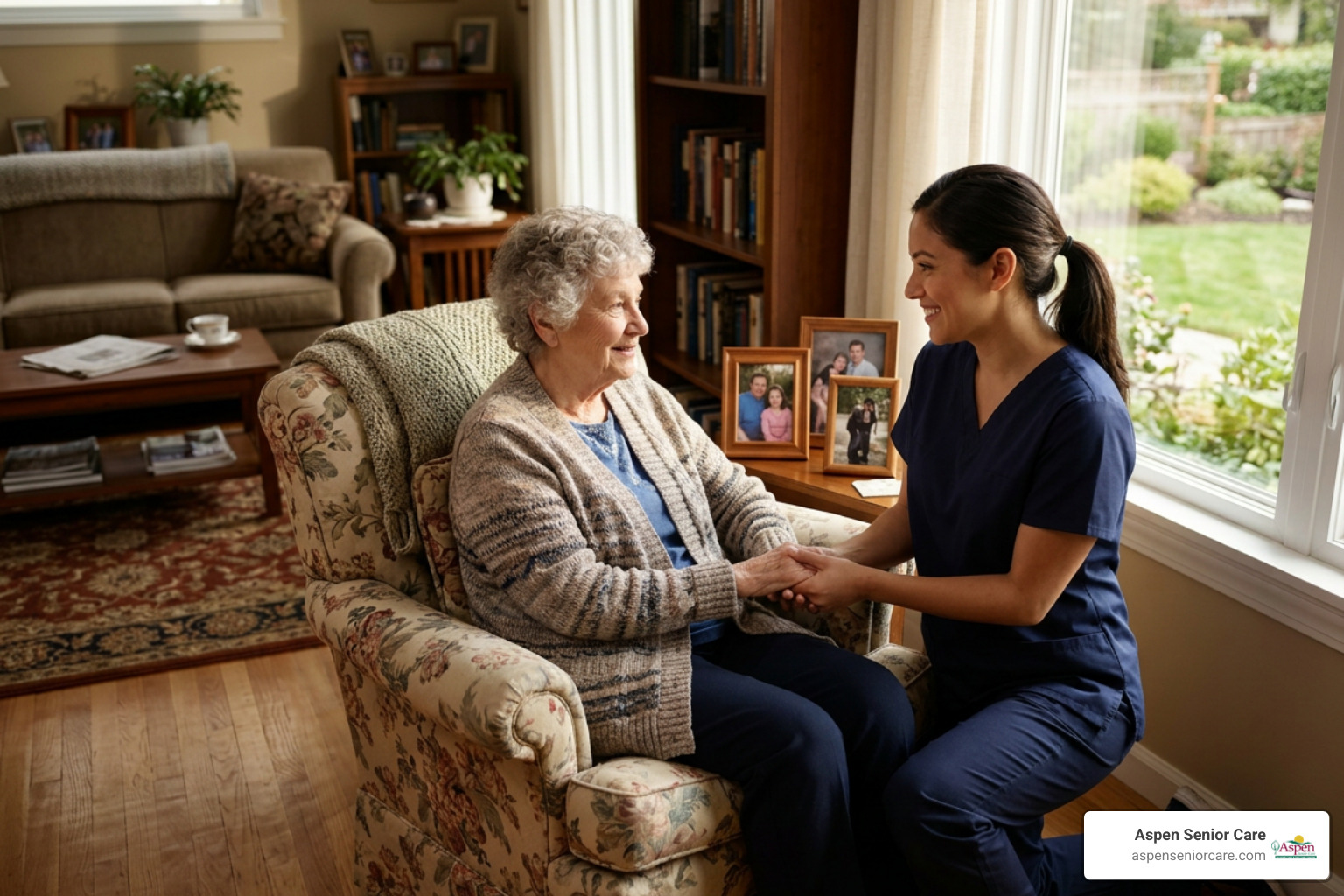
In-home care is non-medical support provided in a person's own home, helping older adults with daily tasks like bathing, dressing, meal preparation, and companionship — so they can age safely and independently without moving to a facility.
Quick answer: What does in-home care include?
Personal care — bathing, grooming, dressing, toileting
Companion care — conversation, social engagement, emotional support
Homemaker services — light housekeeping, laundry, meal prep
Medication reminders — prompting (not administering) prescribed medications
Mobility assistance — help moving safely around the home
Specialized memory care — support for seniors with Alzheimer's or dementia
It is not the same as home health care, which involves skilled clinical services like nursing or physical therapy ordered by a doctor.
If you're caring for an aging parent in Utah Valley, you already know how hard it is. Work, kids, and your own life pull you in every direction — while your mom or dad needs more help than you can give alone. That tension is exactly what in-home care is designed to ease.
The good news: in-home care is often more affordable than people expect. In Texas, for example, in-home care averages around $4,576 per month — hundreds less than nursing home care at $5,125 per month. Utah figures follow a similar pattern. And for families who don't need round-the-clock support, part-time or hourly care can cost significantly less.
This guide covers everything you need to know — from understanding your options and costs to finding a trustworthy agency and coordinating care around medical needs.
Understanding In-Home Care vs. Home Health Care
One of the most common points of confusion for families is the difference between "in-home care" and "home health care." While they sound nearly identical, they serve completely different needs, operate under different regulations, and are paid for in entirely different ways.

Non-Medical In-Home Care
Non-medical care—often referred to simply as in-home care—focuses on helping seniors with Activities of Daily Living (ADLs) and Instrumental Activities of Daily Living (IADLs). The goal is custodial: maintaining safety, comfort, and cleanliness at home.
This type of care is provided by professional caregivers or personal care assistants. Because these services are non-clinical, they do not require a doctor’s prescription. Families typically use in-home care services on a long-term basis, ranging from a few hours a week to 24/7 care, depending on the senior's needs.
Clinical Home Health Care
In contrast, home health care is clinical medical care. It is ordered by a physician and must be delivered by licensed medical professionals, such as registered nurses (RNs), physical therapists (PTs), occupational therapists (OTs), or speech-language pathologists.
Home health is designed to be short-term and rehabilitative—helping a senior recover after a hospital stay, surgery, or a significant change in a chronic medical condition. Medicare covers 100% of allowed home health services if the senior is deemed "homebound" and requires intermittent skilled care.
Here is a quick breakdown to help you compare the two:
Feature Non-Medical In-Home Care Clinical Home Health Care Primary Goal Assist with daily living, safety, and companionship Treat, manage, or rehabilitate a medical condition Care Providers Professional Caregivers / Companions Nurses, Physical/Occupational Therapists Typical Services Bathing, meal prep, light housekeeping, transport Wound care, injections, physical therapy, health monitoring Doctor's Order Required? No Yes Medicare Coverage Generally not covered (custodial care exclusion) 100% covered for eligible, homebound patients Duration Long-term or short-term; highly flexible Short-term, goal-oriented (usually in 60-day episodes)
Services and Benefits of At-Home Support
Aging in place is not just a preference; for many seniors, it is a vital contributor to their emotional well-being. Staying in a familiar environment surrounded by decades of memories brings comfort and security that institutional settings struggle to replicate. Non-medical in-home care provides the exact level of support needed to make aging in place safe and sustainable, while offering immense relief to overwhelmed family caregivers.
Core Services Provided by In-Home Care
Professional caregivers assist with a wide range of everyday tasks. These services are highly customizable and can adapt as your loved one's needs evolve.
Companionship: Social isolation is a major health risk for seniors. Caregivers provide meaningful conversation, play board games, accompany seniors on walks, and help them stay socially connected.
Personal Care: Dignified personal care assistance includes help with bathing, grooming, dressing, toileting, and incontinence care. Having a professional handle these sensitive tasks often preserves the parent-child relationship, removing the awkwardness that can occur when adult children assist with hygiene.
Meal Preparation: Ensuring seniors eat nutritious meals is critical. Caregivers plan menus, shop for groceries, cook healthy dishes, and clean up afterward.
Light Housekeeping: Keeping the home tidy reduces fall risks. Caregivers assist with laundry, dusting, vacuuming, emptying trash, and washing dishes.
Medication Reminders: While non-medical caregivers cannot administer medications (like setting up pill boxes or giving injections), they provide crucial prompts so seniors take the right doses at the correct times.
Specialized Memory Care and Dementia Support
For seniors living with cognitive decline, staying in a familiar home environment is even more critical. Changes in surroundings can trigger confusion, agitation, and anxiety.
Specialized memory care at home focuses on cognitive stimulation, maintaining structured daily routines, and ensuring physical safety. Caregivers trained in dementia care understand how to manage common behaviors such as wandering, repetitive questioning, and sundowning.
Through customized Alzheimer's care and dementia support, we focus on what the senior can still do, utilizing validation techniques and memory games to support dignity. Utilizing professional memory care at home ensures your loved one is safe from household hazards while receiving the focused, compassionate attention they deserve.
Benefits Compared to Assisted Living and Nursing Homes
Choosing between at-home support and a residential facility is a major decision. While nursing homes and assisted living facilities have their place, in-home care offers distinct advantages:
One-on-One Attention: In a facility, staff-to-resident ratios mean care is shared. At home, your loved one has the caregiver’s undivided attention.
Preserved Independence: Seniors keep their own schedules, eat the foods they like, and sleep in their own beds.
Cost-Effectiveness: For seniors who only need a few hours of help a day or a few days a week, paying for hourly in-home support is significantly cheaper than paying flat monthly facility fees.
Reduced Risk of Illness: Staying at home limits exposure to infectious illnesses often found in communal living environments.
For family members who have taken on the role of primary caregiver, utilizing professional care provides essential caregiver respite. It allows you to take a breath, run your own errands, go to work, or simply rest, knowing your parent is in safe, capable hands.

Costs and Financial Options for Senior Care
Understanding the financial side of senior care is essential for realistic, long-term planning. Costs vary widely based on where you live and the intensity of care required.
Average Costs and Regional Variations
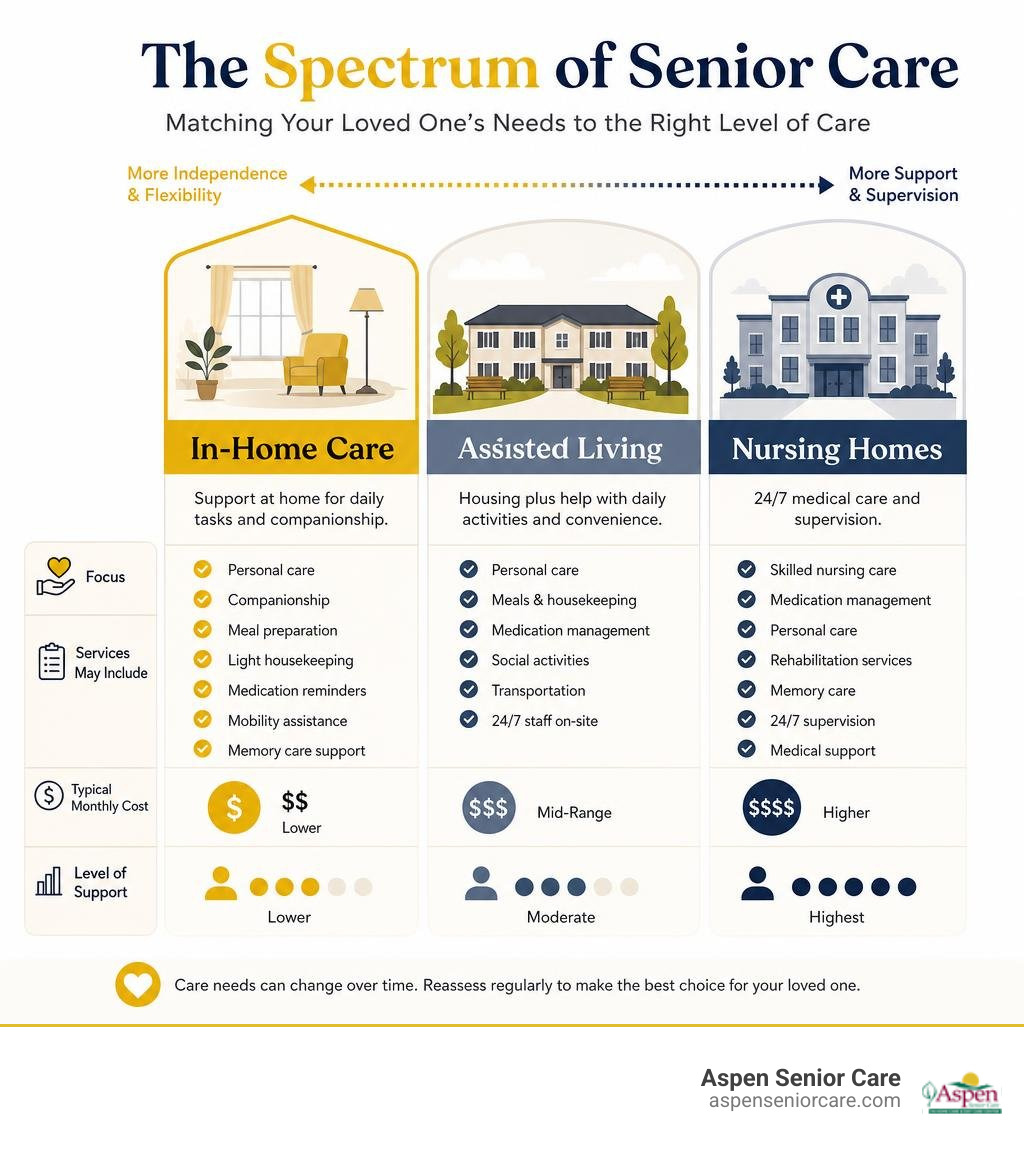
According to industry data, the cost of senior care is highly dependent on geographic location and the setting in which care is delivered. Nationally, the average cost of in-home care sits around $4,957 per month (for approximately 44 hours of weekly care).
In comparison, residential options are typically higher. For instance, nursing home care averages significantly more due to the clinical infrastructure required. In many regions, assisted living facilities average around $4,000 to $4,500 per month, which may seem comparable to full-time home care, but often does not include individual, one-on-one care or specialized memory support fees.
For families who do not require full-time care, utilizing a hybrid model of care can dramatically lower costs. Combining part-time in-home care with local community resources can stretch a senior's budget much further. To understand how community-based programs fit into your budget, it is helpful to look at adult day care costs, which offer a fraction of the daily cost of 1-on-1 home care.
How to Pay for In-Home Care
Because non-medical care is classified as "custodial," standard Medicare does not pay for it. However, families have several viable payment routes:
Private Pay / Out-of-Pocket: The most common method. Families use personal savings, retirement income, or proceeds from selling a home.
Long-Term Care Insurance: If your loved one purchased a policy years ago, it will likely cover non-medical personal care once they meet the policy's physical or cognitive triggers (such as needing help with two or more ADLs).
Veterans Benefits (Aid and Attendance): Eligible wartime veterans and their surviving spouses may qualify for a pension upgrade called Aid and Attendance, which provides monthly tax-free payments specifically to help cover the cost of in-home care or non-medical adult daycare.
Medicaid Waivers: For seniors who meet low-income and asset thresholds, state-specific Medicaid waiver programs can pay for personal care attendants to help prevent or delay placement in a nursing home.
Selecting and Coordinating with a Reputable Agency
Entrusting the care of a vulnerable family member to someone else is a profound act of trust. Finding the right agency requires diligent research, clear communication, and an understanding of regulatory standards.
Screening, Training, and Regulatory Protections
When comparing options, working with a licensed, fully managed agency is highly recommended over hiring independent caregivers from classified sites. Agencies take on the burden of being the employer, which protects your family from significant liabilities.
A reputable agency ensures that caregivers undergo rigorous background checks, reference checks, and continuous training. The Bureau of Labor Statistics projects 765,800 openings per year in the home care field through 2034, highlighting the massive demand for qualified professionals. Agencies with strong retention and training programs are best equipped to navigate this staffing landscape and provide consistent, high-quality care.
When researching care options in Utah County — whether in Orem, Provo, Lehi, American Fork, Pleasant Grove, Spanish Fork, or Alpine — it is important to look for licensed agencies with a strong local reputation. You can consult local senior centers, community directories, or state licensing databases to verify an agency's credentials.
When interviewing potential agencies, make sure to ask these essential questions:
Are your caregivers direct W-2 employees, and are they fully bonded and insured?
What specific background checks, drug screenings, and registry checks do you perform?
How do you train your caregivers, especially regarding specialized dementia or Alzheimer's care?
What is your policy for providing a backup caregiver if the scheduled caregiver calls out sick?
How do you monitor quality of care, and can family members access daily care notes?
Coordinating Care for Post-Hospital Recovery and Chronic Conditions
Transitions of care — such as moving from a hospital or rehabilitation center back to home — are high-risk periods for seniors. Medication errors, falls, and lack of follow-up care frequently lead to preventable hospital readmissions.
Non-medical caregivers play a vital role in transitional care. They coordinate with family members and home health nurses to ensure the discharge plan is followed. Caregivers assist with safe transfers, prepare easy-to-swallow meals, provide steady physical support, and offer constant medication reminders.
For families looking for a holistic care model, combining home care with in-home adult day care programs can provide structured social engagement during the day while maintaining the comfort of one-on-one support at home.
Frequently Asked Questions about At-Home Care
What is the difference between home care and home health?
Home care provides non-medical assistance with daily tasks (like bathing, meal preparation, and light housekeeping) to help seniors live safely at home. Home health care involves skilled, clinical medical services (like physical therapy or wound care) ordered by a doctor to treat or rehabilitate a specific medical condition.
Does Medicare pay for non-medical care at home?
No, Medicare does not pay for non-medical, custodial care if that is the only care needed. Medicare only pays for short-term, medically necessary clinical home health services. Non-medical care must be paid for privately, through long-term care insurance, VA benefits, or state Medicaid waiver programs.
How quickly can care services begin?
In most cases, care can begin within 24 to 72 hours of an initial inquiry. The process starts with an in-home consultation and assessment to understand the senior's needs and lifestyle. A customized care plan is then created, and a caregiver is matched based on the required skills and personality compatibility.
Conclusion
At Aspen Senior Care, we understand that inviting a caregiver into your home is a deeply personal decision. Serving families throughout Utah Valley—including Orem, Provo, Lehi, American Fork, Pleasant Grove, Spanish Fork, Alpine, Cedar Hills, Salem, Eagle Mountain, Highland, Lindon, Saratoga Springs, and Payson—we are dedicated to providing award-winning, family-like, personalized care.
Whether your loved one needs simple companionship, help around the house, or specialized dementia support, our team is here 24/7 to provide the peace of mind your family deserves.
Ready to discuss how we can support your family? Please contact our team today to schedule a free, no-obligation consultation, or explore our comprehensive in-home care options to find the perfect fit for your needs.