

A Practical Guide to Respite Care Options
When Caregiving Becomes Overwhelming: What You Need to Know
Respite care is a short-term care service that gives family caregivers a temporary break while making sure their loved one continues to receive safe, quality support.
Here's a quick overview:
What it is: Temporary relief care lasting anywhere from a few hours to several weeks
Who it's for: Family caregivers of elderly adults, people with dementia, veterans, or individuals with disabilities
Where it happens: At home, in an adult day center, or in a care facility
Who provides it: Trained aides, volunteers, family members, or professional care agencies
How to pay for it: Out of pocket, Medicaid waivers, VA benefits, long-term care insurance, or Medicare (for hospice patients)
If you're caring for an aging parent in Utah Valley, you already know how demanding it can be. Coordinating medications, managing daily tasks, staying alert to safety risks — all while holding down a job and raising your own family. It adds up fast.
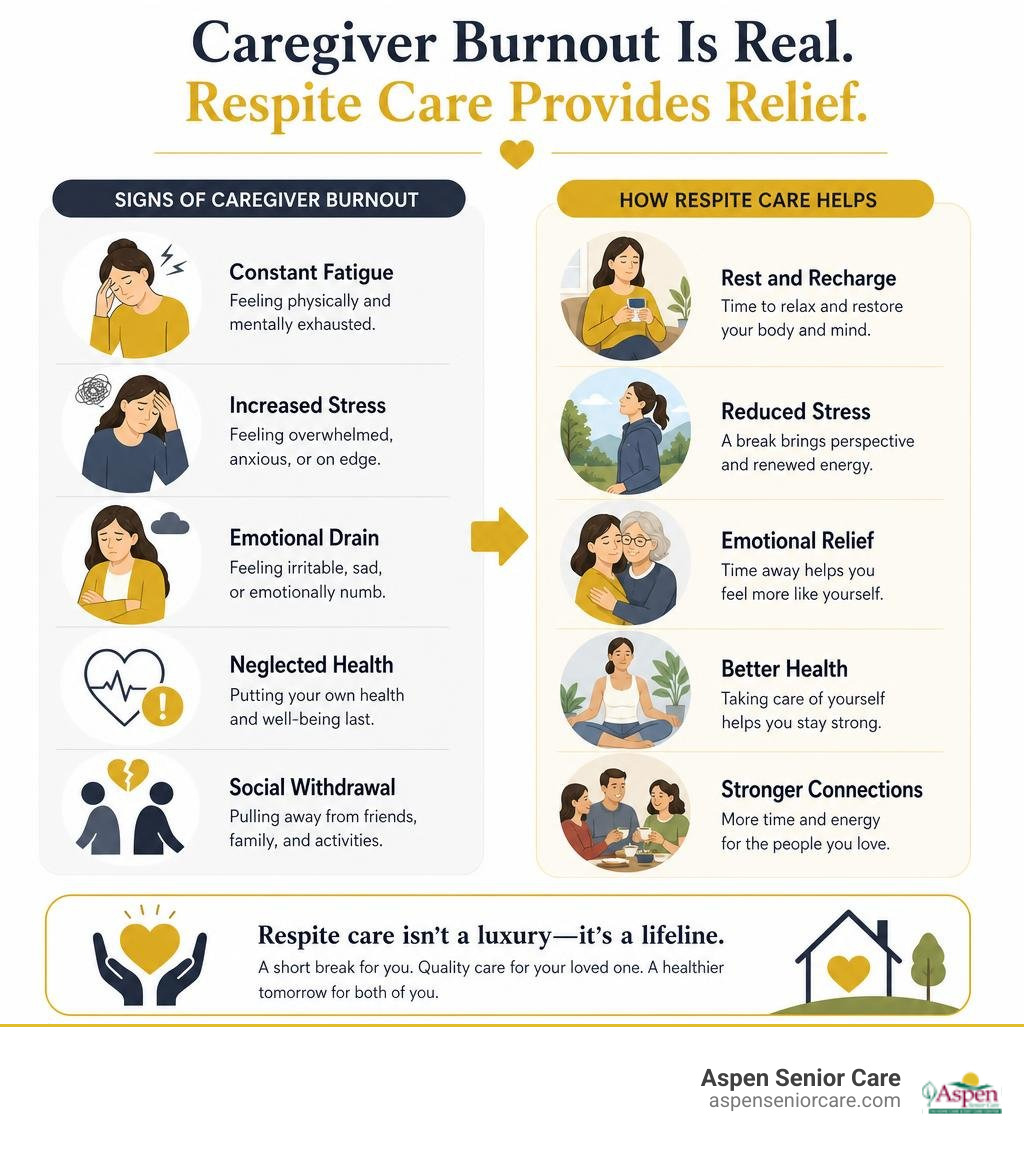
The truth is, caregiving is one of the most selfless things a person can do — and one of the most exhausting. Roughly 20% of family caregivers experience depression, and physical burnout is just as common. Many caregivers quietly put their own health, relationships, and rest on the back burner for months or years.
Respite care exists specifically to address that. It's not a sign of giving up. It's a practical tool that helps caregivers stay healthy and keep providing great care over the long haul.
This guide walks you through everything you need to know — from types of respite care and costs to finding the right provider in your area.
What Is Respite Care and How Does It Work?
At its core, respite care is designed to step in when you need to step out. It is a temporary, short-term caregiving arrangement that transfers your daily responsibilities to another qualified individual. This allows you to rest, run errands, attend to your own medical appointments, or take a much-needed vacation.
According to the Cleveland Clinic Guide to Respite Care, services can range from basic companionship and help with daily activities to more specialized medical care. Respite care is highly adaptable and can be organized in two primary ways:
Planned Respite: This is scheduled in advance. For example, you might arrange for a caregiver to visit your home every Thursday afternoon so you can attend a support group, or book a week-long stay at a specialized program while you travel out of state.
Emergency Respite: Life is unpredictable. If you suddenly fall ill, experience an emergency, or have to travel for an urgent family matter, emergency respite services can be quickly arranged to ensure your loved one is never left without support.
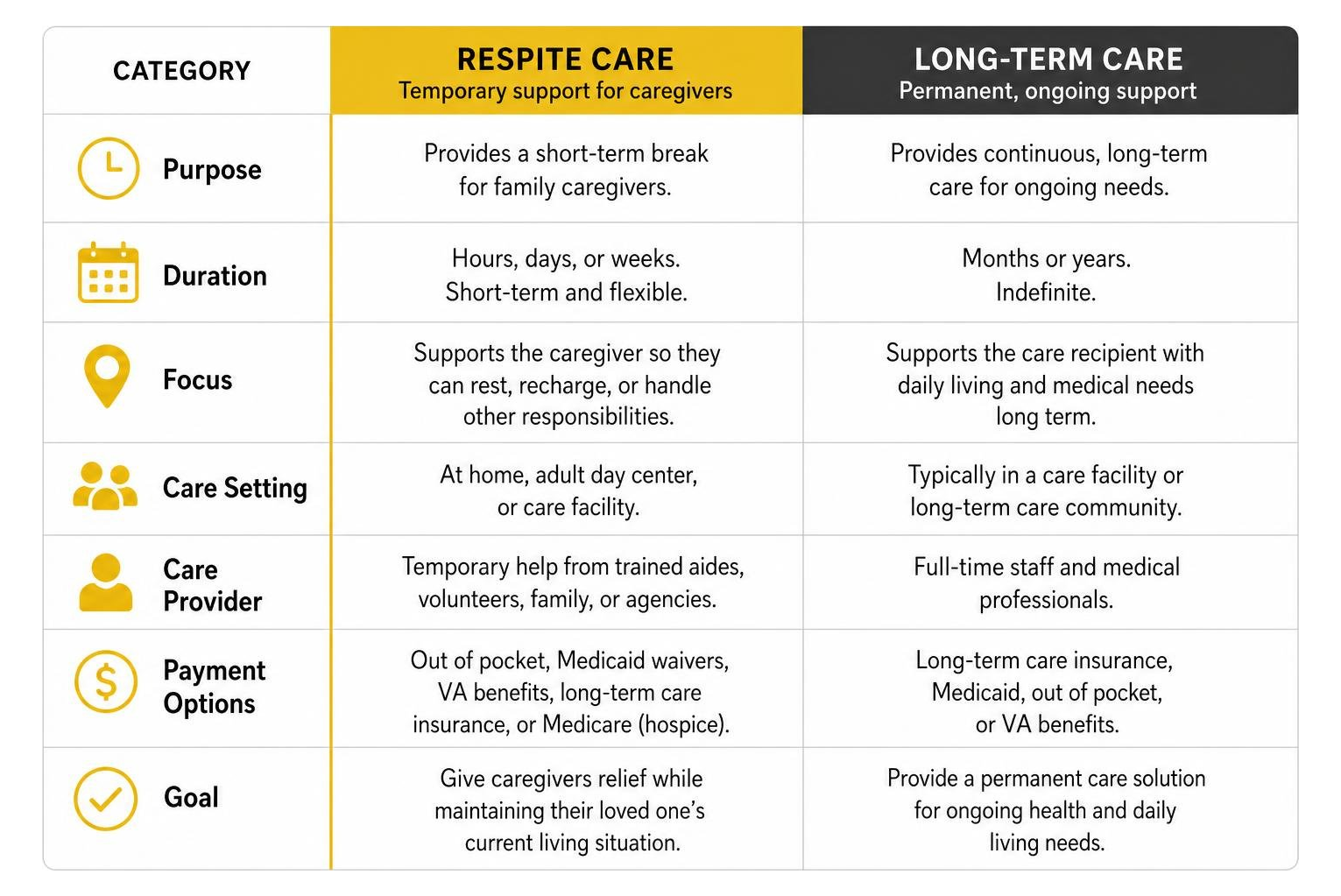
Key Differences Between Respite Care and Long-Term Care
Many families confuse respite support with permanent long-term care. While both focus on supporting individuals who need help with daily activities, they serve entirely different purposes. Respite care is designed to support the caregiver as much as the care recipient by providing a temporary pause, whereas long-term care is a permanent lifestyle transition.
Who Can Benefit from Respite Care Services?
Respite care is not limited to any single demographic. It is a vital resource for anyone acting as a primary, unpaid caregiver. This includes:
Family Caregivers: Spouses, adult children, and relatives who handle daily care tasks and need time to rest and recharge.
Elderly Adults: Seniors who benefit from a change of scenery, new social interactions, and professional attention.
Individuals with Chronic Illnesses: Adults living with progressive conditions who require regular, structured assistance.
Children with Special Needs: Programs like Kids on the Move Respite Care offer dedicated support for families raising children with developmental delays or physical disabilities, giving parents a chance to focus on self-care or spend one-on-one time with siblings.
Main Types and Settings of Respite Support
Respite services are highly flexible and can be customized to match your family’s unique routine, comfort level, and medical needs. Understanding the primary care settings will help you choose the best fit for your family.
In-Home Care Services
For many seniors, there is no place like home. In-home respite care allows your loved one to remain in their familiar environment, surrounded by their favorite comforts, while a professional caregiver steps in to help.
In-home care can include companion services (such as reading, playing games, or light meal preparation) or personal care services (including bathing, dressing, and mobility assistance). If you are looking for more details on how to set up these daily supports, you can read our resources on In-Home Help and explore our comprehensive guide on In-Home Care.
Community-Based Adult Day Services
If your loved one craves social interaction, community-based adult day services are an excellent option. These programs provide structured activities, nutritious meals, and health monitoring in a secure group setting during daytime hours.

Adult day programs allow seniors to build new friendships, participate in therapeutic activities, and enjoy a sense of independence outside the home. To learn more about how these structured environments operate, you can read about our Day Respite Services and find out what to expect at a dedicated Day Respite Centre.
The Primary Benefits of Temporary Care Relief
It is easy to view caregiving as a solo journey, but attempting to do it all alone carries significant risks. Taking advantage of temporary relief programs offers profound advantages for both you and your loved one.
As noted by the National Institute on Aging Respite Care Guide, taking regular breaks is essential for maintaining your own mental and physical health. Some of the most notable benefits include:
Reducing Caregiver Depression and Burnout: With roughly 20% of caregivers experiencing clinical depression, having scheduled time to step away can dramatically lower stress levels and improve your emotional outlook.
Preventing Social Isolation: Caregiving can be incredibly isolating. Respite care gives you the time to maintain friendships, enjoy hobbies, and stay connected with your community.
Enhancing the Caregiver-Recipient Relationship: When you are chronically exhausted, patience wears thin. Returning from a break refreshed allows you to bring renewed energy, patience, and warmth back to your caregiving role.
Providing Vital Socialization for Seniors: Seniors often experience isolation too. Interacting with new, friendly professional caregivers or peers at a day center stimulates their cognitive health and brightens their routine.
Support Options for Specific Populations
Different health conditions and backgrounds require specialized care strategies. Fortunately, respite programs can be tailored to meet these unique demands.
Dementia and Alzheimer's Support
Caring for someone with progressive memory loss requires specialized skills, patience, and a deep understanding of cognitive changes. Dementia-specific respite care focuses on maintaining consistent daily routines, which is critical for minimizing confusion and anxiety.
Professionals trained in memory care know how to handle behavioral shifts, encourage gentle cognitive stimulation, and create a calm, reassuring environment. If you are navigating this journey, the Alzheimer's Association Respite Care Resources offer excellent guidance on how to safely introduce temporary care providers to a loved one with dementia.
Support Programs for Veterans
Veterans who require assistance with activities of daily living may qualify for specific government-backed programs. The Department of Veterans Affairs (VA) recognizes the immense pressure placed on family caregivers and provides robust support options.
Through the VA Geriatrics and Extended Care Respite Program, enrolled veterans who meet specific clinical criteria can access home-based health aides or short-term residential stays. For example, Nursing Home Respite Care services through the VA are available for a maximum of 30 days per calendar year, helping families take extended breaks when needed.
Understanding Costs, Funding, and Provider Selection
Navigating the financial and logistical aspects of professional care can feel overwhelming, but breaking down your options makes the process highly manageable.
Typical Costs and Funding Options
Most non-medical respite services are paid for out of pocket, with rates varying depending on the level of care required and your location. However, several programs can help offset these expenses:
Medicare: While standard Medicare does not cover long-term or non-medical care, it will cover most of the cost for up to five consecutive days of respite care in a hospital or skilled nursing facility for a person receiving Medicare-certified hospice care.
Medicaid Waivers: Many state Medicaid programs offer Home and Community-Based Services (HCBS) waivers that can fund temporary care relief for eligible individuals.
Long-Term Care Insurance: If your loved one has an active long-term care policy, it may cover professional in-home care or adult day center fees.
Local Resources: Families in Utah County can explore localized programs, senior centers, and community registries to find temporary support across cities like American Fork, Pleasant Grove, Spanish Fork, and Alpine.
Choosing the Right Provider
To ensure your loved one's safety and your own peace of mind, it is vital to thoroughly vet any potential care provider.
When interviewing agencies or independent caregivers, keep these best practices in mind:
Verify Background Checks: Ensure the provider conducts comprehensive background screenings, reference checks, and drug testing on all employees.
Ask About Specialized Training: Confirm that caregivers have specific training in CPR, first aid, and dementia care if your loved one has cognitive decline.
Assess Caregiver Matching: Look for providers who take the time to match caregivers with your loved one's unique personality and preferences.
Create an Emergency Plan: Ensure the provider has a clear, documented protocol for handling sudden medical changes or emergencies.
Overcoming Caregiver Guilt and Common Barriers
Despite the clear benefits, many family caregivers hesitate to use respite services. The most common barrier is not financial or logistical — it is emotional.
Many caregivers experience intense feelings of guilt, believing that asking for help is a sign of failure or that no one else can care for their loved one "the right way." Others worry about disrupting their loved one's routine or causing them distress.
To overcome these emotional hurdles, it helps to shift your perspective:
Reframine the Decision: Seeking help is an act of love, not abandonment. You cannot provide high-quality care if your own physical and mental health are failing.
Start Small: You do not have to start with a week-long trip. Begin by scheduling a professional caregiver for just two or three hours a week while you run errands or read a book in another room.
Build a Care Team: Do not wait for a crisis to find a provider. Having a trusted care partner in place early ensures a smooth transition if an emergency arises.
Planning ahead is more important than ever. The demand for home health and personal care aides is expected to grow by 21% through 2033 — much faster than the average for other occupations. As our local Utah Valley senior population continues to grow, securing a relationship with a reliable care team now ensures your family will have access to consistent, high-quality support in the years to come.
Frequently Asked Questions
How long can a loved one stay in a temporary program?
The duration depends entirely on the type of care you choose. In-home visits can be as short as a couple of hours, while community-based adult day centers typically operate on set daily schedules. For overnight or multi-day needs, some residential facilities allow temporary stays ranging from a few days up to several weeks.
Does Medicare cover temporary care costs?
In most cases, standard Medicare does not cover non-medical respite care. The primary exception is for individuals receiving hospice care, where Medicare will cover up to five consecutive days of inpatient respite support to give the primary family caregiver a break.
How do I transition my loved one into a new routine?
We recommend a gradual introduction. Have the new caregiver visit for a brief social call while you are still home, allowing your loved one to get comfortable with them. Keep familiar routines, favorite meals, and comfort items consistent during care sessions to help your loved one feel secure.
Conclusion
Taking care of an aging parent or spouse is a beautiful, deeply meaningful journey — but you were never meant to walk it entirely alone. Recognizing when you need a break is the first step toward preserving your own well-being and ensuring your loved one receives the highest quality of care.
At Aspen Senior Care, we specialize in providing award-winning, family-like, and highly personalized non-medical care across Utah Valley. Whether you need a few hours of help each week or require 24/7 availability, our compassionate team is here to support you. We are proud to serve families throughout Utah County, including Orem, Provo, Lehi, American Fork, Pleasant Grove, Spanish Fork, Alpine, Cedar Hills, Salem, Eagle Mountain, Highland, Lindon, Saratoga Springs, and Payson.
With our specialized dementia support and dedicated adult day programs, you can take a well-deserved break with complete peace of mind, knowing your loved one is in safe, caring hands.
To learn more about local support options, read our guide on Orem Utah Caregiver Respite or schedule a consultation for in-home care today. Let us help you find the perfect balance so you can continue to cherish the moments that matter most.