

The Caregiver's Lifeline: Understanding Day Respite Services
Why Day Respite Services Matter for Family Caregivers
Day respite services are structured, daytime care programs that give family caregivers a planned break while their loved one receives supervision, activities, and support — either at a community center or at home.
Here's a quick summary of what day respite services are and how they work:
What they are: Short-term daytime care for older adults or people with disabilities, provided while the primary caregiver takes a break
Where they happen: Adult day centers, community programs, or in the home
Who they serve: Seniors, adults with dementia, brain injury survivors, people with physical or cognitive limitations
What's included: Meals, activities, medication management, socialization, and supervised care
How long: A few hours to a full day, typically Monday through Friday
Who pays: Private pay, Medicaid waivers, VA benefits, or long-term care insurance
Caregiving is one of the hardest jobs there is. If you're an adult child in Utah Valley juggling work, your own family, and the daily demands of caring for an aging parent, you already know that.
The physical and emotional weight adds up fast. And yet, many family caregivers push through without ever taking a real break — often because they don't know what support is available, or they feel guilty stepping away even for a few hours.
That's exactly where day respite services come in.
They're not just a convenience. For many families, they're the difference between sustainable caregiving and complete burnout.
According to research, social isolation affects 90% of the brain injury population — and structured day programming is one of the most effective ways to address it. The benefits run both ways: the care recipient gets engagement, connection, and professional support, while the caregiver gets time to breathe, work, or simply rest.
This guide walks you through everything you need to know — from eligibility and activities to costs, funding, and how to choose the right program for your loved one.
What Are Day Respite Services?
At their core, day respite services provide a safe, engaging, and supportive environment for seniors and adults with care needs during daytime hours. Unlike moving a loved one into a residential facility, day respite allows individuals to remain living in their own homes while receiving professional care when their primary caregivers need a break.
These services can be delivered in a variety of settings. Some families choose in-home care, where a professional caregiver comes directly to the house to provide companionship and assistance. Others prefer a community-based setting, such as an adult day center, where participants can interact with peers, join group activities, and receive specialized care.
To help you understand the differences, we’ve put together a quick comparison of the most common care options:
Care Feature Day Respite Services (Adult Day Centers) In-Home Care Respite Overnight Facility Respite Primary Setting Specialized community center The senior's private home Assisted living or nursing home Social Opportunities High (group activities, peer interaction) Low to moderate (one-on-one companionship) Moderate (community environment) Typical Cost Lowest (approx. $100/day median) Moderate (approx. $264/day median) Highest (approx. $173–$305+/day) Best For Socialization, structured routines, and cognitive stimulation Seniors who prefer staying home or have limited mobility Caregivers traveling or needing an extended break
Whether you need support for just a few hours a week or every weekday, exploring Adult Day Care Services can help you find the perfect balance for your family's routine.
How Day Respite Services Differ from Overnight Care
While both types of care aim to prevent caregiver burnout, they serve different purposes.
Hourly Respite & Short-Term Breaks: Day respite is designed for periodic, daytime use. It is a highly flexible option that allows you to take care of your own needs—like running errands, attending doctor appointments, or going to work—knowing your loved one is safe and engaged.
Overnight and Extended Care: Overnight respite is designed for situations where a caregiver needs to be away for 24 hours or more, such as going on a vacation or recovering from an illness. These services typically take place in an assisted living community or skilled nursing facility and can last from a few days up to several weeks.
Who is Eligible for Day Respite Services?
Day respite services are designed to support a wide range of individuals. Generally, there are no strict age limits for community-based programs, though adult day centers typically serve older adults and individuals over the age of 18.
The ideal candidates for day respite programs include:
Seniors experiencing social isolation who would benefit from peer interaction.
Individuals with physical limitations who require assistance with activities of daily living (ADLs) like dining, mobility, or hygiene.
Adults recovering from a stroke or living with a brain injury who need structured cognitive and physical stimulation.
Individuals who cannot be safely left home alone during the day.
If you are caring for a loved one in Utah County, you can find local support and resource listings via the MAG Senior Help Guide - Caregiving .

Specialized Support for Dementia and Chronic Conditions
For families managing progressive health conditions, day respite is an invaluable resource. Many day programs offer specialized care tailored to specific neurological and cognitive needs:
Dementia and Alzheimer's Disease: Dedicated programs provide a secure environment with structured routines that reduce anxiety, prevent wandering, and stimulate memory. You can Explore Adult Day Care for Dementia or Read about Adult Day Care for Alzheimer's to learn how these environments are customized for cognitive support.
Parkinson's Disease: Programs designed for physical and motor support help participants maintain mobility and confidence. To see how specialized care can benefit your family, you can Learn about Adult Day Care for Parkinson's.
Activities and Support in Day Respite Programs
A high-quality day respite program is far more than just a safe place for a senior to sit. It is an active, vibrant environment where participants are encouraged to learn, grow, and express themselves.
Common activities and support services provided in these programs include:
Recreational and Music Therapy: Group singing, instrument play, and interactive music sessions designed to boost mood and cognitive function.
Creative Arts: Painting, crafts, and hands-on projects that encourage self-expression and fine motor skill practice.
Physical Exercise: Gentle chair yoga, stretching, and movement games designed to maintain balance and strength.
Life Skills and Cognitive Games: Cooking projects, trivia, puzzles, and group discussions that keep the mind active.
Nutritious Meals: Freshly prepared lunches and snacks tailored to individual dietary needs.
Medication Management: Supervised administration of daily medications by trained staff or licensed nurses.

The Dual Benefits of Day Respite Services
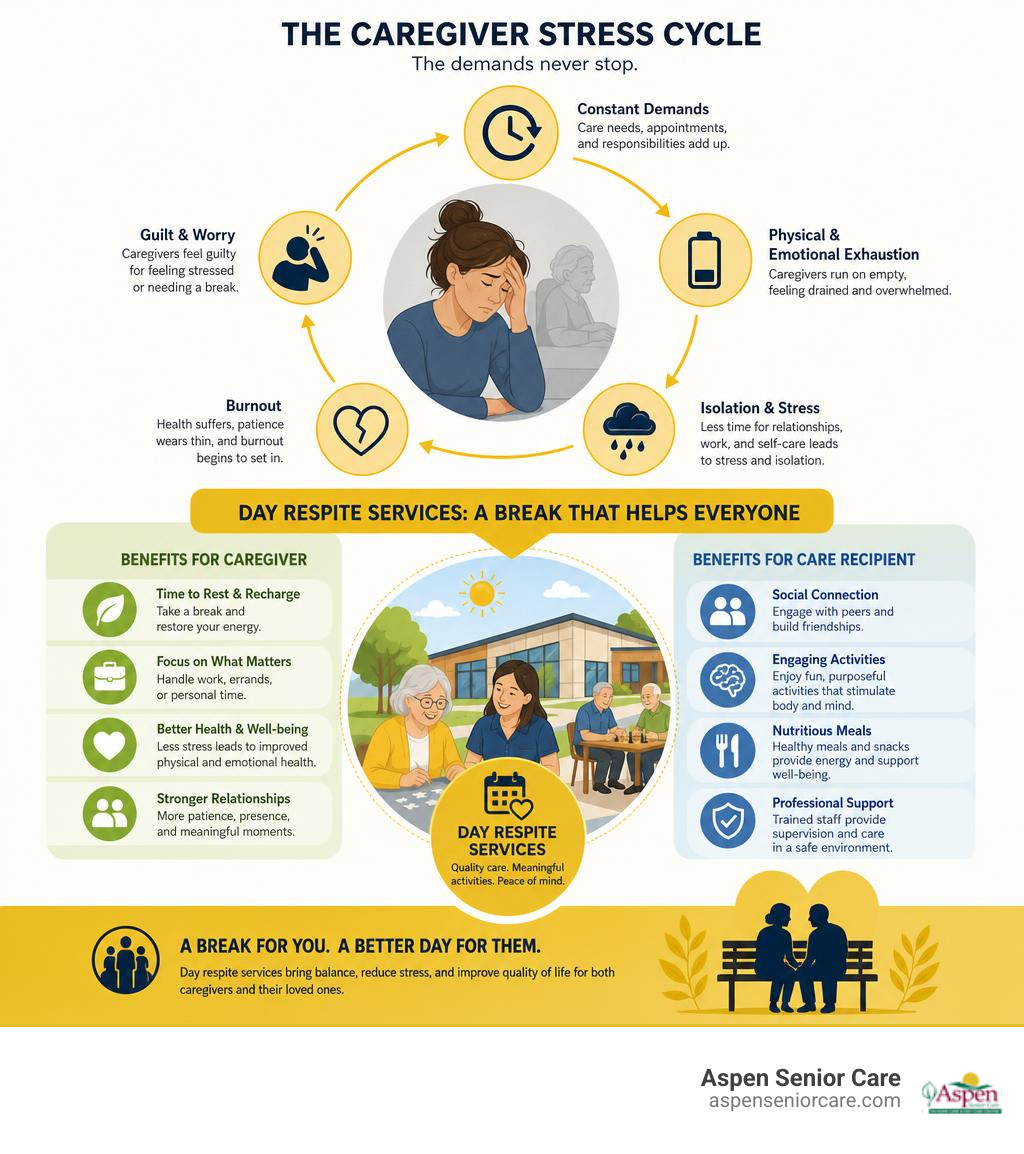
It is common for family caregivers to feel hesitant about using respite care. You might feel like you are "giving up" or that no one else can care for your loved one the way you do. However, research and real-world experience show that day respite provides immense benefits to both the caregiver and the care recipient:
Key Benefits for the Caregiver:
Decreases Burnout: Gives you a consistent, reliable break to rest, recharge, and focus on your own mental and physical well-being.
Sustains Employment: Allows spouses or adult children to continue working their normal daytime jobs.
Reduces Stress: Knowing your loved one is in a safe, professional setting relieves constant worry and anxiety.
Key Benefits for the Care Recipient:
Reduces Social Isolation: Fosters meaningful relationships and peer connections in a warm, friendly environment.
Maintains Independence: Helps seniors stay active and physically engaged, which can delay the need for long-term residential care.
Provides Purpose: Engaging daily routines and seasonal events give participants something exciting to look forward to each week.
Costs, Funding, and Insurance Options
The cost of respite care varies depending on the type of service and where it is provided. However, day respite services are consistently the most affordable professional care option.
According to national median care data:
Adult Day Health Care: ~$100 per day
Assisted Living Community Respite: ~$173 per day
In-Home Care Respite: ~$264 per day
Skilled Nursing Facility Respite: ~$305 per day
To help cover these costs, families have several funding and insurance options:
Private Pay: Many families pay out-of-pocket using personal savings or long-term care insurance policies.
Medicaid Waivers: In Utah, Medicaid offers home and community-based waiver programs that can cover up to 100% of the cost of approved adult day care services.
VA Benefits: Enrolled veterans who meet clinical criteria can access adult day health care and home health aide services through the VA.
Medicare: While standard Medicare does not cover adult day care, it will cover up to five consecutive days of inpatient respite care for individuals enrolled in hospice.
If you are looking for local pricing and resources in the Utah County area, you can Locate 5 Reliable Senior Respite Care Services in Provo, Utah to compare options near you.
Other local options and community resources can be found through regional networks, such as volunteer projects on Respite Care in Lehi - JustServe or directory searches on Respite Care Near Me in American Fork, UT | Temporary Care Support .
How to Choose and Prepare for a Day Respite Program
Choosing the right program is all about finding a place where your loved one feels safe, valued, and comfortable. When touring local providers, make sure to ask about:
Licensing and Credentials: Ensure the program meets state regulations and has qualified staff.
Staff-to-Client Ratios: Ask how many staff members are available per participant to ensure personalized attention.
Staff Training: Verify that the team has specific training in dementia, first aid, and crisis prevention. You can meet our Adult Day Care Team to see what a professional, family-like care team looks like.
Once you choose a program, preparing for the first day can help ease the transition.
Overcoming Challenges with Day Respite Services
It is completely normal to experience some bumps in the road when starting a new routine.
Caregiver Guilt: Taking care of yourself is a necessary part of taking care of your loved one. "You can't pour from an empty cup."
Transition Anxiety: Your loved one may resist going at first. Be patient, speak positively about the program, and give them a few weeks to adjust to the new routine and build friendships.
Scheduling Routines: Try to keep a consistent schedule (e.g., attending every Tuesday and Thursday) to help your loved one build a sense of familiarity and security.
Frequently Asked Questions about Day Respite
How many days of respite care does Medicare or Medicaid cover?
Medicare will cover up to five consecutive days of respite care in an approved inpatient facility (such as a hospital or skilled nursing facility) for individuals receiving hospice care. Medicaid waiver programs may cover ongoing adult day care services or pay 100% of inpatient respite care for the first five days of an approved admission, depending on your specific state waiver program.
Can veterans access day respite programs?
Yes. Enrolled veterans who meet clinical criteria can access respite care through the VA Geriatrics and Extended Care program. This can include attending an Adult Day Health Care center or having a Home Health Aide come to the home. Eligible veterans can apply using VA Form 10-10EC, and nursing home respite benefits are typically capped at a maximum of 30 days per calendar year.
What should my loved one bring on their first day?
We recommend packing a small tote bag with:
A complete change of clothes.
Daily medications in their original, labeled containers.
Personal care items (such as briefs or specialized hygiene products).
A list of emergency contacts and physician information.
Conclusion
Caring for an aging parent or spouse is a beautiful act of love, but you do not have to do it completely alone. Utilizing day respite services is a proactive, healthy step that protects your well-being while enriching your loved one's daily life.
At Aspen Senior Care, we are proud to serve families throughout Utah County, including Orem, Provo, Lehi, American Fork, Pleasant Grove, Spanish Fork, Alpine, Cedar Hills, Salem, Eagle Mountain, Highland, Lindon, Saratoga Springs, and Payson. Our award-winning, family-like adult day programs and personalized in-home care are designed to provide the specialized dementia support and peace of mind you deserve.
Ready to take a well-deserved breath? Contact Us - Adult Day Care today, or go ahead and Schedule Day Respite Services with Aspen Senior Care to give your loved one a fun new outlet and yourself the break you need.