

Finding a Day Respite Center That Feels Like Home
When Caring for a Parent Feels Overwhelming, a Day Respite Center Can Help
A day respite center gives older adults a safe, social, and supportive place to spend part or all of the day — while their family caregiver gets a much-needed break.
Here's what you need to know at a glance:
What it is: A community-based daytime program where seniors participate in activities, receive meals, and get personal support
Who it's for: Older adults who need help with daily tasks, including those living with dementia, Alzheimer's, Parkinson's, or physical disabilities
How it helps caregivers: Provides scheduled, reliable breaks — from a few hours to a full day — to rest, work, or run errands
How to access it: Through government programs, Medicaid waivers, VA benefits, or private payment
What to expect: Social activities, health services, meals, and in many cases, door-to-door transportation
If you're an adult child in Utah Valley trying to juggle a job, your own family, and the daily demands of caring for an aging parent, you already know how exhausting it gets. The worry is constant. The guilt is real. And the time for yourself? It disappears fast.
Research from the Family Caregiver Alliance shows that roughly 1 in 5 caregivers experiences depression — not because they don't love the person they care for, but because caregiving without any relief is simply unsustainable.
That's exactly the gap a day respite center is designed to fill. It's not just a babysitting service. It's a structured, enriching environment where your parent gets to socialize, stay active, and feel cared for — while you get the breathing room you need to stay well yourself.
This guide will walk you through everything: what these programs offer, how to find a quality one, what it costs, and how to get started.
Understanding the Role of a Day Respite Center
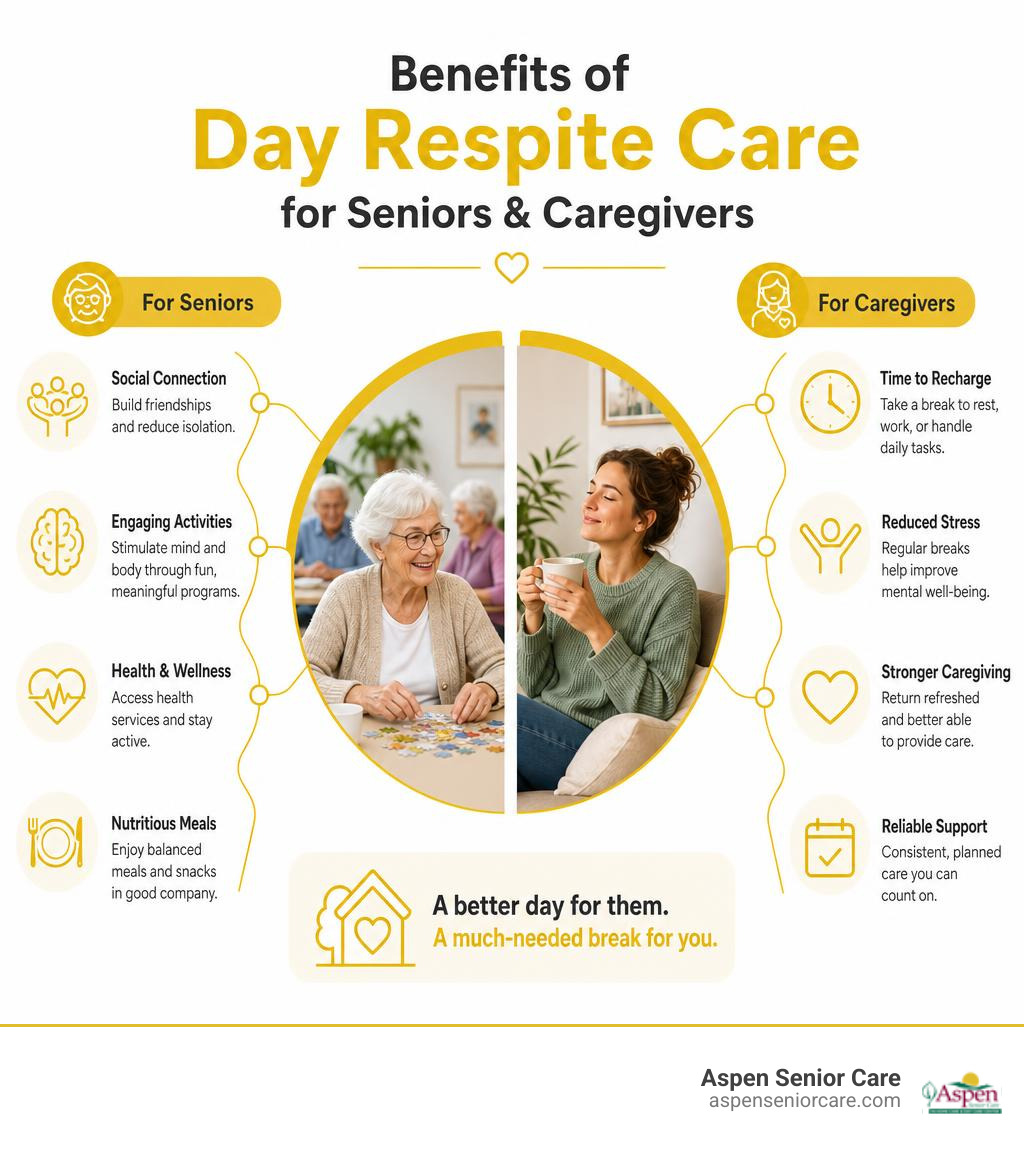
At its core, a day respite center (often referred to as an adult day services program) is designed to serve a dual purpose: providing temporary, structured relief for primary family caregivers while offering a vibrant, health-supporting community for seniors.
When you first begin exploring care options, it is common to feel confused by the terminology. Respite care is a broad umbrella that includes any form of temporary relief. This can range from a professional caregiver coming to your home for a few hours, to a short-term residential stay in a skilled nursing facility, to a community-based adult day center.
Unlike in-home care—where a caregiver works one-on-one with your parent in their home—a day respite center gathers seniors in a lively group environment. This communal setting is highly effective at combating the deep social isolation that many older adults experience. At Aspen Senior Care, we understand that while some seniors thrive with individualized attention at home, others experience a dramatic boost in mood and cognitive function when they have a structured reason to get dressed, leave the house, and interact with peers.
To help you visualize the difference and decide which care model fits your family's current needs, we have compared these two primary non-residential care options below:
Feature Day Respite Center In-Home Respite Care Primary Environment Communal, specialized facility The senior's own home Social Interaction High; group activities, shared meals, and peer friendships Low to moderate; one-on-one companionship Cost Structure Typically lower hourly/daily rates due to shared staff Higher hourly rates due to dedicated one-on-one staffing Physical Activity Structured group exercises, dancing, and active games Individualized assistance with walks or home exercises Routine & Structure Scheduled daily program with a clear start and end time Highly flexible; scheduled around the family's specific hours Best Suited For Seniors who benefit from socialization and structured routines Seniors with highly limited mobility or a preference for solitude
Through our specialized Adult Day Care Services, we have seen how a balanced combination of both models can provide the ultimate support system for families throughout Utah County.
Operating Hours, Transportation, and Accessibility Features
Most day respite centers are designed to mirror standard working hours, typically operating Monday through Friday from early morning (around 7:30 AM or 8:00 AM) to late afternoon (around 5:00 PM or 6:00 PM). This scheduling allows family caregivers to maintain employment, attend to their own medical appointments, or take a dedicated block of time for self-care.
Accessibility is a top priority for these facilities. High-quality centers feature fully wheelchair-accessible layouts, roll-in restrooms, specialized transfer aids (such as Sara Stedy devices), and safety handrails throughout.
Of course, getting your loved one to and from a center can sometimes be the hardest part of the day. To solve this, many centers partner with local specialized transit services or offer their own wheelchair-accessible vans. For national standards and to find certified transportation options near you, resources like the National Adult Day Services Association can help you navigate local transport networks.
The Dual Benefits of Day Respite: Supporting Caregivers and Seniors
The magic of a quality day respite center lies in its ability to simultaneously uplift two generations. For the senior, it represents a wider world. Aging in place is a beautiful goal, but when it results in staring at the same four walls every day, it can lead to cognitive decline and depression. A day center reintroduces a sense of purpose.

When seniors attend a day program, they aren't just "being watched." They are playing board games, sharing stories over hot meals, participating in music therapy, and forming genuine friendships. This active engagement stimulates the brain, improves physical coordination, and often leads to better sleep patterns at home—which, in turn, helps the family caregiver sleep better too.
Preventing Caregiver Burnout and Restoring Well-Being
It is impossible to pour from an empty cup. Yet, millions of family caregivers try to do exactly that every single day. The physical exhaustion of transferring a parent, managing medications, and handling household chores—combined with the emotional weight of watching a loved one decline—creates a perfect storm for chronic stress.
According to the Family Caregiver Alliance, the high rate of caregiver depression is directly linked to social isolation and a lack of regular breaks. Utilizing a day respite program is not an admission of defeat or a sign that you are "giving up" on your parent. Rather, it is a healthy, responsible boundary.
By taking regular, scheduled breaks, you can return to your caregiving role with renewed patience, energy, and love. Whether you use those hours to catch up on work, go to the gym, or simply read a book in a quiet house, that time is essential for preserving your own mental health.
Social and Therapeutic Activities at a Day Respite Center
A typical day at a high-quality center is carefully structured to keep minds sharp and bodies moving. Activities are tailored to the physical and cognitive abilities of the participants and often include:
Gentle Physical Exercise: Chair yoga, balloon volleyball, and balance classes designed to reduce fall risks.
Cognitive Stimulation: Trivia, spelling bees, word games, and historical discussions.
Creative Arts: Watercolor painting, clay modeling, and seasonal crafting.
Music and Entertainment: Live musical performances, sing-alongs, and music memory games.
Nutritious Dining: Shared breakfast, hot lunches, and afternoon snacks that accommodate specific dietary restrictions.
Behind these activities is a dedicated Adult Day Care Team trained to encourage participation without causing frustration, ensuring every senior feels successful and valued.
Specialized Care: Dementia, Alzheimer's, and Physical Disabilities
Caring for an individual with cognitive decline or physical disabilities requires specialized knowledge, patience, and environmental modifications. A general senior center may not have the security or staff training necessary to keep a senior with moderate-to-advanced dementia safe. Specialized day respite centers, however, are specifically built to handle these challenges.

For seniors experiencing cognitive decline, a structured routine is incredibly comforting. The predictable schedule of a day center helps reduce the anxiety, confusion, and "sundowning" behaviors often associated with Alzheimer's and other forms of dementia.
Specialized Dementia and Disability Support at a Day Respite Center
At Aspen Senior Care, we focus heavily on creating a safe haven for seniors navigating neurological changes. Our programs are designed to meet the unique needs of those requiring Adult Day Care for Dementia, including specialized Adult Day Care Alzheimer support and tailored programs for Adult Day Care for Parkinsons.
These specialized programs employ staff members who are deeply trained in validation therapy, behavioral management, and gentle redirection. The physical environment is secure—featuring coded entry and exit doors to prevent wandering—while remaining warm, bright, and residential in feel.
Innovative Models and Therapeutic Technologies
The field of adult day care has evolved significantly, incorporating research-backed therapeutic models to improve the quality of life for participants. Some of these innovative approaches include:
Sensory and Doll Therapy: Utilizing realistic, weighted dolls or plush therapy animals to spark nurturing instincts, reduce agitation, and provide comfort to those in advanced stages of dementia.
Virtual Reality (VR) and Memory Stimulation: Using specialized VR systems (like "WayBack VR") to display historical films and familiar landscapes, triggering long-term memories and conversations.
Interactive Light Systems: Utilizing overhead projection systems (such as OMI interactive LED lights) that project colorful, responsive games onto tables or floors, encouraging physical movement and social play.
Sensory Gardens: Secure outdoor spaces with raised flower beds, wind chimes, and textured plants designed to stimulate the senses safely.
To learn more about the science behind these therapies, you can explore resources provided by the National Institute on Aging.
How to Choose a Quality Day Respite Program
Finding the right day respite center in Utah Valley requires a bit of research and a personal visit. You want to find a place that doesn't just look clean, but also feels warm, inviting, and full of life from the moment you walk through the door.
When researching local options, look for centers that are fully licensed by the state and have a clear, transparent philosophy of care. It is highly recommended to schedule a tour during active program hours so you can observe the staff interacting with participants. Are the caregivers making eye contact, smiling, and speaking with respect? Are the seniors actively engaged, or are they mostly sitting in front of a television?
Key Questions to Ask During Your Visit
To help you evaluate a facility, bring this checklist of questions to ask the program director during your visit:
What is your staff-to-participant ratio? (For general care, a ratio of 1:8 or 1:10 is common; for specialized dementia care, look for closer to 1:4 or 1:6).
What specific credentials and training do your staff members hold? (Ask about CPR, first aid, and specialized dementia care training).
How do you handle medical emergencies or sudden behavioral changes?
Can you accommodate specific physical or dietary needs? (e.g., pureed diets, wheelchair transfers, or assistance with toileting).
Do you offer a free trial or "taster" session? (A trial morning or afternoon is the best way to see how your parent responds to the environment).
If you are looking for local services and community support in Utah County, you can check out resources like Respite Care in Lehi - JustServe to explore volunteer and community-led respite initiatives. For specialized state resources, you can also research the Utah State Development Center | Utah Department of Health and ... or check the quality ratings of local care facilities via the Spanish Fork Rehabilitation and Nursing - Medicare portal. Additionally, organizations like Orem » RISE Services, Inc. Utah and the Mission at Alpine Rehabilitation Center offer excellent insights into the local continuum of care.
For regulatory guidelines and local licensing standards, consult the Utah Department of Health and Human Services.
Costs, Funding, and Eligibility for Day Respite Care
One of the most appealing aspects of a day respite center is its affordability compared to other senior care options. While private duty home care and assisted living facilities are priced around one-on-one labor or residential overhead, day centers share staffing costs among multiple participants, making the daily rate significantly lower.
Typically, day programs charge an hourly or flat daily rate. This rate generally includes all activities, snacks, a hot lunch, and basic personal care assistance.
To help cover these costs, several financial assistance options are available for Utah families:
Medicaid Waivers: Utah’s Home and Community-Based Services (HCBS) waivers can often be used to fund adult day care for qualifying low-income seniors.
Veterans Benefits: Veterans or their surviving spouses may qualify for the VA's Aid and Attendance benefit, or direct Adult Day Health Care services funded through the VA health system.
Long-Term Care Insurance: Many private policies cover adult day services, though you should verify the specific terms of your policy beforehand.
Sliding Scale Fees: Some non-profit or community-based centers offer fees based on household income.
You can research national coverage rules and compare local provider fees on Medicare.gov.
Eligibility Requirements and How to Apply
To qualify for subsidized day respite services, seniors generally must meet certain physical or cognitive criteria, demonstrating a need for assistance with activities of daily living (ADLs) or requiring supervision due to cognitive impairment.
To start the application process for government-funded programs, contact the Utah Division of Aging and Adult Services or your local Area Agency on Aging (AAA). A case manager will conduct an in-home assessment to determine your parent's care needs and guide you through the available funding pathways.
Frequently Asked Questions about Day Respite
How does a day respite program differ from in-home respite care?
Day respite programs take place in a secure, community-based facility where seniors participate in group activities, share meals, and socialize with peers. In-home respite care involves a professional caregiver coming directly to the senior’s home to provide one-on-one companionship and personal care. Day programs are highly structured and ideal for socialization, while in-home care offers maximum flexibility and personalized, private attention.
Can individuals with advanced dementia or physical disabilities attend?
Yes. Specialized day respite centers are specifically designed, secured, and staffed to support individuals with advanced dementia, Alzheimer's, and significant physical limitations. These facilities feature secure perimeters to prevent wandering, accessible restrooms with specialized transfer equipment, and a high staff-to-participant ratio to manage behavioral symptoms and personal care needs safely.
Is transportation typically provided by day respite facilities?
Many day respite centers offer door-to-door transportation services using wheelchair-accessible vans, either directly or through partnerships with local senior transit programs. Availability and service areas vary, so it is important to ask about transport options, schedules, and any additional fees during your initial inquiry.
Conclusion
Finding a day respite center that feels like home is one of the greatest gifts you can give to both your aging parent and yourself. It provides your loved one with a vibrant, supportive community where they can thrive, while giving you the peace of mind and rest you need to be the best caregiver you can be.
At Aspen Senior Care, we are dedicated to supporting families throughout Utah Valley—including Orem, Provo, Lehi, American Fork, Pleasant Grove, Spanish Fork, Alpine, and the surrounding areas. Whether you need the flexible support of an adult day program or specialized in-home caregiving, our team is here to walk beside you every step of the way.
Ready to take a breath and explore your options? We would love to welcome you and your parent for a visit. Contact Us Adult Day Care today to ask questions, schedule a tour, or arrange a trial session.