
Dementia Caregiving Is Hard: Here Is How Respite Care Protects Your Health
Respite Care for Dementia Carers Protects Your Health
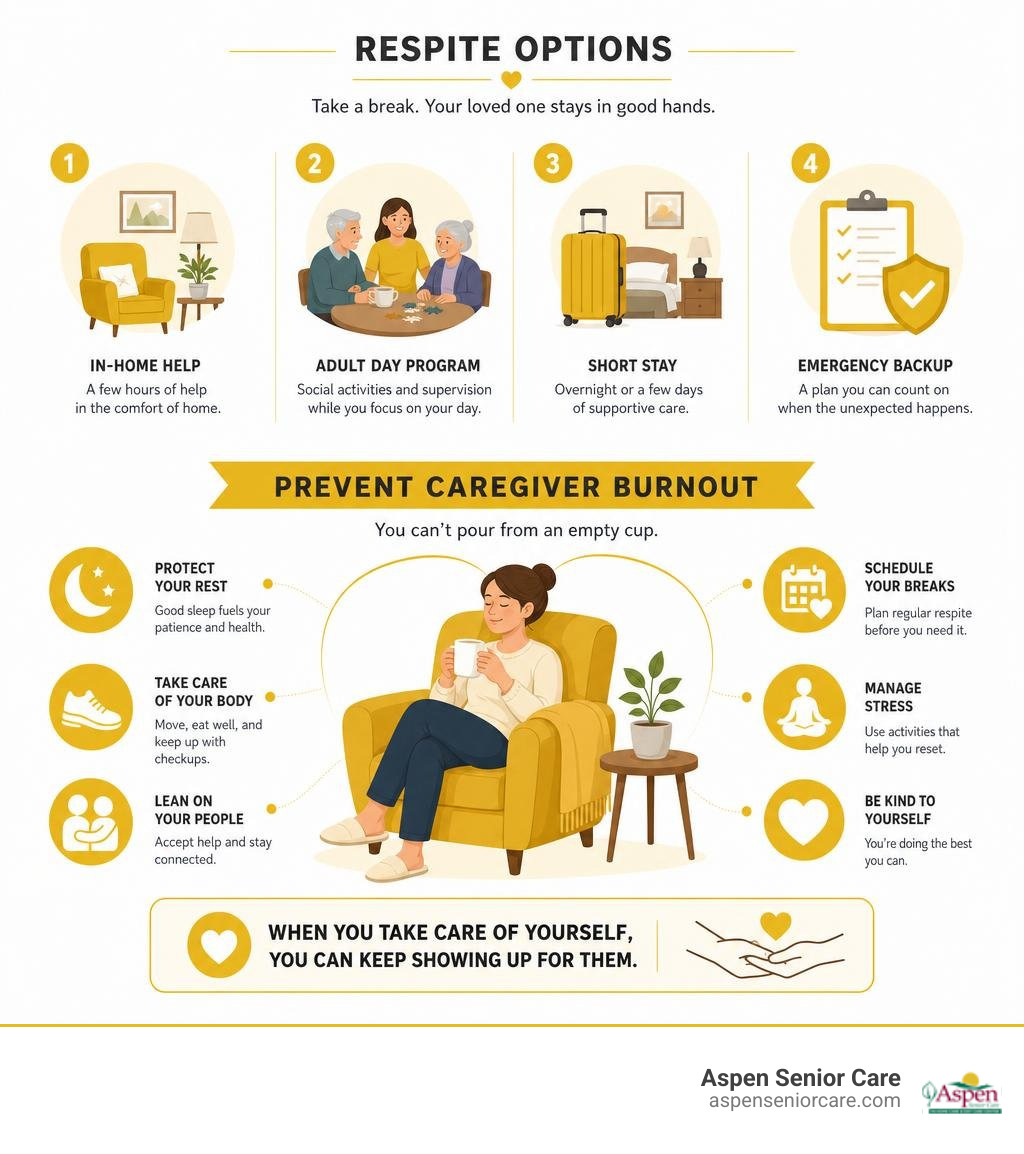
Respite care for dementia carers is planned, short-term support that lets someone else safely care for your parent while you rest, work, attend appointments, or handle life outside caregiving. Start before you reach a breaking point: choose a few hours of in-home help, an adult day program, or a short overnight stay, then schedule it regularly.
For many Utah Valley families, caregiving can mean managing meals, medications, safety concerns, and dementia-related changes alongside a job and family life. That is a lot for one person to carry.
A break is not giving up or stepping away from your loved one. It is a practical way to protect your sleep, health, patience, and ability to keep caregiving sustainable. It can also give the person with dementia safe social time, structured activities, and support from another trained caregiver.
This guide explains how to find the right respite option, prepare your parent for the change, build an emergency backup plan, and work through common concerns about cost, guilt, and trust.
Understanding Respite Care for Dementia Carers and Why It Matters
Caregiving for a parent or spouse with progressive memory loss requires constant vigilance. Whether managing middle-stage cognitive decline or round-the-clock safety concerns, the cognitive demands on family members accumulate rapidly. Respite care acts as an intentional bridge, providing temporary relief while maintaining complete continuity of care.
Without planned breaks, the daily tasks of cueing meals, preventing wandering, and offering reassurance can easily deplete your physical and emotional reserves. Implementing professional care support early ensures that your loved one remains supported in an environment tailored to their cognitive stage while you step away.
Care Setting | Format | Primary Focus | Typical National Median Cost |
|---|---|---|---|
In-Home Care | Hourly / Shift-based | 1-on-1 support in familiar home surroundings | ~$34/hour ($24,733/month for 24/7 care) |
Adult Day Program | Daytime hours | Structured socialization, meals, and cognitive activities | ~$95/day ($2,058/month) |
Residential Stays | Short-term overnight (up to 30 days) | 24/7 supervision and secure memory environment | ~$275/day ($8,250/month) |
Core Health Benefits of Respite Care for Dementia Carers
When you are the sole provider of care, chronic exhaustion sets in silently. Sleep fragmentation occurs as you listen for footsteps down the hall at 2:00 AM, elevating systemic cortisol and weakening immune function. Over time, physical exhaustion impairs the patience and emotional clarity needed for compassionate dementia support.
Securing regular relief directly restores your restorative sleep cycles, lowers cardiovascular strain, and preserves the personal relationships that anchor your life. The broader impact on family caregivers is highlighted by Dementia Carers Respite data on family caregiver reliance, which shows that 45% of people living with dementia rely entirely on unpaid family or friends without local government assistance. Taking planned breaks prevents isolation and protects the health of the caregiver over the long term.
Recognizing Signs of Caregiver Burnout and Timing Respite
Burnout rarely happens overnight; it progresses along a predictable continuum:
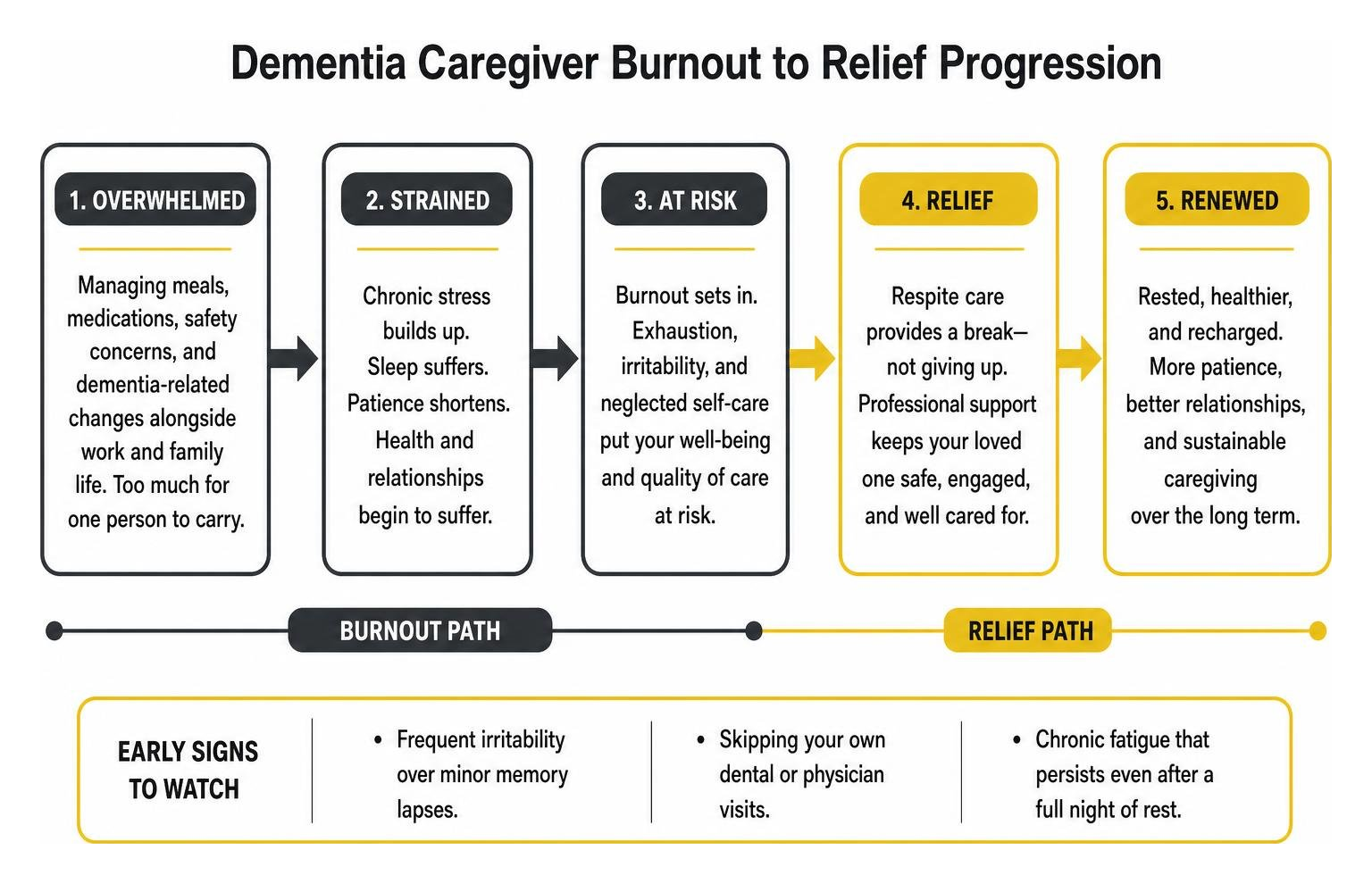
Watch for these early indicators that it is time to arrange support:
Frequent bouts of irritability or a shortening temper over minor memory lapses.
Skipping your own preventative dental or physician visits.
Chronic fatigue that persists even after a full night of rest.
Feelings of resentment followed quickly by intense caregiver guilt.
Social withdrawal from close friends and family members.
Waiting for a physical health crisis or an emotional breakdown forces reactive, stressful decisions. Establishing proactive care arrangements preserves your wellbeing before exhaustion takes over.
Exploring the Main Types of Dementia Respite Services
Selecting the right care setting depends on your family's daily schedule, your loved one's specific stage of memory loss, and their personal comfort with new environments.
In-Home Support and Cognitive Engagement
In-home respite keeps your loved one in their familiar living space while a trained professional steps in. Care professionals can assist with daily routines, prepare nutritious meals, provide gentle medication reminders, and offer personalized mental stimulation.
For older adults who become anxious outside their familiar environment, in-home cognitive support provides customized one-on-one activities such as life-story conversations, puzzles, and gentle sensory exercises. Scheduling flexible, reliable respite care for a few hours each week allows you to run errands, exercise, or rest while knowing your family member is safe.
Day Centers and Group Memory Programs
Day programs provide structured cognitive engagement, supervised dining, and therapeutic recreational activities in a secure setting. These programs give older adults an opportunity to connect with peers and enjoy creative arts or gentle movement.
Enrolling in adult day programs for dementia offers a predictable daytime routine that stimulates cognitive function and encourages better sleep at night. Families seeking tailored daily activities often benefit from specialized dementia daycare, which incorporates low staff-to-participant ratios. Exploring a welcoming community senior day center gives your parent meaningful social engagement while giving you daytime hours to focus on work or personal tasks.
Short-Term Residential Stays and Overnight Care
When a primary caregiver faces an out-of-town commitment, a scheduled surgery, or acute physical exhaustion, residential stays provide around-the-clock peace of mind. Memory care communities offer fully furnished accommodations with professional care teams on duty 24/7.
These short-term stays deliver structured assistance for individuals with advanced care needs, nighttime wakefulness, or wandering tendencies. For families requiring continuous support at home, arranging 24-hour dementia care ensures that qualified professionals manage nighttime safety and complex behavioral needs directly in the home.
Practical Strategies to Coordinate, Prepare, and Plan Care

Transitioning a loved one with dementia to a new caregiver or program requires thoughtful preparation. A clear, coordinated plan reduces anxiety for both you and your loved one.
Steps to Ease Your Loved One's Adjustment
Use reassuring, positive phrasing: Frame the service positively. Instead of saying, "I need a break from caring for you," try, "A friend is coming over to help with lunch while I step out for an errand," or describe an adult day program as a "social club" or "community center."
Pack familiar comfort items: If using an outside day center or short-term residential stay, send along photo albums, a favorite cardigan, or familiar music playlists.
Establish a gradual schedule: Start with short 2- to 3-hour visits or a single half-day session. Once your loved one builds trust with the staff or in-home caregiver, expand the schedule.
Create a quick-reference care sheet: Write down daily habits, preferred beverages, favorite conversation topics, and specific phrases that help de-escalate anxiety.
Preparing for Emergency Respite Situations
Caregiving emergencies can happen unexpectedly. A sudden illness or an urgent repair can leave you temporarily unable to provide care.
Pre-screen local agencies: Set up profiles with reputable local providers in advance so services can begin quickly if an emergency occurs.
Assemble a grab-and-go binder: Keep an updated medical summary, insurance details, physician contacts, and a medication administration schedule in an easy-to-find spot.
Designate family backups: Ensure at least two local relatives or trusted neighbors know your loved one's daily routine and have home access.
Review state resources: Consult official state caregiver support resources to learn about local emergency contingency programs and support networks.
Evaluating Future Memory Care Needs Through Respite Stays
Short-term respite stays can also serve as a helpful evaluation period for families considering long-term care options. Observing how your loved one responds to a structured environment, group dining, and 24-hour support gives you valuable insight into their care needs.
Take note of how they tolerate routine transitions, interact with care staff, and adapt to communal spaces. These observations help your family make informed, compassionate decisions about future care arrangements without the stress of an immediate crisis.
Overcoming Obstacles, Costs, and Emotional Barriers

Many family caregivers hesitate to seek help because of guilt, financial worries, or concerns about care quality. Addressing these challenges openly helps you build a reliable support system for your family.
Finding and Funding Respite Care for Dementia Carers
Funding respite care often involves combining family resources with available community and public programs:
Medicaid Home and Community-Based Services (HCBS) Waivers: Eligible seniors may receive state-funded in-home personal care or adult day program coverage.
VA Caregiver Support & Aid and Attendance: Qualified military veterans and surviving spouses can access respite hours, in-home health grants, and adult day support through the Department of Veterans Affairs.
Sliding-Scale and Area Agency on Aging Grants: Many local agencies offer respite vouchers and subsidies under the National Family Caregiver Support Program for caregivers supporting individuals with Alzheimer's or related dementias.
Long-Term Care Insurance: Review existing policies; many include daily respite allowances for qualified in-home care agencies and licensed day centers.
Building Emotional Resilience and Community Support
Caregiver guilt is common, but stepping away to rest is an essential part of providing good care. You cannot pour from an empty cup; taking time to recharge helps you return to caregiving with patience, energy, and focus.
Connecting with peers who understand these challenges provides reassurance and practical advice. Participating in local caregiver support groups allows you to share experiences, learn coping strategies, and reduce feelings of isolation. For more practical advice on managing day-to-day responsibilities, review our comprehensive caregiver support guide.
Frequently Asked Questions About Dementia Respite Care
How long can a person with dementia stay in temporary respite care?
The duration depends on the care model and provider policies. In-home respite can range from a 2-hour visit to full 24-hour coverage. Adult day programs generally run for 4 to 8 hours during standard business hours. Short-term residential stays in memory care communities typically range from a long weekend up to 30 consecutive days, depending on facility availability and state regulations.
Will a person with dementia experience confusion or agitation during respite?
A temporary change in environment or routine can sometimes cause mild, initial disorientation. However, professional dementia caregivers use person-centered techniques to ease this transition. Providing familiar comfort objects, maintaining regular meal and medication times, and sharing your loved one's personal preferences with the care team will help minimize stress and promote comfort.
Does Medicare or private insurance cover dementia respite care?
Standard Medicare does not cover non-medical in-home companion care, adult day programs, or residential respite stays. The sole exception is Medicare Hospice Care, which covers up to five consecutive days of inpatient respite relief when a patient is actively enrolled in end-of-life hospice services. Most non-hospice respite care is paid for out-of-pocket, through long-term care insurance policies, or via state Medicaid waiver programs and VA caregiver benefits.
Conclusion
Caring for someone with dementia is a deeply meaningful journey, but it is not one you have to walk alone. Prioritizing your own physical, mental, and emotional health is one of the most effective ways to ensure your loved one receives consistent, compassionate support.
At Aspen Senior Care, we provide personalized, award-winning care across Utah Valley—including Orem, Provo, Lehi, American Fork, Pleasant Grove, Spanish Fork, and surrounding communities. Whether your family needs an engaging day program or attentive trusted in-home care, our team is here to support you with dependable, family-focused assistance. Reach out to us today to schedule your respite break and give both you and your loved one the support you deserve.