

Adult Day Programs for Dementia Near Me: A Caregiver's Ultimate Lifeline
When You Need a Break — and Your Loved One Needs More Than Home
If you're looking for adult day programs for dementia near me, here's a quick overview of what to expect:
What adult day programs for dementia typically offer:
Feature Details Hours Monday–Friday, roughly 7:30 a.m. to 5:30 p.m. Activities Music, art, exercise, cognitive games, group discussion Services Meals, medication reminders, personal care assistance Cost Approximately $70–$137/day; sliding scale and financial aid often available Payment options Private pay, Medicaid, VA benefits, long-term care insurance Who it's for Adults with Alzheimer's or other dementias who live at home
Caring for a parent with dementia is one of the hardest things a family can face. You love them. You also have a job, kids, and a life that doesn't stop.
That tension is real — and it's exhausting.
Adult day programs exist to help with exactly this. They give your loved one a safe, structured, socially engaging place to spend the day. And they give you the breathing room to work, rest, or simply recharge.
These programs aren't a last resort. They're often the smartest, most affordable option for families who want to keep a parent at home as long as possible — without burning out in the process.
One caregiver put it simply: their parent became more energetic, happier, and more mentally present after just a few weeks of attending a day program. That kind of change is common.
This guide walks you through everything — how these programs work, what they cost, how to find one near you in Utah Valley, and exactly what questions to ask before you enroll.
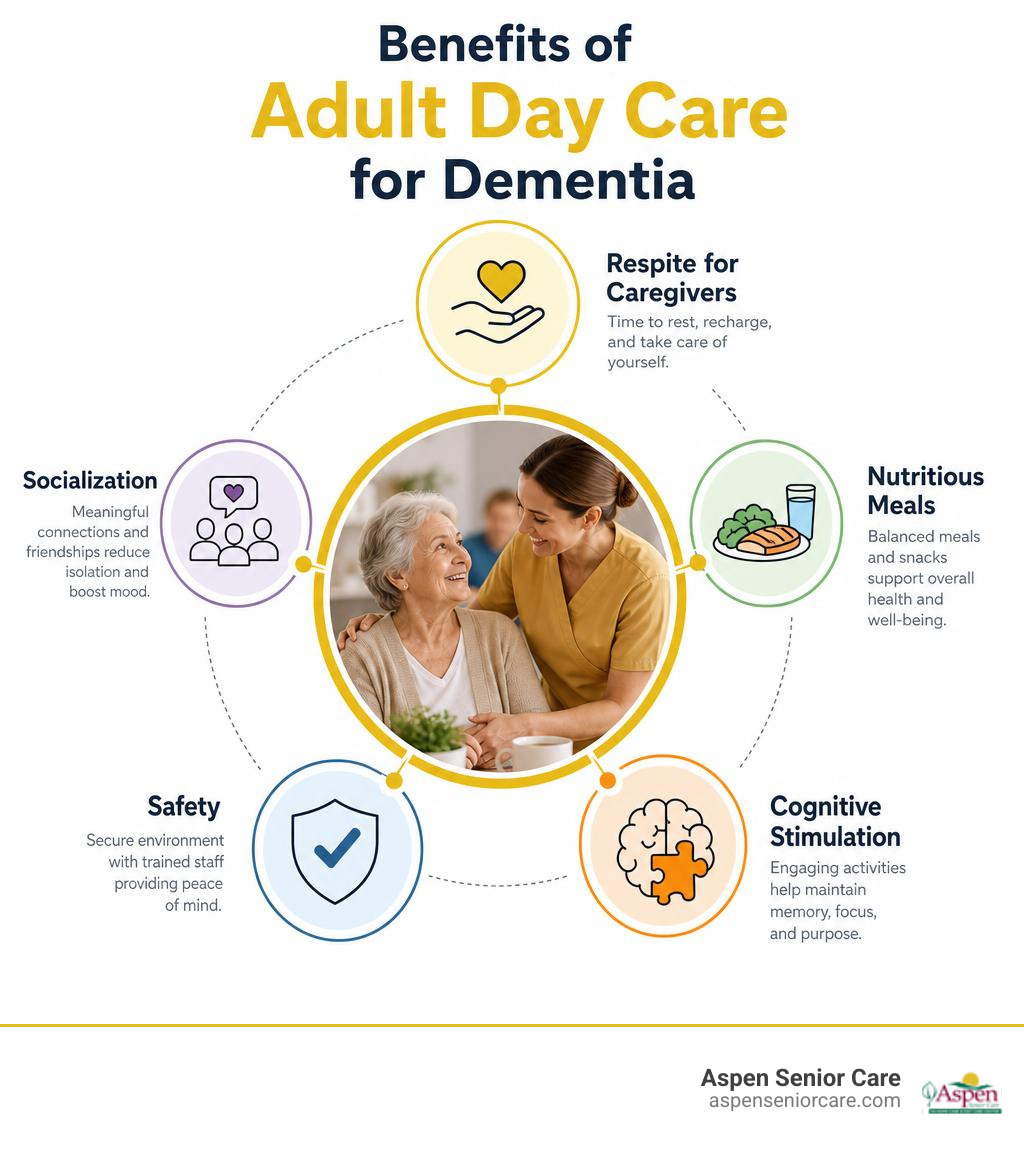
What Are Adult Day Programs for Dementia?
At its core, adult day care is a professional service designed to support older adults who need supervision or companionship during the day. However, when we talk about dementia care, we are looking at a highly specialized branch of senior care options.
Many families reach a point where leaving a loved one with memory loss home alone is no longer safe. Yet, moving them into a full-time residential facility feels too sudden or financially overwhelming. This is where day programs fill the gap, offering a structured environment built entirely around safety, supervision, and specialized engagement.
Unlike general senior centers, which are designed for independent older adults looking for a quick game of bridge or a book club, a dementia-specific day program is secure. It is specifically designed to prevent wandering, manage confusion, and provide a calming routine for those experiencing cognitive decline.
Understanding Specialized Adult Day Programs for Dementia Near Me
For individuals experiencing cognitive decline, a standard environment can quickly become overstimulating or confusing. That is why specialized programs focus heavily on targeted cognitive engagement.
When you look for adult day programs for dementia near me in Utah Valley, you are seeking a program that specializes in Adult Day Care for Dementia. These centers don't just "watch" your loved one; they actively engage them.
Because Dementia affects different parts of the brain over time, activities must be adapted to each individual's abilities. Specialized programs use evidence-based techniques to stimulate memory, encourage physical movement, and foster social connections, helping participants maintain their cognitive strengths for as long as possible.
Adult Day Care vs. In-Home Care and Assisted Living
How do you decide between adult day care, hiring an in-home caregiver, or moving your loved one to an assisted living facility? It usually comes down to three things: socialization, schedule, and cost.
In-Home Care: Having a professional come to your house is incredibly convenient. We offer specialized In-Home Memory Care for families who need one-on-one help right at home. However, while in-home care is excellent for personalized tasks and night-time safety, it doesn't always provide the vibrant, multi-person social environment that a day center can.
Assisted Living and Residential Memory Care: This is a full-time residential solution. While 24-hour Memory Care facilities are necessary when a senior's medical or behavioral needs can no longer be managed at home, they represent a permanent move and a significant financial jump.
Adult Day Care: This option offers the best of both worlds. Your loved one gets to stay in the comfort of their own home every evening and weekend, but they spend their weekdays in an active, social, and fully supervised environment.
From a budget perspective, adult day programs are almost always the most cost-effective long-term care option, costing a fraction of what you would pay for full-time home care or a residential assisted living facility.
Key Services and Activities Offered at Dementia Day Centers
Walking into a high-quality dementia day center feels less like visiting a clinic and more like entering a warm, bustling community center. The goal is to make every day feel purposeful and structured.

Dementia day centers focus on therapeutic activities, personal care, and high-quality nutrition to ensure that participants stay physically healthy, mentally active, and emotionally secure throughout the day.
Cognitive Stimulation and Social Activities
Boredom and isolation are two of the biggest accelerators of cognitive decline. At a specialized center, the daily schedule is packed with activities designed to gently stimulate the brain.
Music Therapy: Music is famously one of the last things affected by dementia. Sing-alongs, listening to classic hits, and even simple dance sessions can unlock memories and bring immense joy to those living with Alzheimer or other forms of dementia.
Art Classes: Creative expression through painting, clay, or simple crafts allows seniors to express themselves without relying on complex language skills.
Intergenerational Programs: Many forward-thinking centers incorporate opportunities for seniors to interact with younger generations, which has been shown to boost mood and bring a sense of youthful energy to the room.
Reminiscing Groups: Guided discussions using old photos, historical events, or vintage items help seniors tap into long-term memories and share stories with their peers.
Specialized Adult Day Care Alzheimer programs ensure that these activities are never frustrating. If a participant gets tired or overwhelmed, staff are trained to gently redirect them to a quiet space or a simpler task.
Health Monitoring and Personal Care Services
Beyond fun activities, day centers provide vital health and personal care support. This ensures your loved one stays clean, comfortable, and healthy.
Medication Reminders: Staff ensure that participants take their scheduled medications on time.
ADL Assistance: Assistance with Activities of Daily Living (ADLs) — such as eating, walking, and using the restroom — is provided with the utmost dignity and respect.
Incontinence Care: Managing incontinence can be highly stressful for family caregivers. Day centers have trained staff and private facilities to handle these needs discreetly.
By utilizing professional Adult Day Care Services, families can rest easy knowing their loved one's physical and medical needs are being monitored by compassionate experts.
The Benefits of Adult Day Programs for Dementia Near Me
The positive impact of a great day program ripples across the entire family. It is a rare win-win in caregiving: the participant's life gets richer, and the caregiver's life gets more manageable.
Enhancing Quality of Life for Participants
When a senior with dementia stays home all day, they often slip into a routine of watching television, napping, and feeling increasingly isolated.
In contrast, attending a day program encourages regular physical exercise, active social engagement, and consistent mental stimulation. This level of activity does more than just pass the time; it helps maintain cognitive health, improves sleep quality at night, and significantly reduces the depression and anxiety that so often accompany memory loss.
When you enroll your loved one in a premier local option like the Aspen Senior Day Center – Senior Day Care At Its Best! - Provo, you are giving them back a sense of community, belonging, and daily purpose.
Essential Respite Care and Support for Family Caregivers
Caregiver burnout is a serious health crisis. Providing 24/7 care for someone with dementia can lead to chronic stress, physical exhaustion, and clinical depression.
Respite care is not a luxury; it is a necessity. Having a guaranteed block of hours during the week where you do not have to worry about your loved one's safety allows you to:
Keep your job or catch up on professional tasks.
Attend your own medical appointments.
Spend quality time with your children, spouse, or friends.
Simply rest and take a breath.
Additionally, many centers facilitate Caregiver Support Groups and provide extensive Care Giver Resources to help you navigate the emotional and practical challenges of the dementia journey alongside others who truly understand.
Cost of Care and Financial Assistance Options
One of the first questions families ask is: "How are we going to pay for this?" Understanding the financial landscape is key to sustainable long-term planning.
Average Costs of Dementia Day Programs
Generally, adult day care is the most affordable form of professional senior care. While in-home care agencies and assisted living facilities charge thousands of dollars a month, day programs typically charge a manageable daily or half-day rate.
Daily rates across the industry generally range from $70 to $137 per day, depending on the level of care required and the specific services included (such as specialized meals or transportation assistance). For families mapping out a budget, this makes private pay a highly viable and cost-effective option compared to 24/7 residential care.
Medicaid, VA Benefits, and Scholarships
If private pay is tight, there are several avenues for financial aid and assistance:
Funding Source How It Works for Adult Day Care Private Pay Families pay out-of-pocket. Highly flexible with no waiting lists. Medicaid In Utah, certain Medicaid waiver programs can cover the cost of adult day services for qualifying low-income seniors. VA Benefits Veterans or their surviving spouses may qualify for Aid and Attendance benefits or direct VA-funded adult day care services. Long-Term Care Insurance Many private long-term care policies cover adult day health services. Check your specific policy details. Scholarships / Sliding Scale Some local non-profits and county programs offer needs-based scholarships or sliding-scale fees.
In Utah County, the MAG Senior Help Guide - Adult Day Centers is an incredible local resource provided by the Mountainland Association of Governments. It helps local families find certified centers, navigate Medicaid waivers, and discover county-level assistance programs.
How to Evaluate and Choose the Right Program
Choosing a day program is a deeply personal decision. You need to find a place where your loved one feels safe and comfortable, and where you feel completely confident leaving them.

Key Questions to Ask During a Tour
The best way to evaluate a center is to schedule a tour. Walk through the facility, watch how the staff interacts with the current participants, and ask plenty of questions.
Here are some critical questions to bring with you:
What is your staff-to-participant ratio? (Dementia-specific programs should have a higher ratio to ensure close supervision.)
Is your staff specifically trained in dementia care and behavior management?
How do you ensure participant safety and prevent wandering?
Are people with dementia integrated into general activities, or do you have a separate, specialized memory program?
How do you handle medical emergencies or sudden behavioral changes?
Are meals and snacks included, and can you accommodate specific dietary restrictions?
What is your policy for late pick-ups or last-minute cancellations?
For more answers to common logistical questions, you can also browse our general FAQ page.
How Do I Find the Best Adult Day Programs for Dementia Near Me?
If you live in Utah Valley, you have access to a truly exceptional local resource. The Aspen Senior Day Center: Utah Valley's Only Adult Day Care Center is a state-of-the-art facility located in Provo, serving families throughout the entire county (including Orem, Lehi, American Fork, Spanish Fork, and beyond).
By focusing exclusively on memory care and senior socialization, our day center provides a level of specialized, warm, and family-like care that is unmatched in the region.
Frequently Asked Questions About Adult Day Programs
What should I expect during the first few weeks of attendance?
There is almost always an adjustment period. It is completely normal for a senior with dementia to feel anxious, confused, or resistant during their first few visits.
We recommend giving the transition at least three to four weeks. Building a routine is key. Try to send them on the same days each week so the schedule becomes familiar. Over time, as they make friends with the staff and other participants, the anxiety will fade, and they will begin looking forward to their "club" days.
Are meals and transportation typically provided?
Yes, most high-quality centers provide nutritious meals (usually breakfast, lunch, and afternoon snacks) that are approved by a dietitian. They can also accommodate common dietary restrictions.
While some centers offer direct transportation assistance, others partner with local transit services (such as Utah Transit Authority's paratransit services or county programs) to help transport seniors safely to and from the facility.
How do I handle a loved one who refuses to go?
This is a very common challenge. If you tell your parent, "I'm taking you to day care," they will likely resist. No senior wants to feel like they are being sent to "childcare."
Instead, try these communication strategies:
Reframe the terminology: Call it a "club," a "senior class," a "volunteer opportunity," or a "community center."
Give them a purpose: Tell them the center needs their help. For example: "They need someone who knows about gardening to help with their plants today," or "They are looking for seniors to help welcome new members."
Go slowly: Accompany them for the first hour of their first couple of visits until they feel secure, then gradually step away.
Conclusion
At Aspen Senior Care, we understand that caring for a loved one with memory loss is a journey you shouldn't have to walk alone. Whether you need the daily support of our specialized Adult Day Care Team at our Provo center, or you prefer personalized, non-medical care in the comfort of your home, we are here to provide a lifeline of support for families throughout Utah Valley.
You don't have to wait until you are completely overwhelmed to ask for help. Taking care of yourself is the first step in taking excellent care of your loved one.
Ready to take a tour or learn more about how we can help?
Contact Us Adult Day Care today to speak with a compassionate care coordinator.
Get More info about adult day care services and discover how we can bring joy, safety, and peace of mind back into your family's daily routine.