

Master Daily Routines with Practical Parkinson's Caregiving Tips
Parkinson's Caregiving Tips for a Safer Daily Routine
Start with a steady routine: give medications at the prescribed times, plan meals and movement around when symptoms are best controlled, and leave time for rest. Clear walking paths, improve lighting, and let your loved one do what they can safely do on their own. Keep a short record of falls, sleep, mood, and changes in movement to share with their care team.
Parkinson's affects more than movement, and needs can change from day to day. If you're balancing work and a parent's care, build in help and breaks for yourself, too. The tips below show how to make daily care safer without taking away independence.

As nearly one million people live with Parkinson’s across the United States, millions of families navigate these complex adjustments every single day. Balancing motor fluctuations alongside non-motor symptoms—which affect up to 90% of individuals and frequently emerge years before a physical tremor—requires a steady, thoughtful approach. By mastering hands-on strategies, families throughout Utah Valley can transform overwhelming days into safe, predictable routines.
Essential Parkinson's Caregiving Tips for Daily Routines

When establishing daily care, consistency serves as the foundation for physical stability and emotional reassurance. In our comprehensive Parkinson's Care Guide 2026, we highlight that maintaining predictable rhythms reduces daily anxiety while preserving a loved one's dignity and personal autonomy.
Establishing Predictable Daily Schedules
Parkinson’s disease impairs the brain's automatic movement pathways, making routine tasks demand conscious mental energy. Establishing regular times for waking, meals, physical therapy, and sleep creates a biological rhythm that eases motor transitions.
Pace activities intentionally. Rushing triggers stress, which invariably worsens tremors and rigidity. Allow twice as much time for dressing and grooming in the morning. When your loved one sets the pace, they retain functional independence without the frustration of feeling hurried.
Mastering Medication Timing and Adherence
Managing Parkinson's medications requires near-military precision. Unlike many common medications where a delay of an hour makes little difference, carbidopa-levodopa formulations require strict timing. A delay of just 30 minutes can cause dopamine levels to plunge, resulting in sudden "off" periods characterized by painful muscle freezing, stiffness, and severe mobility loss.
Implement Visual & Digital Alarms: Use automated smartphone alerts and a multi-compartment weekly pill organizer.
Coordinate Meals Around Dosages: Dietary protein can compete with levodopa absorption in the small intestine. Administer medications at least 30 to 60 minutes before meals, or two hours after, as directed by your physician.
Keep an Emergency Supply: Always keep an organized, two-week emergency medication supply ready in case of unexpected delays or severe weather.
Consult Medical Guidelines: As outlined by Johns Hopkins Medicine on ways to help your loved one, tracking side effects and maintaining an accurate log of "on" and "off" intervals provides critical data for neurologist appointments.
Mobility and Fall Prevention: Parkinson's Caregiving Tips for Home Safety
Postural instability and gait freezing significantly elevate fall risks for seniors living with Parkinson's. Performing proactive room-by-room environmental modifications ensures your home remains a safe haven.
Home Area | Identified Hazard | Adaptive Safety Modification |
|---|---|---|
Hallways & Walkways | Loose throw rugs, clutter, low ambient lighting | Remove rugs, clear pathways, install motion-activated nightlights |
Bathrooms | Slick floor surfaces, low toilet seats, standard tubs | Mount wall-anchored grab bars, install raised toilet seats, use shower chairs |
Living Areas | Soft, deep-cushioned low chairs | Provide firm armchairs with supportive seat heights to assist rising |
Bedrooms | Entangled bed sheets, unstable bed heights | Install bed assist rails, adjust mattress heights for flat-foot floor contact |
Kitchen & Dining | High, hard-to-reach cabinet shelving | Relocate daily dishes to waist-height counters; use non-slip mats |
When assisting with mobility, avoid pulling on arms or shoulders, which can dislocate joints or throw off balance. Instead, use a sturdy gait belt around their waist. If your loved one needs tailored gait training, consider specialized services like in-home PT for neurologic therapy in and near Lehi, Utah to practice transfer mechanics directly within your home environment.
Nutrition, Hydration, and Safe Swallowing Practices
Dysphagia (difficulty swallowing) is common as Parkinson's progresses and represents a primary risk factor for aspiration pneumonia—the leading cause of hospitalization and death in advanced disease.
To ensure mealtime safety:
Maintain Upright Posture: Keep the individual seated at a 90-degree angle during meals and maintain an upright position for at least 30 minutes afterward.
Time Meals with "On" Medication Windows: Serve food when medication is at peak efficacy and throat muscles function at their best.
Utilize Adaptive Kitchenware: Use weighted utensils, plate guards, rocker knives, and two-handled cups to counteract resting tremors.
Modify Food Textures: Coordinate with a speech-language pathologist to assess if pureed foods, soft solids, or thickened liquids are necessary.
Track Hydration: Autonomic dysfunction often causes chronic constipation; ensure steady fluid intake alongside dietary fiber throughout the day.
Navigating Emotional, Cognitive, and Motor Challenges
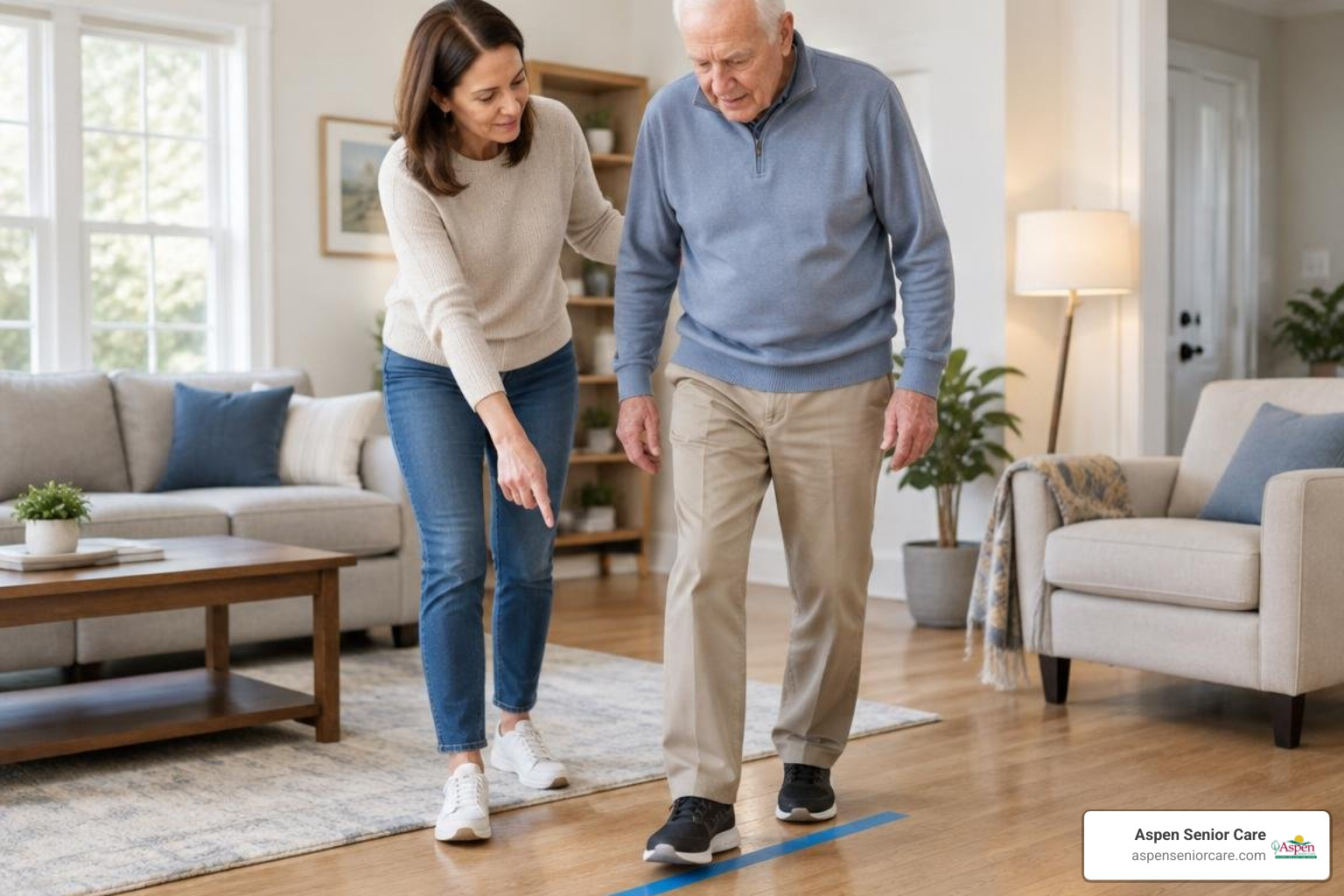
Caring for someone with Parkinson's extends beyond physical tasks. Non-motor symptoms, ranging from speech changes to cognitive shifts, frequently alter family dynamics. Acknowledging ambiguous loss—grieving changes in a loved one's abilities while they are still present—is an essential step in maintaining compassionate emotional connections.
Communication Strategies: Parkinson's Caregiving Tips for Connection
Parkinson’s frequently causes hypophonia (a quiet, softened voice) and facial masking (reduced spontaneous facial expression). It is easy to misinterpret a masked expression as apathy, anger, or depression when it is simply a physical motor symptom.
Position Yourself Face-to-Face: Maintain eye contact in quiet, well-lit spaces to eliminate ambient acoustic distractions.
Encourage Breath Support: Prompt your loved one to take a deep breath before speaking to maximize vocal volume.
Give Ample Time to Respond: Processing and formulating verbal responses takes additional effort. Avoid finishing their sentences or rushing conversations.
Use Close-Ended Questions: When fatigue sets in, rephrase open-ended prompts into simple yes-or-no choices.
Managing Freezing Episodes and Motor Fluctuations
Motor freezing creates a sudden, temporary inability to move the feet, often described as feeling "glued to the floor." These episodes frequently happen when turning, passing through narrow doorways, or approaching crowded spaces.
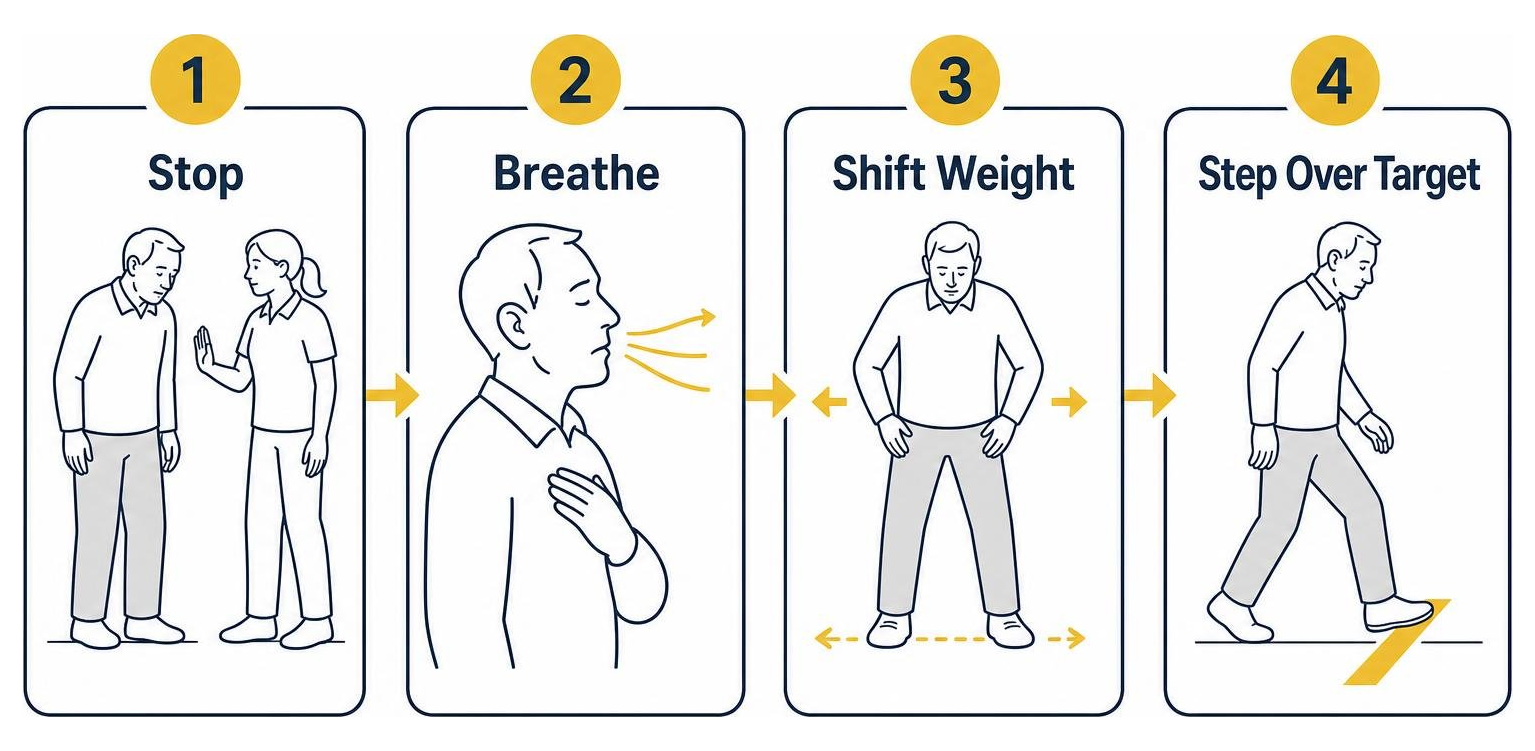
When a freezing episode happens, use these steps:
Stop and Breathe: Do not pull or jerk your loved one forward, which increases fall risk. Encourage them to stop completely and take a slow, calming breath.
Shift Weight: Ask them to gently shift their body weight from side to side.
Use Visual & Auditory Cues: Place strips of brightly colored tape on high-risk thresholds, such as bathroom doorways, and instruct them to "step over the line." Alternatively, use rhythmic counting ("1, 2, 3, step") or a laser pointer cue to restart movement.
Addressing Cognitive Changes, Hallucinations, and Mood Shifts
Cognitive changes affect between 50% and 80% of individuals in later stages of Parkinson's. Depression, anxiety, sleep disturbances (reported by over 75% of individuals), and vivid visual hallucinations can also occur.
When providing specialized cognitive support, keep the following practices in mind:
Avoid Arguing About Hallucinations: If your loved one sees non-threatening figures or objects, acknowledge their feelings calmly without reinforcing or aggressively debating the illusion.
Address Sundowning: Reduce evening confusion by maintaining bright indoor lighting during late afternoons, minimizing noise, and establishing relaxing bedtime rituals.
Exercise Extreme Caution with Medications: Standard typical antipsychotics (such as haloperidol or chlorpromazine) block dopamine receptors and must never be administered to someone with Parkinson's, as they trigger catastrophic motor decline. Always consult a movement disorder specialist before adjusting any psychoactive prescriptions.
Caregiver Wellness and Preventing Burnout
Providing continuous care is emotionally and physically taxing. Studies show that 40% to 70% of Parkinson's care partners experience extreme stress, with approximately half meeting the clinical criteria for depression. Caring for yourself is not a luxury—it is a medical necessity.
Recognizing Caregiver Stress and Seeking Respite Care
Caregiver burden exists along a progressive continuum:
Signs of strain include chronic fatigue unrelated to sleep, irritability, social withdrawal, and neglect of personal medical appointments. Applying the "airplane oxygen mask" rule ensures you remain healthy enough to continue supporting your loved one.
When daily responsibilities become overwhelming, utilizing professional respite care gives you dedicated hours to recharge, run errands, or attend to personal wellness. Discovering practical methods for caring for the care partner protects your mental and physical health over the long term.
Building a Sustainable Support Network
Do not carry the caregiving journey alone. Construct a multi-tiered support circle comprising family members, neighbors, and local community resources.
Engage Specialized Community Day Programs: Enrolling your loved one in an engaging senior day center for Parkinson's provides them with structured social connection and therapeutic activities while offering you reliable daytime respite.
Join Peer Support Communities: Connecting with others who understand the unique aspects of movement disorders in local caregiver support groups reduces isolation and provides practical, crowdsourced solutions.
Delegate Concrete Tasks: Give specific assignments to friends and relatives—such as picking up prescriptions in Orem or dropping off groceries in Provo—rather than fielding vague offers of assistance.
Long-Term Planning Across Parkinson's Disease Stages
Parkinson’s is an evolving condition. Preparing for future stages early—while your loved one can actively participate in decision-making—protects family finances and honors personal wishes.
Legal, Financial, and Advance Care Planning
The average family spends over $10,000 annually on non-medical Parkinson's care, with residential facility care regularly exceeding $9,000 per month. Proactive planning helps avoid crisis-driven choices:
Execute Advance Directives: Finalize durable financial powers of attorney, healthcare proxies, and living wills early.
Document Care Preferences: Discuss choices regarding future feeding tubes, mechanical ventilation, and home-based versus facility care.
Review Financial Eligibility: Investigate long-term care insurance policies, VA benefits, and local Medicaid waiver programs across Utah County to offset in-home caregiving costs.
Adapting Support for Advanced Hoehn and Yahr Stages
As the condition advances into Hoehn and Yahr Stages 4 and 5, individuals experience profound mobility limitations, requiring comprehensive hands-on support for transfers, personal hygiene, and eating.
Reviewing expert guidance on caring for advanced-stage Parkinson's disease helps families understand the evolving clinical needs of late-stage care. Key safety measures include:
Utilizing Mechanical Lifts: Use Hoyer lifts and sliding transfer boards to protect family caregivers from debilitating spinal and shoulder injuries.
Preventing Pressure Injuries: Reposition bedbound individuals at least every two hours, utilizing alternating-pressure mattresses and specialized skin barrier ointments.
Integrating Palliative Care: Understand that palliative care is not limited to end-of-life hospice. Palliative specialists work alongside your regular neurology team at any stage to aggressively manage discomfort, rigidity, and emotional distress.
Frequently Asked Questions About Parkinson's Caregiving
What is the most effective way to help someone during a freezing episode?
The best approach is to remain calm and avoid pulling or pushing the person forward. Instruct them to stop, take a slow breath, and shift their weight from side to side. Use a rhythmic verbal cue (such as counting aloud) or provide a visual target on the floor (like your foot or a piece of tape) for them to step over.
Why is medication timing so critical in Parkinson's disease?
Parkinson's medications, particularly carbidopa-levodopa, work by replenishing dopamine in the brain. Because these medications have a short metabolic half-life, a delay of just 30 minutes can cause dopamine concentrations to drop, triggering sudden motor "off" states, stiffness, and increased fall risks.
How can family caregivers avoid burnout when managing Parkinson's?
Caregivers can prevent burnout by scheduling mandatory weekly breaks, maintaining personal healthcare routines, joining a dedicated support group, and delegating specific logistical tasks to family. Bringing in professional in-home respite aides or utilizing senior day care centers provides essential relief to sustain long-term caregiving capacity.
Conclusion
Providing Parkinson’s care requires patience, continuous education, and practical daily systems. By establishing predictable schedules, optimizing home safety, strictly tracking medication times, and giving yourself permission to rest, you can provide exceptional support while preserving your own health and well-being.
Every stage brings unique challenges and milestones. Learn more about progression markers by exploring our detailed guide to Parkinson's disease stages.
At Aspen Senior Care, we provide award-winning, family-like in-home caregiving and engaging day center programs designed specifically for families facing Parkinson's disease and memory loss throughout Provo, Orem, Lehi, and all of Utah County. Whether you need a few hours of weekly respite or 24/7 personalized care, our team is here to walk beside you. Reach out to our compassionate care team today to create a customized support plan for your loved one.