

Navigating Cognitive Shifts: Practical Support for Parkinson's Caregivers
Start With a Parkinson's Dementia Care Plan for Daily Life
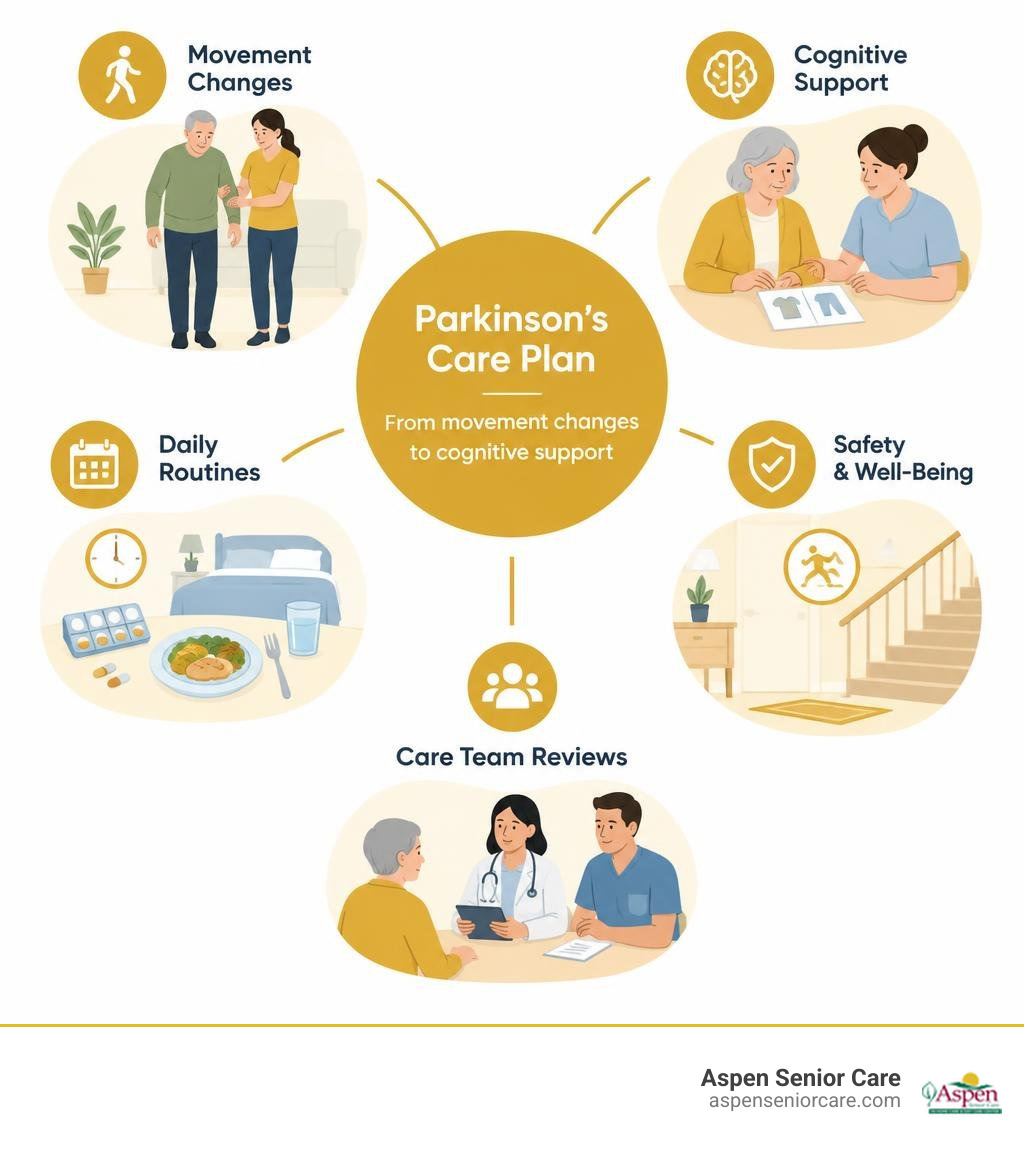
A parkinson's dementia care plan should make each day safer and easier. Set a steady routine for medication, meals, movement, and rest. Use short, one-step directions. Check for falls, swallowing trouble, and changes in thinking or behavior. Write down what you notice, and review the plan with the person's Parkinson's care team as needs change.
Parkinson's can affect thinking as well as movement. Someone who once managed a morning routine may now need help choosing clothes or following its steps. Start with the support they need today, while leaving room for them to do what they still can.
Understanding Parkinson's Disease Dementia vs. Other Cognitive Conditions
When most people think of Parkinson's disease, they picture motor challenges like tremors, muscle stiffness, and shuffling steps. In fact, Parkinson’s disease affects about 2% of individuals aged 65 and older. Over time, however, neurodegenerative shifts can extend beyond physical movement. Research indicates that approximately 24% to 31% of individuals with Parkinson's develop dementia as the condition advances, though around 30% of people with Parkinson's do not develop dementia as part of their disease progression.
Cognitive changes in Parkinson's stem primarily from subcortical brain changes and the spread of alpha-synuclein protein deposits, known as Lewy bodies. While cortical dementias like Alzheimer's target the brain's outer memory-storage centers first, Parkinson's disease dementia (PDD) impacts deeper structures that manage processing speed, attention, and executive function.
Think of an organization where the executive leadership is still present, but the administrative support staff is severely understaffed. The person still possesses their core knowledge and memories, but retrieving that information, sorting through complex choices, or organizing multi-step tasks takes significantly more time and mental energy.
Feature / Condition | Parkinson's Disease Dementia (PDD) | Dementia with Lewy Bodies (DLB) | Alzheimer's Disease |
|---|---|---|---|
Primary Brain Region | Subcortical and frontal pathways | Diffuse cortical and subcortical | Cortical (hippocampus and temporal lobes) |
Onset Timeline | Motor symptoms precede dementia by years | Cognitive decline occurs before or within 1 year of motor signs | Memory loss begins years before any motor impairment |
Primary Cognitive Deficit | Executive dysfunction, slow processing | Fluctuation in attention, visual deficits | Short-term memory loss, encoding failure |
Hallucinations | Common in advanced stages (up to 60%) | Early and vivid visual hallucinations | Rare in early stages; occur in late stages |
Motor Presentation | Rigidity, bradykinesia, resting tremor | Spontaneous parkinsonism, gait instability | Normal motor function until late stages |
Differentiating PDD, Lewy Body Dementia, and Alzheimer's Disease
Clinicians rely on the established "one-year rule" to differentiate between Parkinson's disease dementia and Dementia with Lewy Bodies. If motor impairments—such as resting tremors or rigidity—have been present for at least a year before significant cognitive decline appears, the diagnosis is classified as Parkinson's disease dementia. When cognitive shifts and hallucinations occur first, or emerge alongside motor symptoms within the first twelve months, the condition is categorized as DLB.
Understanding these milestones helps families track the early motor milestones and stages of Parkinson's. Unlike Alzheimer's disease, where new memories cannot be stored (encoding failure), individuals with PDD retain the memory file in their brain—they just experience retrieval delays. With simple cues and patience, they can often access that information. Disrupted cholinergic pathways also make people with PDD particularly prone to visual processing challenges, spatial confusion, and illusions.
Clinical Diagnosis and Multidisciplinary Evaluations
A thorough diagnosis should be coordinated by a movement disorder specialist or neurologist experienced in Parkinson's cognitive profiles. Neuropsychological evaluations assess attention, spatial orientation, and problem-solving to map out current strengths and deficits.
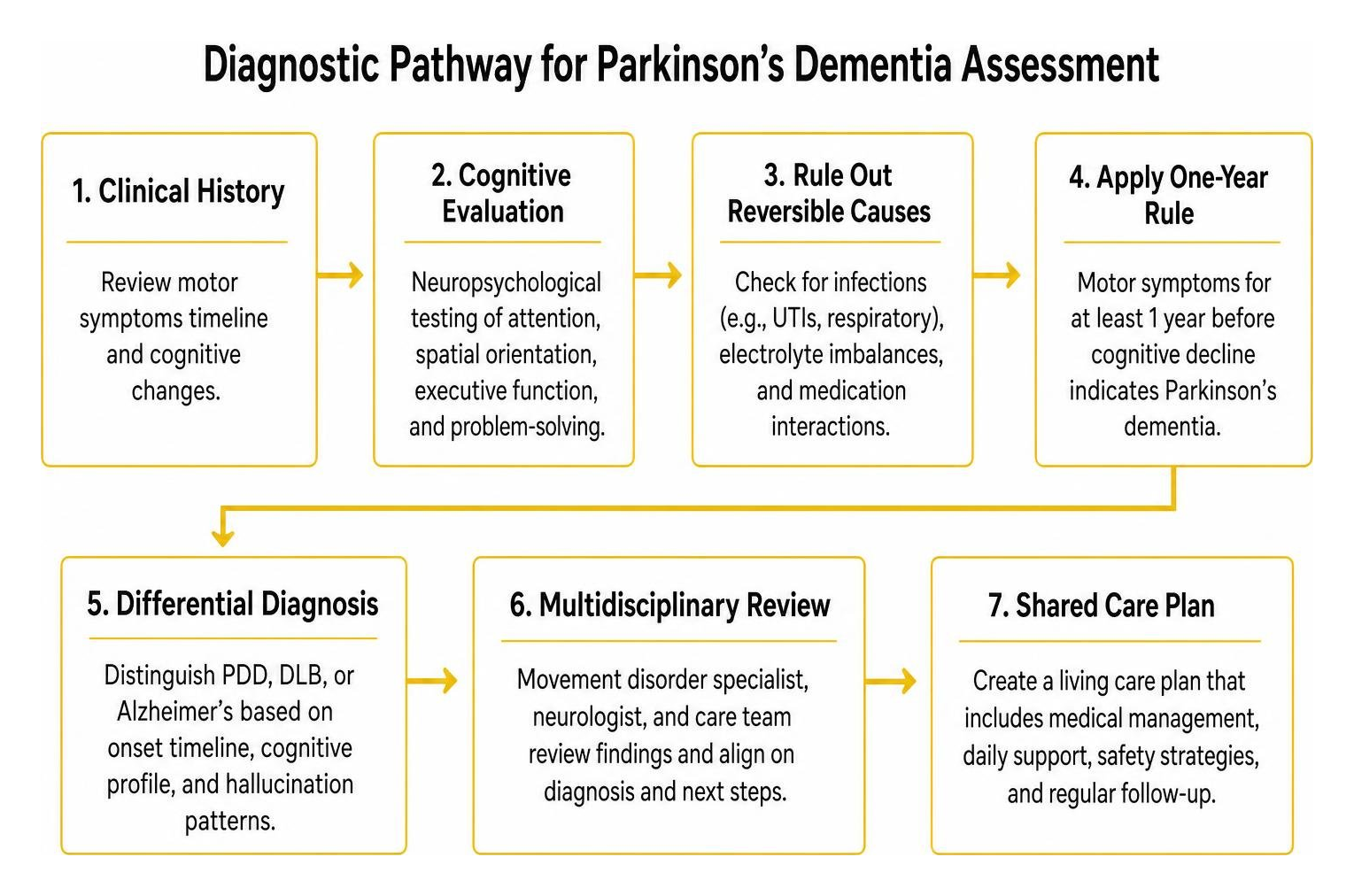
It is crucial to rule out reversible causes of sudden confusion. Acute urinary tract infections (UTIs), respiratory infections, electrolyte imbalances, and medication interactions can trigger delirium, which mimics sudden dementia progression. Families can review the Parkinson's Foundation dementia care guidelines to prepare structured questions for their clinical visits and ensure non-motor symptoms receive proper attention.
Building a Comprehensive Parkinson's Dementia Care Plan
A successful care plan serves as a living roadmap. It coordinates medical schedules, daily physical tasks, environmental adjustments, and emotional needs into a cohesive routine.

A multidisciplinary approach ensures every symptom is managed proactively:
Neurologists and Movement Disorder Specialists: Manage dopamine therapies and cognitive medications.
Speech-Language Pathologists (SLPs): Evaluate swallowing safety, treat speech volume loss, and introduce communication aids.
Occupational Therapists (OTs): Recommend home safety modifications and adaptive equipment for daily living.
Physical Therapists (PTs): Build customized mobility programs to preserve balance, reduce freezing, and prevent falls.
Integrating these specialists early aligns with palliative care considerations in neurodegenerative disorders, helping families proactively manage discomfort, emotional well-being, and future transitions (Steen et al., 2019).
Core Medical Components of a Parkinson's Dementia Care Plan
Medication timing is the cornerstone of daily care. Carbidopa-levodopa must be administered on a strict schedule to prevent unpredictable "off" periods where movement freezes and cognitive anxiety spikes.
Key medical considerations include:
Protein Competition: Dietary protein can compete with levodopa absorption in the small intestine. Administer levodopa 30 minutes before or 60 minutes after protein-rich meals to maintain therapeutic effectiveness. Never crush extended-release formulations.
Swallowing Safety: Dysphagia affects up to 80% of people with Parkinson's, and aspiration pneumonia remains the leading cause of death in Parkinson’s Disease. Regular swallowing screenings protect long-term health.
Medication Sensitivity: Traditional antipsychotics like haloperidol severely block dopamine receptors and can cause catastrophic motor decline. When managing hallucinations, specialists may consider atypical options like quetiapine or pimavanserin.
Caregivers should remain vigilant in identifying advanced Parkinson's symptoms to adjust care interventions before crises occur.
Legal, Financial, and Advance Care Directives
Because cognitive decline gradually impairs decision-making capacity, legal and financial arrangements should be finalized as early as possible.
Durable Power of Attorney (Financial and Healthcare): Appoints trusted family members to handle banking, bill payments, and medical decisions when cognitive slowing intensifies.
Advance Health Care Directives and Living Wills: Documents personal wishes regarding feeding tubes, mechanical ventilation, and hospital transfers.
POLST / MOLST Orders: Translates patient values into actionable medical orders signed by a physician.
Using structured tools like the NHS anticipatory care planning framework ensures that the individual's values guide future care decisions, while safeguarding bank accounts and credit cards against scams.
Adapting Daily Routines and Managing Home Safety
Predictability reduces cognitive fatigue. When daily schedules follow a reliable rhythm, individuals with PDD feel more secure and experience fewer behavioral fluctuations.

When home routines become overwhelming, families in Utah County—including Orem, Provo, and Lehi—often turn to specialized in-home cognitive support to maintain structure while keeping their loved one in familiar surroundings.
Modifying Hygiene, Dressing, and Sleep Routines
Physical stiffness combined with executive planning deficits can make dressing and bathing frustrating. Simplifying these tasks preserves dignity:
Dressing: Replace complex buttons and zippers with magnetic closures, Velcro fasteners, and elastic waistbands. Lay out clothes in the exact order they will be put on to avoid decision fatigue.
Bathing and Grooming: Install sturdy grab bars, use slip-resistant mats, and place a weighted shower chair in the stall. An electric toothbrush removes the need for fine-motor coordination.
Sleep Management: REM Sleep Behavior Disorder (acting out dreams) and nighttime restlessness are common. Use dim nightlights to prevent disorientation, install padded bed rails if rolling is a concern, and keep the bedroom quiet and cool.
Preventing Falls, Freezing Episodes, and Wandering
Gait freezing—feeling as though one's feet are glued to the floor—significantly increases fall risks, especially in narrow doorways or during turns.
Visual and Auditory Cues: Place strips of contrasting, brightly colored tape across thresholds. Stepping "over" a line helps bypass damaged subcortical circuits. Metronomes or rhythmic counting can also reset movement.
Orthostatic Hypotension Management: Blood pressure often drops upon standing, causing dizziness. Encourage drinking 6 to 8 glasses of water daily, have your loved one sit on the edge of the bed for two minutes before standing, and consider compression stockings.
Wandering Safeguards: Add discreet door chime alarms and provide a comfortable medical alert ID bracelet containing emergency contact details.
Addressing Swallowing Difficulties and Nutritional Health
To minimize aspiration risks and maintain adequate nutrition:
Ensure the person sits fully upright at a 90-degree angle during all meals and remains upright for at least 30 minutes afterward.
Introduce the "chin-tuck" technique (tucking the chin toward the chest when swallowing) to protect the airway.
Work with an SLP to evaluate whether texture-modified foods, purees, or thickened liquids are necessary.
Serve smaller, nutrient-dense meals throughout the day to prevent physical fatigue during eating.
Effective Communication and Behavioral Support Techniques
Cognitive slowing (bradyphrenia) and facial masking (hypomimia) can make communication feel challenging. The person may appear disinterested or unresponsive, but their emotional awareness remains intact. Exploring practical Parkinson's caregiving strategies helps bridge these daily communication gaps.
Navigating Speech Changes and Processing Delays
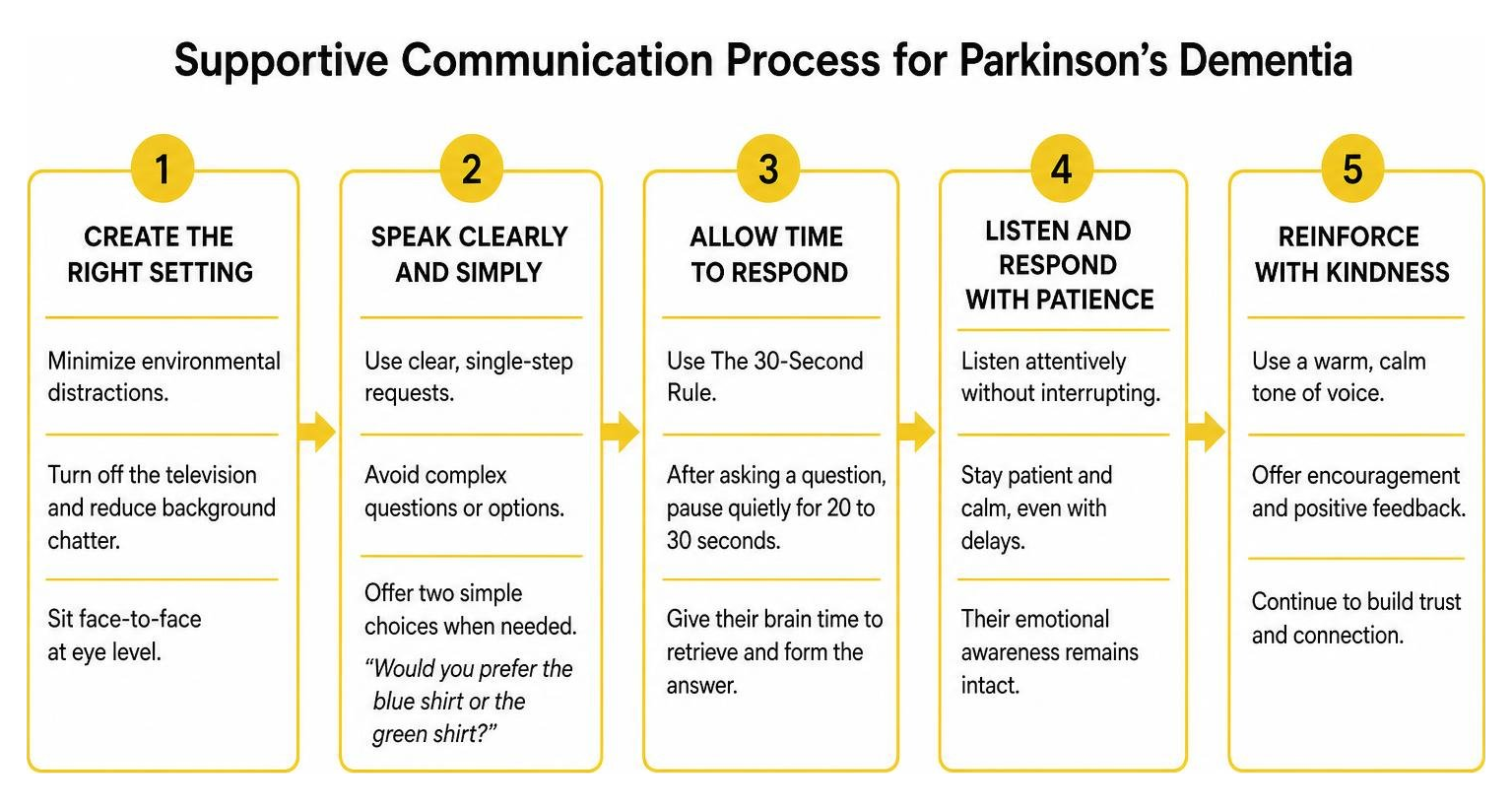
The 30-Second Rule: After asking a question, pause quietly for 20 to 30 seconds before repeating yourself. Give their brain time to retrieve and form the answer.
Clear, Single-Step Requests: Avoid complex options. Instead of asking, "What would you like to wear today?", present two shirts and ask, "Would you prefer the blue shirt or the green shirt?"
Minimize Environmental Distractions: Turn off the television and reduce background chatter before starting a conversation. Sit face-to-face at eye level.
Support Soft Speech: If their voice has become quiet or breathy (hypophonia), portable voice amplifiers can restore clear conversation without causing vocal strain.
Responding to Hallucinations, Delusions, and Mood Changes
Visual hallucinations occur in up to 60% of people living with Parkinson’s Disease, often appearing as shadows, animals, or people in peripheral vision.
Avoid Direct Arguments: Contradicting their reality can increase anxiety and agitation. If the hallucination is not distressing, you can simply acknowledge their feelings without confirming an untruth.
Offer Calm Reassurance: Say, "I know that feels unsettling, but you are safe here with me."
Adjust Lighting: Shadows and glare from windows frequently trigger visual misperceptions. Keep rooms evenly lit and close curtains at dusk to minimize illusions.
Track Patterns: Keep a journal of when hallucinations or mood swings occur. Sudden behavioral shifts often point to an underlying infection, poor sleep, or a medication reaction.
Long-Term Transitions and Caregiver Burnout Prevention
Caring for someone with both motor disability and progressive cognitive decline is deeply demanding. Chronic sleep loss, physical strain, and emotional pre-grief can quickly lead to exhaustion if support systems are not in place.
Integrating Respite and Behavioral Support into a Parkinson's Dementia Care Plan
Caregivers must protect their own physical and emotional health to provide sustainable care. The American Heart Association's "Life's Simple 7" guidelines—focusing on blood pressure, activity, diet, and rest—offer a helpful self-care framework for family caregivers.
Practical ways to integrate respite include:
Day Programs: Enrolling your loved one in tailored Parkinson's day center programs gives them structured cognitive engagement, supervised movement, and social connection while providing caregivers essential daytime rest.
Support Groups: Joining local caregiver support groups allows you to share advice, trade practical tips, and find encouragement from peers walking the same path.
Professional In-Home Care: Scheduling regular non-medical in-home caregiving provides dedicated help with bathing, mobility, and companionship.
Evaluating Changes in Care Needs
As Parkinson's dementia progresses, family members often need to evaluate whether home care remains sustainable or if additional support is required.
Key signs that indicate a need to adjust the care plan include:
Frequent, unassisted falls or physical injuries.
Nighttime wandering that disrupts household safety.
Severe swallowing difficulties that require continuous professional monitoring.
Caregiver physical illness, depression, or profound fatigue.
Holding regular family care conferences and consulting with your movement disorder specialist helps your family make thoughtful adjustments before an emergency forces a decision.
Frequently Asked Questions About Parkinson's Dementia
How does Parkinson's dementia differ from Alzheimer's disease?
Parkinson's dementia primarily affects subcortical brain pathways, causing slowed processing, executive dysfunction, and difficulty with motor planning, while long-term memory storage remains relatively intact. Alzheimer's disease is a cortical dementia that damages the hippocampus first, leading to rapid short-term memory loss and difficulty encoding new information.
What are the earliest warning signs of cognitive decline in Parkinson's?
Early indicators include subtle visual misperceptions (seeing shadows or shapes out of the corner of the eye), difficulty planning multi-step tasks, taking noticeably longer to answer questions, struggling with driving navigation, and reduced verbal problem-solving.
Why is medication timing so critical for individuals with Parkinson's dementia?
Parkinson's medications manage brain dopamine levels within a narrow window. Dosing delays can cause severe motor freezing, painful muscle spasms, and heightened anxiety. Conversely, taking medications incorrectly or too close together can trigger confusion, low blood pressure, or vivid hallucinations.
Conclusion
Caring for a loved one with Parkinson's disease dementia requires balance, practical safety measures, and deep empathy. While progressive cognitive shifts present real challenges, building a proactive care plan preserves independence, dignity, and quality of life for both the individual and their family.
At Aspen Senior Care, we understand these complex motor and cognitive shifts. Serving families throughout Utah Valley—including Orem, Provo, American Fork, Lehi, and Spanish Fork—our award-winning team provides personalized in-home caregiving and specialized day center programs designed to support your family every step of the way.
To learn more about what to expect as the condition advances, explore our detailed guide on understanding the progressive stages of Parkinson's disease and reach out to our team to build your personalized care plan today.