

A Caregiver's Guide to Overnight Respite: What to Expect
When Caregiving Doesn't Stop: Why Overnight Respite Care Matters
Respite care overnight gives family caregivers a real, uninterrupted break — while a trained professional steps in to care for your loved one through the night.
Here's what you need to know quickly:
What it is: Temporary care (one night to several weeks) provided in a residential facility or in your home while you rest
Who it's for: Family caregivers of aging parents, adults with disabilities, or people with dementia who need help with daily tasks, medications, or safety
Where it happens: Senior living communities, dedicated respite facilities, or in the home with an overnight caregiver
How long: Stays typically range from one night up to 30 days per year, depending on the program
What's included: Meals, personal care, medication management, 24/7 supervision, and social activities
Cost: Varies widely; funding options include Medicaid waivers, VA benefits, and long-term care insurance
If you're an adult child in Utah Valley juggling work, your own family, and the daily demands of caring for an aging parent — you already know how exhausting this can be.
More than 60% of family caregivers experience burnout, with real physical consequences: elevated stress hormones, weakened immune function, increased risk of depression, and even higher mortality rates compared to people the same age who aren't caregiving.
That's not a sign of weakness. It's a sign that caregiving is genuinely hard work — and that no one can give endlessly without rest.
Overnight respite care exists precisely for this reason. It's not about stepping away from your responsibilities. It's about making sure you can keep showing up for your loved one — tomorrow, next month, and next year.

What is Overnight Respite Care and How Does It Work?

At its core, overnight respite care is designed to provide temporary relief to primary caregivers by placing their loved ones in the hands of trained professionals during the evening and nighttime hours. This is the time when caregiving can become uniquely challenging. Whether your loved one struggles with sundowning, needs help visiting the bathroom safely in the dark, or simply requires continuous monitoring, overnight care ensures they are safe while you get the restorative sleep you need.
There are two primary ways to access this support:
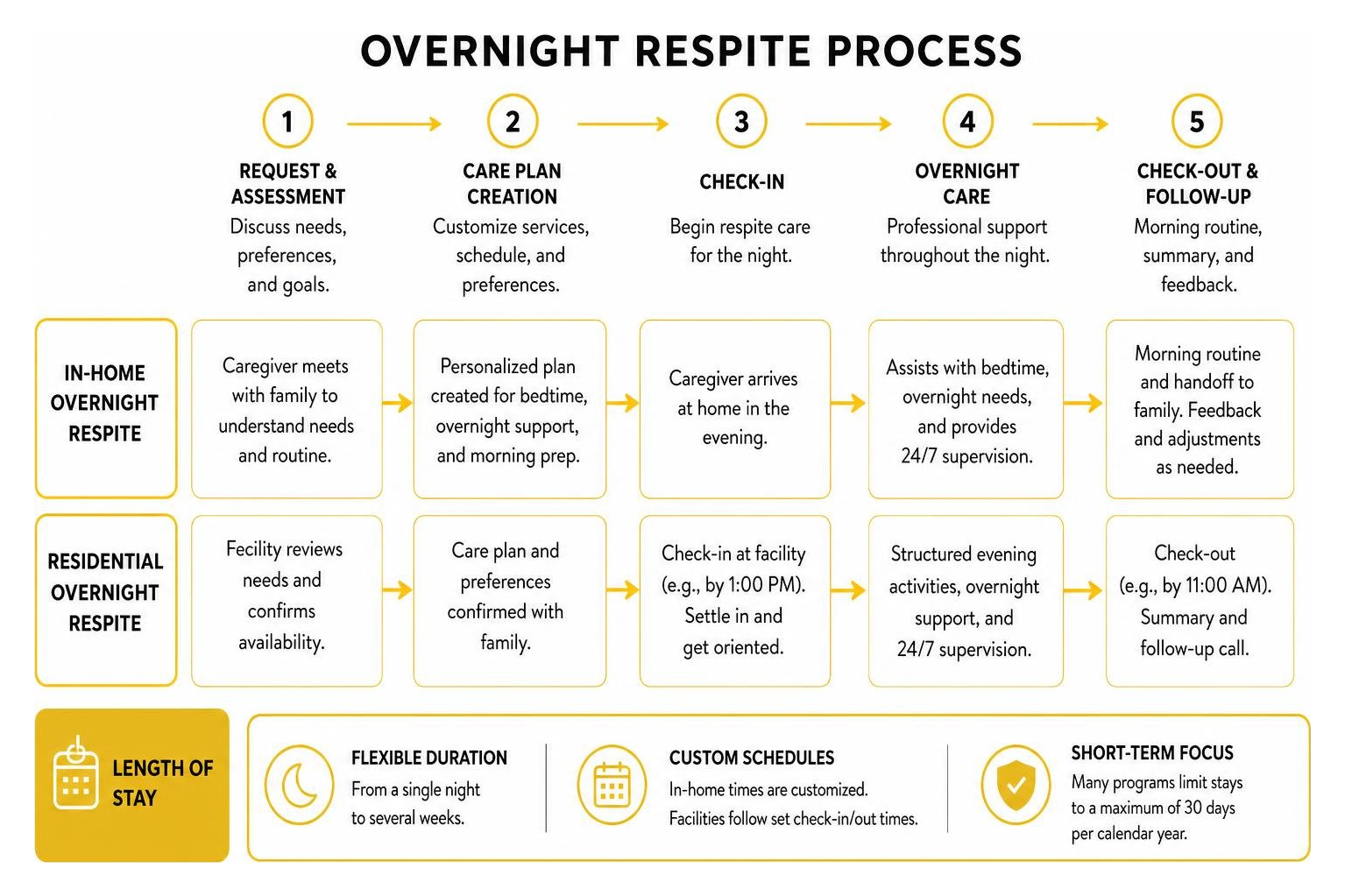
In-Home Overnight Respite: A professional caregiver comes directly to your home in Orem, Provo, or Saratoga Springs. They stay awake or remain on-call throughout the night, assisting with bedtime routines, middle-of-the-night needs, and morning prep. This keeps your loved one in a familiar environment, which is often best for those with cognitive decline.
Residential Overnight Respite: Your loved one stays in a specialized senior living community, group home, or dedicated respite facility.
While some families utilize our specialized Day Respite Services at a local Day Respite Centre for daytime breaks, overnight care extends that peace of mind through the night.
To look at how other regions manage this, the Vancouver Overnight Respite Program at Family Respite Centre in Canada offers structured overnight stays for medically stable seniors, showing how valuable a dedicated overnight facility can be. However, for families living in Utah County, having a local, personalized solution that doesn't require a long commute is usually the most practical choice.
Key Services and Amenities Included
When you book respite care overnight, your loved one isn't just getting a bed to sleep in; they are receiving comprehensive support. Typical services include:
Personal Care: Dignified assistance with evening hygiene, bathing, undressing, and getting into bed, as well as morning routines.
Medication Management: Ensuring that evening and morning doses are taken at the correct times and documented accurately.
Nutritious Meals: A warm, healthy dinner and breakfast, along with hydration and snacks as needed.
Social Activities: In residential settings, guests can participate in structured evening wind-down activities, board games, or light physical exercises.
24/7 Supervision: Gentle monitoring to prevent wandering, fall risks, or confusion during the night.
Check-In, Check-Out, and Length of Stay
The duration of overnight respite care is highly flexible, but it generally operates under specific structural guidelines depending on the setting.
For in-home overnight care, schedules are customized entirely around your family's routine. For instance, a caregiver might arrive at 7:00 PM and stay until 7:00 AM the following morning.
In residential facilities, check-in and check-out times are more structured. For example, some programs require check-in by 1:00 PM and check-out by 11:00 AM to allow staff to sanitize and prepare rooms.
Stays can range from a single night to several weeks. However, many state programs and facility policies cap stays at a maximum of 30 days per calendar year to keep the care classified as "short-term."
Understanding the Cost and Funding of Respite Care Overnight
The cost of overnight respite care depends heavily on whether you choose in-home care or a residential facility, as well as the level of medical attention your loved one requires.
Care Type Average Cost Range (Utah Valley) What's Covered In-Home Overnight Care $250 - $450 per night One-on-one personal care, safety monitoring, bedtime/morning assistance, and light housekeeping in your home. Residential Respite Care $150 - $350 per night Private or semi-private room, 24-hour facility staffing, meals, organized activities, and basic nursing support.
Most families pay for respite care out-of-pocket (private pay). However, because respite is widely recognized as a critical tool for preventing long-term institutionalization, several financial assistance programs can help offset these expenses. For families navigating these local resources, the MAG Senior Help Guide - Caregiving published by the Mountainland Association of Governments is an invaluable tool for identifying county-specific programs in Utah County.
Financial Assistance and Insurance Options
Veterans Benefits (VA): If your loved one is an enrolled veteran, the VA offers excellent support. The VA typically covers up to 30 days of respite care per calendar year. This can be delivered via in-home health aides, adult day health centers, or short-term stays in VA-approved community nursing homes.
Medicaid Waivers: In Utah, Home and Community-Based Services (HCBS) waivers may cover short-term overnight respite care for seniors who meet clinical and financial eligibility criteria.
Long-Term Care Insurance: Many private long-term care policies include a daily benefit for respite care, though they typically require using a licensed agency.
State and County Programs: Local government grants or caregiver support programs sometimes offer small stipends to help cover the cost of a few nights of respite care each month.
Eligibility, Requirements, and Finding a Local Provider

Finding the right provider in Utah County requires a bit of research. If you are looking for local registries, community programs, or in-home support, starting with local resources is always best. For example, Respite Care - Kids on the Move provides specialized respite care options for families with children who have special developmental needs in Orem and surrounding areas.
For older adults, you can find helpful directories such as 18 Respite Care Facilities in Pleasant Grove, UT to explore nearby physical locations. Additionally, tools like Respite Care In Salt Lake City, UT - CarePatrol can assist families in navigating senior living options across the Wasatch Front. If you prefer to keep your loved one in their own home, exploring professional In-Home Help is often the most comfortable route. You can read our In-Home Care Complete Guide 2026 to understand how to set up consistent, high-quality care.
To ensure a smooth transition, providers will look at specific eligibility requirements:
Medical Stability: The senior must not require acute hospital-level medical care during their stay.
Clinical Criteria: An initial assessment is performed to document their cognitive state, mobility levels, and assistance needs for Activities of Daily Living (ADLs).
Vaccinations and Health Screenings: Many residential facilities require up-to-date TB tests and physical exams before admission.
What to Consider When Choosing a Provider
When evaluating overnight respite options, look for the following quality indicators:
Licensing and Credentials: Ensure the agency or facility is fully licensed by the State of Utah and carries comprehensive liability insurance.
Staff Training: Ask if caregivers receive specialized training in first aid, CPR, and dementia care.
Safety Protocols: Inquire about fall-prevention measures, secure exit doors (to prevent wandering), and emergency response plans.
Caregiver Matching: A good agency will match caregivers to your loved one's personality and specific care needs.
Background Checks: Verify that the provider conducts thorough national criminal background checks and drug screenings on all employees.
At Aspen Senior Care, we pride ourselves on matching these rigorous standards with our deeply personalized, award-winning, family-like touch.
Specialized Overnight Respite for Dementia and Special Needs
Caring for a family member with Alzheimer's disease or other forms of dementia presents unique nighttime challenges. Sundowning — a state of increased confusion, anxiety, and agitation that begins in the late afternoon or early evening — can make sleep almost impossible for both the senior and their caregiver.
Specialized overnight respite care for dementia focuses on maintaining highly structured, familiar routines. Staff trained in dementia care know how to use gentle re-direction, soothing sensory activities, and environmental adjustments (like keeping rooms well-lit or using white noise) to reduce anxiety.
If you are caring for a loved one with cognitive decline, we offer highly specialized In-Home Care Dementia and In-Home Care Alzheimer services. By utilizing professional Memory Care experts, you can rest easy knowing your loved one is safe. For families facing severe nighttime wandering or constant wakefulness, arranging structured 24 Hour Dementia Care provides around-the-clock safety and complete peace of mind.
How Respite Care Overnight Prevents Caregiver Burnout
It is easy to underestimate the toll of chronic sleep deprivation. When you are waking up multiple times a night to assist your loved one, your body is in a constant state of high alert. This elevates cortisol levels, weakens your immune system, and contributes to the fact that more than one-third of dementia caregivers report symptoms of depression.
Using overnight respite is not a luxury; it is a clinical necessity for your own health. By stepping back for just one or two nights a week, you can:
Restore your natural sleep cycle.
Reduce feelings of resentment and frustration.
Reconnect with your spouse, children, or personal hobbies.
Prevent the physical collapse that often forces families into emergency nursing home placements.
If you live in Orem, Provo, Lindon, or anywhere else in Utah County, utilizing Orem Utah Caregiver Respite resources is the best way to protect your mental health while continuing to provide loving care.
Preparing Your Loved One for a Successful Stay
Preparing Your Loved One for Respite Care Overnight
Transitioning to overnight care — especially in an unfamiliar residential setting — can trigger anxiety for your loved one. To make the experience as positive as possible, preparation is key.
Other programs, like the Piercy Respite Hotel | Island Health in British Columbia, operate much like a guest house to reduce institutional anxiety, emphasizing the importance of a warm, welcoming environment. To achieve this same sense of security, we recommend keeping daily routines as close to normal as possible. Organizations like Short Term Respite - Our Family Respite Services advocate for keeping meals, sleep schedules, and familiar comforts consistent to ease the transition.
Here is a practical checklist to help you prepare:
Pack Familiar Items: Bring their favorite pillow, a cozy blanket, framed family photographs, or a familiar nightlight to make the room feel like home.
Prepare Medications: Ensure all medications are clearly labeled. Many facilities require medications to be provided in pre-packaged blister packs from a pharmacy.
Write Down the Routine: Provide a detailed cheat sheet of their evening habits. Do they like a warm glass of water before bed? Do they watch a specific television show? Do they prefer the door cracked open?
Keep Explanations Simple: If your loved one has cognitive decline, avoid long, complex explanations about the stay. Simply frame it as a short, pleasant "hotel stay" or a "visit with a friend" while you are catching up on errands.
Frequently Asked Questions about Overnight Respite
What is the difference between overnight respite and 24-hour care?
Overnight respite care typically covers a specific shift (usually 8 to 12 hours) focused entirely on evening routines, nighttime safety, and morning care. 24-hour care, on the other hand, is continuous, around-the-clock support. In 24-hour care, multiple caregivers work in rotating shifts to ensure your loved one is never left alone, regardless of the time of day.
Does Medicare cover overnight respite care?
Generally, traditional Medicare does not cover overnight respite care if it is used solely for caregiver relief. However, there is a major exception: if your loved one is currently enrolled in the Medicare Hospice Benefit, Medicare will cover up to five consecutive days of inpatient respite care at a time in an approved facility to give the primary caregiver a break.
How far in advance should I book overnight respite?
For planned respite — such as an upcoming family vacation, a wedding, or a scheduled medical procedure — we recommend booking 1 to 2 weeks in advance. This gives the provider ample time to conduct an initial in-home assessment and match the perfect caregiver. For emergency situations (like a caregiver's sudden illness), some agencies can arrange care within 24 to 72 hours, though availability is never guaranteed.
Programs like the Weekend Respite Program I Stepping Stones Ohio , which runs structured weekend camp sessions for individuals with developmental needs, require registering weeks in advance due to high demand. Booking early ensures you secure a spot when you need it most.
Conclusion
Taking care of your own physical, emotional, and mental health is the most loving thing you can do for the senior in your care. You cannot pour from an empty cup, and you cannot provide compassionate care when you are utterly exhausted.
At Aspen Senior Care, we are dedicated to supporting families throughout Utah Valley — including Orem, Provo, Lehi, American Fork, Pleasant Grove, Spanish Fork, and Alpine. Our award-winning, family-like, personalized non-medical care is available 24/7, providing you with the professional support and absolute peace of mind you deserve.
Ready to take a much-needed breath and get a good night's sleep? Contact Us In-Home Care today to learn more about our customizable In-Home Care and overnight respite options. Let us help you recharge so you can continue to care with love.