
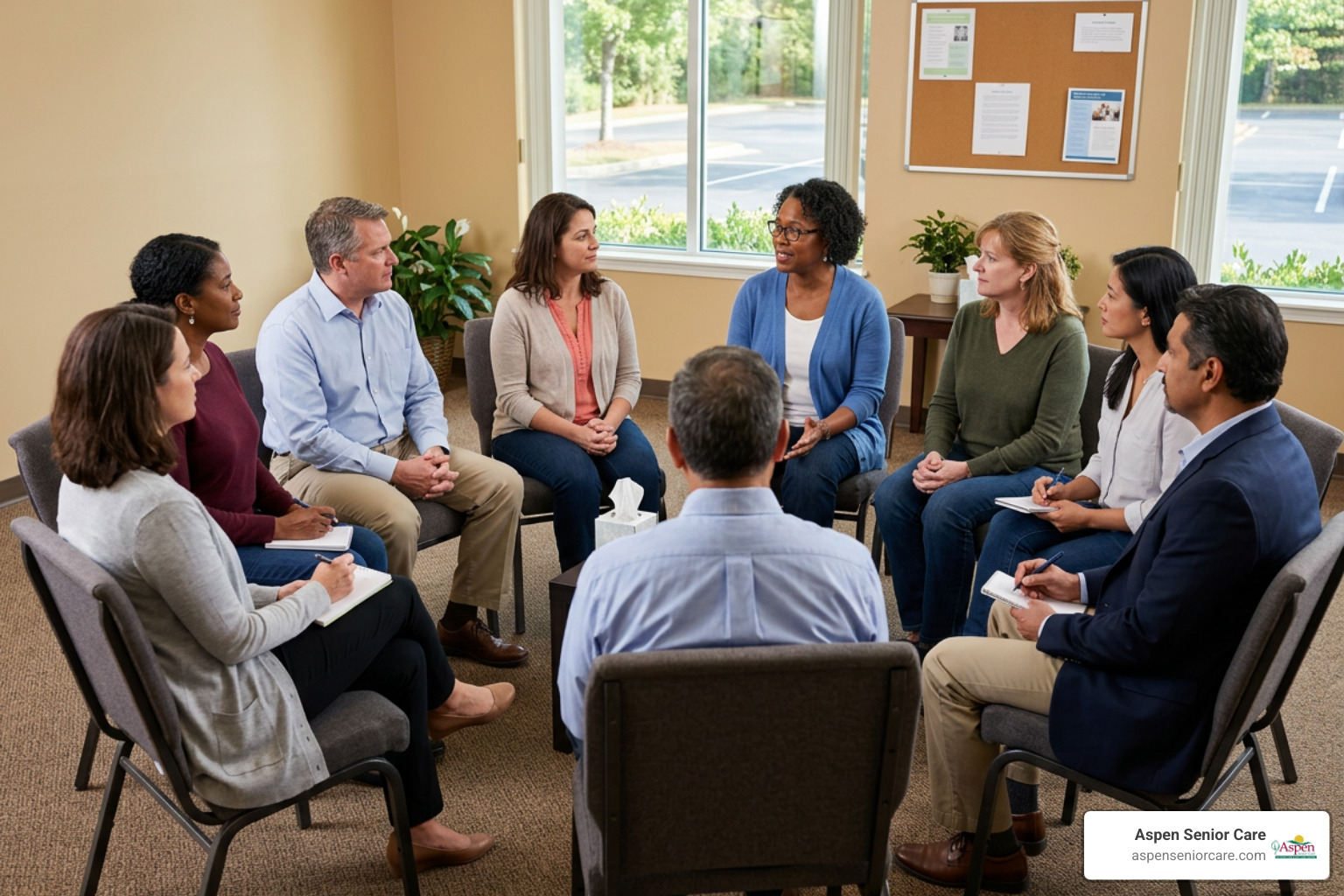
The Ultimate Guide to Finding Elder Care Support Groups Near Me
When Caregiving Feels Overwhelming, You Don't Have to Go It Alone
Finding elder care support groups near me is one of the most important steps you can take as a caregiver for an aging parent.
Quick answer — here's how to find elder care support groups near you:
Contact your local Area Agency on Aging — they connect you to free, nearby groups
Search the Family Caregiver Support Program in your state or county
Check national organizations like the Alzheimer's Association or AARP for virtual and in-person options
Ask your parent's doctor or hospital — many host or refer to caregiver groups
Look for online/Zoom groups if nothing is available locally
Balancing a job, your own family, and caring for an aging parent is exhausting. Many adult children in Utah Valley are doing exactly that — managing medications, safety concerns, and daily tasks for a parent, often without much outside help.
The emotional weight can quietly build up. Isolation is common. And most caregivers put their own well-being last.
That's exactly what caregiver support groups are designed to address. These are free, facilitated spaces — in person or virtual — where caregivers share experiences, learn practical strategies, and connect with others who get it. As one caregiver put it: "I wish I knew about this group earlier."
Support groups won't eliminate the hard work of caregiving. But knowing you're not alone can make a real difference.
Why Join Elder Care Support Groups Near Me?

Caregiving is a rewarding journey, but it can also take an incredible emotional, physical, and financial toll. Because family caregivers often focus entirely on their loved ones, they regularly neglect their own health and well-being.
This is where finding a local caregiver support group becomes essential. Joining a peer group provides an environment that promotes socialization, bonding with others, and building a network of caring, supportive people. It is a place—whether virtual or in-person—where you can learn to take better care of yourself and the person you are caring for.
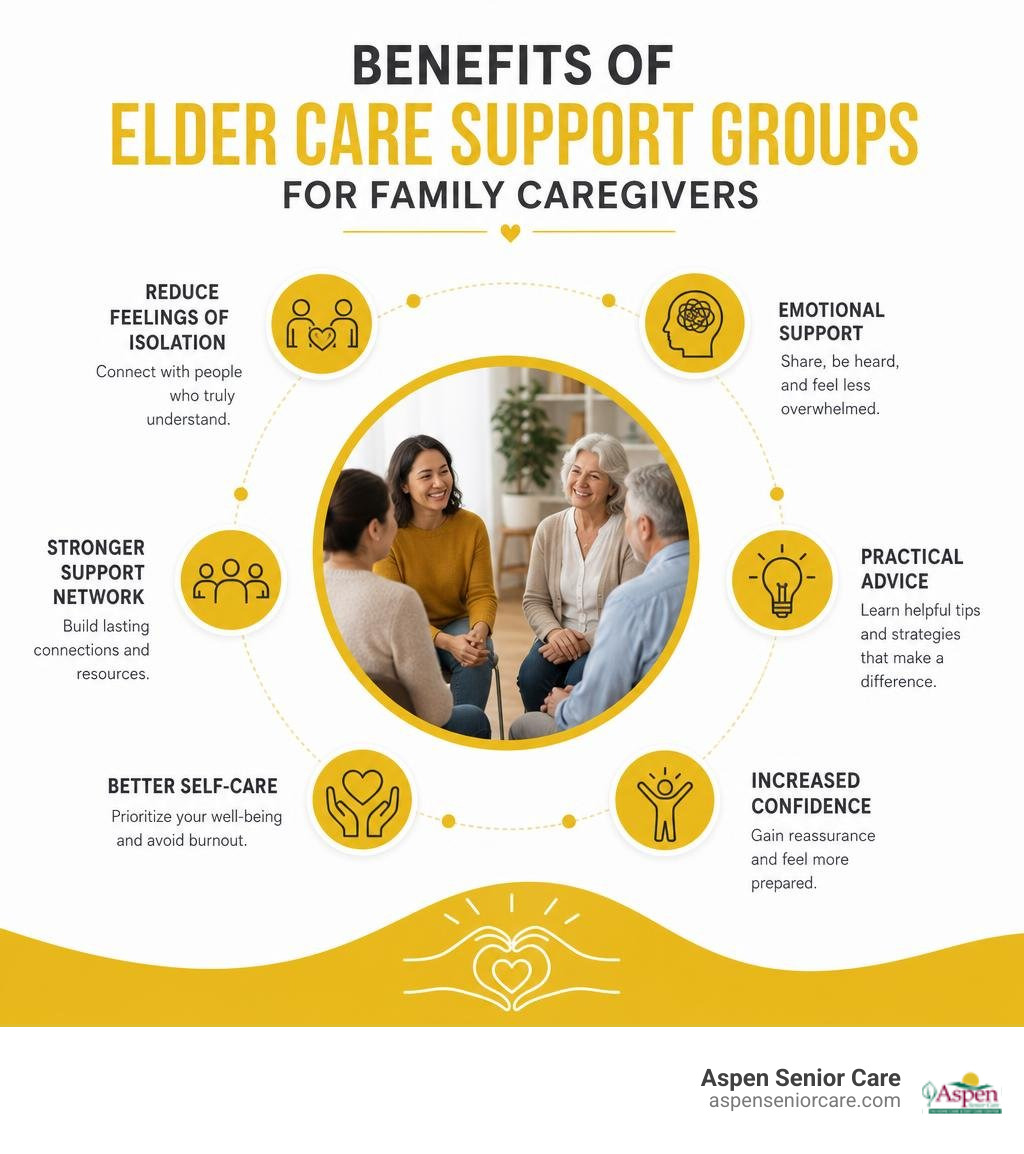
When you search for elder care support groups near me, you are looking for more than just a meeting; you are looking for a lifeline. These groups offer:
A Safe, Non-Judgmental Space: You can express your true emotions, frustrations, disappointments, and successes without fear of criticism.
Emotional Support: Knowing that you are not alone and having a place to share your feelings can make a massive difference when you are struggling with your role.
Coping Strategies and Practical Advice: Members exchange real-world tips on everything from managing difficult behaviors to navigating local senior care resources.
If you want to read more about how these dynamics work and find local connections, you can explore our dedicated page on Caregiver Support Groups.
Types of Caregiver Support Groups Available
Not every caregiver’s situation is the same. A spouse caring for a partner with progressive physical limitations faces different challenges than an adult child managing a parent's cognitive decline. Fortunately, there are many specialized support groups designed to meet these distinct needs.
Group Type Primary Focus Best For Dementia & Alzheimer's Memory loss, cognitive changes, and behavior management Caregivers of individuals with progressive cognitive decline Parkinson's & Chronic Illness Managing physical limitations and progressive motor symptoms Families dealing with movement disorders and chronic physical conditions Relationship-Based Spousal dynamics or adult child caregiving challenges Those needing peer connection with similar family roles Kinship Care Grandparents raising grandchildren and non-traditional care Older adults navigating legal, financial, and parenting hurdles Bereavement Support Grief, loss, and transitioning out of the active caregiving role Individuals who have recently lost a loved one
Dementia and Alzheimer's Support Groups
Caring for someone with memory loss, dementia, or other cognitive changes can be overwhelming—emotionally and practically. Specialized dementia support groups focus heavily on specialized memory care coping strategies.
These groups typically offer guided discussions led by trained facilitators (often affiliated with organizations like the Alzheimer's Association). They provide a safe space to discuss the unique challenges of memory loss, such as communication barriers, personality shifts, and safety concerns. Participating in these peer-led circles helps caregivers learn how to de-escalate stressful behaviors and plan for the progressive stages of cognitive decline.
Parkinson's and Chronic Illness Groups
Parkinson’s disease and other chronic, progressive illnesses bring severe physical tolls and complex medical routines. Support groups tailored to these conditions focus heavily on resource exchange and physical caregiving strategies.
In these meetings, caregivers share practical advice on managing progressive symptoms, mobility challenges, and medication schedules. They also offer mutual peer encouragement to help caregivers cope with the long-term physical demands of assisting a loved one with limited mobility.
Specialized Elder Care Support Groups Near Me for Spouses and Adult Children
Your relationship with the person you care for shapes your daily challenges. Spousal caregivers often struggle with the shifting dynamics of partnership, intimacy loss, and the grief of seeing their lifelong companion change. On the other hand, adult children frequently grapple with the "sandwich generation" struggle—balancing their careers, their own children, and their aging parents.
Seeking out a local caregiver support group that aligns with your specific relationship dynamic ensures that the advice and peer connection you receive are highly relevant to your daily life.
Grandparents Raising Grandchildren and Bereavement Groups
Kinship care is another rapidly growing area of need. Grandparents raising grandchildren face unique legal, financial, and emotional hurdles as they take on parenting roles later in life. Specialized kinship groups help these grandparents connect, share resources, and navigate school and legal systems.
Additionally, bereavement support groups provide a crucial space for emotional healing after a caregiving journey ends. When a loved one passes away, caregivers often experience a profound void. These groups help individuals process their grief and transition into their next chapter surrounded by people who understand their profound loss.
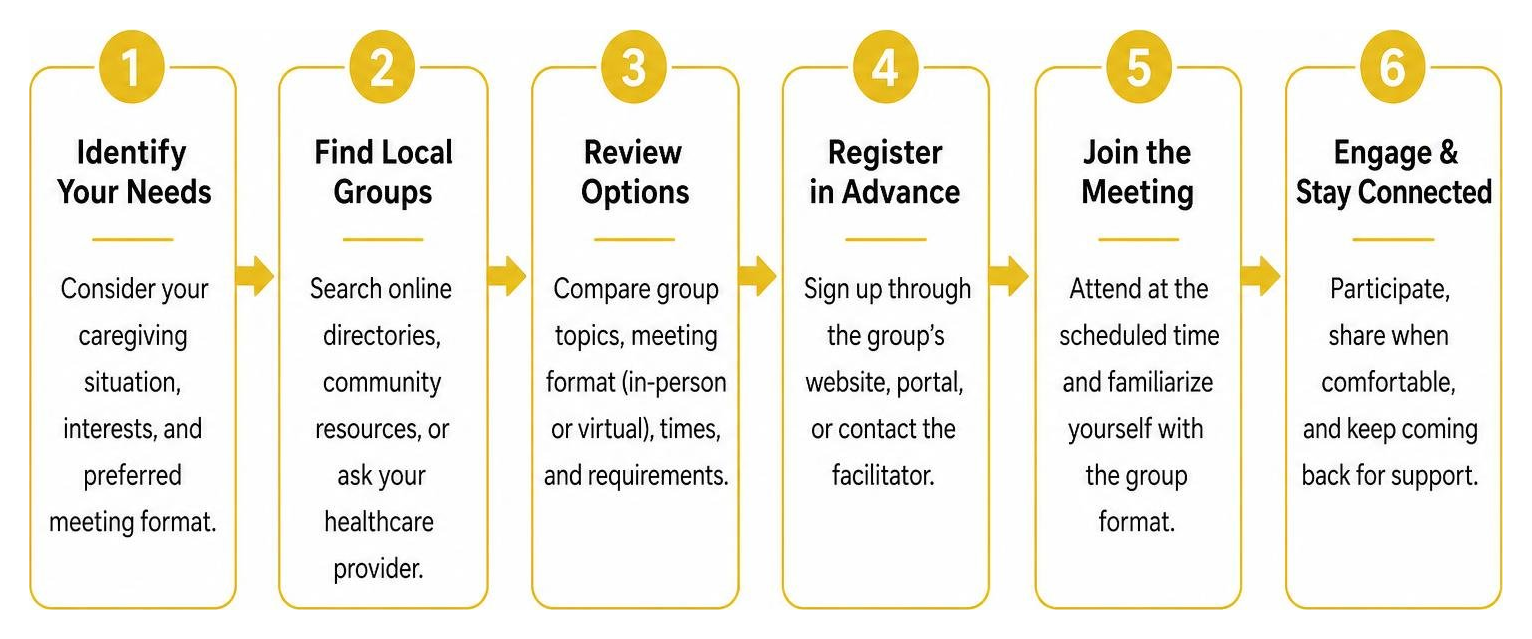
How to Find and Register for Support Groups in Your Area

If you live in Utah Valley, finding local resources is highly straightforward. The primary hub for family caregiver resources in our area is the Mountainland Association of Governments (MAG), which serves as the local Area Agency on Aging for Utah, Wasatch, and Summit counties.
Through the Family Caregiver Support Program, MAG hosts and sponsors free caregiver support groups led by trained staff. Because these groups are fully funded by public resources, they are entirely free to attend. However, most groups require caregivers to register in advance so facilitators can manage group sizes and send out meeting links or location updates.
You can view the schedule and sign up directly through the Utah Caregiver Support Groups portal.
Virtual vs. In-Person Meeting Formats
Caregiver support groups are offered in-person, virtually, or through hybrid formats to fit different schedules:
In-Person Meetings: These offer deep face-to-face peer connection and socialization. They are ideal if you can arrange respite care and want to physically step away from your home environment for a short break.
Virtual Meetings (Zoom/Online Video): Virtual groups provide unmatched schedule flexibility. You can log in from your living room during your loved one's naptime without needing to arrange transportation or outside care.
Finding Elder Care Support Groups Near Me When Local Options Are Limited
If you live in a more rural part of Utah County or cannot find an active in-person group in your specific town, you still have excellent options:
Aging and Disability Resource Centers (ADRC): Contacting your local ADRC or MAG coordinator is the quickest way to find unlisted or newly formed community groups.
National Organizations: Groups like the Family Caregiver Alliance, the VA Caregiver Support Program, and the Alzheimer's Association host robust telephone and online support networks.
Specialized Directories: You can search online directories like the Caregivers Support Groups in Utah - Psychology Today listing to find licensed therapists and community organizations hosting local caregiver circles.
What to Expect at Your First Caregiver Support Group Meeting
It is completely normal to feel nervous or hesitant before attending your first support group meeting. Many caregivers worry that the meeting will be depressing or that they will be forced to speak.
Here is what you can actually expect:
A Warm, Welcoming Environment: Meetings are structured to be safe, confidential, and non-judgmental.
Trained Facilitators: Most sessions are guided by social workers, counselors, or experienced peer leaders who keep the conversation constructive, positive, and focused on self-care.
No Pressure to Speak: You are welcome to just sit, listen, and take in the discussion. There is never any pressure to share your story until you feel completely comfortable doing so.
Active Listening and Shared Solutions: You will hear other caregivers talk about their daily struggles, which helps normalize your own feelings of stress, anger, or sadness. Often, a hardship you are currently facing has already been solved by someone else in the room.
Frequently Asked Questions About Caregiver Support
Are elder care support groups free to attend?
Yes. The vast majority of community-based caregiver support groups are completely free of charge. Groups sponsored by the local Family Caregiver Support Program (such as those run by MAG in Utah County) are fully funded and do not cost anything to join, though some independent community groups may accept voluntary donations to cover minor supply costs.
Do I need to register in advance for a support group?
Yes, most groups require advance registration. Facilitators use RSVPs to manage group capacity (many intimate peer groups are capped at around 10 participants), distribute virtual Zoom links, and notify attendees of any schedule changes. It is always best to contact the group coordinator via email or phone before attending your first session.
What additional resources are paired with these support groups?
Support groups are rarely standalone resources. They are typically paired with other critical family services, including:
Respite Care: Programs that temporarily take over caregiving duties so you can attend meetings or rest.
One-to-One Counseling: Individual problem-solving sessions with a licensed social worker or caregiver specialist.
Educational Workshops: Classes like Powerful Tools for Caregivers that focus on stress reduction and communication skills.
To learn more about navigating these options, check out our comprehensive FAQ about senior care.
Conclusion
Caring for an aging family member is a profound act of love, but it is not a journey meant to be traveled alone. Seeking out elder care support groups near me connects you with a community of peers who can share your burdens, celebrate your successes, and offer the emotional strength you need to keep going.
At Aspen Senior Care, we understand the immense dedication it takes to care for a senior at home. As a Utah Valley-based senior care company, we provide award-winning, family-like, personalized non-medical in-home care and adult day programs across Orem, Provo, Lehi, American Fork, Spanish Fork, and the surrounding areas. Whether you need specialized dementia support or reliable respite care so you can attend a local support group, our team is available 24/7 to help.
To learn more about how we can support your family, Contact our team today, or Explore Caregiver Resources to find more tools for your caregiving journey.