

An Essential Guide to Finding Companion Care Options
Finding Companion Care That Fits Your Parent's Needs
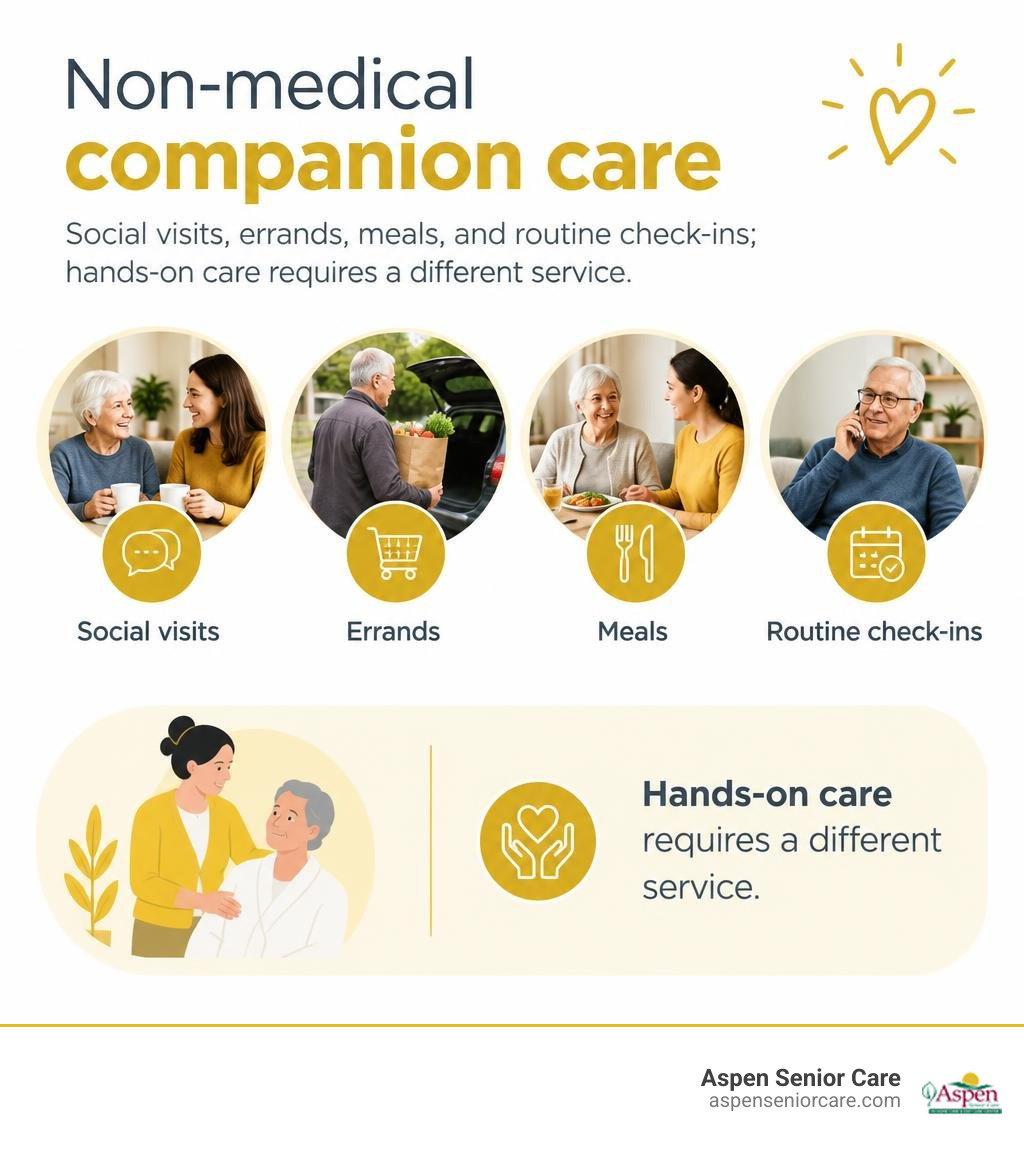
Companion care is non-medical help for older adults who want to stay at home. A caregiver can offer conversation, prepare simple meals, help with errands, and provide routine check-ins. They can also remind someone to take medication, but they do not administer it or replace hands-on help with bathing or dressing.
If you're balancing work with caring for a parent in Utah Valley, start with the help your parent needs most. Is it company during the day, a ride to appointments, or someone to notice when a routine changes? The right match should fit your parent's preferences and give your family a clear way to stay informed.
What Is Companion Care and How Does It Support Aging in Place?
Aging in place is a shared goal for most seniors across Utah County. Staying in a familiar home surrounded by decades of cherished memories brings comfort and emotional security. However, as mobility shifts and social circles naturally change, living alone can quickly become lonely and subtly hazardous.
Non-medical support bridges this gap by offering emotional connection and practical assistance with daily life. As outlined in comprehensive resources exploring what companion care entails, these services are designed specifically for older adults who do not need skilled medical treatment but thrive with regular social interaction and light household help.
At Aspen Senior Care, we see every day how tailored companion care for seniors transforms daily living. Rather than letting small household hurdles pile up into overwhelming obstacles, a companion steps in alongside your loved one. Whether it is reminiscing over family photo albums, playing a friendly game of checkers, or ensuring healthy lunches are prepared, companion care preserves dignity while keeping independent living sustainable. You can explore how these services fit into a broader aging plan in our in-home care complete guide 2026.
Understanding In-Home Companion Care vs. Personal Care
When exploring options for elderly care at home, families often wonder where companionship ends and hands-on personal care begins. The primary distinction lies in physical touch and medical necessity. Companion caregivers provide supportive oversight and social engagement, whereas personal care aides assist directly with hands-on activities of daily living (ADLs) such as bathing, dressing, and hygiene.
Feature / Service | Companion Care | Personal Care |
|---|---|---|
Primary Focus | Socialization, light chores, safety oversight | Physical support and hygiene assistance |
Hands-On Physical Contact | None (non-medical, hands-off) | Yes (direct physical assistance) |
Bathing, Grooming & Dressing | Verbal encouragement / setting out clothes | Direct physical bathing, grooming, and dressing |
Toileting & Incontinence Support | No | Yes |
Mobility & Physical Transfers | Standby supervision / walking partner | Hands-on lifting, transferring, and gait support |
Meal Prep & Light Housekeeping | Yes | Yes |
Transportation & Errands | Yes | Yes |
Medication Support | Verbal routine reminders | Medication assistance and reminders |
Core Daily Services and Non-Medical Assistance Tasks
Companion caregivers perform a wide variety of practical, non-medical duties that keep a household running smoothly and keep older adults feeling valued. When arranged through dependable in-home help, these services adapt seamlessly to your parent's unique rhythm:
Nutritious Meal Preparation: Planning, cooking, and serving balanced meals tailored to dietary guidelines, followed by full kitchen cleanup.
Light Housekeeping and Laundry: Washing dishes, changing bed linens, dusting, sweeping, taking out the trash, and keeping walkways clear of clutter.
Transportation and Outings: Driving seniors to doctor visits in Provo, grocery shopping in Orem, visiting local senior centers, or simply enjoying scenic drives through Utah Valley.
Medication Reminders: Prompting your loved one to take their prescribed medications on time according to their daily schedule.
Engaging Social Activities: Fostering mental stimulation through conversation, reading aloud, board games, crafting, gardening, or scrapbooking.
Routine Observation: Keeping an eye on subtle changes in appetite, mood, or mobility and reporting these observations back to the family.
Key Benefits for Seniors, Daily Safety, and Family Caregivers

A caring companion does much more than check off items on a chore list; they act as a vital safety net. While seniors value their autonomy, subtle hazards in the home can create serious risks. Attentive companions practice proactive fall awareness by identifying tripping hazards such as loose rugs or cluttered hallways. They also encourage consistent hydration, notice when food in the refrigerator has passed its expiration date, and ensure front doors are locked securely before evening sets in.
Combating Senior Loneliness and Promoting Cognitive Engagement
Social isolation poses significant health risks for aging adults, contributing to cognitive decline and depression. Regular, engaging interaction is one of the most effective ways to keep the mind sharp and the spirit bright.
Companion caregivers engage older adults through meaningful conversations about their life stories, guided memory exercises, and stimulating hobbies. For individuals experiencing early memory loss, specialized in-home care cognitive support offers familiar routines that reduce anxiety, boost confidence, and nurture emotional wellness without disrupting their home environment.
Alleviating Burnout for Family Caregivers
Family caregivers often dedicate immense energy to supporting an aging parent while simultaneously juggling their own careers, children, and personal health. Over time, this emotional and physical strain leads to deep exhaustion.
Scheduling planned respite care through a companion allows family members to step back, rest, and recharge with total peace of mind. Practicing caring for the care giver is not selfish—it is an absolute necessity for sustaining a healthy relationship with your loved one. For practical strategies on balancing these responsibilities, explore our comprehensive caregiver support guide 2026.
How to Choose and Hire the Right In-Home Provider

Finding the right caregiver involves finding someone whose personality, communication style, and values mesh with your parent's personality. To read more about our philosophy and approach to custom matching, visit our in-home care about page.
Evaluating an In-Home Care Agency
Families generally choose between hiring an independent caregiver privately or partnering with a licensed home care agency. While private hiring might seem less expensive upfront, it places all employer liabilities, payroll taxes, background checks, and worker's compensation risks entirely on your family.
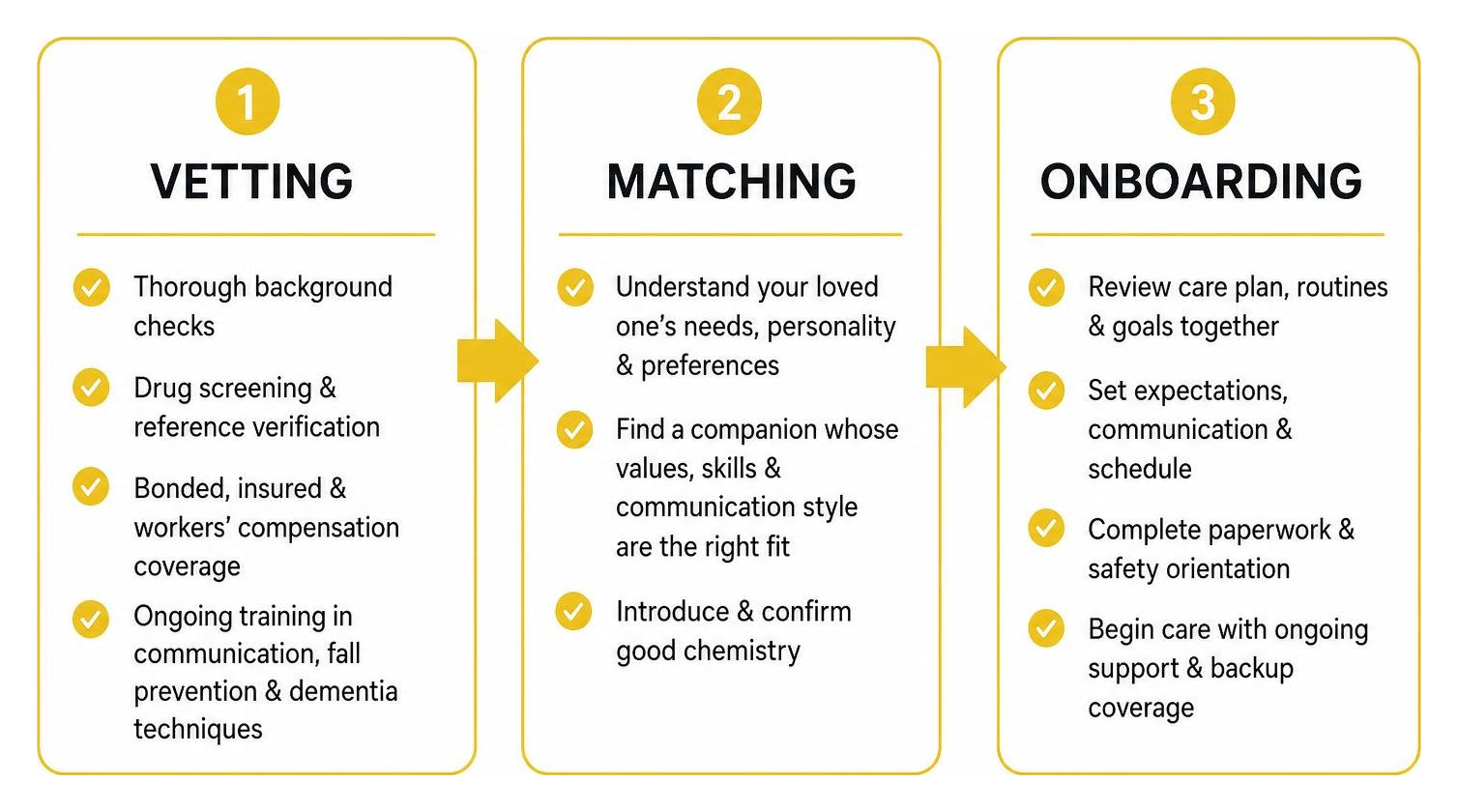
When evaluating an established agency, look for:
Thorough Background Checks: Comprehensive state and national background checks, drug screenings, and reference verifications.
Bonding and Insurance: Full liability and workers' compensation coverage to protect your family and home.
Reliable Backup Coverage: Guaranteed substitute caregivers if your primary companion is ill or takes time off.
Ongoing Training: Dedicated education in communication, fall prevention, and dementia techniques. Our care giver resources provide helpful information on what quality caregiving standards entail.
Essential Questions to Ask Before Hiring Companion Care
Before finalizing care arrangements, review key operational details with the provider. For additional answers to common concerns, check out our faq page. We recommend asking these direct questions:
How do you vet and train your caregivers for non-medical and memory support?
What is your protocol if a caregiver is sick or unavailable for a scheduled shift?
How do you match caregiver personalities and shared interests with my parent?
How do you communicate regular updates or changes in condition to our family?
What are your minimum hourly requirements and cancellation policies?
Are your caregivers direct employees who are bonded and covered by workers' compensation?
Understanding Rates, Costs, and Signs Additional Support Is Needed
Planning for in-home support requires a clear understanding of current market rates and budgeting options. For full pricing transparency across Utah County, review our home care pricing guide 2026 alongside our companion care price list.
Typical Pricing Factors and Budgeting in 2026
Companion care is typically billed by the hour, with rates reflecting geographic location, caregiver experience, and schedule frequency. In 2026, standard non-medical companion rates in Utah Valley generally range between $28 and $38 per hour through licensed agencies.
Factors influencing overall care costs include:
Shift Duration and Minimums: Agencies often have a minimum shift length (such as 3 or 4 hours) to attract and retain high-quality caregivers.
Weekly Frequency: Consistent, recurring weekly schedules make monthly budgeting straightforward and predictable.
Overnight and 24/7 Care: Extended shifts or around-the-clock presence carry different flat-rate or hourly pricing structures.
Payment Methods: Most companion care is paid privately out of pocket or funded through long-term care insurance policies and Veterans Aid and Attendance benefits.
Recognizing When a Senior Outgrows Companionship Alone
While companionship is fantastic for social engagement and light chores, an aging adult's needs can evolve over time. It is vital to recognize when non-medical companionship is no longer sufficient to keep someone safe at home.
Watch for these clear warning signs:
Frequent Stumbles or Falls: Increasing instability while standing or walking that requires physical hands-on support.
Hygiene Decline: Unwashed hair, body odor, or soiled clothing indicating an inability to bathe or dress independently.
Unmanaged Incontinence: Inability to manage toileting needs safely without direct assistance.
Advanced Memory Loss and Wandering: Disorientation, leaving stove burners unattended, or attempting to leave the house unsafely.
When cognitive decline progresses, families should evaluate specialized in-home care dementia support or consider structured group socialization at an adult day center.
Frequently Asked Questions About In-Home Senior Companionship
Does Medicare pay for non-medical companion services?
No, traditional Medicare does not cover non-medical companion care. Medicare is designed to pay for short-term, medically necessary skilled nursing care or physical therapy prescribed by a physician following an acute illness or hospital stay. Custodial and companion services—such as meal prep, conversation, errands, and light housekeeping—are generally covered through private pay, long-term care insurance, or specific veteran assistance programs.
How many hours of companion support are typically scheduled per week?
Schedules are completely customizable based on your parent's routine and family availability. Some seniors thrive with two or three visits per week (lasting 3 to 4 hours each) for grocery runs, social outings, and house tidying. Others benefit from daily morning or evening check-ins, or even full daytime coverage while family members are at work.
What is the biggest mistake families make when arranging companion support?
The most common mistake is waiting for a crisis—such as a fall, malnutrition, or extreme social withdrawal—before seeking help. Another frequent misstep is choosing support solely based on the cheapest hourly rate rather than vetting for reliability, insurance coverage, and staff stability. Starting companion support early establishes a trusted relationship while your parent is still relatively independent, making any future care transitions smooth and stress-free.
Conclusion
Every senior deserves to feel valued, secure, and socially connected in the comfort of their own home. Whether your parent lives in Orem, Provo, Lehi, American Fork, Spanish Fork, or elsewhere in Utah County, having a dependable companion can revitalize their daily routine and restore harmony to your family life.
At Aspen Senior Care, we treat our clients like family, providing award-winning, personalized care plans backed by compassionate staff and 24/7 support. Explore our dedicated companion care options to see how we can assist your family, or contact us in-home care today to schedule a friendly, no-obligation consultation.