

The Complete Guide to Finding Reliable Elderly Home Care Options
Why So Many Families Are Turning to Elderly Care at Home
Elderly care at home is exactly what it sounds like: professional support that helps aging adults live safely in their own homes instead of moving to a nursing facility.
Here's a quick look at what it typically includes:
Personal care – bathing, dressing, grooming, toileting
Companion care – conversation, errands, social engagement
Meal preparation – cooking nutritious meals and grocery shopping
Medication reminders – prompting seniors to take the right dose at the right time
Light housekeeping – laundry, cleaning, home organization
Specialized care – dementia support, Parkinson's assistance, post-surgery recovery
Respite care – short-term relief for family caregivers
Most home care does not require a doctor's order and can often start within 24 to 72 hours of your first call.
If you're a working adult in Utah Valley trying to keep an aging parent safe at home while also managing your own job and family, you're not alone. Millions of adult children across the country are navigating the same challenge — figuring out how to get Mom or Dad the help they need without uprooting their lives or draining their savings.
The good news? There are more options than most families realize. From a few hours of weekly companionship to full-time live-in care, in-home care can be tailored to almost any situation and budget. State programs, veterans benefits, and long-term care insurance can all help offset the cost.
This guide walks you through everything — the types of care available, how much it costs, how to pay for it, and how to find someone you can actually trust.
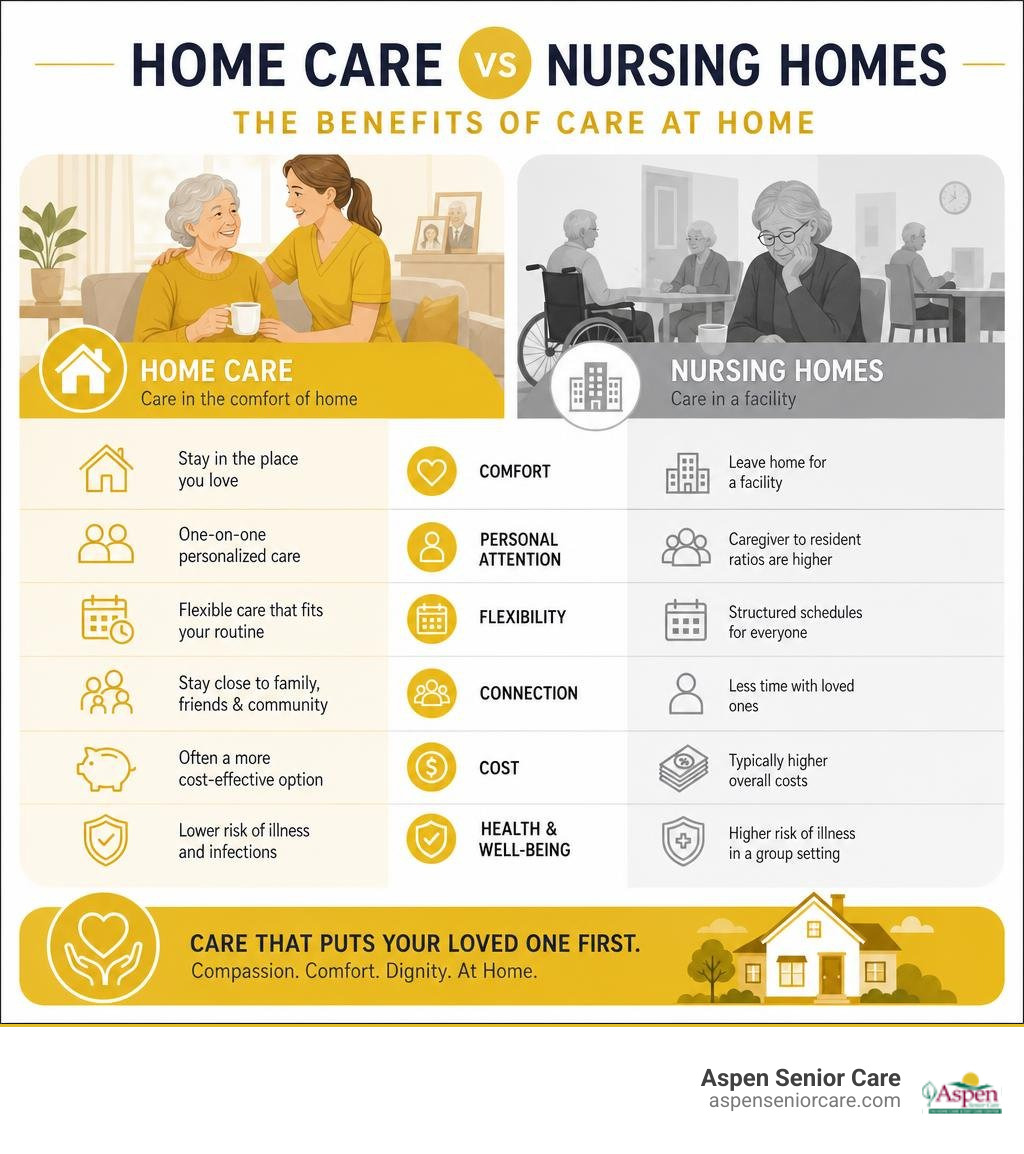
Understanding the Landscape of In-Home Care Services
When you first begin exploring care options for an aging family member, the terminology can feel overwhelming. You might hear terms like "companion care," "personal care," "skilled nursing," and "transitional care" thrown around interchangeably. However, understanding these distinctions is the first step toward building a safe, sustainable plan for your loved one.
At Aspen Senior Care, we focus on providing highly personalized, heart-led care that adapts to your family's needs. To help you get your bearings, we have put together our In-Home Care Complete Guide 2026, which dives deep into how these services function in the real world.

Understanding the Types of Elderly Care at Home
In-home services generally fall into a few primary categories, each designed to address different levels of need:
Companion Care: This is often the perfect starting point for seniors who are mostly independent but are beginning to struggle with isolation or minor household tasks. It includes friendly conversation, light housekeeping, laundry, and running errands.
Personal Care: As physical limitations increase, seniors often need hands-on help with Activities of Daily Living (ADLs). This includes dignified support with bathing, dressing, grooming, toileting, and mobility or transfer assistance.
Transitional Care: If your loved one is returning home after a stay at a Utah Valley hospital, transitional care provides short-term oversight to ensure they follow discharge instructions, take their medications, and avoid readmission.
By focusing on these practical daily tasks, professional caregivers help seniors maintain their independence and dignity. If you are wondering what specific chores or daily routines a caregiver can assist with, check out our guide on In-Home Help.
Non-Medical Home Care vs. Skilled Home Health Care
One of the most common points of confusion for families is the difference between non-medical home care and skilled home health care. Choosing the wrong one can lead to unnecessary expenses or gaps in essential medical treatment.
Here is a straightforward breakdown of how they compare:
Feature Non-Medical Home Care Skilled Home Health Care Primary Focus Daily living support, safety, and companionship Medical treatment, rehabilitation, and clinical monitoring Common Services Bathing, meal prep, light cleaning, medication reminders Wound care, physical therapy, injections, speech therapy Doctor's Order Required? No Yes Personnel Professional Caregivers / Home Health Aides Registered Nurses (RNs), Physical Therapists (PTs) Payment Source Private pay, Long-Term Care Insurance, VA benefits Medicare, Medicaid, private health insurance (short-term) Duration Long-term, flexible schedules (hourly to 24/7) Short-term, goal-oriented visits based on medical recovery
By coordinating both types of care when necessary, families can ensure that their loved one's clinical medical needs and daily physical safety are fully covered.
Evaluating the Cost of Elderly Care at Home and Payment Options
One of the first questions families ask us is: "How are we going to pay for this?" It is a valid concern. In July 2026, navigating senior care costs requires a clear look at your financial options.
While Medicare typically does not cover non-medical elderly care at home when it is the only care needed, there are several viable pathways to fund these services. To help you map out your budget, we recommend reviewing our In-Home Care Summary, which outlines typical care structures and cost expectations.
Utilizing Veterans Benefits and Long-Term Care Insurance
For families in Utah County, several programs can significantly reduce out-of-pocket costs:
Veterans Aid and Attendance Pension: Veterans and surviving spouses who require the assistance of another person for daily activities may qualify for this valuable VA benefit. It provides a monthly pension that can be used directly to pay for home care services.
Long-Term Care Insurance (LTCI): Unlike standard health insurance, LTCI policies are specifically designed to cover non-medical personal care, companion care, and memory care. We can help you navigate your policy's elimination period and daily benefit limits.
Private Pay Structuring: For many families, private pay is the primary funding source. We work closely with families to design flexible schedules — starting with just a few hours a week and scaling up only as needs change — to keep care affordable.
If you are researching local care options and costs in specific Utah Valley communities, we provide personalized care plans tailored to families throughout Lehi, Provo, Orem, American Fork, Pleasant Grove, Spanish Fork, Alpine, and surrounding areas.
Specialized Care for Dementia and Chronic Conditions
Caring for a senior with progressive cognitive decline or a chronic illness presents unique challenges. What starts as occasional forgetfulness can quickly transition into a round-the-clock safety concern. Specialized home care programs are designed to meet these complex needs, allowing seniors to remain in familiar, comforting surroundings rather than moving to an institutional setting.

At Aspen Senior Care, we specialize in providing compassionate, family-like support for those living with memory loss. You can explore our dedicated services for Dementia Care and Alzheimer Care to see how we structure our daily care plans.
Cognitive Support and 24-Hour Supervision
For seniors experiencing moderate to advanced stages of dementia, safety is the primary concern. Common behaviors such as wandering, confusion, and "sundowning" (increased agitation and anxiety in the late afternoon and evening) require experienced, patient intervention.
Our caregivers are trained in specialized cognitive techniques to manage these challenges:
Validation Therapy: Rather than arguing with or correcting a confused senior, we meet them in their reality to reduce anxiety.
Structured Routines: Consistent daily schedules for meals, activities, and sleep help minimize confusion and behavioral triggers.
Environmental Safety: We help identify and eliminate hazards that could lead to wandering or falls.
When a senior requires continuous monitoring to stay safe, we provide 24-Hour Dementia Care to give families total peace of mind. To learn more about how we stimulate mental engagement and support memory retention, read about our approach to Cognitive Support.
Supporting Family Caregivers with Respite and Day Programs
Caring for an aging parent is a labor of love, but it can also be physically and emotionally exhausting. Family caregiver burnout is a very real risk, often leading to health issues for the caregiver themselves. To be the best caregiver you can be, you must allow yourself to take regular breaks.
We believe that supporting the family is just as important as caring for the senior. We encourage family members to utilize our Care Giver Resources and join local Caregiver Support Groups to connect with peers who understand the daily journey of elder care.
Adult Day Care and Respite Services
One of the most effective ways to balance your caregiving duties with your personal life is through a combination of in-home respite care and adult day programs.
Our adult day center in Orem provides a lively, safe environment where seniors can enjoy social activities, nutritious meals, and cognitive exercises while you take care of your own needs.
If you are exploring these options, here are several resources to help you understand the benefits and costs:
To learn about our specialized day program, visit Non-Medical Adult Daycare.
For local respite options, explore our Orem Utah Caregiver Respite services.
If you are wondering about schedules and availability, check out our Day Respite Services and Day Respite Centre guides.
To compare different day care models, read about In-Home Adult Day Care versus center-based Senior Daycare Services.
For budgeting and financial planning, review How Much Does Adult Day Care Cost.
To see how we provide a warm, welcoming environment, check out our Family Oriented Senior Care Orem and Orem Assisted Living program comparisons.
If you live in neighboring communities, find out more about our Provo Utah Senior Daycare options.
Local Community Resources and Support Groups
In addition to professional care, building a local network of support is vital. Connecting with others who are walking the same path can provide emotional relief and practical caregiving tips. If you are looking for local peer support networks, you can search for Elder Care Support Groups Near Me to find meetings right here in Utah County.
How to Choose a Reliable Home Care Agency
Selecting the right care provider is a deeply personal decision. You are inviting a professional into your loved one's private space, and you deserve to feel completely confident in their safety, competence, and compassion.
Steps to Begin Reliable Elderly Care at Home
We believe that finding the perfect care match should be a smooth, stress-free process.
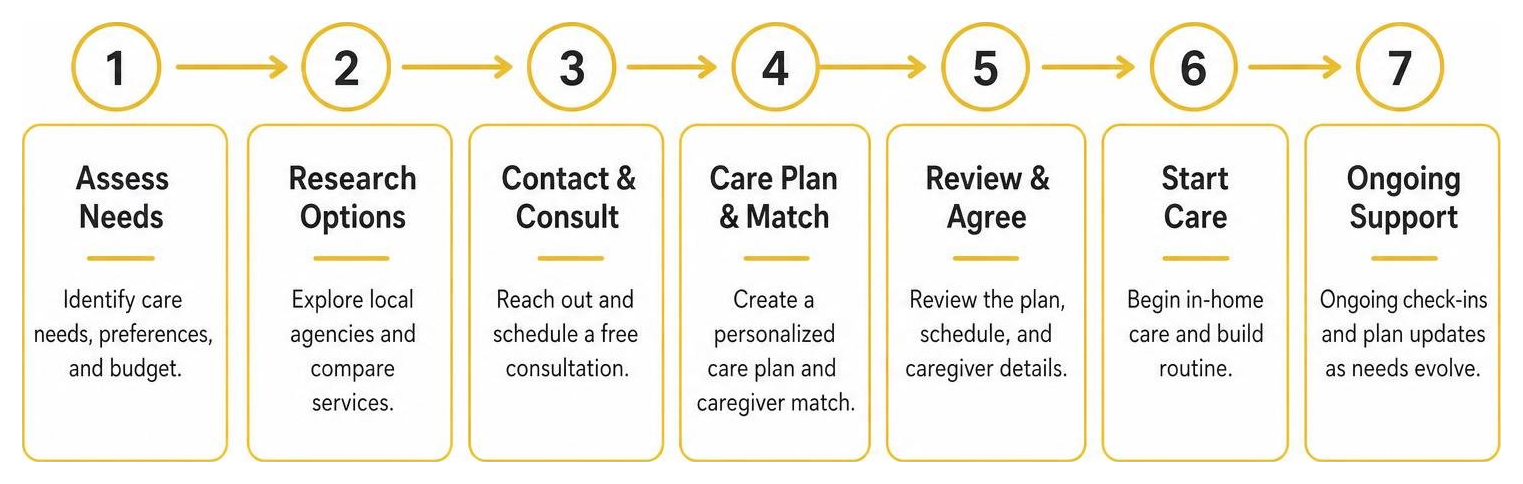
When you are interviewing potential home care agencies, here are a few essential questions to ask:
Are your caregivers W-2 employees, or are they independent contractors? (W-2 employment ensures the agency handles taxes, workers' comp, and liability insurance).
What does your caregiver screening and background check process look like?
How do you match caregivers with clients based on personality and lifestyle preferences?
Do you have a backup plan in place if our regular caregiver calls out or has an emergency?
How do you supervise and monitor the care plan over time?
The Role of Professional Caregivers in Fall Prevention and Safety
One of the greatest benefits of hiring a professional caregiver is proactive safety management. Falls are the leading cause of injury among seniors, often resulting in a loss of independence.
A professional caregiver helps mitigate these risks by:
Conducting a comprehensive home hazard assessment (identifying loose rugs, poor lighting, or cluttered pathways).
Providing steady physical assistance during transfers, bathing, and walking.
Encouraging regular, safe physical movement to maintain muscle strength and balance.
Ensuring the senior wears appropriate, non-slip footwear inside the home.
Frequently Asked Questions About Home Care
Does Medicare cover non-medical elderly care at home?
Generally, no. Original Medicare does not cover non-medical home care (such as help with bathing, dressing, meal preparation, or companionship) when it is the only care needed. Medicare is designed to cover medically necessary, short-term clinical care. You can review the official Medicare.gov home health services coverage information for details on what Medicare may cover. To fund non-medical support, families typically rely on private pay, long-term care insurance, or veterans benefits.
What is the difference between a W-2 agency and a 1099 registry?
A W-2 agency employs its caregivers directly, taking full responsibility for payroll taxes, workers' compensation, professional liability insurance, and ongoing training. A 1099 registry acts as a matchmaking service, leaving the family as the legal employer. This means the family could be held liable for workplace injuries or responsible for unpaid employment taxes. At Aspen Senior Care, all of our caregivers are fully bonded, insured, background-checked W-2 employees.
How quickly can in-home care services typically begin?
In many cases, care can be arranged to start within 24 to 72 hours of your initial inquiry. If your loved one is being discharged from a hospital or rehab facility, we recommend contacting us a few days in advance so we can conduct a home assessment and ensure a seamless, safe transition.
Conclusion
Helping an aging parent remain safely and happily in their own home is one of the greatest gifts you can give them. While the journey of arranging elder care can feel complex, you do not have to navigate it alone.
By choosing a trusted, licensed partner like Aspen Senior Care, you gain a compassionate team dedicated to supporting your entire family. Whether you need a few hours of weekly companionship, specialized memory care, or a vibrant adult day program, we are here to help.
To discuss your family's unique needs and explore how we can help your loved one age in place with dignity, visit our main In-Home Care Services page or Contact Us In-Home Care today to schedule a free, no-obligation consultation.