
All About Finding Reliable Senior Caregiver Options
Finding the Right Senior Caregiver for Your Loved One
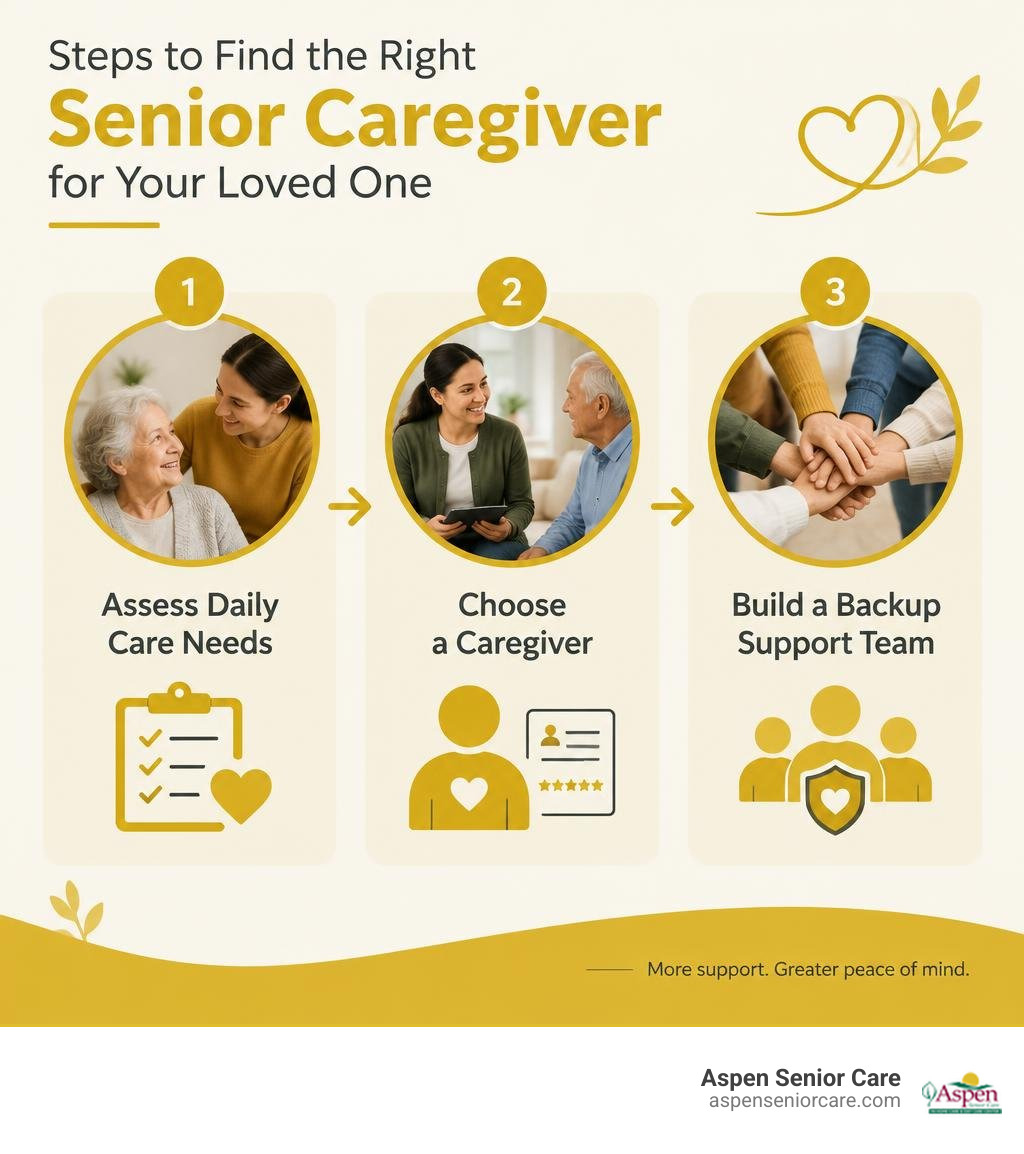
A senior caregiver helps an older adult with daily life, such as bathing, meals, getting around, and staying connected. To find reliable help, start by writing down what your loved one needs each day. Then check a caregiver's experience, references, and fit with your loved one. Make a plan for who will help when that caregiver is unavailable.
If you already help an aging parent with these tasks, you're a family caregiver, even if no one has called you one. You don't have to cover every hour alone. This guide will help Utah Valley families spot when more support is needed, choose care, and share the work without losing sight of their own well-being.
Understand the Caregiver Role and Recognize When Help Is Needed
What Is a Family Caregiver, and How Do You Know If You Already Are One?
A family caregiver is someone who provides unpaid care to a loved one who is sick, injured, elderly, or living with a disability. That person doesn't have to be family. A child, spouse, friend, or neighbor can all fill the role.
You may be one already if any of these sound familiar:
Your parent moved in because living alone was no longer safe.
You cook, clean, or run errands for a neighbor who can't manage anymore.
You help your spouse recover after a stroke.
You manage bills and appointments for someone from another city.
That last one counts too. Living an hour or more away makes you a long-distance caregiver, and your coordination still matters.
The numbers show how common this is. About 53 million family caregivers in the U.S. provide unpaid help, and they deliver roughly 89% of all help in the home for older adults. On average, they spend about 22 hours a week on care, and nearly 1 in 5 spend more than 41 hours. Families often step in because adults live longer and hospital stays are shorter, so follow-up care lands at home. Our guide to elderly care at home explains how that support can look day to day.
What Does a Senior Caregiver Do Each Day?
Every person is different, but most days include a mix of hands-on help and quiet company:
Personal care: bathing, dressing, grooming, and toileting, done in a way that protects dignity.
Meals: planning, cooking, and making sure your loved one actually eats.
Mobility and transportation: helping with walking, transfers, and rides to appointments or errands.
Medication reminders: helping your loved one take medicines as prescribed and avoiding mix-ups or missed doses.
Health watching: noticing changes in mood, appetite, or energy and passing them to the doctor.
Companionship: conversation, walks, games, and someone to listen.
Home safety: clearing clutter, adding grab bars, and fixing trip hazards.
Many families also handle financial and legal tasks, such as paying bills and sorting out who makes health decisions if an emergency strikes. Talk about these things early, while it's calm. Ask where your loved one wants to live, who should make medical decisions, and how care will be paid for.
Help with the basics of self-care is often called ADLs assistance, and friendly social time is the heart of companion care. For more detail on typical duties, see this checklist of common caregiver duties.

What Are the Signs Your Loved One Needs a Regular Caregiver?
Needs often creep up slowly. Watch for these signs in your loved one:
Missed meals, an empty fridge, or weight loss
Changes in hygiene or wearing the same clothes for days
Falls or near-falls
Medication mix-ups
Late bills or unopened mail
A messy yard, piled-up packages, or a home that's less tidy than before
Loneliness, pulling away, or low mood
Signs in you count too. If you feel worried or worn out, or grooming, meals, and upkeep take more and more of your time, informal help may no longer be enough. Doctors, neighbors, and friends sometimes raise concerns first, so listen.
Memory loss deserves extra attention. Most people with Alzheimer's and related dementias are cared for at home by family or friends, and these caregivers face a higher risk of anxiety and depression. The CDC guidance for dementia caregivers is a helpful starting point. Our team also offers specialized dementia support when families need it.
How to Find and Evaluate a Reliable Senior Caregiver
How Do I Choose a Reliable Senior Caregiver?
Start with the care needs list you wrote. Then match a person or agency to it.
Look for relevant experience. Someone who has cared for people with similar needs, such as dementia or limited mobility, will adjust faster.
Check training. CPR, basic first aid, and home health aide training are good signs.
Call references and run a background check. Don't skip this, even for a friendly referral.
Value reliability. Punctuality, honesty about mistakes, and logging only the hours actually worked all matter.
Consider personality fit. Your loved one needs to feel comfortable. A quiet parent can get along beautifully with a chatty caregiver, so exact matches aren't required.
Ask about health requirements. Some families request vaccinations, such as flu shots.
The agency versus private hire choice matters too. Agencies typically screen staff, carry bonding and insurance that protect against theft or damage, and can send backup when someone is sick. A private hire may cost less, but your family handles vetting, taxes, and finding a replacement. Our post on caregivers and companions can help you sort out the options.
Family caregiver | Home health aide | Nurse | |
|---|---|---|---|
Typical duties | Daily help, errands, emotional support, coordination | Personal care, health monitoring, medication reminders | Medication administration, wound care, assessments |
Training | None required | Formal aide training | Nursing degree, licensure |
Scope of care | Non-medical, unpaid, flexible | Limited medical tasks under nurse supervision | Skilled medical care |
What Is the Difference Between a Family Caregiver, Home Health Aide, and Nurse?
A family caregiver provides unpaid care and usually has no formal training, so learning as you go is part of the job. Personal care aides help with daily living, and aides who go through longer training can monitor basics and remind about medicines. Companions and homemakers provide non-medical help only.
A home health aide can do limited health-related tasks under a nurse's supervision, but cannot give injections, administer medications, or insert or remove tubes. Nurses handle skilled care. Registered nurses and licensed practical nurses monitor vital signs, care for wounds, manage catheters, and give medications. Certified nursing assistants can measure vital signs and report changes.
Aspen Senior Care provides non-medical in-home caregiving and adult day programs. If your loved one needs skilled nursing, it's best to work alongside their medical team, and we can handle the daily support around it.
What Are the First Steps to Becoming a Family Caregiver?
Before you say yes, take an honest look at your own situation:
Estimate the care needed. How many hours a week, and for what tasks?
Check your real availability. Consider your job, children, and personal needs.
Think about support. Who else can pitch in?
Consider your mental capacity. If you feel obligated or already stretched, plan preventive mental health care.
Ask your loved one. Their preferences come first, including their comfort with you helping with personal tasks.
Do a safety walkthrough. Look for loose rugs, poor lighting, and bathroom hazards.
Also ask yourself whether you can stay calm and respect your loved one's independence, even through a role reversal. Nobody can do everything, and being realistic is a strength, not a failure.

Build a Care Plan, Find Support, and Understand Payment Options
How Do I Develop a Care Plan and Build a Care Team?
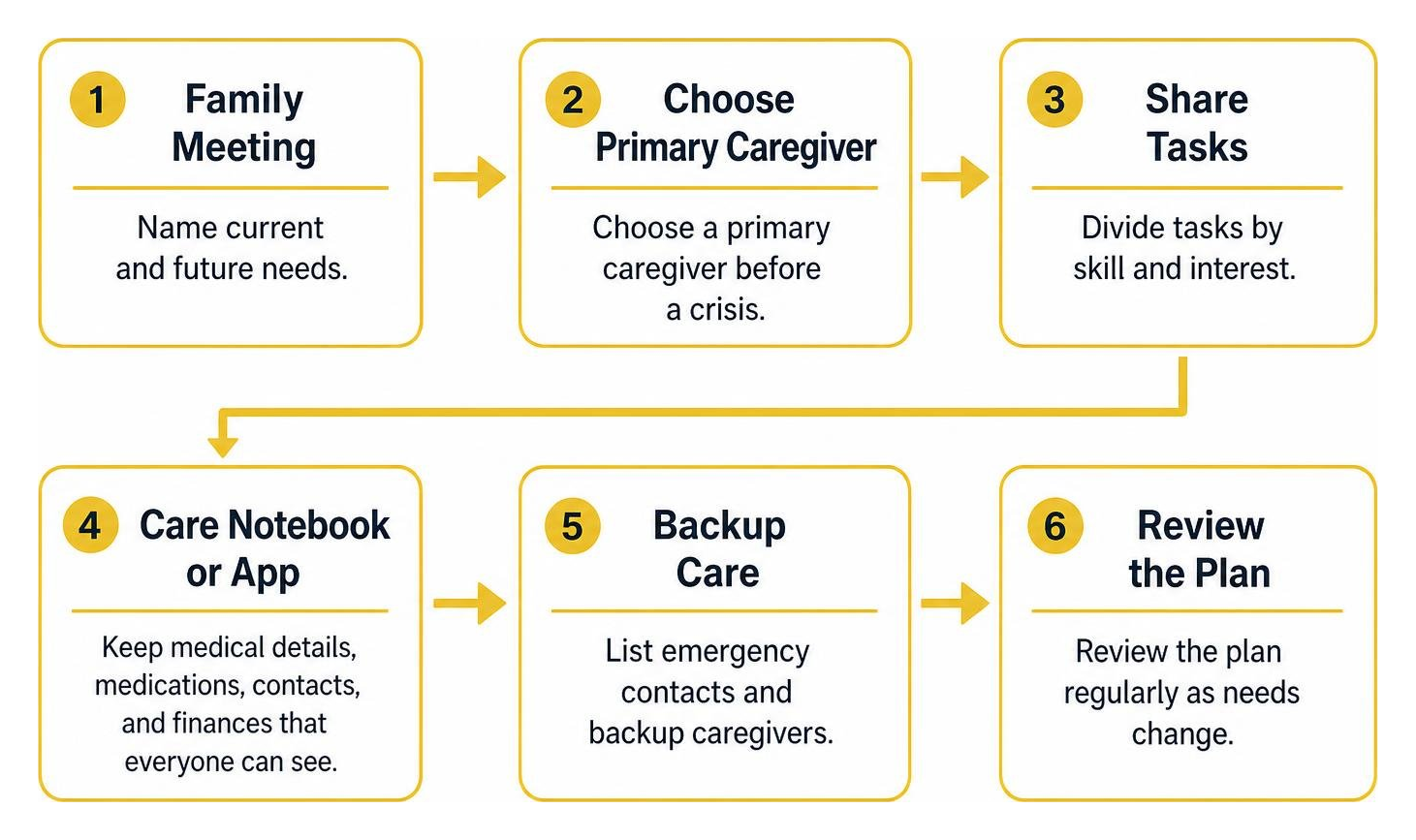
A care plan puts needs, people, and backups on paper. Involve your loved one, family, friends, and medical team. Here is a simple process:
Hold a family meeting or call to name current and future needs.
Choose a primary caregiver, ideally before a crisis, so someone can step in immediately.
Divide tasks by skill and interest. One person may be good with numbers and bills, another confident talking with doctors, another close enough for groceries and cleaning.
Keep a care notebook or app with medical details, medications, contacts, and finances that everyone can see.
List emergency contacts and backup caregivers.
Review the plan regularly as needs change.
The NIA guidance on sharing caregiving responsibilities includes a worksheet for this. Distant relatives can still help by coordinating information, handling paperwork, or scheduling visits. Primary caregivers, especially spouses, often hesitate to ask for help, so others should offer first. Our in-home care guide shows how professional help can fit into the plan.
How Can I Get Paid as a Family Caregiver in California?
Because Aspen Senior Care serves Utah Valley, this section is a general overview, and programs vary by state. In California, the best-known option is In-Home Supportive Services (IHSS), a Medi-Cal related program where eligible people can choose and employ a family member as their caregiver. Eligibility depends on the care recipient's needs and income. Contact your county office for current rules.
Other routes to consider, with eligibility varying by state:
Medicaid consumer-directed programs, where the care recipient picks the caregiver.
VA programs, such as aid and attendance and veteran-directed care.
Paid family leave, where available. Notify your employer and get certification from a health provider.
Long-term care insurance, though only about 3% of adults over 50 have policies allowing family caregiver coverage.
Personal care agreements, written contracts for duties and pay based on local rates. Get legal advice first.
Ask a tax professional about reporting rules too. Caregiving also costs money: family caregivers spend more than $7,200 a year of their own funds on average. Paid caregivers in California average about $15.33 an hour, so these programs can ease the strain. Utah families should check Utah's Medicaid office and Area Agency on Aging.
What Resources, Support Groups, and Respite Services Can Help?
Plenty of help exists:
California Caregiver Resource Centers: a network of 11 centers covering every California county, with CareNav as an online tool.
Area Agencies on Aging: local help with transportation, in-home services, and counseling.
Eldercare Locator: enter a ZIP code to find nearby services.
Medical social workers: they assess needs and point to training, respite, and financial support.
Disease-specific nonprofits and support groups: places to swap tips and feel less alone.
Respite care and adult day programs: short breaks that let you recharge.
The HHS caregiver and long-term care resources pull many federal tools into one place, including VA caregiver support. For breaks, read about respite care, and our caregiver support guide covers local ideas. Adult day programs offer social time and supervision, and they are a good middle step when you aren't ready for a regular caregiver but need more help.
How Can Caregivers Protect Their Well-Being and Mental Health?
Caregiving is rewarding, but it takes a toll. Research reports that about 80% of family caregivers feel high stress and half experience significant depression. Dementia caregivers carry extra risk, and about one in four caregivers are in the sandwich generation, raising children while caring for a parent.
Self-care isn't selfish. Try these:
Protect your sleep and eat well.
Keep seeing friends and family.
Set boundaries about what you can do.
Try counseling or a support group.
Ask for help before you hit a wall.
Keep your own medical appointments.
If your loved one is hostile or difficult, learn not to take it personally.
Plan breaks on the calendar, like any other appointment. Our article on caring for the caregiver goes deeper.
Frequently Asked Questions About Senior Caregivers
Can a Family Member Be Paid to Care for a Parent in California?
Yes, in some cases. IHSS through Medi-Cal can pay an eligible family member chosen by the care recipient. Paid leave, VA programs, and long-term care insurance may also help. Eligibility varies, so check with the state or county first.
Does Medicare Pay for a Regular In-Home Caregiver?
Generally no. Medicare covers home health only under strict conditions: a need for skilled nursing or therapy, homebound status, a doctor's care plan, and a Medicare-certified agency. It usually doesn't cover 24-hour care or long-term personal care, and Medicare Advantage plans typically don't either. About 70% of people turning 65 will use some long-term care, so plan early for costs through savings, insurance, or Medicaid.
What Should I Do If I Cannot Provide All the Care Myself?
You're not alone, and you shouldn't be. Build a care team of family and friends, share tasks, and fill the gaps with professional help. Respite care gives short breaks, and adult day programs provide daytime supervision and company. Start the conversation sooner rather than later.
Conclusion
Good care starts with knowing what your loved one needs, planning early, and choosing support you can trust. Protect your own well-being along the way, because a rested caregiver is a better caregiver. Aspen Senior Care is here for Utah Valley families with personalized in-home care and adult day programs, including 24/7 availability and specialized dementia support. Reach out, and we'll help you build a plan that fits.