
Everything Families Need to Know About In-Home Senior Companions
How Caregivers and Companions Help Older Adults at Home
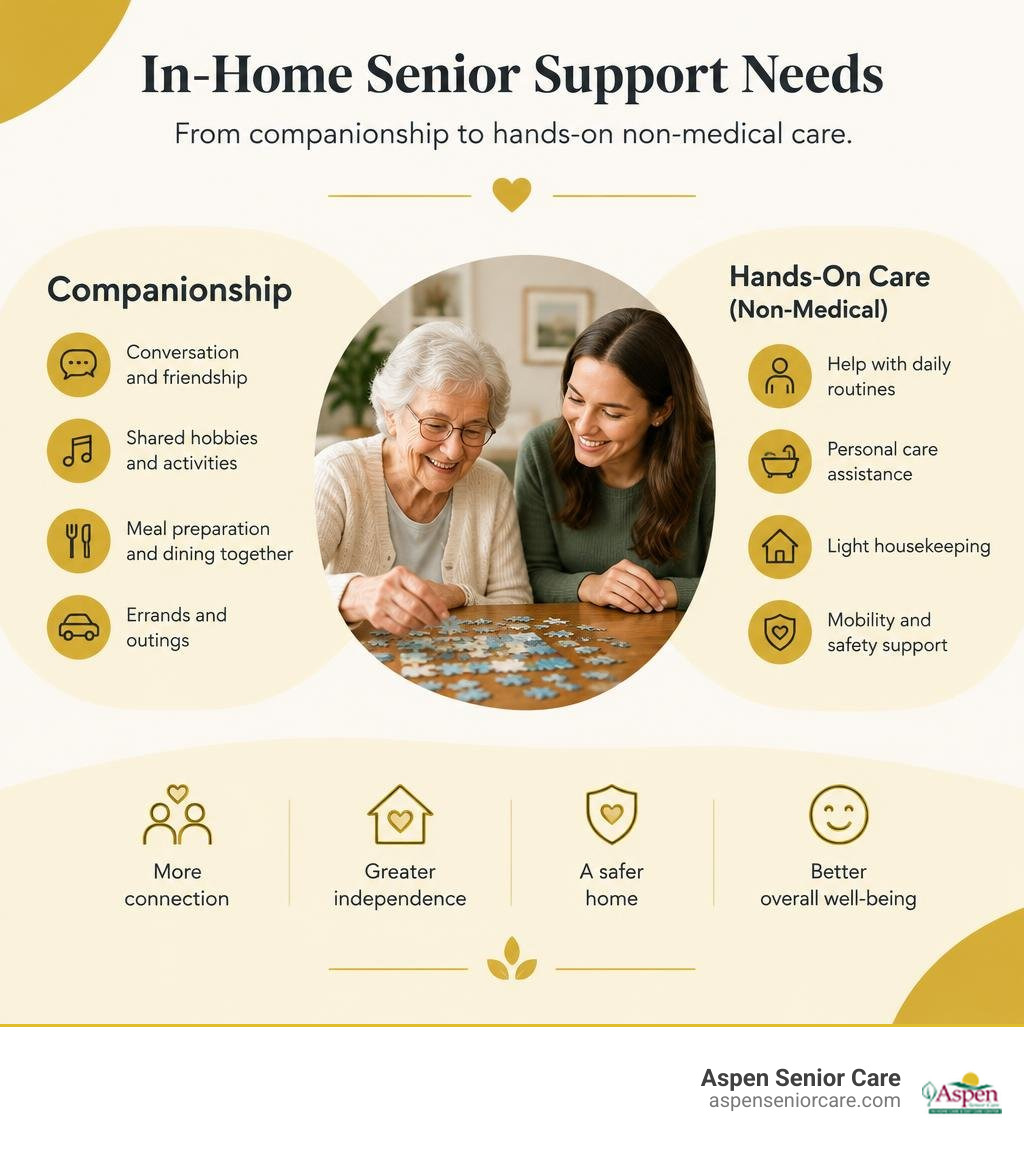
Caregivers and companions help older adults stay connected and manage daily life at home. A companion may visit for conversation, share a hobby, prepare a meal, or help with errands. When someone needs more hands-on help, a caregiver may assist with daily routines and personal care. Neither role replaces a nurse for medical care.
For families in Utah Valley, the right starting point is your parent’s needs: Are they lonely, having trouble with daily tasks, or unsafe alone? This guide will help you sort out the roles, find a good match, and plan for the cost.
According to data compiled by the National Alliance for Caregiving and AARP, close to 49 million informal or family caregivers provide vital assistance to adults across the United States, with broader estimates reaching nearly 66 million. Many of these family members balance jobs, child-rearing, and their own health while looking after an aging parent. Compounding this challenge, almost half of women aged 75 and older live alone. Without regular social contact and a bit of routine help, living alone can lead to social isolation, malnutrition, or unmanaged home hazards.
Understanding the Roles of Caregivers and Companions in Modern Eldercare
Navigating the landscape of home-based support can feel confusing. Families often hear terms like care companion, home health aide, personal care assistant, and registered nurse used interchangeably. However, each role fulfills specific needs along the eldercare spectrum.

When an aging loved one desires to remain in the comfort of their home, identifying the right balance of non-medical in-home help ensures safety without stripping away independence.
Here is how common care roles compare:
Role | Primary Focus | Key Responsibilities | Medical / Clinical Scope |
|---|---|---|---|
Care Companion | Social engagement & household support | Conversation, hobbies, meal prep, light housekeeping, errand running, rides | Non-medical only; no hands-on personal hygiene or physical transfers |
Home Health Aide / Personal Care Aide | Hands-on non-medical assistance | Bathing, dressing, grooming, toileting, ambulation, basic exercise assistance | Non-medical personal care; may assist with basic vitals under clinical supervision |
Registered Nurse (RN) / LPN | Skilled clinical care | Medication administration, wound care, tube feedings, complex medical assessments | Full medical/clinical scope prescribed by a physician |
Defining the Non-Medical Scope of Companion Care
The heart of companion support lies in friendship, intellectual stimulation, and homemaking assistance. A dedicated companion is a watchful eye and a willing ear. They provide emotional comfort and practical help, ensuring that an older adult feels valued and connected.
Practical tasks provided through non-medical companion care include:
Active Companionship: Playing cards, discussing current events, scrapbooking, or working on gardening projects.
Homemaker Support: Preparing nutritious meals, washing dishes, folding laundry, and organizing living spaces.
Safety Oversight: Ensuring pathways are clear of tripping hazards and keeping a calm, reassuring presence at home.
Medication Reminders: Prompting the individual when it is time to take pre-poured medications.
Family Updates: Keeping adult children informed about mood changes, nutritional intake, and day-to-day well-being.
Companion caregivers do not perform skilled medical tasks (such as administering injections or changing sterile dressings), nor do they provide intimate, hands-on hygiene care like complete sponge baths.
When to Introduce Companionship for Aging in Place
Knowing when to bring outside help into the home is one of the toughest decisions families face. Often, the need develops gradually. You might notice your mother skipping meals because cooking for one feels like a chore, or your father giving up his favorite woodworking hobby because he feels unsteady on his feet.
Key signs that indicate it is time to explore elderly care at home include:
Social Withdrawal: Reluctance to leave the house, attend church, or call friends.
Changes in Driving Ability: Dents on the car, reluctance to drive at dusk, or missed appointments due to transportation worries.
Mild Memory Lapses: Forgetting to turn off appliances or misplacing essential items frequently.
Neglected Nutrition: Weight loss, spoiled food in the refrigerator, or relying solely on frozen snacks.
Caregiver Fatigue: Family members feeling overwhelmed, anxious, or physically exhausted from keeping up with daily care.
Introducing a companion early creates a trusted relationship before an urgent health crisis occurs.
Key Benefits of In-Home Companionship for Older Adults
Remaining at home offers older adults a sense of autonomy and dignity. But living alone without regular interaction can increase the risk of cognitive decline and emotional distress. Non-medical companion support bridges this gap.

As outlined in the AARP guide on companion care options, companion care provides a vital layer of security and emotional enrichment for seniors who are otherwise physically capable. Tailored companion care for seniors transforms solitary routines into opportunities for growth, purpose, and community connection.
Reducing Loneliness and Social Isolation
Loneliness is not simply an uncomfortable feeling; research shows prolonged social isolation carries health risks comparable to smoking. When a senior lives alone, hours can pass without speaking to another person.
A trusted companion provides meaningful conversational engagement:
Sharing stories about family history and life experiences.
Encouraging regular walks around the neighborhood to enjoy fresh air.
Accompanying seniors to local community centers, libraries, or art classes.
Playing board games and brain teasers that stimulate memory and problem-solving skills.
By establishing a warm friendship, companion care revitalizes a senior's daily outlook, promoting emotional resilience and a healthier mental state.
Household Management and Transportation Assistance
Maintaining a clean and orderly home becomes physically taxing with age. Simple chores like reaching top shelves or carrying a heavy laundry basket can turn into dangerous fall risks.
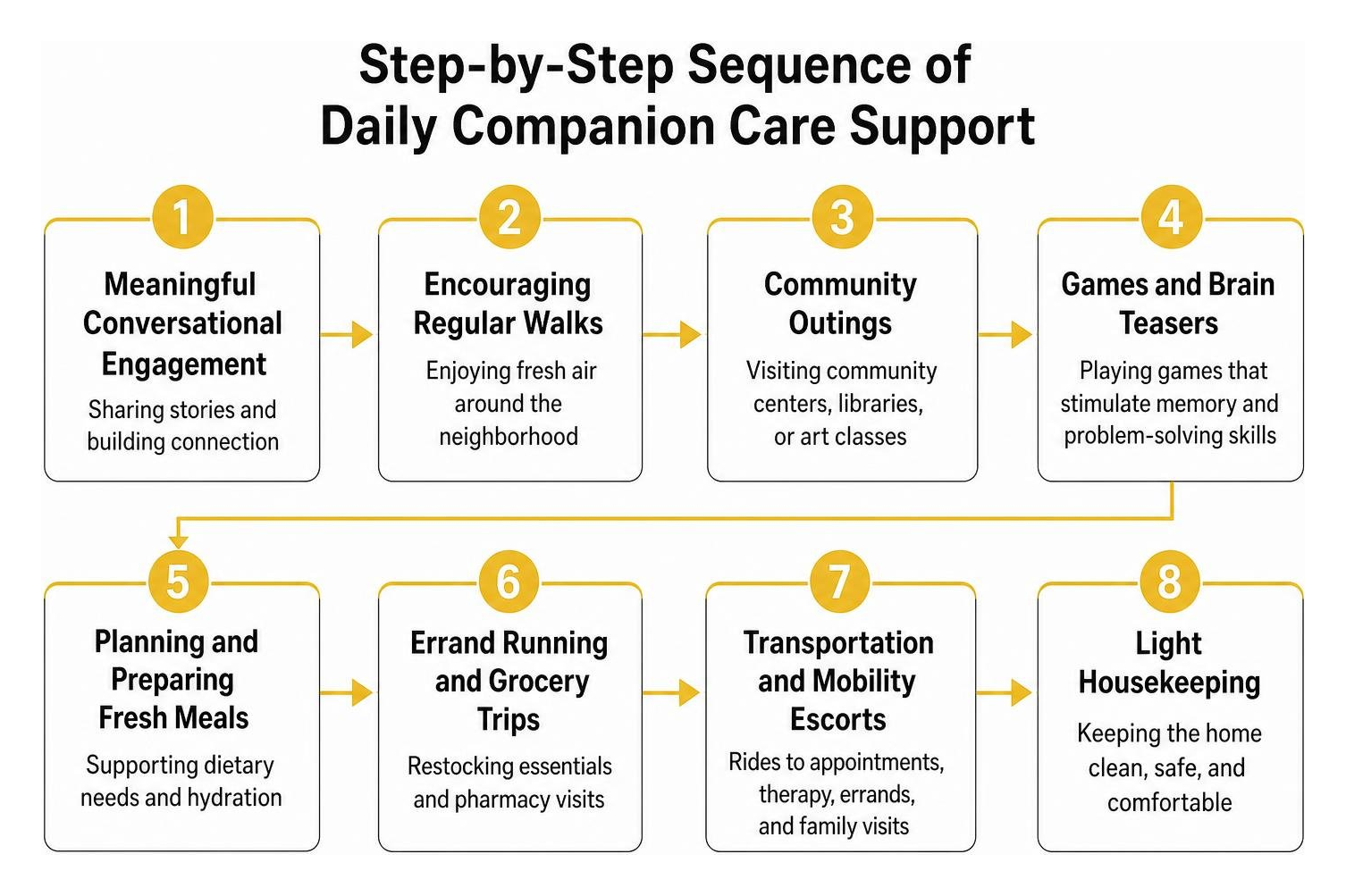
Companions seamlessly support daily home life by:
Planning and Preparing Fresh Meals: Accommodating dietary needs such as low-sodium or diabetic-friendly recipes, ensuring seniors stay hydrated and properly nourished.
Errand Running and Grocery Trips: Taking the stress out of pantry restocking and pharmacy visits.
Transportation and Mobility Escorts: Providing reliable rides to doctor visits, physical therapy, hair appointments, and family gatherings.
Light Housekeeping: Dusting, vacuuming high-traffic areas, taking out the trash, and changing bed linens.
Navigating Care Coordination, Family Support, and Caregiver Wellness
Caregiving is rarely a solo endeavor. Successful care requires smooth teamwork between family members, professional helpers, and medical providers.
The Harvard Health Caregiver's Handbook emphasizes that family caregivers must view themselves as care managers. Coordinating daily schedules, tracking behavioral changes, and maintaining clear communication channels ensures that everyone involved in a loved one's care stays aligned. Additionally, the National Institute on Aging Caregiving Toolkit highlights the importance of using community-based programs to organize daily routines effectively.
Caregivers also take on critical roles beyond the home. During hospital stays, research demonstrates that informal caregivers dynamically switch between five distinct responsibilities: acting as a companion, assistant, representative, navigator, and planner (Miller et al., 2016). Recognizing these shifting duties helps families prepare for healthcare encounters and advocate effectively during clinical visits and hospital discharges.
How Family Caregivers and Companions Coordinate Care at Home
When a companion joins the household routine, communication is essential. Setting up simple tracking systems ensures nothing slips through the cracks.
Best practices for smooth coordination include:
Bedside or Kitchen Communication Logs: A notebook or shared digital board where companions and family note daily meals, fluid intake, mood, activities, and upcoming appointments.
Medication Checklists: Clear, easy-to-read charts that log when medication reminders were given.
Weekly Family Check-Ins: A quick call between the primary family caregiver and the companion agency to discuss any emerging patterns, such as altered sleep habits or changes in mobility.
Respite Strategies for Dedicated Caregivers and Companions
Caring for an aging spouse or parent is deeply rewarding, but it can also take a heavy toll. A comprehensive systematic review on spousal caregiving strategies illustrates that older cohabiting caregivers carry immense "moral labor," constantly balancing their partner’s needs with their own personal identity and health (Glasdam et al., 2025). Spousal caregivers frequently push through physical and emotional exhaustion to avoid disrupting their partner's routine, which often leads to severe burnout.
Practicing proactive caring for the caregiver is not selfish—it is necessary for sustainable care. Joining local caregiver support groups allows family members to share experiences, exchange practical advice, and find emotional relief. For structured guidance on managing stress and establishing healthy boundaries, reviewing our caregiver support guide offers actionable steps to prevent burnout.
Utilizing Digital Tools and Care Platforms
Technology can streamline coordination, but digital tools must be practical and user-friendly. In a published study on digital caregiver tools and adoption barriers, researchers found that online platforms often see low adoption if they are overly complex or lack direct human connection (Dale et al., 2023). For older family caregivers, simple tools that integrate easily into daily life are far more effective than complicated dashboards.
Practical resources include:
Shared calendar apps (such as Google Calendar or Cozi) for family appointment scheduling.
Automated pill dispensers with auditory reminders.
Curated online caregiver resources that provide vetted guides on local adult day programs, respite care, and safe home adaptations.
How to Find, Vet, and Finance Senior Companion Services
Inviting someone into your loved one’s private living space requires trust, diligence, and thorough vetting. Families generally choose between two primary hiring models: hiring an independent caregiver directly or working with a licensed home care agency.
Direct Hiring (Private Caregiver): Families post job listings, conduct interviews, run background checks, manage payroll taxes, and arrange their own backup coverage when the caregiver is sick or on vacation.
Agency Care Model: A licensed home care agency employs, trains, insures, and bonds the caregivers. The agency handles background screenings, matches personalities, manages payroll, and guarantees seamless substitute coverage if a regular companion is unavailable.
Essential Steps for Vetting and Personality Matching
Finding a companion is not just about checking boxes on a resume; it is about building a genuine friendship.
When evaluating potential candidates, follow these key vetting steps:
Comprehensive Background & Motor Vehicle Checks: Verify criminal records and driving histories if the companion will transport your loved one.
Professional Reference Verification: Speak directly with past employers or families to evaluate reliability, punctuality, and patience.
Interest and Personality Alignment: Match companion candidates based on shared hobbies (such as baking, classical music, or sports) and complementary communication styles.
Structured Trial Visits: Schedule an initial paid session where a family member is present to observe interactions and ensure your loved one feels comfortable and respected.
Understanding Costs and Payment Options
Planning for home-based care requires an understanding of standard industry rates and available funding options. Families can consult our transparent companion care price list to evaluate care levels and design a schedule that fits their family budget.
Common payment avenues include:
Private Pay: The most common method for companion care, paid out-of-pocket from personal savings, retirement funds, or family contributions.
Long-Term Care Insurance (LTCI): Many long-term care policies include coverage for non-medical in-home care once an individual meets specific benefit triggers (such as needing assistance with instrumental activities of daily living).
Veterans Affairs (VA) Benefits: Eligible veterans and surviving spouses may qualify for the VA Aid and Attendance benefit or Homemaker and Home Health Aide programs to offset in-home care costs.
Medicare Advantage (Part C): While traditional Medicare does not cover non-medical companion care, select Medicare Advantage plans offer supplemental home-care benefits.
Frequently Asked Questions About Senior Companionship
What is the average hourly cost of senior companion care in 2026?
Nationally, the median hourly rate for companion and homemaker services is approximately $26 to $32 per hour. Rates vary based on geographic location, whether care is arranged privately or through an agency, and the level of specialized supervision needed (such as memory care support).
Does traditional Medicare cover in-home companion services?
No. Traditional Medicare (Parts A and B) only covers intermittent, medically necessary skilled care ordered by a physician (such as skilled nursing or physical therapy for homebound individuals). It does not pay for custodial, non-medical companionship, meal preparation, or homemaking services.
What duties is a non-medical companion legally allowed to perform?
Non-medical companions can assist with light housekeeping, meal preparation, grocery shopping, transportation, safety supervision, recreational activities, and verbal medication reminders. They are legally restricted from performing skilled clinical tasks, such as administering injections, managing IV lines, dressing open wounds, or managing sterile medical equipment.
Conclusion
Choosing the right care path for an aging loved one is about preserving their independence while ensuring they stay safe, nourished, and socially engaged. In-home companions provide the essential support that allows seniors to thrive in familiar surroundings, while giving family caregivers the peace of mind and respite they deserve.
At Aspen Senior Care, we provide award-winning, family-like in-home caregiving and adult day services across Utah Valley, including Orem, Provo, Lehi, American Fork, Pleasant Grove, Spanish Fork, and surrounding communities. Whether your family needs a few hours of weekly companionship or comprehensive around-the-clock dementia support, our dedicated team is here to help your loved one age with dignity and joy. Contact us today to discuss your family's needs and schedule a personalized in-home assessment.
References
Miller AD, Mishra SR, Kendall L, Haldar S, Pollack AH, Pratt W. "Partners in Care: Design Considerations for Caregivers and Patients During a Hospital Stay.." CSCW : proceedings of the Conference on Computer-Supported Cooperative Work. Conference on Computer-Supported Cooperative Work, 2016. PMCID PMC4852166. Glasdam S, Xu H, Slåtsveen RE, Stilwell C, Wind G, Gulestø RJA, Turcotte PL. "Older caregivers' responsibilities and strategies for their cohabiting partners living at home-a qualitative systematic literature review.." Frontiers in public health, 2025. PMCID PMC12575198. Dale J, Nanton V, Day T, Apenteng P, Bernstein CJ, Grason Smith G, Strong P, Procter R. "Uptake and Use of Care Companion, a Web-Based Information Resource for Supporting Informal Carers of Older People: Mixed Methods Study.." JMIR aging, 2023. PMCID PMC10556998.