

In Depth Guide to ADL Assistance Options for Daily Care
How to Start with ADLs Assistance
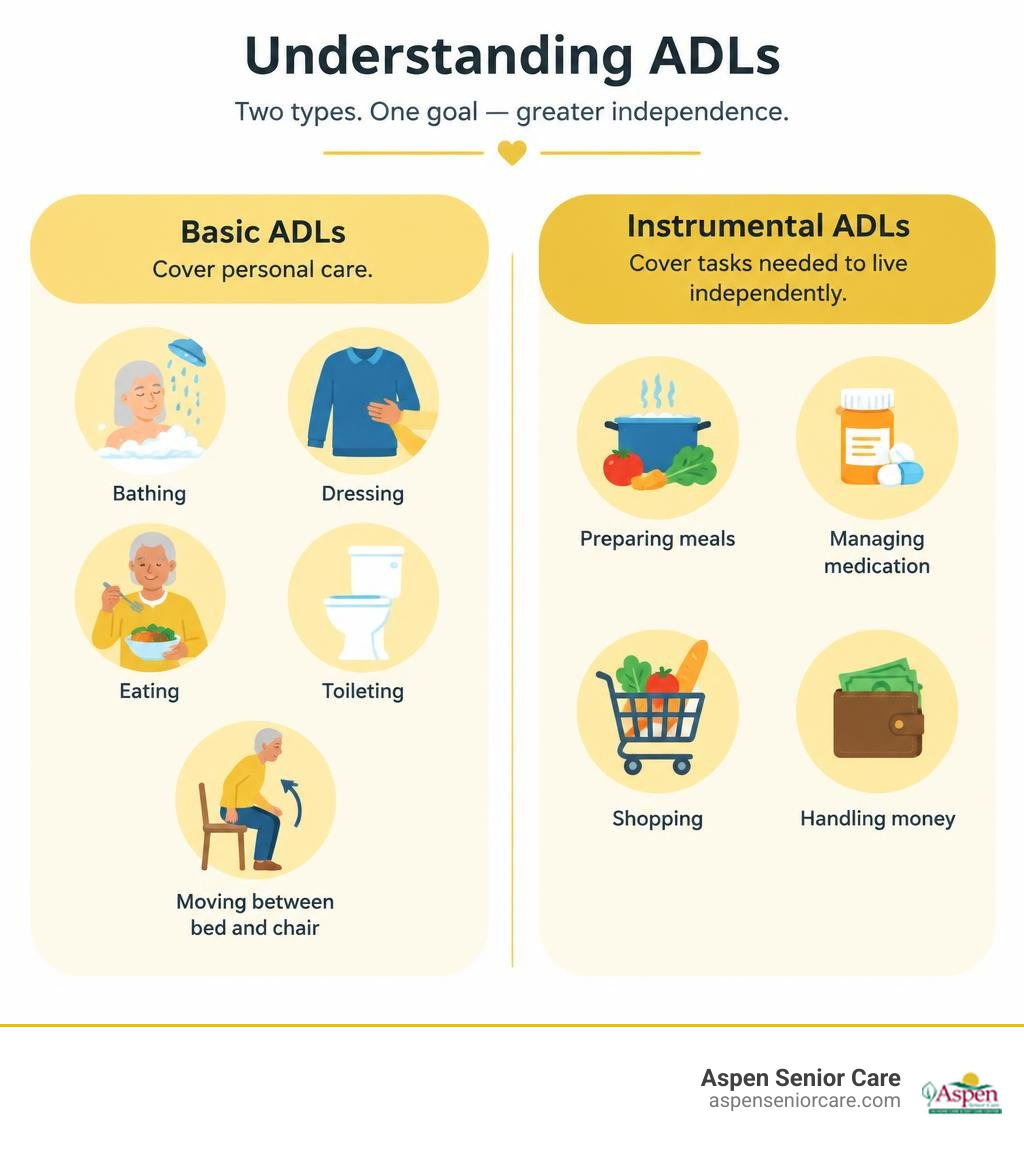
If you're looking for adls assistance for a parent, start with the tasks they can no longer do safely on their own. Basic ADLs include bathing, dressing, eating, toileting, and moving between a bed and chair. Instrumental ADLs include preparing meals, managing medication, shopping, and handling money. Write down where your parent needs a reminder, a helping hand, or someone to do the task for them. Then share that list with their healthcare team to plan the right level of support.
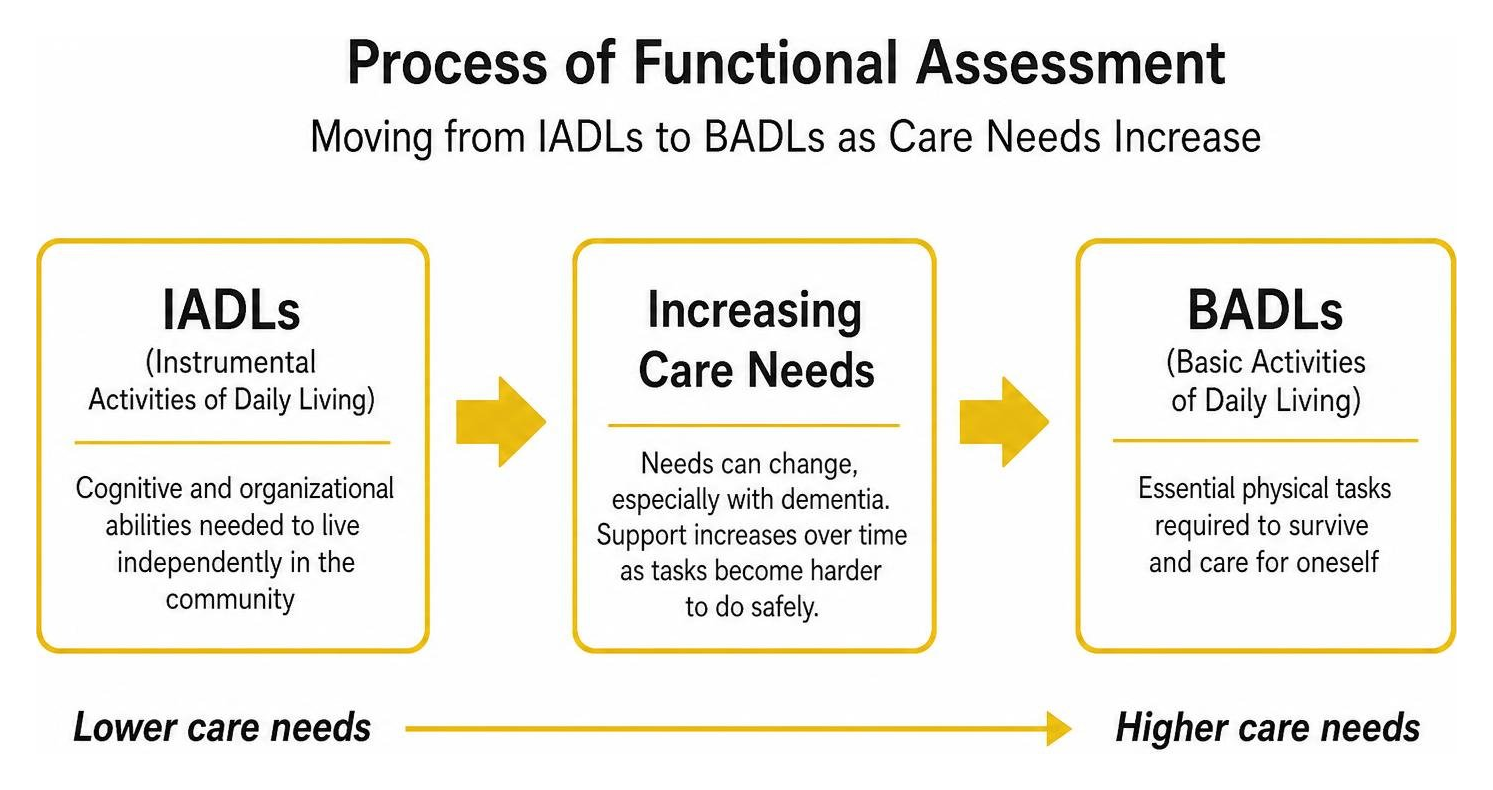
Needs can change, especially with dementia. A parent may first need help keeping track of medication, then later need hands-on help getting dressed. The goal is to keep them involved in each task as much as they safely can.
Understanding ADLs vs. IADLs: Core Functional Differences
Understanding functional ability is the foundation of geriatric care and long-term planning (NBK470404). When we evaluate how well an older adult manages on their own, we look at daily activities through a functional hierarchy. Tasks fall into two main categories: Basic Activities of Daily Living (BADLs) and Instrumental Activities of Daily Living (IADLs).
The distinction between IADLs vs ADLs is critical for care planning. While BADLs reflect the essential physical tasks required to survive, IADLs measure the cognitive and organizational abilities needed to live independently within a community.
Basic Activities of Daily Living (BADLs)
Basic ADLs represent the fundamental self-care tasks that people learn early in childhood. Healthcare professionals assess six core functional areas:
Bathing and Grooming: The physical capacity to wash one's body, brush teeth, style hair, and maintain personal hygiene safely.
Dressing: The ability to choose appropriate seasonal clothing, manage fasteners like buttons and zippers, and physically put on or take off garments.
Toileting: Getting on and off the toilet safely, cleaning oneself properly, and managing clothing.
Transferring and Mobility: Moving from one position to another, such as shifting from a bed to a wheelchair or rising from a recliner, along with general ambulation across flat surfaces.
Continence: Maintaining complete voluntary control over bladder and bowel functions, or managing personal hygiene products independently.
Feeding: The physical ability to move food from a plate to the mouth and chew and swallow safely (this does not include cooking the meal).
Instrumental Activities of Daily Living (IADLs)
Instrumental activities require a higher level of cognitive processing, planning, and executive functioning. These complex tasks often begin to slip before physical self-care tasks decline:
Meal Preparation: Planning nutritious meals, safely handling kitchen appliances, using cooking utensils, and storing food safely.
Medication Management: Taking correct dosages at scheduled times, refilling prescriptions, and understanding potential side effects or drug interactions.
Financial Management: Paying bills on time, balancing a checkbook, avoiding common financial scams, and handling everyday transactions.
Housekeeping and Laundry: Cleaning living areas, washing dishes, running laundry machines, and maintaining a hygienic home environment.
Shopping: Purchasing necessary groceries, household supplies, and personal items.
Transportation: Driving safely, arranging rides, or navigating public transit systems.
Communication: Managing phone calls, using a mobile device, or handling regular postal mail.
Functional Category | Primary Focus | Cognitive vs. Physical Demand | Early Warning Signs of Decline |
|---|---|---|---|
Basic ADLs (BADLs) | Fundamental physical self-care | High physical demand, low-to-moderate cognitive demand | Unwashed hair, wearing soiled clothes, unsteadiness standing from chairs |
Instrumental ADLs (IADLs) | Complex independent living | High cognitive demand, moderate physical demand | Unopened mail, unpaid bills, spoiled food in fridge, missed medication doses |
Clinical Evaluation and Qualifying for ADLs Assistance
When an older adult begins to struggle with routine tasks, an objective clinical assessment determines the exact level of support required. ADL decline is a primary predictor of hospital readmission, fall risk, and nursing home placement. In fact, research indicates that older adults who cannot independently perform more than two basic ADLs often require long-term care stays exceeding one year (NBK470404).
Across the United States, functional decline increases significantly with advanced age. By age 85 and older, roughly 20.7% of adults require hands-on help with basic ADLs, compared to 7% of adults aged 75 to 84, and 3.4% of those aged 65 to 74 (NBK470404).
Standardized Assessment Scales in Healthcare
Interprofessional healthcare teams—including physicians, registered nurses, occupational therapists (OTs), and physical therapists (PTs)—use standardized assessment instruments:
The Katz Index of Independence in Activities of Daily Living: Evaluates six basic functions (bathing, dressing, toileting, transferring, continence, feeding). Scoring ranges from 0 to 6, where a score of 6 indicates full functional independence and 0 indicates complete dependence (NBK470404).
The Lawton Instrumental Activities of Daily Living Scale: Assesses eight complex domains of daily living. Scoring ranges from 0 (low function, dependent) to 8 (high function, independent), highlighting subtle cognitive impairments that affect independent community life (NBK470404).
Kohlman Evaluation of Living Skills (KELS): Combines direct clinical observation with patient self-reporting to assess 17 practical living skills across self-care, safety, money management, and work/leisure. Because it utilizes direct task observation, KELS is particularly valuable for individuals experiencing cognitive decline (NBK470404).
Common Causes and Risk Factors for ADL Decline
Functional decline rarely happens in isolation. It stems from progressive medical conditions, sudden acute events, or gradual physical frailty:
Neurodegenerative Disorders: Alzheimer's disease, Lewy body dementia, frontotemporal dementia, and Parkinson's disease slowly impair the brain's ability to sequence complex movements and make sound judgments.
Musculoskeletal and Joint Diseases: Advanced osteoarthritis, spinal stenosis, and osteoporosis reduce physical reach, grip strength, and weight-bearing tolerance.
Cardiovascular and Pulmonary Illnesses: Congestive heart failure (CHF) and chronic obstructive pulmonary disease (COPD) limit stamina, leaving individuals breathless during simple tasks like showering or putting on socks.
Acute Events and Surgeries: Strokes, joint replacements, and hip fractures often cause immediate functional deficits that demand structured physical and occupational rehabilitation.
Stage-by-Stage Strategies for Cognitive and Dementia Care
Assisting an individual who has cognitive decline requires a balance between ensuring safety and preserving personal dignity. In adult day programs, care teams manage a wide variety of daily functional needs: approximately one-third of participants need help with toileting, one-quarter need assistance with eating, one-third require medication support, nearly half need mobility assistance, and one-third need physical transfer help.
Providing compassionate elderly care at home means adapting your caregiving techniques as dementia progresses.
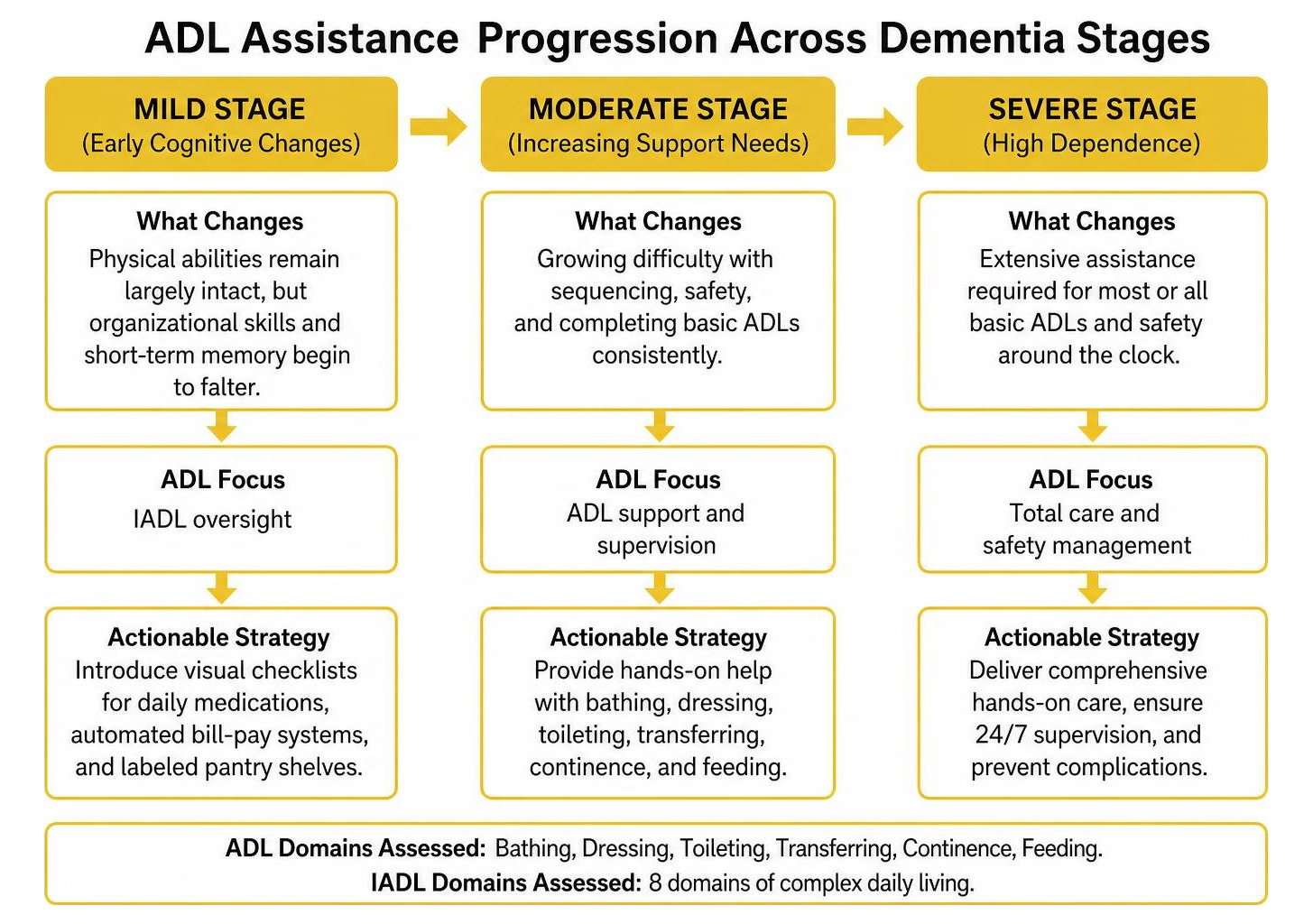
Tailoring ADLs Assistance Across Mild, Moderate, and Severe Dementia
1. Mild Stage (Early Cognitive Changes)
In the early stage, physical abilities remain largely intact, but organizational skills and short-term memory begin to falter.
Actionable Strategy: Focus on IADL oversight. Introduce visual checklists for daily medications, automated bill-pay systems, and labeled pantry shelves.
Preserving Independence: Encourage your loved one to manage their own grooming and dressing, stepping in only to assist with planning or weather-appropriate clothing choices.
2. Moderate Stage (Emerging Physical and Sequencing Challenges)
As memory loss progresses, sequencing multi-step tasks becomes confusing. An individual may look at a toothbrush or a shirt and feel unsure of what to do first.
Actionable Strategy: Break tasks down into clear, single-step prompts ("Please put your right arm in this sleeve"). Lay out clothes in the exact order they should be put on. Use adaptive dinnerware, such as plates with raised edges or weighted utensils, to encourage self-feeding.
Bathroom Modifications: Set up the shower area completely before bringing your loved one into the room. Ensure the water is warm, towels are within reach, and lighting is gentle to reduce anxiety.
3. Severe Stage (Full Physical Support Required)
In advanced dementia, verbal comprehension declines and physical motor skills diminish significantly.
Actionable Strategy: Provide full, hands-on assistance with basic ADLs while speaking in soothing, reassuring tones. Use gentle touch to cue physical movements.
Comfort Focus: Use one-step directions and maintain eye contact. Prioritize skin integrity, comfortable seating positions, regular repositioning, and gentle oral hygiene using soft-bristled swabs or brushes.
Communication and Behavioral Approaches for Caregivers
Caregiver approach and emotional tone directly influence how a person responds to daily care. Rushing through a task or showing frustration can trigger distress or resistance:
Maintain Eye Contact and Speak in a Calm Voice: Approach from the front at eye level. Avoid startling the person from behind.
Repeat Requests Verbatim: If someone doesn't understand an instruction, repeat the exact same short phrase rather than rephrasing it, which requires new mental processing.
Offer Manageable Choices: Instead of asking an open-ended question like "What do you want to wear today?", hold up two options: "Would you like the blue sweater or the green cardigan?"
Respect Established Habits and Personal Space: If a loved one has bathed in the evening their entire adult life, do not force a morning shower. Honor their personal preferences and give them physical breathing room whenever safety permits.
Assistive Technology and Environmental Modifications
Making thoughtful adaptations to the living environment helps older adults maintain independence, reduces fall risks, and makes caregiving physically safer. Proactive planning is key; organizations like the ALS Association Assistive Technology Resources recommend installing accessibility devices and mobility equipment well before physical exhaustion or mobility loss creates an emergency.
Environmental Accessibility and Home Upgrades
Targeted home modifications make daily routines substantially safer:
Bathroom Safety: Professional installation of secure grab bars anchored into wall studs next to the toilet and inside the shower stall. Replace standard bathtubs with barrier-free walk-in showers featuring handheld sprayers and slip-resistant flooring.
Stair and Entryway Access: Install continuous handrails on both sides of stairwells, build low-incline wheelchair ramps at primary entrances, and install modular stairlifts for multi-story homes.
Doorway and Hallway Clearance: Utilize expandable offset door hinges to add up to two inches of clearance for walkers and wheelchairs without major wall reconstruction.
Specialized Daily Living Aids and Monitoring Tools
Low-tech and high-tech tools can bridge functional gaps throughout the home:
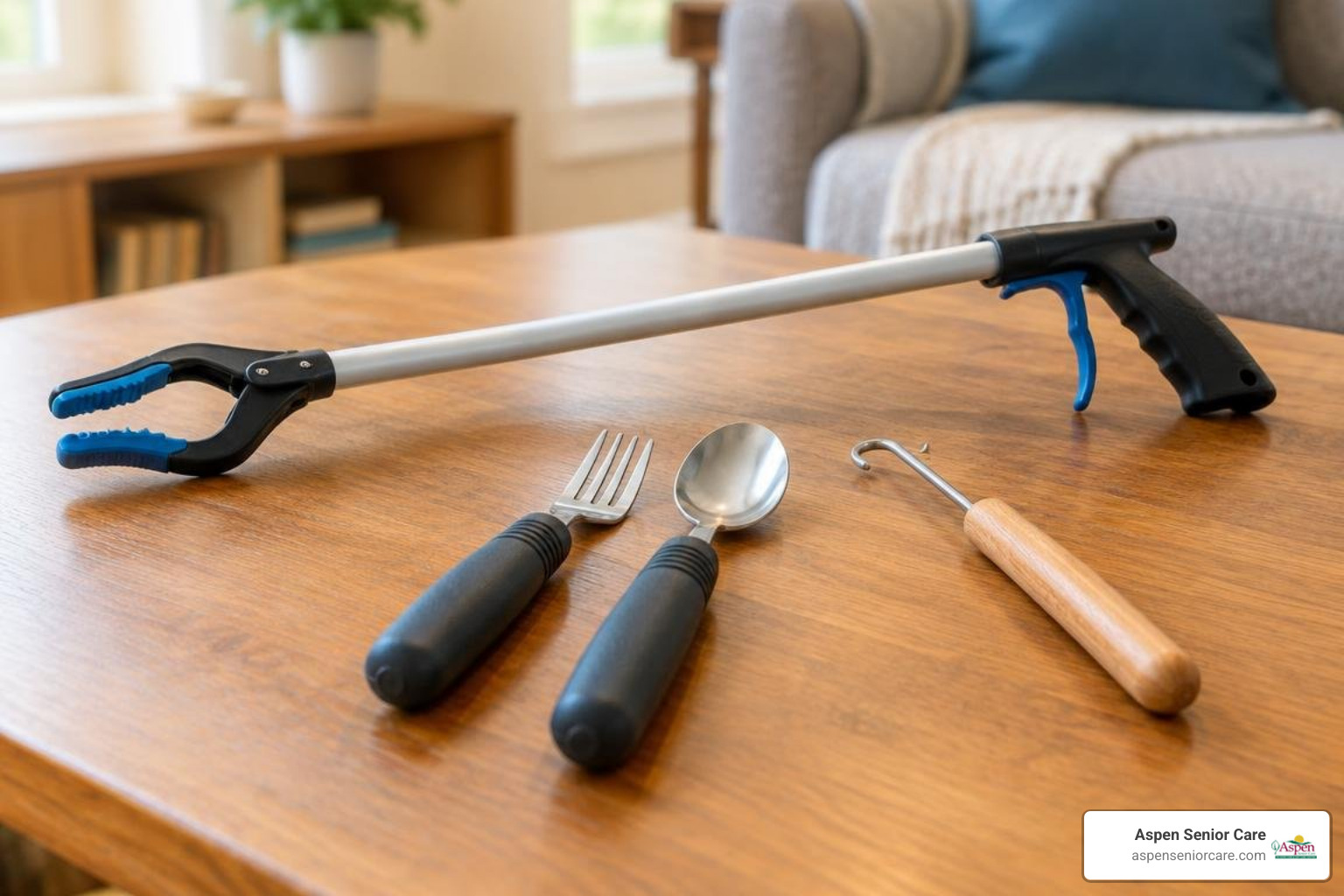
Dressing and Grooming Aids: Button hooks, zipper pulls, long-handled shoehorns, and elastic no-tie shoelaces allow seniors with arthritis or tremors to dress without assistance.
Adaptive Eating Utensils: Weighted cutlery helps steady Parkinson's tremors, while ergonomic angled spoons and high-rimmed scoop plates assist individuals recovering from strokes.
Medication Safety Devices: Automated, lockable pill dispensers deliver pre-sorted medications at scheduled times, sounding an audible alarm and flashing light cues.
Smart Sensors and Emergency Response Systems: Modern Personal Emergency Response Systems (PERS) with automatic fall-detection sensors and wearable pendant buttons ensure rapid help in an emergency, while passive ambient motion sensors can alert family members to unexpected nighttime wandering.
Navigating Funding and In-Home Support Programs
Funding long-term daily care requires understanding the mix of private resources, state waivers, and community-based programs. Because traditional Medicare covers acute, skilled medical care rather than ongoing custodial ADL assistance, families often use a blend of options. For detailed financial comparisons, our Home Care Pricing Guide 2026 and In-Home Care Complete Guide 2026 provide transparent breakdowns of home-based support costs.
Government Programs, Waivers, and Local Support
Depending on location, income, and medical eligibility, several programs help offset equipment and caregiving expenses:
State Medicaid Home and Community-Based Services (HCBS) Waivers: Many states offer specialized waiver programs designed to keep seniors in their homes. For example, the South Dakota Assistive Daily Living Services Waiver provides up to $4,000 per service plan year for environmental accessibility adaptations and up to $30,000 every ten years for specialized vehicle modifications.
Provincial Equipment Support: In Canada, the Alberta Aids to Daily Living Program operates a cost-share model where qualifying residents pay 25% of benefit costs up to an annual maximum of $500, with complete exemptions for lower-income individuals.
Utah Aging Services and Area Agencies on Aging: Utah residents can access support through Utah Aging and Adult Services. In Utah County, the Mountainland Association of Governments Senior Help Guide provides direct referrals for local caregiver respite, meal delivery, and supportive home care.
Coordinating ADLs Assistance with Professional In-Home Teams
Balancing work, family life, and hands-on caregiving is demanding. Bringing in professional in-home help creates a sustainable support system.
Professional care teams adapt their services to each family's exact needs, offering everything from friendly companion care for seniors to comprehensive hands-on support with bathing, transfers, and incontinence management. Regular respite care allows family members to rest and recharge, knowing their loved one is receiving attentive, award-winning care in familiar surroundings.
Frequently Asked Questions about ADL Assistance
How do healthcare providers determine if someone needs help with ADLs?
Healthcare professionals use standardized screening tools—such as the Katz Index of Independence in Basic ADLs and the Lawton IADL Scale—alongside clinical observations from occupational and physical therapists. They review mobility, balance, cognitive status, and self-care performance to identify areas where a patient is safe, requires cueing, or needs complete physical support.
What is the primary difference between ADLs and IADLs?
Basic ADLs involve fundamental, physical self-care tasks essential for survival (such as feeding, bathing, dressing, and using the restroom). Instrumental ADLs (IADLs) involve more complex, multi-step cognitive activities necessary for independent living within a community (such as managing finances, cooking meals, scheduling medications, and handling household chores).
Does Medicare or standard insurance cover daily ADL assistance?
Traditional Medicare and standard private health insurance policies generally do not cover non-medical, custodial ADL care (such as assistance with dressing, bathing, or homemaking) when that is the only level of care needed. Coverage for daily hands-on care is typically funded through private pay, long-term care insurance policies, Veterans Aid and Attendance benefits, or state-specific Medicaid Home and Community-Based Services (HCBS) waiver programs.
Conclusion
Assisting a loved one with activities of daily living is a journey that requires patience, empathy, and the right practical tools. Recognizing the early signs of functional decline, using structured assessments like the Katz and Lawton scales, and introducing adaptive home equipment can significantly improve quality of life while preserving dignity and autonomy.
No family has to manage these daily caregiving responsibilities alone. At Aspen Senior Care, we provide Utah Valley families with award-winning, family-like support tailored to your routine. Whether your loved one needs help with morning grooming, safe transfers, memory care, or engaging adult day activities in Utah County—including Orem, Provo, Lehi, American Fork, and surrounding communities—our experienced caregivers are here around the clock.
Discover how our personalized in-home care services can bring comfort, safety, and peace of mind to your family today.