

Managing Advanced Symptoms with 24 Hour Parkinson's Care at Home
When 24-Hour Care for Parkinson's Disease Makes Sense
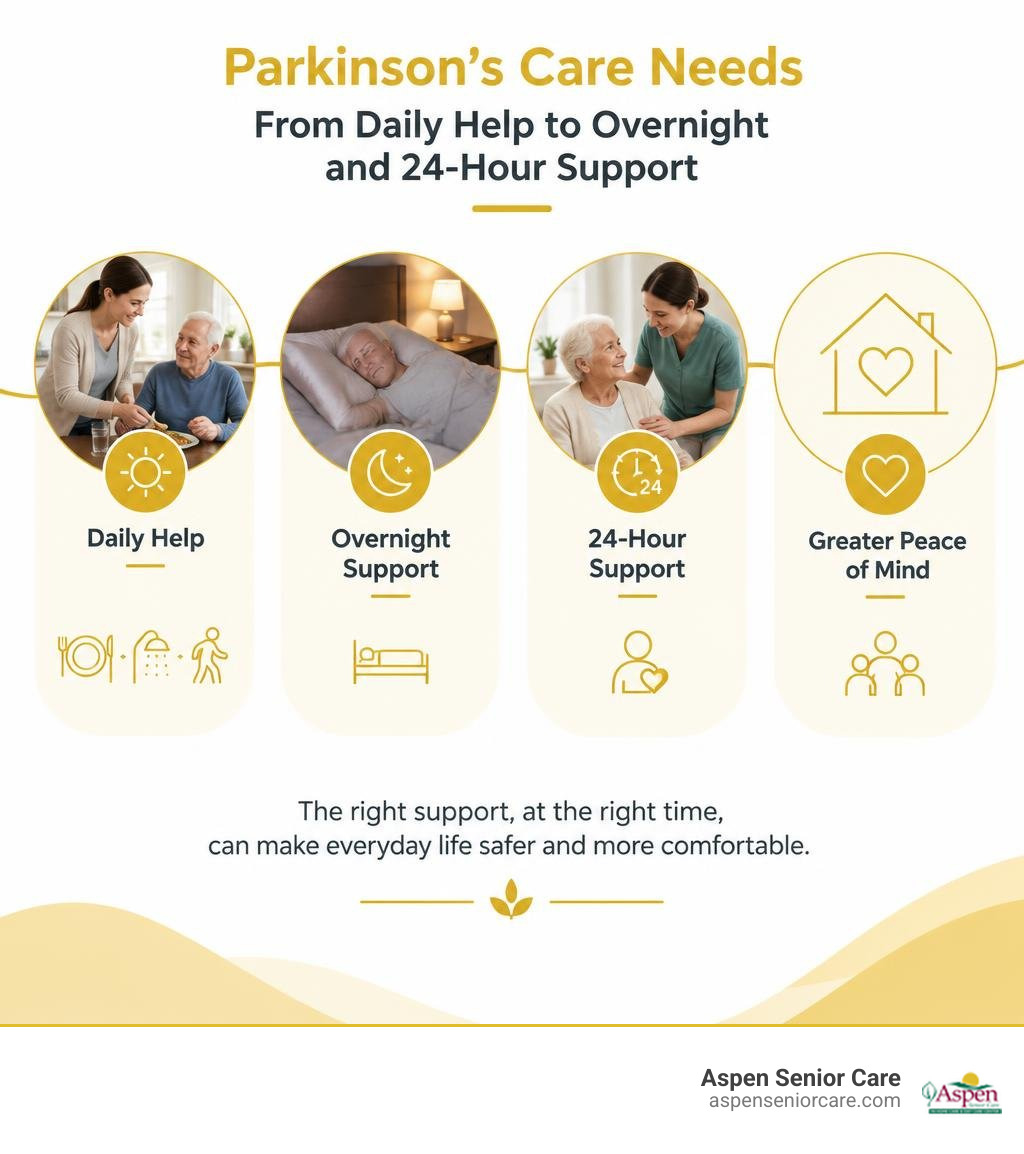
24-hour care for Parkinson's disease may be needed when someone cannot safely manage falls, bathroom trips, meals, or other daily tasks without help at any hour. Families can arrange in-home support through a live-in caregiver or caregivers working shifts. If help is needed throughout the night, ask how overnight coverage works before choosing a plan.
For families in Utah Valley, the goal is not to do everything alone. Start by noting when help is needed, especially during medication changes or nighttime waking. Then discuss those needs with your loved one's care team so home support fits their symptoms and routine.
Understanding Parkinson's Disease Progression and Critical Signs
Parkinson’s disease is a progressive neurodegenerative condition primarily caused by the loss of dopamine-producing neurons in the brain. Dopamine plays a vital role in coordinating smooth, balanced muscle movements. As levels drop over years, movement becomes increasingly unpredictable. While early stages may bring mild tremors or slight stiffness, later stages often introduce pronounced motor fluctuations that complicate daily life.
In advanced stages, individuals frequently experience severe dyskinesia (involuntary muscle jerking or writhing) and sudden "freezing of gait," where feet feel glued to the floor mid-stride. Recognizing the distinct signs and symptoms of advanced Parkinson's disease helps families understand why standard part-time assistance may no longer be sufficient. Chewing and swallowing difficulties (dysphagia) also become prominent, raising risks of weight loss and choking.
When routines break down and daily safety becomes precarious, consulting professional guidelines on recognizing next care steps can provide clarity on escalating support.
Signs Your Loved One Needs Parkinson's Disease 24 Hour Care
Determining the right time to transition to continuous assistance involves monitoring specific physical and cognitive changes:
Frequent Fall Risks and Immobility: Unpredictable postural instability and sudden freezing can cause repeated falls, especially during transfers from chairs or beds.
Medication Timing Complexity: Advanced Parkinson's requires strict, time-sensitive medication schedules (such as carbidopa/levodopa). A 30-minute delay can lead to debilitating "off" periods where movement becomes impossible.
Hallucinations and Visual Changes: Disease progression or medication side effects can trigger mild illusions or vivid hallucinations, requiring calm supervision to prevent panic or wandering.
Cognitive Impairment: Parkinson's-related dementia affects executive function, memory, and spatial awareness, making independent living hazardous.
Care Partner Physical Strain: When family members are lifting, transferring, and waking multiple times a night, physical exhaustion sets in rapidly.
Addressing these overlapping challenges often involves implementing a comprehensive Parkinson's dementia care plan that accounts for both motor limitations and cognitive changes.
Nighttime Complications and Around-the-Clock Safety Risks
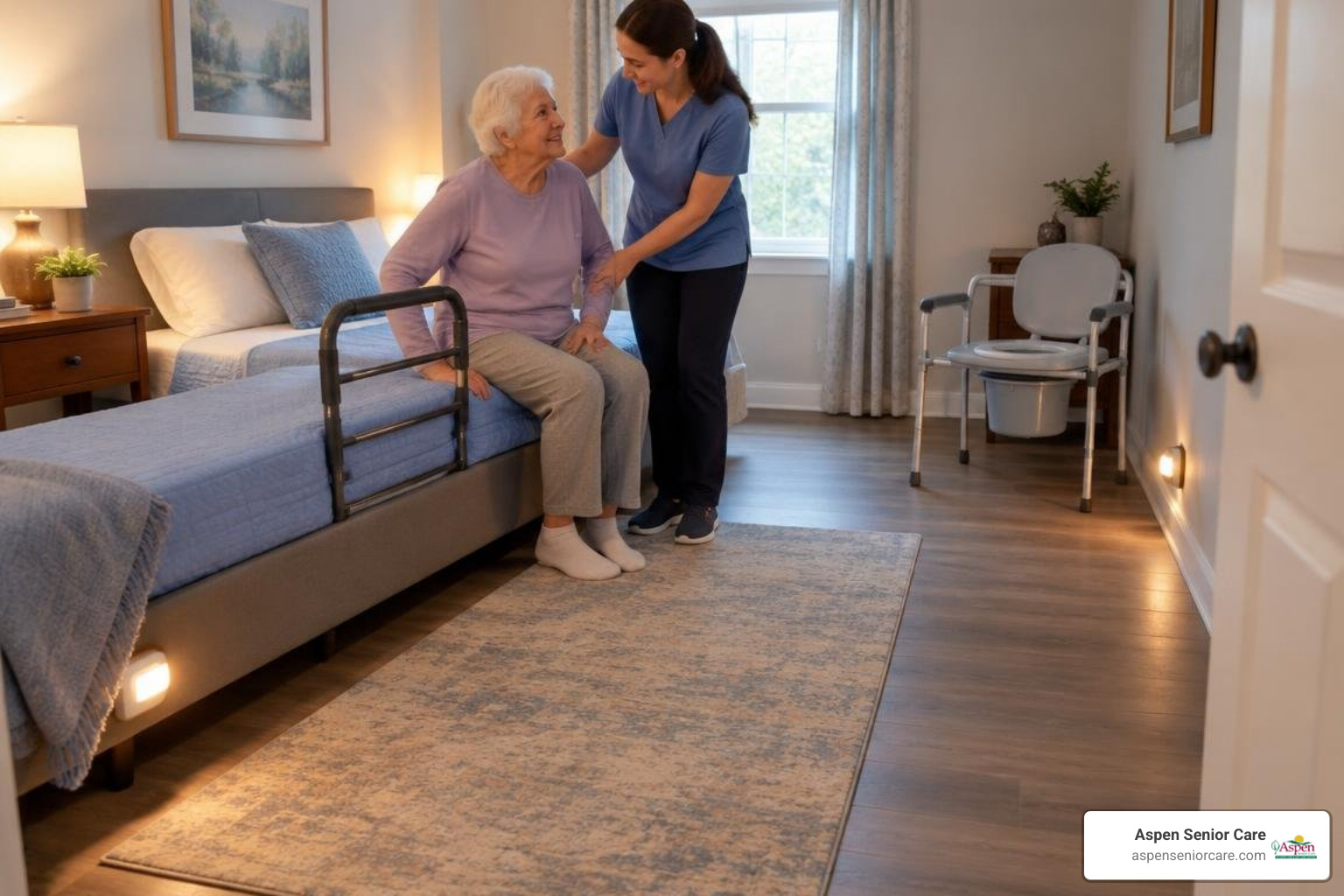
Nighttime is often the most dangerous window for individuals with advanced Parkinson's. As medications wear off during sleep hours, nocturnal stiffness and rigidity set in.
Key nighttime complications include:
REM Sleep Behavior Disorder (RBD): Acting out vivid dreams through kicking, flailing, or shouting, which creates injury risks for both the individual and their sleeping partner.
Nocturia and Urgency: Frequent bathroom trips combined with poor balance, low lighting, and nighttime rigidity drastically increase fall risks.
Bed Mobility Limitations: Losing the ability to turn over in bed leads to painful pressure points, skin breakdown, and sleep disruption.
Aspiration Risks: Difficulty managing oral secretions or swallowing water during the night can lead to dangerous aspiration.
Having continuous support ensures someone is present to assist with transfers, repositioning, and toileting throughout the night.
Evaluating Parkinson's Disease 24 Hour Care at Home
When continuous support is necessary, families often compare staying at home with moving to a residential facility. Home care allows individuals to remain in familiar surroundings, preserving comforting daily habits and personalized routines.
Care Model | Staffing Structure | Primary Advantages | Best Suited For |
|---|---|---|---|
Live-In Home Care | One primary caregiver resides in the home, requiring a private room and dedicated sleep time. | High consistency, familiar companion, cost-effective for predictable nighttime needs. | Individuals who sleep mostly through the night but need constant daytime and evening presence. |
24-Hour Rotating Shifts | Two or three caregivers work 8- to 12-hour shifts to provide active, awake care around the clock. | Caregiver is awake and alert every minute; immediate nighttime response. | Individuals with severe nighttime wandering, frequent waking, or intensive physical repositioning. |
Assisted Living / Memory Care | Facility-based communal living with shared care staff across residents. | Structured social activities, dining services, maintenance-free environment. | Individuals who desire community amenities and have predictable, moderate care needs. |
Skilled Nursing Facility | Institutional residential setting with 24/7 on-site licensed medical and nursing staff. | Continuous clinical monitoring, complex medical equipment management. | Severe clinical needs requiring regular skilled nursing interventions and medical oversight. |
Exploring these home care options helps clarify which environment best supports your loved one's specific stage and lifestyle.
Structuring Parkinson's Disease 24 Hour Care at Home
In-home care for Parkinson's is completely tailored to the individual's specific motor fluctuations and personal habits.
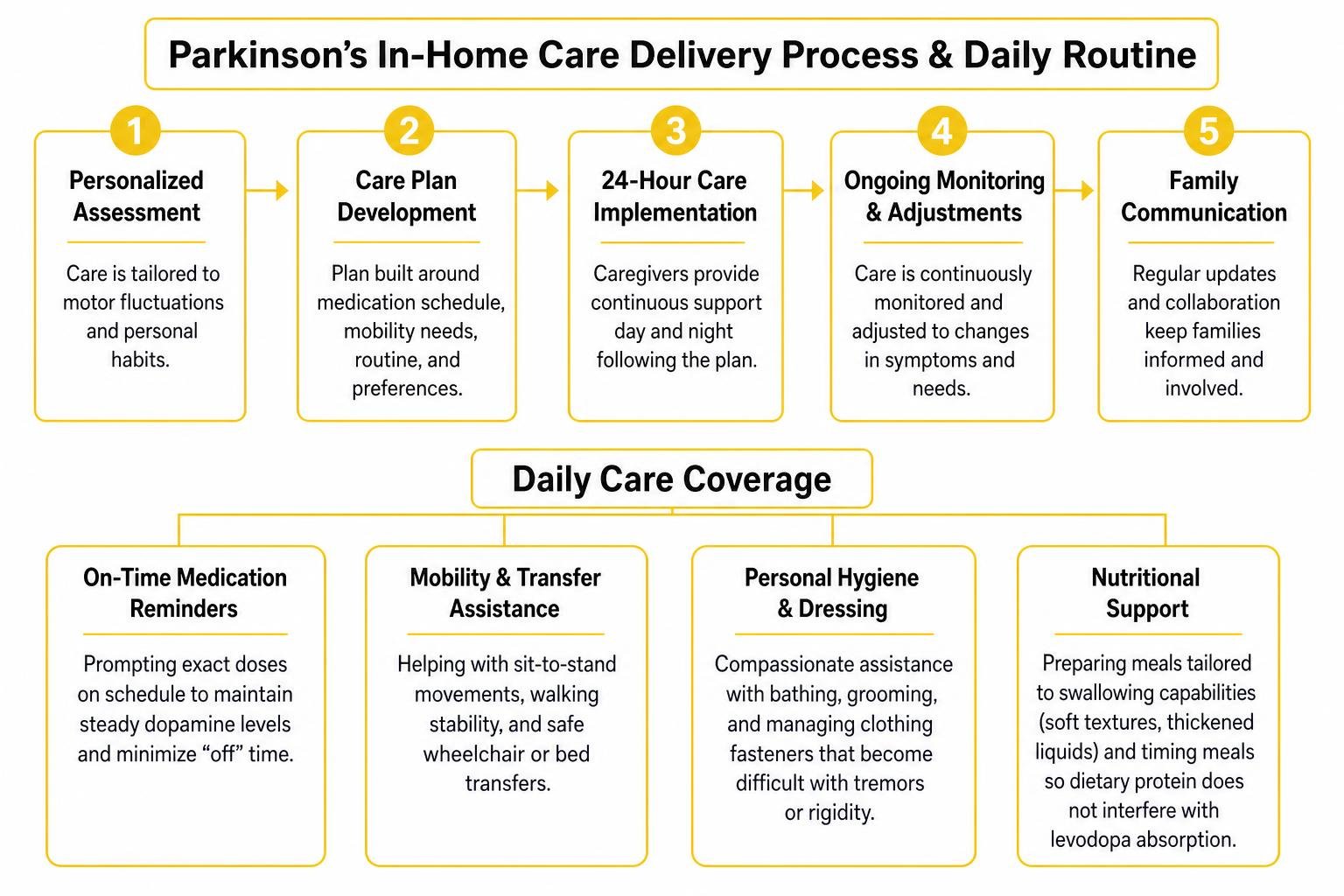
Comprehensive round-the-clock home support covers essential daily functions:
On-Time Medication Reminders: Prompting exact doses on schedule to maintain steady dopamine levels and minimize "off" time.
Mobility and Transfer Assistance: Helping with sit-to-stand movements, walking stability, and safe wheelchair or bed transfers.
Personal Hygiene and Dressing: Compassionate assistance with bathing, grooming, and managing clothing fasteners that become difficult with tremors or rigidity.
Nutritional Support: Preparing meals tailored to swallowing capabilities (soft textures, thickened liquids) and timing meals so dietary protein does not interfere with levodopa absorption.
Continuous Monitoring: Tracking subtle shifts in mood, bowel habits, skin health, and motor symptoms to share with the primary care team.
Families seeking comprehensive home support can explore personalized in-home care services tailored to changing mobility and safety requirements.
Palliative and Hospice Support in Late-Stage Parkinson's
Palliative care is specialized, multidisciplinary medical care designed to provide relief from the symptoms, pain, and stress of serious illness. A common misconception is that palliative care is only for end-of-life situations. In reality, it can be integrated at any stage of Parkinson's alongside ongoing treatments to enhance daily quality of life.
A palliative team—consisting of doctors, nurses, social workers, physical, occupational, and speech therapists—works collaboratively to address non-motor symptoms like chronic pain, constipation, fatigue, and depression.
When the disease reaches its final stages and curative goals shift entirely toward comfort, families can benefit from understanding hospice care in Parkinson's. In hospice care:
Support is focused on comfort, dignity, and pain management.
Hospice teams visit the home while 24-hour on-call nursing advice remains available for sudden symptom changes.
Essential Parkinson's medications like levodopa are often continued to prevent distressing rigidity and muscle pain.
Advance care planning ensures the individual's preferences regarding feeding tubes, breathing support, and hospitalizations are clearly documented and honored.
Financial Planning, Costs, and Caregiver Support

Arranging continuous care requires practical financial planning. Because Medicare and standard private health insurance do not cover non-medical custodial care, families often combine several funding avenues:
Private Pay: Personal savings, retirement funds, or family contributions.
Long-Term Care Insurance: Policies specifically designed to reimburse in-home personal care, adult day programs, and respite services based on daily benefit caps.
Medicaid Home and Community-Based Services (HCBS): State Medicaid waiver programs can help income-eligible seniors access home-based personal care assistance.
Veterans Benefits: The VA Aid and Attendance pension provides monthly funds for eligible wartime veterans or surviving spouses who need assistance with daily living activities.
Family care partners often shoulder immense emotional and physical burdens. Utilizing overnight respite care gives family caregivers uninterrupted sleep and relief. Taking proactive steps toward preventing caregiver burnout is crucial for family health.
During daytime hours, attending a specialized Parkinson's senior day center offers structured socialization, cognitive exercises, and physical movement while family members work or rest. Families can also find guidance by connecting with outside carepartner help through local support groups and national foundations.
Essential Home Modifications for Round-the-Clock Safety
Creating an accessible living space minimizes fall risks and allows caregivers to assist safely:
Clear Pathways: Remove throw rugs, secure loose cords, and rearrange furniture to create wide, unobstructed paths for walkers and wheelchairs.
Bathroom Adaptations: Install secure grab rails by toilets and showers, place non-slip rubber mats inside tubs, and utilize raised toilet seats and shower chairs.
Bedroom Safety: Adjust bed height so feet rest flat on the floor when sitting. Consider satin sheets or specialized sleepwear to reduce friction when turning over.
Adequate Lighting: Place motion-sensor nightlights along hallways, bedrooms, and bathrooms to assist with midnight bathroom trips.
Adaptive Kitchen Utensils: Use weighted, ergonomic silverware, non-spill cups, and plate guards to promote dignity and independence during meals.
Emergency Alert Systems: Wearable medical alert pendants or bedside call buttons ensure help can be summoned instantly.
An occupational therapist evaluation provides tailored recommendations to match your home's layout to your loved one's specific physical needs.
Frequently Asked Questions About Parkinson's 24-Hour Care
How does a 24-hour caregiver manage strict Parkinson's medication schedules?
Caregivers set precise alarms and maintain logs to prompt time-sensitive medications (like carbidopa/levodopa) exactly as prescribed. They coordinate doses around meals—separating protein intake from medication by 30 to 60 minutes when advised—to ensure optimal absorption, and track "on/off" patterns to report to the neurologist.
Does Medicare or insurance pay for 24-hour in-home Parkinson's care?
Medicare and standard health insurance cover intermittent skilled clinical needs (such as short-term physical therapy or wound care) but do not pay for 24-hour non-medical custodial care. Families typically utilize long-term care insurance, Medicaid waivers, Veterans Aid and Attendance benefits, or private funds to cover round-the-clock home care.
When is live-in care better than 24-hour rotating-shift care?
Live-in care is ideal when the individual sleeps through most of the night and benefits from the continuous presence of a single familiar caregiver. It helps preserve established routines, allows married couples to stay together at home, and provides consistent one-on-one companionship. Rotating shifts are better suited for individuals who wake frequently or require constant overnight supervision.
Conclusion
Managing advanced Parkinson's disease requires proactive planning, adaptable routines, and compassionate teamwork. When daily tasks, medication management, and mobility challenges exceed what family members can provide alone, round-the-clock home care delivers the dedicated supervision and assistance needed to maintain dignity and comfort in familiar surroundings.
At Aspen Senior Care, we provide personalized in-home caregiving and adult day programs across Utah Valley—including Orem, Provo, Lehi, American Fork, Pleasant Grove, Spanish Fork, Alpine, Cedar Hills, Salem, Eagle Mountain, Highland, Lindon, Saratoga Springs, and Payson. Our family-like approach and specialized dementia and Parkinson's support offer peace of mind for families navigating complex care decisions.
To better understand your loved one's condition and anticipate future needs, explore our detailed guide to Parkinson's disease stages.