

Companion Care Home Health Service: A Practical Guide for Family Caregivers
What a Companion Care Home Health Service Does
A companion care home health service helps an older adult stay safe and comfortable at home. A caregiver may prepare meals, help with errands, offer company, and remind them to take medication. This is non-medical care: it does not replace a nurse or therapist who provides skilled treatment.
If your parent needs help with daily life, start by listing the tasks they struggle with. If they also need wound care, therapy, or other clinical treatment, ask their doctor about medical home health. Some people need both.

Understanding Companion Care Home Health Service vs. Skilled Medical Care
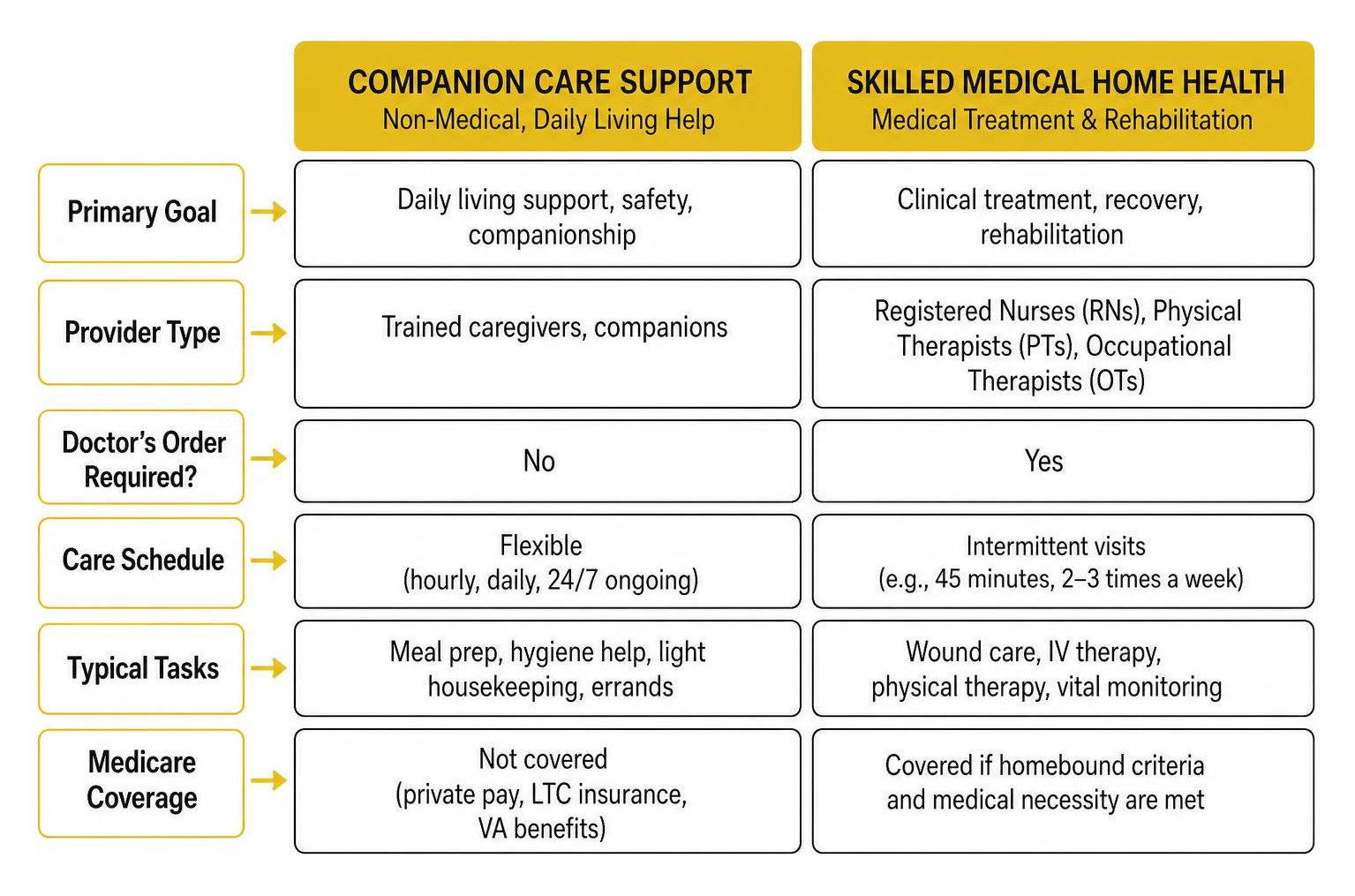
The difference between daily supportive care and medical treatment comes down to clinical skill. Many families assume that hiring a home health aide covers everything from medical injections to vacuuming the living room. In practice, long-term non-medical assistance and short-term medical interventions operate under distinct standards and funding sources.
When you arrange companion care for seniors, the primary objective is maintaining independence, safety, and emotional well-being at home. Skilled medical care, on the other hand, aims to treat an acute injury, manage a worsening clinical illness, or provide short-term rehabilitation under medical orders.
Feature | Companion Care Service | Skilled Medical Home Health |
|---|---|---|
Primary Goal | Daily living support, safety, companionship | Clinical treatment, recovery, rehabilitation |
Provider Type | Trained caregivers, companions | Registered Nurses (RNs), Physical Therapists (PTs), Occupational Therapists (OTs) |
Doctor's Order Required? | No | Yes |
Care Schedule | Flexible (hourly, daily, 24/7 ongoing) | Intermittent visits (e.g., 45 minutes, 2–3 times a week) |
Typical Tasks | Meal prep, hygiene help, light housekeeping, errands | Wound care, IV therapy, physical therapy, vital monitoring |
Medicare Coverage | Not covered (private pay, LTC insurance, VA benefits) | Covered if homebound criteria and medical necessity are met |
Non-Skilled Companion Care Services
Non-skilled care focuses on activities of daily living (ADLs) and instrumental activities of daily living (IADLs). These everyday tasks keep a household running and protect a senior's safety:
Meal Planning and Preparation: Cooking nutritious meals tailored to dietary requirements (such as low-sodium or diabetic diets) and ensuring proper hydration throughout the day.
Light Housekeeping: Dusting, vacuuming, washing dishes, managing laundry, taking out the trash, and keeping high-traffic areas free of tripping hazards.
Medication Reminders: Prompting seniors to take their prescribed medications at the correct times.
Errands and Transportation: Driving to grocery stores, pharmacy pickups, church services, social gatherings, and hair appointments.
Companionship and Social Engagement: Playing board games, sharing conversations, reading together, organizing photo albums, or taking walks in the neighborhood to combat social isolation.
Safety and Dementia Supervision: Providing steady hands for transfers, offering redirection during periods of cognitive confusion, and watching for wandering behaviors.
Families seeking reliable in-home help often turn to these non-medical services to keep their loved ones safe in familiar surroundings.
Skilled Medical Home Health Care
Skilled medical home health involves clinical interventions that require professional medical licenses. These services are ordered by a physician and delivered by licensed healthcare professionals:
Skilled Nursing: Managing complex surgical wounds, administering intravenous medications, catheter care, and monitoring clinical disease progression.
Physical Therapy: Restoring gross motor skills, teaching gait training, and prescribing exercises to regain strength after a joint replacement, fall, or stroke.
Occupational Therapy: Helping a senior adapt to physical limitations by practicing safe techniques for eating, dressing, and using assistive devices.
Speech-Language Pathology: Treating swallowing disorders (dysphagia) and assisting with cognitive-communication deficits caused by neurological conditions.
Skilled medical visits are brief and intermittent. A physical therapist or nurse may visit for 45 to 60 minutes a few times a week. They do not stay to cook lunch, clean up the kitchen, or keep your loved one company throughout the afternoon.
Evaluating Care Needs: Daily Assistance vs. Clinical Treatment
Choosing the right type of care starts with an honest assessment of your loved one's day-to-day challenges. Many families experience a "caregiver identity crisis" when they expect a clinical visiting nurse to assist with morning showers and meal preparation, only to discover that the nurse must leave immediately after completing clinical checks.

Reviewing an in-home care summary can help clarify the level of support your family requires.
When to Choose a Companion Care Home Health Service
A companion care arrangement is ideal when the primary challenges involve daily functional tasks, cognitive changes, or isolation, rather than active medical rehabilitation:
Memory Loss and Cognitive Decline: Seniors living with Alzheimer's disease or other forms of dementia often need structured daily routines, cueing, and calm redirection rather than clinical treatments.
Fall Risk and Mobility Challenges: Aging adults who feel unsteady getting out of bed, navigating stairs, or using the shower benefit from having a caregiver nearby.
Nutritional Concerns: When an older adult forgets to eat, skips meals, or relies entirely on processed snacks, a caregiver ensures regular, fresh meals are prepared.
Isolation and Depression: Living alone can lead to withdrawal. Regular visits provide mental stimulation and emotional connection.
Family Caregiver Burnout: Family members who manage work, children, and caregiving duties use supportive elderly care at home to take necessary breaks and recharge.
Combining Companion Care and Medical Home Health
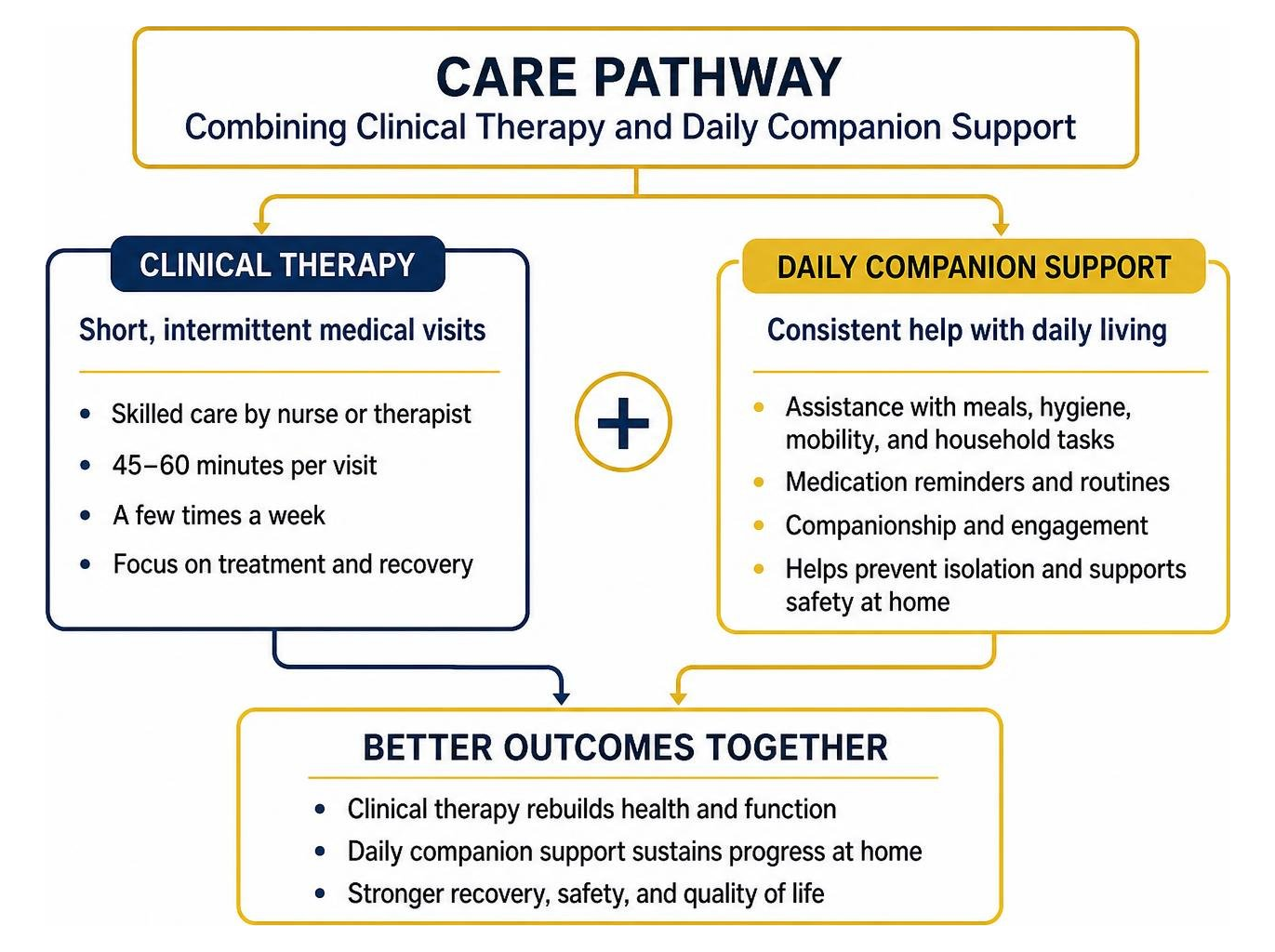
Many families find that their loved one requires both types of care simultaneously. Clinical recovery and daily living support complement one another, especially after an acute health event.
Consider these practical situations:
Post-Orthopedic Surgery: A senior recovering from hip replacement surgery receives Medicare-certified physical therapy three mornings a week to rebuild mobility. Between those medical visits, a companion caregiver helps them get safely in and out of bed, prepares balanced meals, does laundry, and makes sure pathways are clear.
Stroke Rehabilitation: A stroke survivor receives speech and occupational therapy visits to relearn cognitive and motor tasks. A companion caregiver provides continuous support by practicing memory games, preparing soft foods, and assisting with bathroom visits throughout the week.
Chronic Disease Management: A patient managing congestive heart failure has a visiting nurse monitor oxygen levels and lung sounds weekly, while a companion caregiver assists with daily low-sodium meal prep, gentle walking exercises, and medication prompting.
Companion Care Costs and Payment Options in 2026
Planning for long-term supportive care involves understanding payment structures, hourly rates, and financial resources. Because companion care is non-clinical, funding typically comes from private resources, specialized insurance, or specific veteran programs.
Consulting a companion care price list or a comprehensive home care pricing guide 2026 will help your family map out hourly requirements, from short respite shifts to 24/7 coverage. For national context on long-term care costs, the Genworth Cost of Care Survey provides annual benchmarks for homemaker and home health aide services across the country.
Medicare and Private Insurance Guidelines
A common point of confusion for family caregivers is expecting Medicare or standard private health insurance to pay for companion care:
Traditional Medicare: Medicare covers skilled, intermittent medical home health services when ordered by a doctor for homebound patients. Medicare never covers non-skilled companion care, custodial care, or assistance with basic ADLs.
Medicare Advantage: Some Medicare Advantage plans offer limited allowances for non-medical home support, though these benefits are often restricted to a specific number of annual hours or select providers.
Private Health Insurance: Standard private health insurance follows the same clinical model as Medicare, excluding coverage for custodial care, housekeeping, and companion services.
Long-Term Care (LTC) Insurance: Most comprehensive LTC insurance policies cover non-medical companion care and personal assistance. Benefits typically activate once a policyholder requires help with two or more ADLs or requires supervision due to cognitive impairment.
For a broader look at budgeting and care models, read our in-home care complete guide 2026.
Veterans Aid & Attendance and Other Assistance Programs
Veterans and their surviving spouses may qualify for substantial financial help through the Department of Veterans Affairs.
The VA Aid & Attendance pension benefit provides monthly payments to qualifying wartime veterans and surviving spouses who require assistance with daily living activities.
Benefit Amounts: In 2026, qualifying veterans and surviving spouses can receive between $1,200 and $2,700 per month in tax-free pension benefits to help pay for in-home caregivers.
Clinical Criteria: The applicant must demonstrate a need for assistance with everyday tasks (such as bathing, dressing, meal preparation, or medication management) or require a protective environment due to cognitive decline.
Service Requirements: The veteran must have served at least 90 days of active military duty, with at least one day during an eligible period of wartime, and received an honorable discharge.
How to Choose and Verify a Licensed Care Provider
Inviting a caregiver into your loved one's home is a significant decision. Choosing a reputable, licensed, and insured agency ensures that caregivers are thoroughly vetted, trained, and supervised.
Checklist for Hiring a Companion Care Home Health Service
When interviewing care agencies, ask the following questions to verify their standards and operational quality:
[ ] Licensing and Compliance: Is the agency appropriately licensed by state regulatory authorities to deliver in-home companion and personal care services?
[ ] Background Checks and Screening: Does the agency run nationwide criminal background checks, motor vehicle record checks, and drug screenings on all caregivers prior to placement?
[ ] Caregiver Training: What specific training do caregivers complete, particularly regarding dementia care, fall prevention, communication, and emergency response?
[ ] Bonding and Insurance: Is the agency fully bonded and covered by general liability and workers' compensation insurance to protect your family from liability?
[ ] Care Plan Customization: Does a care supervisor conduct an in-person assessment to design a personalized care plan tailored to your loved one's specific habits and needs?
[ ] Supervision and Quality Checks: How often do supervisory staff visit the home to evaluate caregiver performance and update the care plan as needs evolve?
[ ] Caregiver Matching and Consistency: What steps does the agency take to match caregiver personalities and skills with the client, and what is the protocol if a caregiver is sick or unavailable?
Frequently Asked Questions About Companion Care
Does Medicare cover companion care services?
No. Traditional Medicare does not cover non-skilled companion care, homemaker services, or custodial care when those are the only services needed. Medicare only pays for medically necessary, skilled home health care—such as intermittent skilled nursing, physical therapy, or occupational therapy—ordered by a physician for a homebound patient. Daily assistance with meal preparation, light housekeeping, and personal companionship must be funded privately, through long-term care insurance, or via VA benefits.
Can a patient receive companion care and medical home health at the same time?
Yes. Patients frequently use both services concurrently. A home health agency may send a physical therapist or registered nurse for short clinical appointments to treat medical issues, while a companion care agency provides the daily, continuous assistance necessary for safe living, meal preparation, hygiene, and household management.
How flexible is a companion care schedule?
Companion care schedules are highly flexible and tailored to your family's specific routine. Support can range from short visits a few times a week for grocery shopping and meal preparation to daily assistance or 24/7 continuous supervision and companionship.
What should I do if my loved one's care needs increase over time?
Care needs often change, especially for seniors diagnosed with progressive conditions like Alzheimer's or Parkinson's disease. Quality agencies perform regular reassessments to adjust the care plan, increasing hours or transitioning from light companion support to comprehensive personal care and around-the-clock supervision as needed.
Conclusion
Navigating the care options for an aging family member can feel overwhelming, but understanding the difference between medical treatments and daily living assistance brings clarity to the process. Companion care fills the everyday gaps that clinical medicine leaves behind, offering seniors the friendship, practical help, and safety oversight they need to remain comfortable in their own homes.
If you are evaluating care options for your family, learn more about our award-winning companion care services or reach out to our team at Contact Us In-Home Care to discuss a personalized support plan tailored to your loved one. Families located near our service areas can also explore local support through our in-home care locations in Orem and across Utah County to help your loved one age safely with dignity and peace of mind.