

Recognizing Early Onset Parkinson's Signs Early for Better Treatment
Early Onset Parkinson's Signs Can Be Easy to Miss
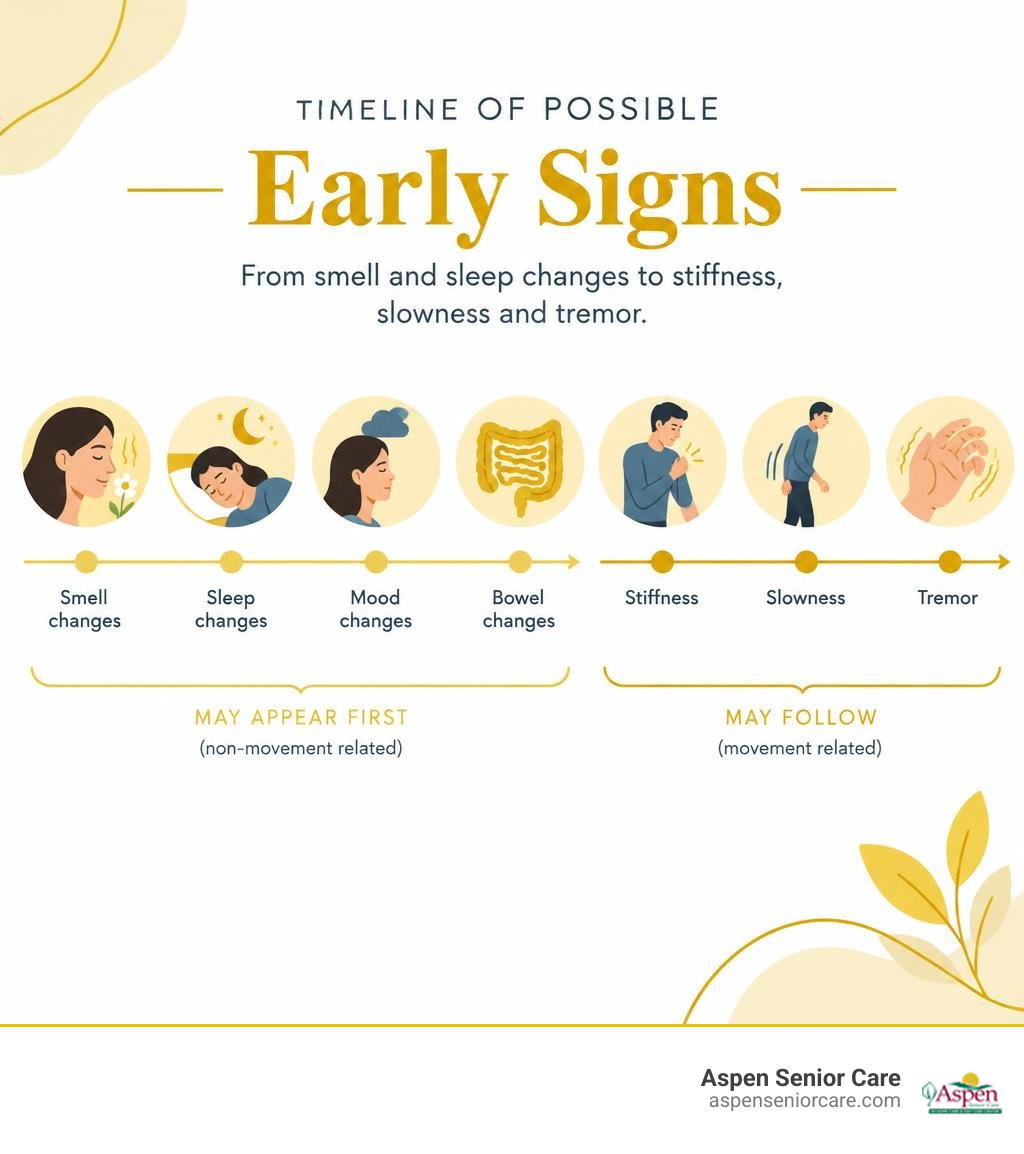
Watch for early onset parkinson's signs such as stiffness or slowness on one side, a hand tremor at rest, or painful toe curling. Smaller handwriting, a quieter voice, and less arm swing can also be clues. Changes in smell, sleep, mood, or bowel habits may appear before movement problems.
Early-onset Parkinson's begins before age 50, but none of these signs alone means someone has it. If changes persist or occur together, note when they began and ask a healthcare professional about an evaluation.
What Is Early-Onset Parkinson's Disease (EOPD)?
When most people picture Parkinson's disease, they envision someone in their golden years. However, early-onset Parkinson's disease (EOPD)—also frequently referred to as young-onset Parkinson's disease (YOPD)—develops in adults between the ages of 21 and 50. While standard Parkinson's disease is typically diagnosed around age 60 to 70, EOPD accounts for roughly 5% to 14% of all diagnosed cases worldwide.
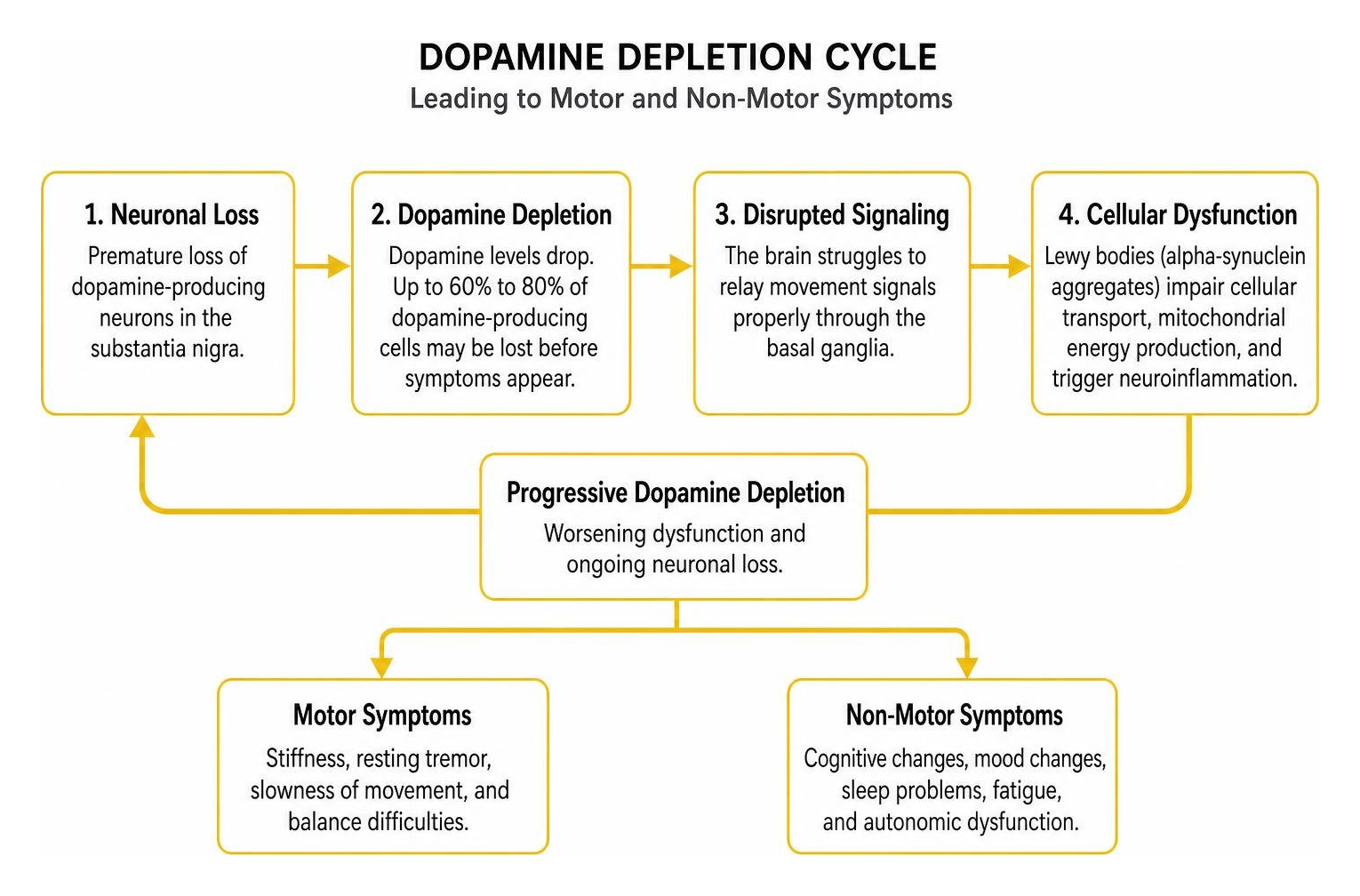
The global age-standardized prevalence of EOPD is estimated at 10.2 per 100,000 people, with an incidence of about 1.3 per 100,000. At its core, the condition involves the premature loss of specialized neurons in the substantia nigra, a region of the brain responsible for producing dopamine. Dopamine acts as a chemical messenger coordinating smooth, purposeful muscle movement. When dopamine levels drop, the brain struggles to relay movement signals properly.
According to a clinical overview of early-onset features, receiving this diagnosis in mid-adulthood comes with distinct biological characteristics and life impacts that set it apart from late-onset disease.
Feature | Early-Onset Parkinson's (EOPD) | Late-Onset Parkinson's (LOPD) |
|---|---|---|
Age at Diagnosis | 21 to 50 years old | 60+ years old |
Initial Presentation | Frequently asymmetric stiffness or focal dystonia (~50%) | Classic resting tremor or balance issues |
Progression Rate | Significantly slower motor and functional decline | Faster motor decline |
Cognitive Preservation | Memory and cognition remain preserved for decades | Higher risk of early cognitive impairment/dementia |
Medication Side Effects | Higher susceptibility to dyskinesias (~80%) | Lower susceptibility to dyskinesias (~54%) |
Genetic Contribution | Higher likelihood of monogenic mutations (up to 65% if <20) | Primarily sporadic (only ~10–15% genetic link) |
Average Disease Duration | 25 to 32 years from onset to end of life | 7 to 14 years from onset to end of life |
Clinical Differences Between EOPD and LOPD
The differences between young-onset and late-onset Parkinson's go well beyond a person's birth year. Individuals with EOPD generally experience a much slower progression of motor symptoms. For instance, advancing one stage on the standard Hoehn and Yahr clinical scale can take up to a decade in EOPD, whereas someone with late-onset disease might experience that same progression in under two years.
Furthermore, cognitive abilities and memory remain intact for far longer in younger adults with Parkinson's. However, the younger nervous system responds differently to long-term dopaminergic therapy. People diagnosed at a younger age are far more prone to developing motor fluctuations and levodopa-induced dyskinesias (involuntary writhing or twitching movements) within five to six years of starting therapy. For families navigating these changes, understanding the 5 stages of PD helps clarify how clinical markers evolve over several decades.
Biological Mechanisms and Dopamine Depletion
Movement control is orchestrated by the basal ganglia, a complex network of structures deep inside the brain. In Parkinson's disease, dopamine-producing neurons within the substantia nigra undergo progressive degeneration. By the time noticeable motor signs like stiffness or a resting tremor emerge, up to 60% to 80% of these dopamine-producing cells may already have been lost.
As detailed in the National Institute on Aging Parkinson's Overview, the underlying pathology is marked by the accumulation of alpha-synuclein protein aggregates known as Lewy bodies. These misfolded protein clusters disrupt cellular transport, impair mitochondrial energy production, and trigger chronic neuroinflammation. In younger adults, genetic vulnerabilities often accelerate this mitochondrial dysfunction, making cellular energy failure a central feature of the disease process.
10 Key Early Onset Parkinson's Signs to Watch For

Because Parkinson's develops gradually, recognizing early signs allows people to pursue timely medical strategies that support long-term mobility. According to the Parkinson's Foundation 10 Early Signs, symptoms often appear in non-motor systems years before traditional movement issues take center stage.
Subtle Non-Motor Signs of Early-Onset Parkinson's
Loss of Smell (Hyposmia): A diminished or absent sense of smell affects up to 90% of individuals with Parkinson's and can precede motor signs by several years. You might notice difficulty detecting distinct odors such as dill pickles, bananas, or licorice.
REM Sleep Behavior Disorder (RBD): During normal REM sleep, your body remains temporarily paralyzed so you don't act out dreams. In RBD, this paralysis mechanism fails, leading to kicking, punching, shouting, or thrashing during sleep. Nearly 96% of individuals with diagnosed RBD eventually develop Parkinson's or a related neurological condition.
Chronic Constipation: The enteric nervous system in the gut is often affected very early in the disease process. Experiencing fewer than three bowel movements per week without an obvious dietary reason can indicate early autonomic nervous system changes.
Mood Changes (Depression and Anxiety): Affecting roughly 48% of people with EOPD, mood shifts are not merely emotional reactions to stress. They stem directly from altered dopamine and serotonin signaling pathways in the brain.
Dizziness or Lightheadedness (Orthostatic Hypotension): Parkinson's also affects norepinephrine-producing nerves that regulate blood pressure. Feeling lightheaded or faint upon standing up quickly can be an early sign of autonomic dysregulation.
Recognizing Early Onset Parkinson's Signs in Movement and Posture
Focal Dystonia and Toe Curling: Painful, involuntary muscle contractions—such as a foot turning inward or toes persistently curling during a run or workout—are among the most distinct early motor signs in younger adults.
Resting Tremor: An involuntary shaking in a finger, hand, or chin that occurs when the limb is completely relaxed. It often starts on one side of the body and may resemble a "pill-rolling" motion between the thumb and forefinger.
Slowness of Movement (Bradykinesia): Everyday tasks like buttoning a shirt, tying shoes, cutting food, or typing on a keyboard start taking noticeably longer. People often feel as though their limbs are moving through water.
Micrographia (Small Handwriting): A progressive shrinkage and crowding of handwriting across a single page or sentence, caused by a loss of automatic motor scaling.
Facial Masking (Hypomimia) and Soft Voice (Hypophonia): Reduced spontaneous facial expressions can make someone appear serious, angry, or detached even when they feel perfectly fine. Simultaneously, the voice may become softer, hoarser, or breathier, leading individuals to believe others around them are having trouble hearing.
Causes and Genetic Risk Factors in Younger Adults
While late-onset Parkinson's is predominantly sporadic, younger-onset cases feature a much stronger genetic contribution. As highlighted by Young-Onset Insights by Parkinson's Foundation, genetics play a substantial role when symptoms manifest in early adulthood.
Hereditary Influences and Genetic Testing
Research demonstrates that approximately 65% of people with Parkinson's onset before age 20 and 32% of those diagnosed between ages 20 and 30 carry an identifiable genetic mutation. Key monogenic variants associated with early-onset Parkinson's include:
PRKN (Parkin): The most common genetic cause of autosomal recessive EOPD, frequently associated with early focal dystonia and a very slow disease progression.
PINK1: Regulates mitochondrial quality control; mutations cause recessive, early-presenting parkinsonism.
DJ-1: Protects cells from oxidative stress; rare recessive mutations lead to early-onset motor signs.
LRRK2 and GBA1: Common genetic risk modifiers that can influence both early- and late-onset forms, altering enzyme function and protein degradation.
Initiatives like the PD GENEration study provide comprehensive clinical exome sequencing and genetic counseling. While testing does not currently alter routine medication choices, it offers crucial clarity for family planning, clinical trial eligibility, and understanding individual progression risk.
Environmental Triggers and Lifestyle Modifiers
Genetics alone do not tell the whole story. Most cases arise from a blend of genetic susceptibility and environmental factors. As noted in the Mayo Clinic Parkinson's Symptoms and Causes summary, notable environmental considerations include:
Pesticides and Herbicides: Chronic occupational exposure to chemicals like paraquat or rotenone is linked to increased risk.
Industrial Solvents: Chemicals such as trichloroethylene (TCE) have been implicated in dopaminergic neuron damage.
Head Trauma: Repeated concussions or traumatic brain injuries can trigger chronic neuroinflammatory cascades.
Protective Lifestyle Factors: Regular aerobic exercise demonstrates a strong protective association, with studies showing an approximate 34% reduction in overall risk among physically active adults. Moderate caffeine consumption has also shown protective correlations.
Diagnostic Hurdles: Why Diagnosis Is Often Delayed
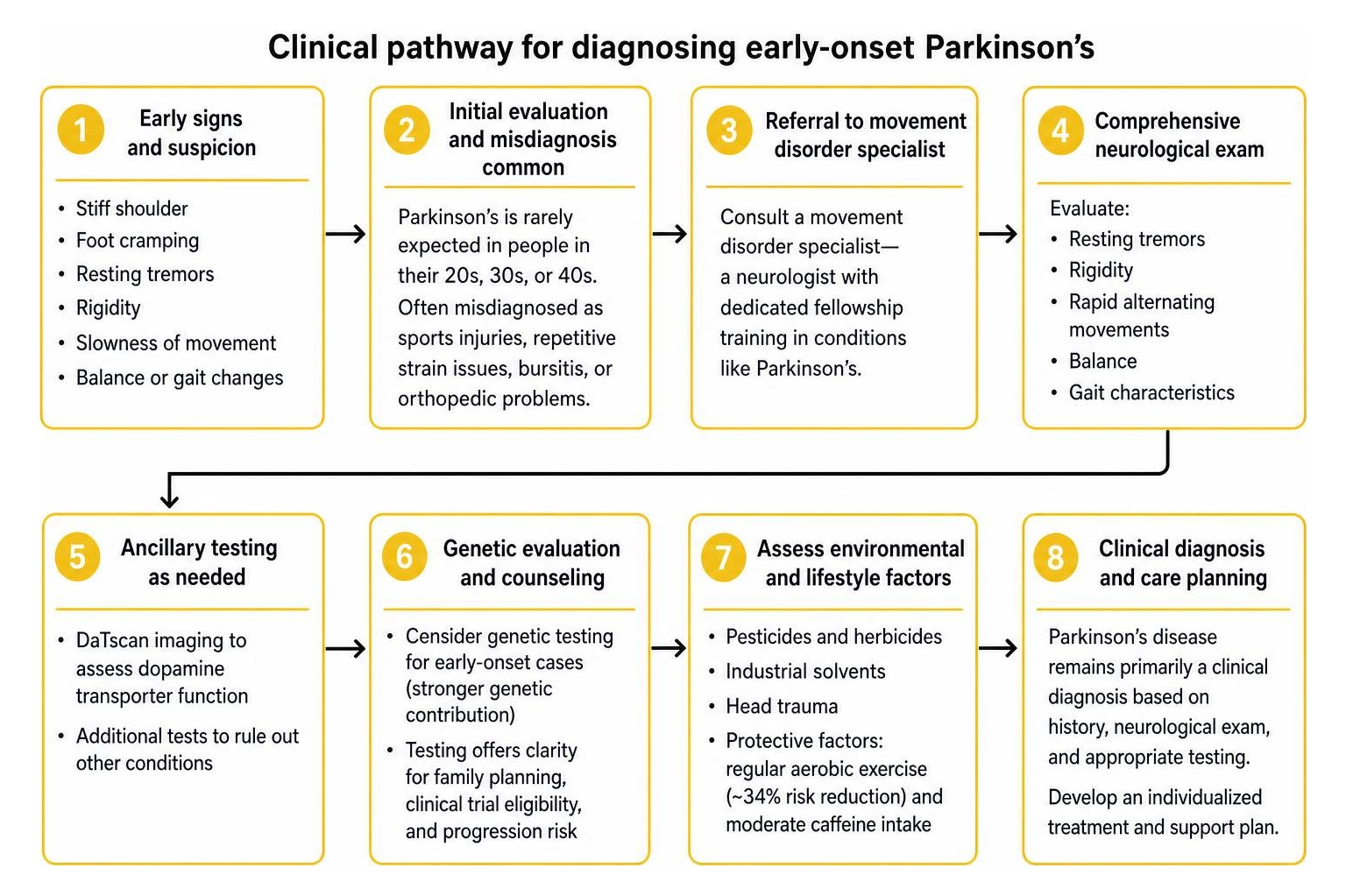
Because Parkinson's disease is rarely expected in people in their 20s, 30s, or 40s, getting an accurate diagnosis can be a frustrating journey. Younger adults who present with a stiff shoulder or foot cramping are routinely misdiagnosed with sports injuries, repetitive strain issues, bursitis, or orthopedic problems. It is not uncommon for an individual to spend several years seeing physical therapists, chiropractors, and orthopedists before receiving a neurological evaluation.
The Cleveland Clinic Guide to EOPD underscores that Parkinson's disease remains primarily a clinical diagnosis based on a comprehensive medical history and a detailed neurological examination.
Navigating the Diagnostic Pathway
When an evaluation is warranted, consulting a movement disorder specialist—a neurologist with dedicated fellowship training in conditions like Parkinson's—is the gold standard. The diagnostic workup often includes:
Comprehensive Neurological Exam: Evaluating resting tremors, rigidity, rapid alternating movements, balance, and gait characteristics.
DaTscan (Dopamine Transporter Imaging): A specialized single-photon emission computed tomography (SPECT) scan that visualizes dopamine transporter density in the brain, helping confirm dopaminergic deficit.
Brain MRI: Primarily used to rule out secondary causes of parkinsonism, such as strokes, normal pressure hydrocephalus, structural lesions, or multiple system atrophy.
Targeted Blood & Urine Panels: Younger adults are routinely screened for Wilson's disease (a treatable copper metabolism disorder) and other metabolic conditions that mimic Parkinson's symptoms.
Psychosocial, Career, and Family Impact
Receiving a chronic neurological diagnosis during peak career and family-building years presents complex personal challenges. Adults with EOPD are often managing full-time jobs, paying mortgages, and raising school-aged children, while sometimes also supporting aging parents—a reality known as the "sandwich generation."
Workplace Considerations: Individuals can plan their career trajectory proactively, exploring reasonable workplace accommodations protected under the Americans with Disabilities Act (ADA), such as ergonomic equipment, speech-to-text software, or hybrid schedules.
Financial and Legal Safeguards: Reviewing disability coverage, life insurance, and long-term care policies early ensures family security as needs evolve.
Caregiver Well-being: Family dynamics shift when a partner takes on caregiving responsibilities in mid-life. Providing proactive support and managing caregiver burnout is vital for maintaining emotional health and strong relationships over decades of care.
Treatment Options, Progression, and Long-Term Prognosis

A diagnosis of early-onset Parkinson's is life-changing, but it does not mean putting your life on hold. Because the condition progresses more gradually in younger adults and the brain retains substantial neuroplasticity, comprehensive management allows individuals to live active, fulfilling lives for decades. To explore comprehensive long-term planning, our Parkinson's care guide offers practical frameworks for every stage of care.
Medication Strategies and Timing
Medication regimens for younger individuals are carefully tailored to balance immediate symptom relief with long-term motor management:
Carbidopa-Levodopa: The most effective medication for restoring dopamine levels. While historically delayed in younger patients due to dyskinesia concerns, modern consensus emphasizes using appropriate doses to preserve functional quality of life without undue delay.
Dopamine Agonists: Medications like pramipexole and ropinirole mimic dopamine in the brain. They have a lower risk of causing dyskinesias early on, though clinicians monitor patients closely for side effects like daytime sleepiness or impulse control behaviors.
MAO-B Inhibitors & Amantadine: Drugs such as rasagiline or selegiline help prevent the breakdown of dopamine, while amantadine helps manage both tremors and levodopa-induced dyskinesias.
Advanced Therapies and Lifestyle Interventions
Deep Brain Stimulation (DBS): A surgical procedure where thin electrodes are implanted into targeted brain regions (such as the subthalamic nucleus) to regulate abnormal electrical signals. Younger adults are often excellent candidates for DBS, experiencing remarkable improvements in motor fluctuations and medication reduction.
Targeted Physical and Occupational Therapy: Specialized exercise programs (such as LSVT BIG) and high-intensity aerobic training stimulate neuroplasticity, preserve joint mobility, and improve gait mechanics.
Speech and Voice Therapy: Programs like LSVT LOUD help retrain vocal volume and swallowing mechanics early, preventing future complications.
Structured Community & Respite Programs: As the disease advances over many years, families benefit greatly from daytime enrichment and professional respite. Engaging in specialized day programs for Parkinson's support helps individuals maintain physical activity, cognitive engagement, and social connection while giving family caregivers essential breathing room. As care needs shift over time, recognizing the signs and symptoms of advanced Parkinson's disease ensures supportive adjustments are made well in advance.
Frequently Asked Questions About Early-Onset Parkinson's
What is the life expectancy for someone diagnosed with early-onset Parkinson's?
Parkinson's disease itself is rarely directly fatal. Because EOPD progresses more slowly and younger adults generally have fewer unrelated health conditions, life expectancy is often near-normal. Studies show an average disease duration of 25 to 32 years from symptom onset to end of life. Long-term health depends on staying physically active and proactively managing secondary complications, such as fall prevention and swallowing care.
Can early-onset Parkinson's start before age 30?
Yes. While rare, Parkinson's symptoms developing before age 40 account for about 2% of all Parkinson's cases. When symptoms appear before age 21, it is clinically termed juvenile parkinsonism. These very early presentations have a very high correlation with specific inherited genetic mutations, particularly in the PRKN and PINK1 genes.
How can I tell the difference between essential tremor and a Parkinson's tremor?
The primary distinction lies in when the tremor occurs:
Parkinson's Tremor: Typically a resting tremor that occurs when your hands or legs are completely relaxed (such as resting in your lap) and diminishes during purposeful movement. It almost always begins asymmetrically on one side.
Essential Tremor: An action tremor that becomes noticeable when you use your muscles to perform a task (such as holding a cup, drinking water, or writing). It typically affects both sides of the body equally and frequently involves the head or voice.
Conclusion
Noticing unexpected changes in your body can feel overwhelming, but recognizing early signs opens the door to proactive care, lifestyle adjustments, and advanced therapies that preserve independence. Managing early-onset Parkinson's is a long journey—one best navigated with a supportive medical team, family resources, and trusted community programs.
At Aspen Senior Care, we understand how Parkinson's impacts the entire family dynamic. From personalized in-home support to engaging daytime activities at our adult day center, we are dedicated to helping families throughout Utah Valley live fully and confidently. For a deeper look at what to expect as the condition develops over time, review our detailed overview of Parkinson's disease stages.