

Day Sitters for the Elderly vs Adult Day Care
Choosing Between Day Sitters for the Elderly and Adult Day Care
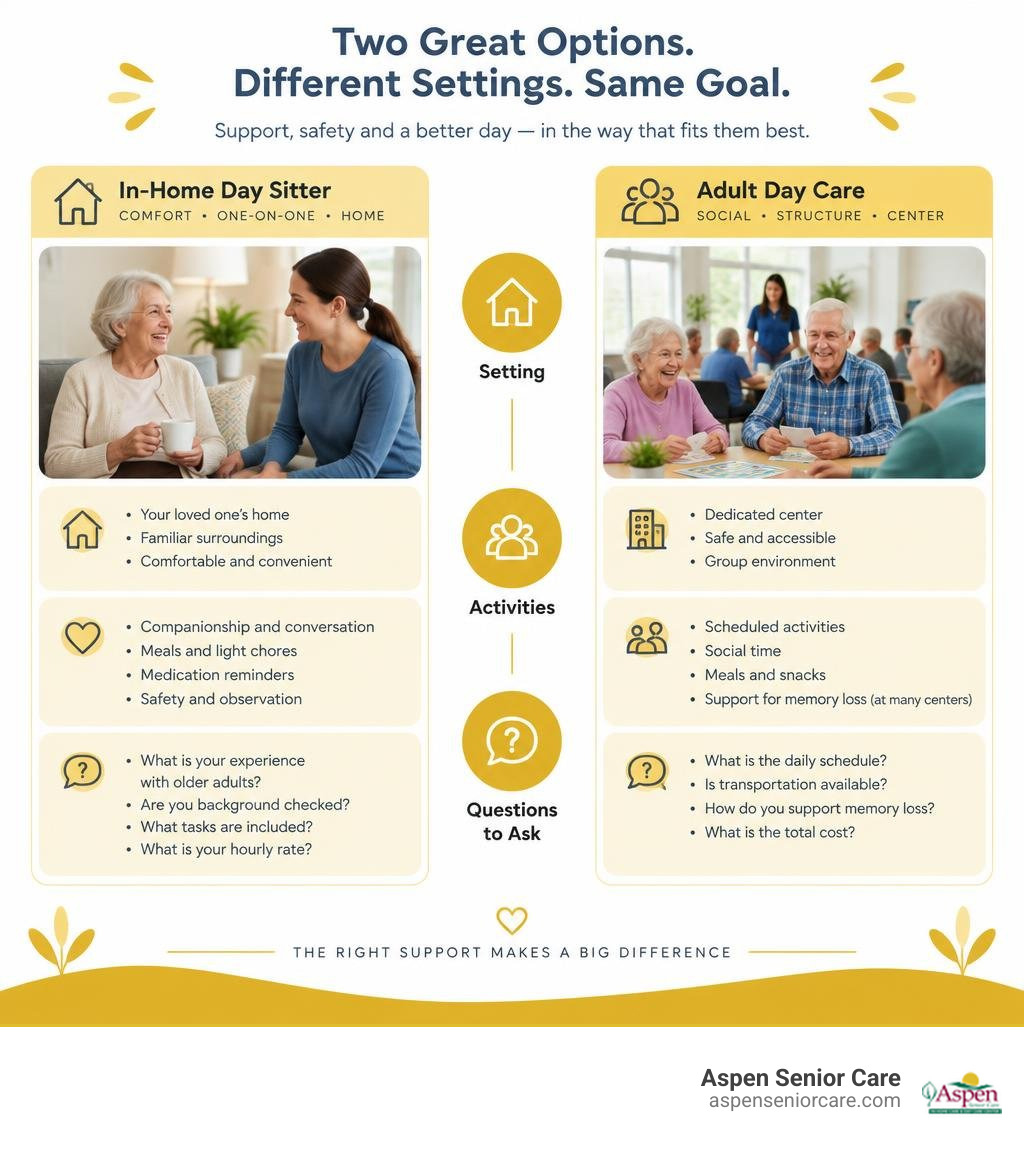
Need daytime help for an aging parent? Start with where they feel safest and what help they need. An in-home day sitter can offer companionship, meals, light chores, medication reminders, and someone to watch for safety concerns. Adult day care offers a set schedule, group activities, and social time at a center. Neither is a substitute for nursing care.
If your parent wants to stay home, ask local sitters about their experience, background checks, duties, and hourly rate. If they enjoy being around others, visit an adult day care center and ask about transportation and support for memory loss. Compare the full cost and try a short visit before committing.
What Are Day Sitters for the Elderly?
A day sitter provides non-medical companionship and supervision for aging adults who want to stay safely in their own homes. As our loved ones grow older, managing routine household tasks or spending long hours alone can become challenging. A sitter steps in during the daytime hours to ensure safety, reduce loneliness, and maintain a comforting daily routine.
Unlike licensed medical practitioners, day sitters focus on personal support and quality of life. They do not administer complex medical treatments, dress surgical wounds, or manage IV lines. Instead, they act as an extra pair of eyes, ears, and hands. Whether your family member lives in Orem, Provo, Lehi, or American Fork, incorporating a companion into their day creates a protective layer of elderly care at home that allows them to preserve their independence without sacrificing well-being.
Key Duties of Day Sitters for the Elderly
Day sitters perform a variety of non-medical tasks tailored to the senior's individual preferences and lifestyle. Their primary goal is to keep the day structured, engaging, and safe. Key daily responsibilities include:
Companionship and Social Engagement: Sharing friendly conversations, playing card games, working on puzzles, reading together, or going for gentle walks outdoors.
Nutritious Meal Preparation: Cooking fresh breakfasts and lunches, warming up pre-portioned dinners, and ensuring adequate hydration throughout the day.
Light Housekeeping: Tidying up the kitchen, wiping counters, doing laundry, washing dishes, and keeping walking pathways free of clutter to prevent falls.
Medication Reminders: Prompting the senior to take pre-poured, scheduled pills at the correct times of day.
Errands and Accompaniment: Assisting with grocery shopping, picking up prescriptions, or accompanying your loved one on brief neighborhood outings.
These everyday services form the core of dedicated companion care for seniors, providing peace of mind to family members who must work or attend to other duties during the day.
What Day Sitters Can and Cannot Provide
Understanding the distinct scope of non-medical support is essential when planning home support. The table below outlines what families can expect:
Daily Support Area | What a Day Sitter CAN Provide | What a Day Sitter CANNOT Provide |
|---|---|---|
Companionship & Supervision | Active conversation, board games, fall prevention monitoring, cognitive games | Skilled behavioral therapy or psychiatric treatment |
Meals & Nutrition | Preparing fresh meals, assisting with feeding, hydration prompts | Tube feeding or clinical dietary management |
Medication Support | Verbal reminders for pre-set daily pill organizer boxes | Organizing pillboxes, adjusting dosages, or administering injections |
Personal Hygiene | Assisting with standing at the sink, brushing teeth, hands-off standby support | Full bed baths, complex transfer lift operation, or clinical wound care |
Mobility & Transfers | Offering a steadying arm, steadying walkers, light walking support | Physical therapy rehabilitation or skilled transfer protocols |
Health Monitoring | Basic observation of mood, energy, appetite, and reporting changes to family | Diagnosing illnesses, managing oxygen equipment, or running clinical tests |
Comparing In-Home Day Sitters and Adult Day Care Centers

When exploring options for daytime assistance across Utah County, families usually evaluate two main models: one-on-one in-home sitters and community-based adult day care centers. Both models offer vital caregiver respite, but they deliver support in distinct environments.
Structure, Socialization, and Environment
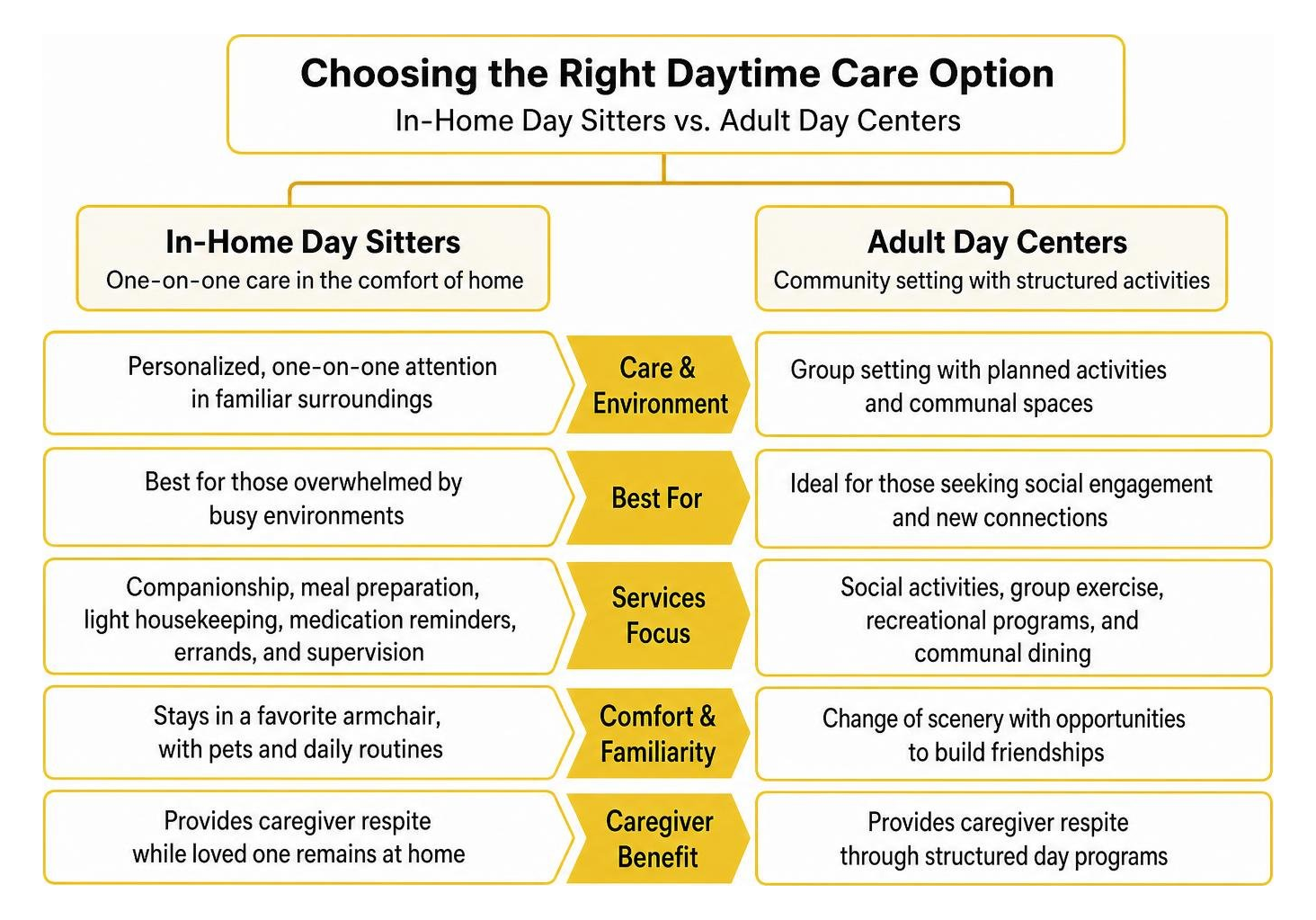
In-home day sitters provide customized, one-on-one attention inside the senior's familiar personal surroundings. This option works well for individuals who feel overwhelmed by busy environments or who prefer staying in their favorite armchair with their own pets and daily rhythms.
Conversely, a dedicated senior day center offers a structured community setting with planned recreational activities, group exercise, musical entertainment, and communal dining. For seniors experiencing isolation, attending adult day programs near me can spark new friendships, boost conversational energy, and promote mental sharpness through collaborative social interactions.
Memory Loss and Dementia Support
For individuals navigating Alzheimer’s disease or related dementias, daytime care requires specialized attention to routine and wandering prevention.
In-home day sitters support memory care by maintaining familiar cues, preparing comforting meals, and providing redirection if the senior experiences confusion or sundowning symptoms.
In a center setting, specialized memory programs incorporate sensory engagement, music, art, and secure indoor spaces designed specifically to prevent wandering while encouraging cognitive engagement. Utilizing structured day respite services ensures that individuals with memory loss remain safe, engaged, and supported throughout the day while family caregivers recharge.
The Costs and Payment Options for Senior Day Care
Budgeting for senior support involves looking at hourly rates, weekly schedules, and long-term financial resources. Reviewing an in-home care summary helps clarify overall care investments.
Average Pricing and Weekly Budgets
In-home sitter rates typically range from $15 to $30 per hour depending on qualifications, agency backing, and localized demand across Utah Valley communities such as Pleasant Grove, Spanish Fork, and Saratoga Springs.
Care Schedule | Typical Weekly Hours | Estimated Hourly Rate | Estimated Weekly Cost | Estimated Monthly Cost |
|---|---|---|---|---|
Part-Time Companionship | 15 hours/week | $15 – $30 / hr | $225 – $450 | $900 – $1,800 |
Half-Day Support | 20 hours/week | $15 – $30 / hr | $300 – $600 | $1,200 – $2,400 |
Full-Time Day Sitting | 40 hours/week | $15 – $30 / hr | $600 – $1,200 | $2,400 – $4,800 |
Adult Day Care Center | Full Day (Daily Rate) | Flat Daily Rate | $400 – $850 | $1,600 – $3,400 |
How to Pay for Day Sitters for the Elderly
Most private day sitting services are paid out-of-pocket, but several programs can offset costs:
Long-Term Care Insurance: Policies often reimburse non-medical in-home companion care or adult day center attendance once daily living triggers are met.
Veterans Benefits: The VA Aid and Attendance benefit provides monthly stipends to qualifying wartime veterans and surviving spouses to cover in-home sitting and day care.
State and County Assistance: Utah Medicaid waivers and caregiver support programs may provide vouchers or respite grants for eligible seniors.
Local Community Senior Programs: Many cities, such as American Fork through their local community senior programs, offer community resources, social events, and recreational activities that complement daytime care plans.
How to Choose the Right Daytime Care Solution

Selecting between an in-home day sitter and an adult day center requires balancing your loved one’s personality, mobility level, and social desires against family scheduling needs. Taking advantage of planned respite care prevents family burnout while sustaining long-term home routines.
Assessing Safety and Caregiver Fatigue
Ask yourself these practical questions to evaluate your current situation:
Is your loved one safe when left alone? Are they prone to forgetting stove burners, misplacing items, or losing balance when walking?
Are they experiencing social isolation? Do they spend most of the day watching television without speaking to anyone?
Are family caregivers exhausted? Are you balancing work and personal commitments while feeling constant stress about your parent's daytime safety?
Recognizing the need for in-home help is an important first step toward a healthier balance for your entire family.
Key Questions to Ask When Hiring
When interviewing potential day sitters or evaluating daytime programs, use this checklist:
What specific experience do you have with older adults or memory care?
Do you undergo verified criminal background checks and driving record screenings?
Are you trained in CPR, first aid, and emergency response procedures?
How do you handle sudden confusion, refusal to eat, or stubborn behaviors?
What is your cancellation and substitute coverage policy if you become ill?
Can you provide recent client references from families in our area?
Frequently Asked Questions about Daytime Senior Support
Do day sitters help with full baths and medication administration?
Standard day sitters provide verbal reminders for pre-poured medication and hands-off supervision near the bathroom sink. They do not administer prescription medications or perform hands-on bathing in showers. If your loved one requires hands-on bathing assistance or clinical medication administration, a Certified Nursing Assistant (CNA) or home health nurse is required.
How do I know if an in-home day sitter is safe and vetted?
When hiring independently, you must run background checks, verify driving records, call references, and confirm liability coverage yourself. When working with a licensed care agency, all caregivers undergo rigorous screening, drug testing, continuous background monitoring, bonding, and training before entering your home.
What if my loved one resists outside help or going to a center?
Resistance is natural when routines shift. Introduce a day sitter gradually—start with just two hours a week and frame the caregiver as a helpful assistant or friend stopping by to help with cooking and light chores. For adult day programs, arrange a brief half-day trial visit to participate in a favorite activity, like lunch or musical performances, allowing familiarity to build naturally.
Conclusion
Finding the right daytime balance brings security to your loved one and relief to your family. Whether through dedicated in-home companionship or an energetic day program, quality daytime support preserves independence while enriching daily life.
At Aspen Senior Care, we provide compassionate, personalized in-home caregiving alongside engaging daytime activities across Utah Valley, including Orem, Provo, Lehi, American Fork, Pleasant Grove, Spanish Fork, Alpine, Cedar Hills, Salem, Eagle Mountain, Highland, Lindon, Saratoga Springs, and Payson. Contact our friendly team today to explore our adult day care services and discover the ideal daytime solution for your family.