
How Geriatric Day Care Helps Seniors Stay Independent Longer
How Geriatric Day Care Helps Seniors Stay Independent
Geriatric day care can help an older adult keep living at home by providing daytime supervision, social activities, meals, and help with daily tasks. To make it work, choose a program that fits your parent’s needs, check that its hours cover the time they need support, and build a steady routine.
For families in Utah Valley, that routine can ease worry during the workday and give caregivers time to rest. Day care does not replace support at home, but it can make each day safer and more engaging for a parent who should not be alone for long stretches.
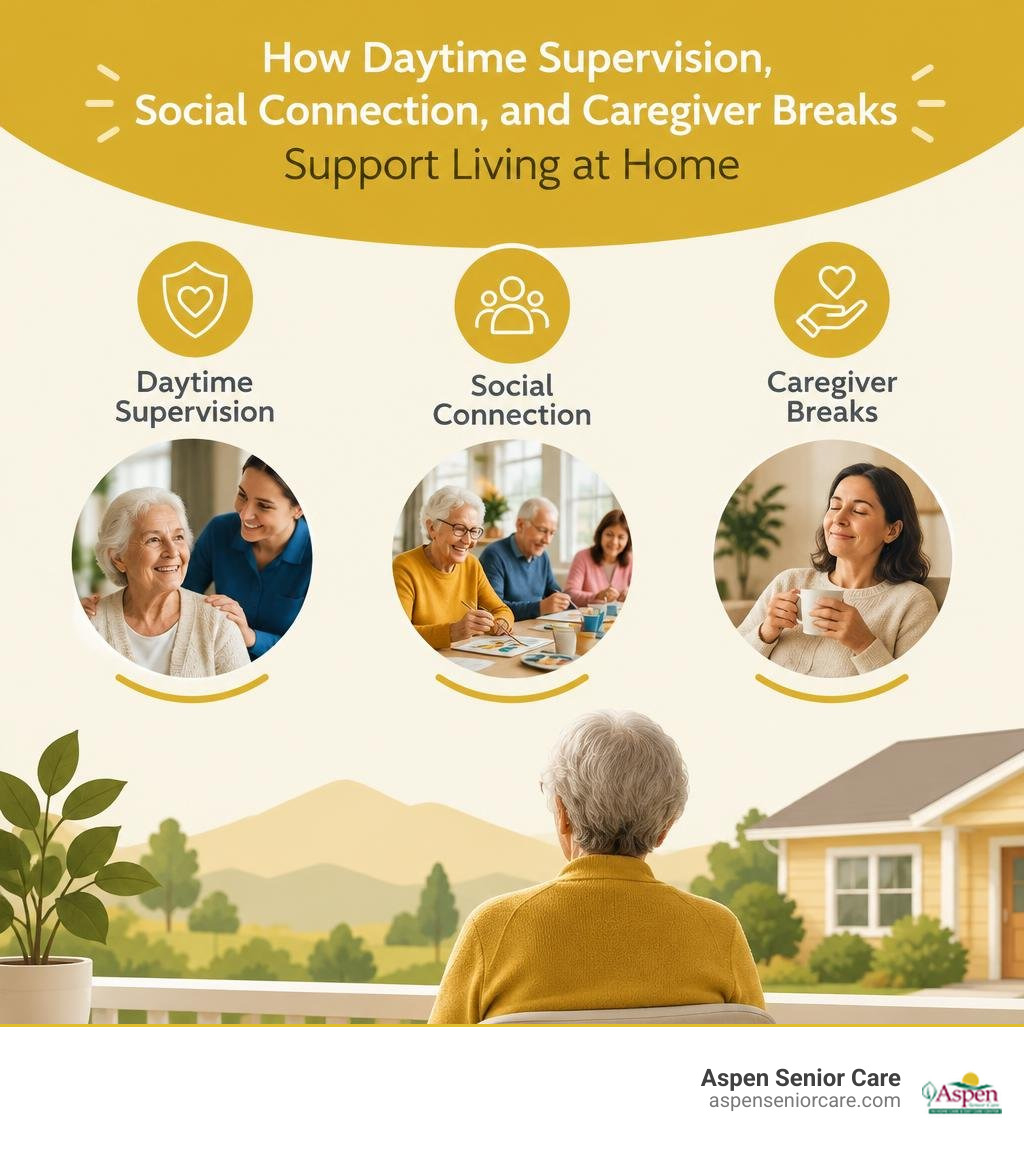
As loved ones age, maintaining self-reliance while managing chronic conditions or memory loss can feel like a delicate balancing act. When social isolation creeps in and family members begin experiencing caregiver burnout, finding structured, daytime care is often the key to preserving a loved one's independence and functional health.
Understanding the Different Models of Geriatric Day Care
Not all adult daytime care looks the same. Depending on your loved one’s functional capabilities and personal needs, programs are organized into distinct care pathways. The broader landscape of community-based adult day services generally spans three overarching frameworks:
Social Model Programs: Designed primarily for older adults who are relatively stable physically but benefit from supervised group activities, peer engagement, nutritious dining, and recreational therapy. An established social model adult day services approach emphasizes emotional well-being, movement, and cognitive stimulation rather than intensive medical interventions.
Adult Day Health Care (ADHC) / Medical Model: Focuses on seniors with complex health monitoring needs. These centers typically feature on-site nursing, medication administration, physical therapy, and close coordination with primary physicians. Nationally, nearly 80% of adult day centers maintain a nurse on staff, and nearly 50% employ a social worker.
Specialized Dementia Models: Tailored specifically for individuals navigating progressive cognitive changes like Alzheimer's disease or related dementias, utilizing secure perimeters and sensory programming.
Across these models, programs tend to be tight-knit communities. Most day programs are small, averaging around 20 participants daily, which allows for direct care worker ratios of approximately one staff member for every four to six attendees.
Social and Specialized Dementia Programs
For seniors living with memory loss, a generic social environment can sometimes feel overwhelming. A dedicated specialized dementia daycare environment uses evidence-based recreational therapies, music therapy, reminiscence discussions, and guided cognitive exercises to tap into preserved memories and skills.
A high-quality adult day center designs its entire space to reduce disorientation and agitation. By establishing predictable daily cadences—morning chair stretches, shared warm meals, creative arts, and sensory calm-down periods—staff members help participants feel successful, dignified, and socially connected throughout their stay.
Comparing Day Programs and In-Home Care
Families often ask whether they should choose a daytime center or schedule in-home caregiving visits. Both approaches offer immense value, and they can even complement each other as part of a comprehensive aging-in-place strategy.
Our senior day care guide highlights the major differences between center-based care and dedicated in-home care options:
Feature | Geriatric Day Care Centers | In-Home Care Assistance |
|---|---|---|
Primary Environment | Professional, secure community center | The senior’s private residence |
Social Dynamics | Dynamic peer interaction, group games, communal dining | One-on-one companion focus and personal connection |
Staffing Structure | Multidisciplinary group (activities staff, aides, nurses) | Dedicated single caregiver per shift |
Cost Basis | Flat daily or half-day rates | Hourly rates based on scheduled shift lengths |
Best Suited For | Reducing isolation, group stimulation, structured routine | Targeted personal care, morning/night routines, bed-bound support |
Core Benefits for Seniors and Family Caregivers

Enrolling in a daytime program creates a positive ripple effect for the entire family system. The older adult gains a renewed sense of purpose and a bustling social calendar, while family caregivers receive dedicated daytime relief to work, run errands, or simply recharge.
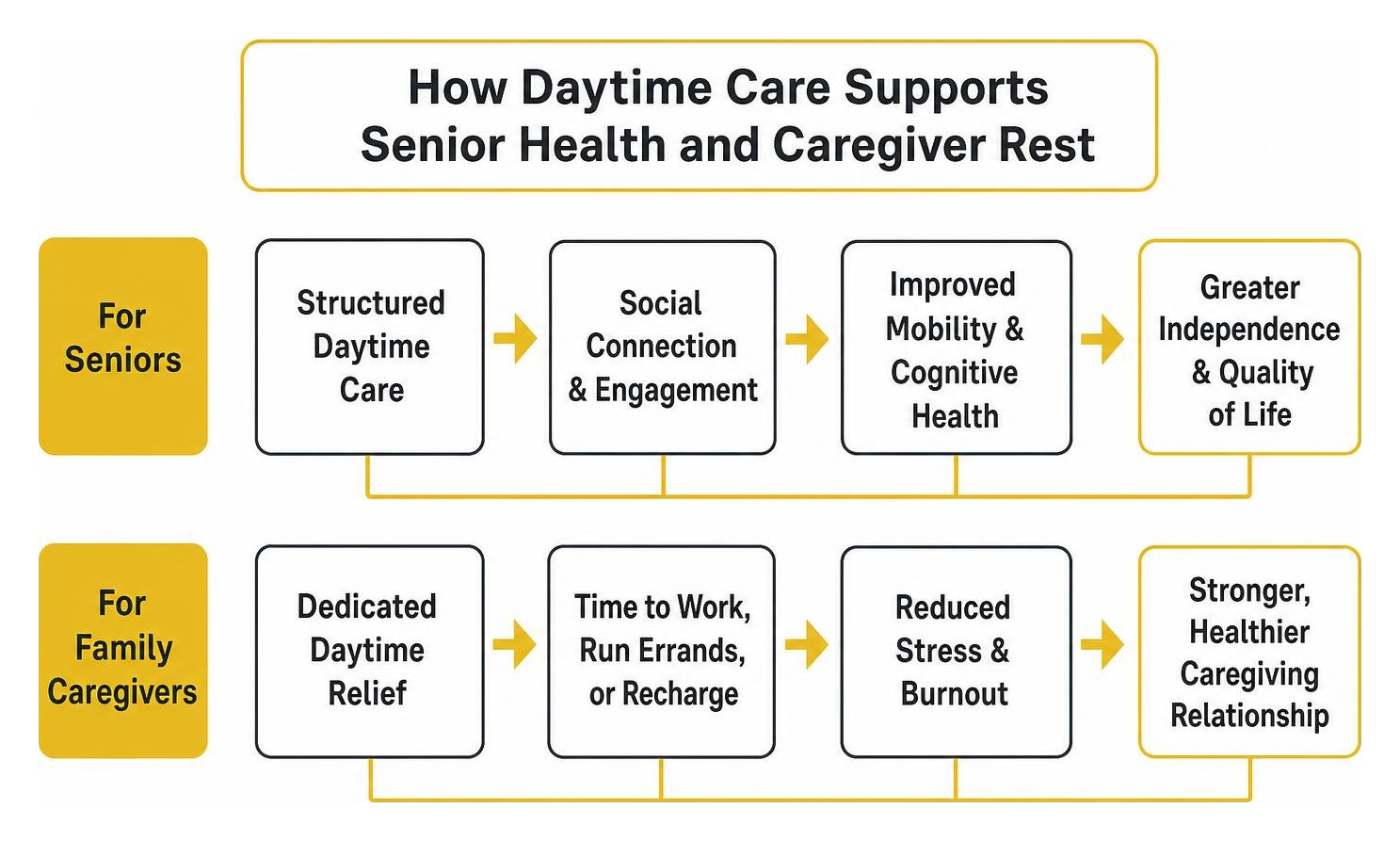
How Geriatric Day Care Supports Daily Independence and Cognitive Health
When older adults spend prolonged periods alone at home, physical mobility can deteriorate and cognitive decline can accelerate. Structured daytime care addresses both challenges head-on:
Mobility Preservation & Fall Prevention: Certified activity leaders conduct daily range-of-motion drills, balance routines, and seated exercises that build core stability and joint flexibility.
Essential ADLs Assistance: Trained staff assist with activities of daily living such as safe transfers, mobility support, continence care, and dignified eating assistance.
Cognitive Maintenance: As noted by leading memory organizations like the Alzheimer's Association adult day centers, engaging in group discussions, trivia, puzzles, and sensory art stimulates neurological pathways, which helps slow functional decline.
Nutritional Support: Centers provide hot, well-balanced lunches and healthy snacks tailored to specialized dietary needs (such as diabetic-friendly or low-sodium options), ensuring participants stay properly nourished and hydrated.
Reducing Caregiver Stress and Preventing Burnout
Full-time caregiving is physically and emotionally demanding. According to industry data, 19.1% of family caregivers utilize adult day programs to create a sustainable long-term caregiving arrangement.
Having access to reliable respite care services during regular business hours allows adult children and spouses to maintain their employment, attend to their personal health, and avoid chronic exhaustion. Families can also explore specialized caregiver support resources to connect with educational tools and peer support networks throughout their care journey.
Managing Costs, Funding Options, and Financial Assistance

Daytime care can be a practical long-term care option for families who need structured support during the day. When reviewing how much adult day care costs, families typically encounter straightforward half-day or full-day pricing models:
Private Pay: Most programs charge an all-inclusive daily rate that covers activities, meals, supervision, and routine personal care assistance.
Medicaid Waivers & State Programs: Low-income older adults who meet clinical nursing facility level-of-care criteria can often fund their participation through state Medicaid Home and Community-Based Services (HCBS) waivers.
Veterans Benefits: Eligible military veterans can frequently access daytime health services funded directly through VA extended care coverage.
Long-Term Care Insurance: Many comprehensive private long-term care insurance policies cover adult day programs when the policyholder requires assistance with two or more activities of daily living or has a documented cognitive impairment.
How to Choose and Tour the Right Facility
Finding the right environment for your loved one requires thoughtful observation and research. When evaluating prospective providers of day care for elderly family members, schedule an on-site visit during active program hours to get a genuine feel for the atmosphere.
Look closely at how the staff interacts with the attendees. Are participants engaged and smiling, or are they left sitting in front of a television screen? Is the facility clean, odor-free, and well-lit, with wide hallways and secure, monitored exits?
Essential Checklist and Questions to Ask Providers
Bring a clear list of questions to your facility tour to evaluate whether their operational capabilities match your loved one’s specific care plan:
Staffing & Ratios: What is your direct staff-to-participant ratio throughout the day? What certifications (such as CPR, First Aid, and specialized dementia training) are required for your direct care team?
Licensing & Accreditation: Is the center licensed and in good standing with state regulatory agencies?
Medical & Emergency Protocols: How are medication reminders and administration handled? What is your protocol if an attendee becomes ill or experiences an emergency?
Behavioral Management: How do staff members de-escalate anxiety, agitation, or exit-seeking behaviors in participants with cognitive decline?
Nutrition & Dining: Can your kitchen accommodate texture-modified diets, purees, or food allergies?
Trial Periods: Do you offer a half-day or full-day trial visit so we can gauge how well my loved one enjoys the environment?
Transitioning Your Loved One into Geriatric Day Care Smoothly
Transitioning into a new environment takes patience. It is completely normal for an older adult to feel apprehensive during their first few visits. Use these proven steps to make the adjustment smoother:
Start with Shorter Stays: Begin with two half-days per week before transitioning to full-day schedules.
Frame the Program Positively: Introduce the center as an inviting social club, community center, or volunteering opportunity rather than a place where they are receiving "care."
Share Personal Insights: Provide the activity team with a summary of your loved one’s favorite hobbies, former career achievements, musical tastes, and comfort items.
Commit to a Consistent Routine: Give the program at least three to four consecutive weeks. Most participants need time to build familiarity with their peers and staff before feeling fully at home.
Frequently Asked Questions About Daytime Senior Support
What is the typical daily schedule and cost of a program?
Most daytime programs operate between 7:30 AM and 5:30 PM, Monday through Friday, with select centers offering weekend or extended-hour options. A typical day balances morning coffee and news reviews, gentle physical exercise, cognitive group games, a hot midday meal, afternoon music or arts, and quiet relaxation time. Daily rates vary by program type and care level; you can review standard fee schedules in our adult day care price breakdown.
How do centers accommodate dementia and physical disabilities?
Modern day centers feature secure entryways and wandering prevention systems to keep participants safe. Bathrooms and common rooms are fully wheelchair-accessible with roll-in entries, grab bars, and mechanical transfer assists. In our specialized senior day center memory care environment, daily schedules are thoughtfully paced with calming sensory cues to prevent overstimulation.
Can day services be combined with in-home caregiver assistance?
Yes. Many families use a hybrid model. An older adult might attend an adult day center three days a week for active group socialization and physical exercise, while utilizing companion care for seniors at home on alternate mornings or evenings for bathing, grooming, and light housekeeping.
Conclusion: Empowering Seniors to Flourish at Home
Choosing daytime care is an investment in your loved one's independence and your family's peace of mind. By providing structured cognitive stimulation, movement, balanced nutrition, and genuine peer connections, day programs empower older adults to continue living in their cherished home environments while giving family caregivers the dependable support they deserve.
At Aspen Senior Care, we provide award-winning, family-like daytime programs and non-medical home care services throughout Utah Valley—including Orem, Provo, Lehi, American Fork, Pleasant Grove, Spanish Fork, and surrounding communities. Discover how our personalized adult day care services can help your loved one stay active, safe, and independent. Contact our friendly care team today to schedule a tour or discuss your family's care needs.