An Essential Guide to Finding Senior Wellness Centers
Senior Wellness Centers Help Older Adults Stay Active and Connected
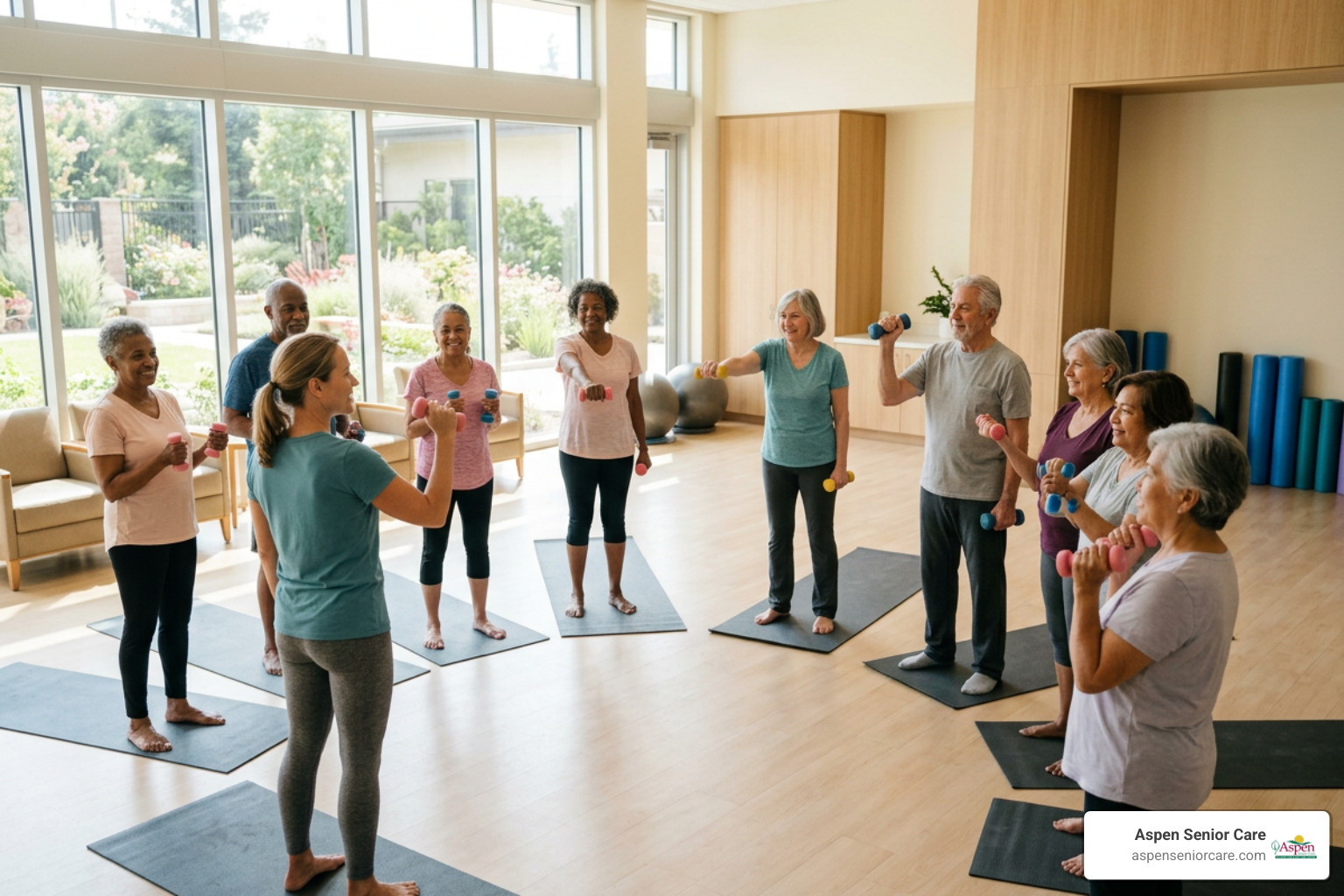
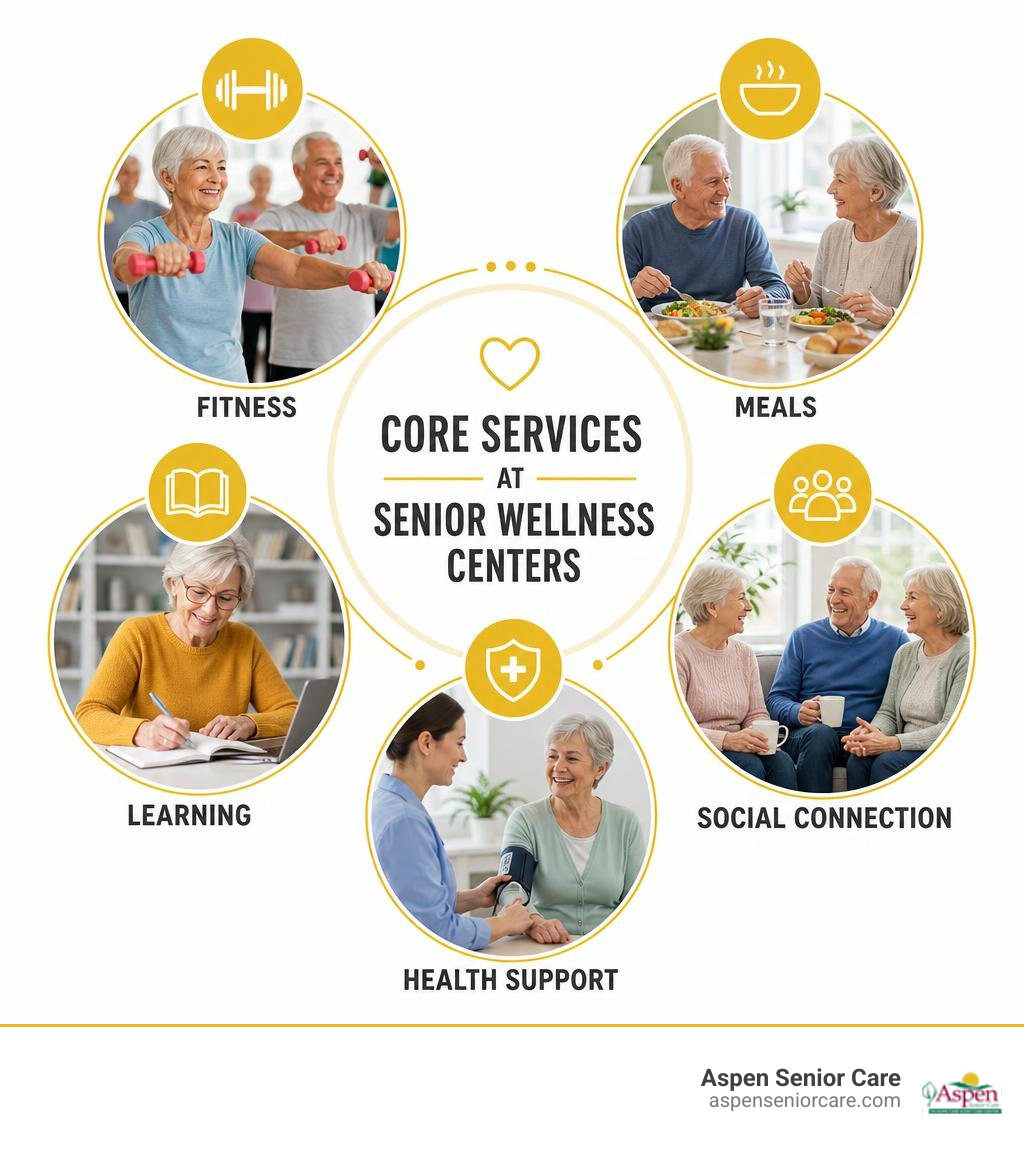
Senior wellness centers are community-based places where older adults can take fitness classes, share meals, learn new skills, and spend time with peers. They are built to support healthy aging, social connection, and independence for seniors who live at home.
For families in Utah Valley, a local center can be a helpful part of a larger care plan. Look for one that matches your parent's mobility, health needs, interests, transportation options, and need for supervision. Many offer weekday programs, often during standard daytime hours, plus low-cost lunches, exercise equipment, computer access, health education, and virtual activities.
These centers can be a strong fit for an older adult who is largely independent but needs more routine and connection. If your parent needs hands-on help with daily tasks, medication reminders, or safety monitoring, a specialized adult day program may be the better choice.
What Are Senior Wellness Centers and How Do They Operate?
Senior wellness centers serve as lively community anchors designed to help older adults remain independent, socially engaged, and physically active. Rather than functioning as clinical clinics or institutional facilities, these centers operate as welcoming, multi-purpose community hubs. Their primary purpose is holistic wellness: addressing physical strength, cognitive health, emotional balance, and nutritional needs under one roof.
Modern senior wellness centers rely on dynamic operational models. Many are established through municipal initiatives and public recreation departments, while others partner with trusted non-profit operators, community health networks, and local area agencies on aging. In places throughout Utah County—including Orem, Provo, Lehi, American Fork, Pleasant Grove, and Spanish Fork—cities frequently invest in dedicated recreational infrastructure to support their aging populations.
When families look for a dedicated wellness center for seniors, they discover environments built around purposeful routine. The operational structure typically focuses on self-directed engagement for independent older adults, offering flexible daily schedules where participants can pick and choose the activities that best match their personal goals and energy levels.
Daily Activities and Programs in Senior Wellness Centers
A visit to a senior wellness center reveals an active, engaging atmosphere filled with laughter, movement, and learning. Daily schedules are thoughtfully structured to promote whole-body vitality through evidence-based recreation.
Typical daily programs include:
Low-Impact Physical Fitness: Gentle movement classes tailored for senior joint health and mobility, such as chair yoga, Tai Chi, Zumba Gold, line dancing, and balance improvement routines.
Cognitive and Creative Arts: Hands-on creative outlets including watercolor painting, ceramics, quilting, stitching, and structured crafting groups that encourage creative expression.
Games and Social Recreation: Friendly competition featuring billiards, dominoes, card tournaments, chess, and monthly bingo gatherings.
Digital Literacy and Modern Technology: Practical workshops that teach smartphone photography, email navigation, tablet basics, and internet safety.
Health Education and Chronic Condition Management: Informative seminars covering topics like diabetes management, arthritis relief, heart health, fall prevention, and nutrition.
For individuals seeking structured weekday engagement with added supervision, exploring specialized day programs for seniors offers an ideal way to balance engaging recreation with dedicated personal care.
Essential Amenities and Nutrition Programs
Beyond structured activity classes, senior wellness centers provide essential amenities that make daily visits comfortable, convenient, and deeply fulfilling.

Standard amenities typically feature fully equipped fitness rooms with senior-friendly resistance machines, computer labs with high-speed internet access, quiet libraries, billiards rooms, and expansive multi-purpose social halls.
A cornerstone of community centers is the congregate nutrition program. Centers provide hot, nutritionally balanced lunches on weekdays, offering both meat-based and vegetarian options tailored to senior dietary guidelines. These shared meal programs combat senior malnutrition while transforming lunchtime into a joyful social tradition.
Families can review county-wide nutrition and connection resources through the MAG Senior Help Guide - Senior Centers And Socialization to learn more about localized meal programs and community support across our region.
Health and Social Benefits of Active Participation
Aging well is not just about managing health conditions—it is about embracing vitality, purpose, and meaningful friendships. Regular participation at a local wellness center produces measurable improvements across every dimension of an older adult's life.
Physical Vitality and Chronic Disease Management
Consistent physical activity is one of the most effective tools for maintaining mobility and preserving daily independence. Senior wellness centers offer safe, modified exercise programs that help older adults build core strength, enhance joint flexibility, and practice balance control.
Regular exercise combined with preventive health services helps seniors:
Prevent Falls: Targeted balance and leg-strengthening exercises significantly reduce slip and fall risks at home.
Monitor Vital Signs: Many centers host free weekly blood pressure clinics and wellness checks to help seniors stay on top of cardiovascular health.
Manage Chronic Conditions: Structured movement eases joint stiffness caused by arthritis, improves circulation for those with hypertension, and assists in blood sugar regulation for individuals managing diabetes.
Improve Sleep and Energy: Daily physical and social engagement promotes deeper, more restorative sleep patterns.
Cognitive Stimulation and Emotional Health
Social isolation and loneliness pose severe health risks to older adults, contributing to cognitive decline and depression. Senior wellness centers provide an uplifting environment where older adults can build new friendships, share stories, and establish meaningful daily routines.
Engaging in lifelong learning lectures, book clubs, creative arts, and strategy games stimulates neuroplasticity and sharpens mental agility. By keeping the brain active and spirits high, seniors experience greater self-esteem, renewed optimism, and a powerful sense of belonging within their local community.
Comparing Community Wellness Hubs and Specialized Adult Day Care
While community senior wellness centers are wonderful for active, independent older adults, families often wonder how they differ from specialized adult day care centers. Understanding the distinction ensures your loved one receives the exact level of support, safety, and engagement they need.
Feature / Service | Community Senior Wellness Center | Specialized Adult Day Center |
|---|---|---|
Primary Focus | Social recreation, fitness, lifelong learning | Structured care, therapeutic recreation, cognitive support |
Participant Independence | Fully independent with activities of daily living (ADLs) | Requires assistance with mobility, eating, or personal care |
Memory & Dementia Support | General social activities; unmonitored exits | Specialized memory care, secure environment, sensory rooms |
Staffing & Supervision | Activity coordinators and instructors (low supervision) | Professional care staff and trained dementia specialists |
Caregiver Respite | Casual drop-in; senior manages own schedule | Full-day, dependable respite for family caregivers |
Medication Management | Self-administered by participant | Supervised and coordinated medication support |
Evaluating Levels of Support in Senior Wellness Centers
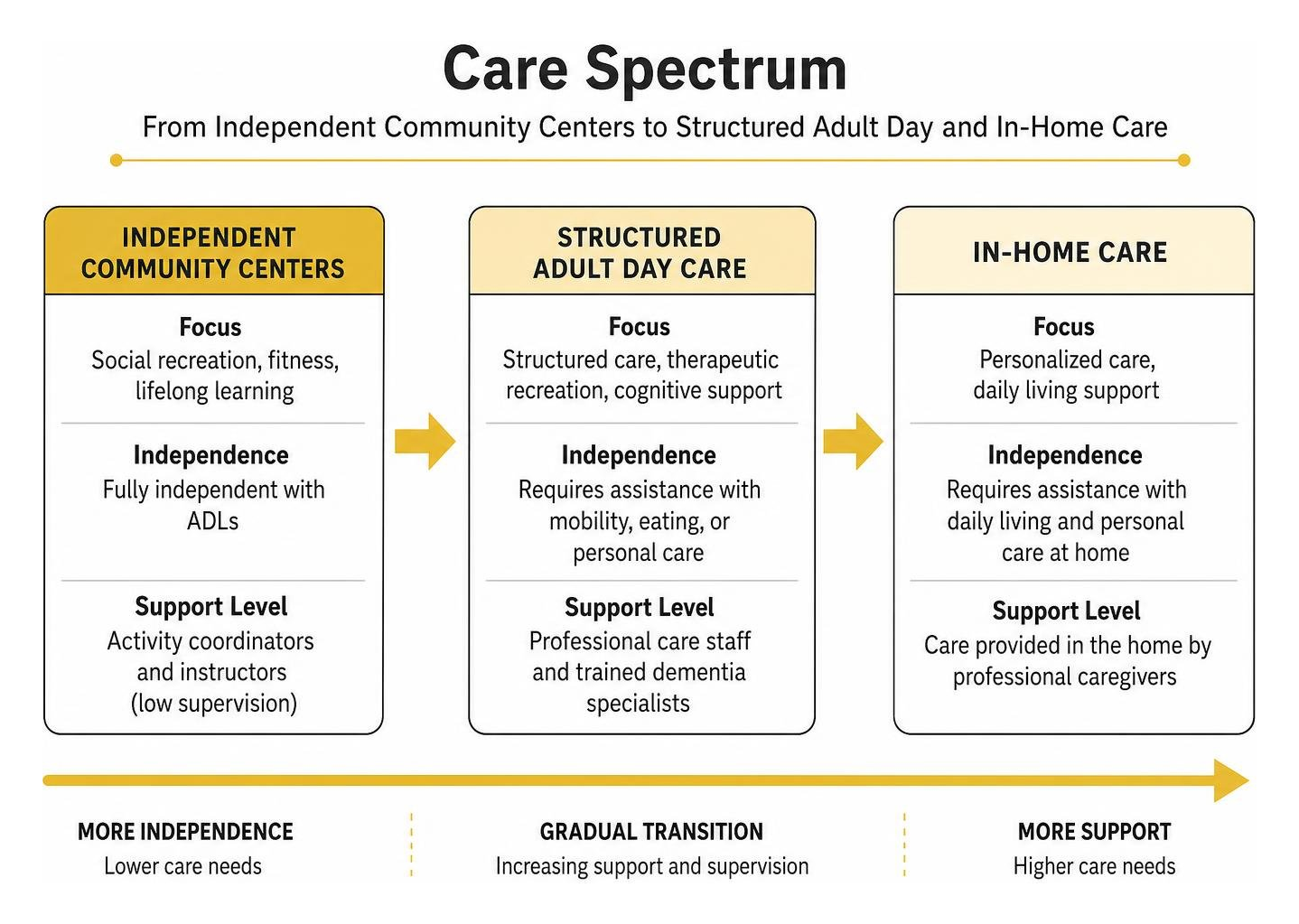
Community senior centers are designed for individuals who can safely navigate their surroundings without constant personal supervision. If an aging parent begins experiencing memory loss, wander risk, or physical frailty, standard community centers may no longer provide sufficient oversight.
When an older adult requires hands-on assistance or specialized cognitive programming, transitioning to dedicated senior daycare services provides the right balance of fun activities and skilled physical assistance. Families navigating these options can consult our detailed Senior Day Care Guide 2026 to determine which care level aligns best with their loved one's daily routine.
Coordinating Caregiver Respite and In-Home Assistance
Family caregivers often carry heavy daily responsibilities. While independent senior centers offer a few hours of social recreation, families caring for loved ones with advanced physical or memory care needs frequently require dependable, comprehensive respite solutions.
Pairing adult day programs with professional in-home caregiving ensures aging adults receive compassionate, personalized support around the clock. To explore how personalized caregiver visits assist with morning routines, meal prep, and mobility, read our In-Home Care Complete Guide 2026.
To browse nearby municipal community centers across Utah County and surrounding areas, you can also check the Utah State List: Senior Centers.
Membership Registration, Operating Hours, and Program Costs
Joining a local senior wellness center is straightforward and welcoming. Most municipal and non-profit centers welcome new members year-round.
To register a senior family member at a local community center, you will typically need:
Proof of Age: A valid government-issued photo ID or driver's license verifying age (generally 60+ for subsidized programs).
Proof of Local Residency: A utility bill or state ID demonstrating residency within the municipal or county service area.
Emergency Contact Details: Contact information for family members, primary care physicians, and designated emergency representatives.
Basic Intake & Health Form: A simple form outlining emergency contacts, allergies, and general activity preferences.
For example, local residents in Utah County can explore city-specific schedules and registration steps through Senior Programs | Provo, UT as well as municipal community pages in neighboring towns.
Operating Hours, Locations, and Subsidized Meal Fees
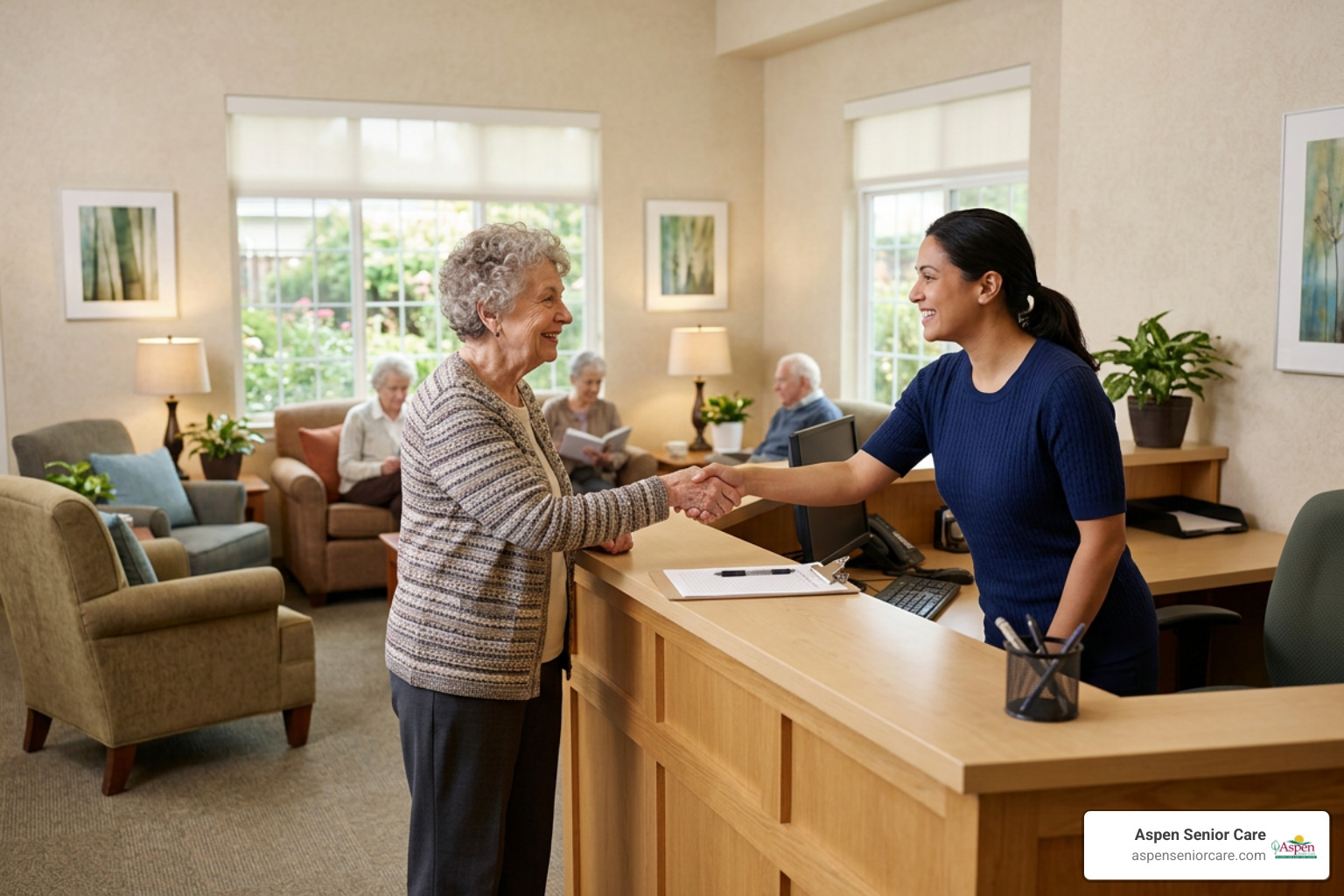
Most senior centers operate Monday through Friday during standard daytime hours, typically between 8:00 AM and 5:00 PM, with scheduled morning group activities running from 9:00 AM to 1:00 PM. Many centers also provide hybrid virtual programming, allowing older adults to tune into balance classes or educational lectures from home when weather or transportation presents a challenge.
Community-funded senior wellness centers offer exceptional value:
Daily Programs & Memberships: Often completely free or available for a modest annual municipal registration fee.
Nutritious Congregate Lunches: Senior wellness centers offer a nutritionally balanced lunch, Monday through Friday, for a suggested donation of $2.50 for anyone age 60+; the cost of lunch for those under 60 is $8.76. Meal reservations are typically requested 24 hours in advance to assist kitchen planning.
Frequently Asked Questions
Can family caregivers accompany seniors to local center activities?
Yes. Most community senior centers warmly welcome family caregivers to attend alongside older adults who may need slight physical assistance or emotional reassurance during classes and lunch programs. Having a caregiver present ensures the senior enjoys community activities safely and comfortably.
What is the typical cost for meals and daily programs?
The vast majority of daily recreational activities, fitness classes, and educational workshops are provided free of charge or for very low nominal supply fees. Subsidized lunches are made available to seniors aged 60 and older for a suggested donation of approximately $2.50, while non-senior guests pay standard meal rates.
What is the difference between a senior center and adult day care?
A senior center is a recreational drop-in hub for independent seniors who manage their own personal care and schedules. An adult day care center provides structured therapeutic recreation, trained staff supervision, assistance with activities of daily living (such as walking and dining support), and specialized memory care programming for seniors living with Alzheimer's or dementia.
Conclusion
Senior wellness centers play an invaluable role in enriching the lives of older adults, providing a welcoming environment to build strength, exercise the mind, and form lasting friendships. Staying active and socially connected is the cornerstone of joyful, healthy longevity.
At Aspen Senior Care, we are committed to helping seniors throughout Utah Valley—including Orem, Provo, Lehi, American Fork, Pleasant Grove, Spanish Fork, and surrounding communities—live vibrantly and safely. Whether your family needs personalized in-home caregiving or the engaging, secure environment of our specialized senior day center, our team is here to support you with compassionate, family-like care every step of the way. Reach out to us today to discover how we can help your loved one thrive.