

Find Senior Wellness Services at Our Center
What Is a Senior Wellness Center and How Does It Compare?
A senior wellness center operates as a community recreation and health hub dedicated to active aging, preventive wellness, and independent living. Unlike clinical facilities, these centers offer a vibrant, non-medical environment where older adults can pursue personal health goals, build friendships, and engage their minds. Whether someone wants to join a low-impact exercise class, learn a new language, or share a hot meal with peers, these facilities provide the necessary resources to support vitality in later life.
Maintaining whole-person health encompasses physical, emotional, and social well-being. Senior wellness centers empower older adults to build sustainable daily routines that enhance longevity and everyday happiness. By encouraging regular physical movement and continuous mental stimulation, these hubs serve as protective environments against physical decline and cognitive stagnation.
Many families across Utah Valley wonder how a wellness center for seniors differs from structured care environments. While wellness centers focus primarily on independent recreation and self-directed health promotion, an adult day center delivers structured daytime supervision, cognitive activities, and assistance with daily activities.
Feature | Senior Wellness Center | Adult Day Care Program | Assisted Living Facility |
|---|---|---|---|
Primary Focus | Recreation, fitness, and lifelong learning | Therapeutic activities, supervision, and respite | Residential housing with daily personal care |
Cognitive Requirement | Independent cognition and self-direction | Accommodates mild to advanced memory loss | Accommodates varied cognitive care levels |
Physical Independence | Self-sufficient with mobility and self-care | Assistance provided for transfers and hygiene | Full assistance available for daily living tasks |
Supervision Level | General staff presence, no direct monitoring | Continuous professional staff supervision | 24/7 on-site staff and caregiving support |
Cost Structure | Free, low-cost memberships, or drop-in fees | Daily or hourly rates; respite funding options | Monthly residential rent and tiered care fees |
Understanding the Purpose of a Senior Wellness Center
The central mission of a wellness center is to promote active aging through comprehensive physical, social, and intellectual stimulation. Staying engaged in community programs helps older adults maintain functional mobility, lower chronic disease risks, and prevent social isolation. Regular attendance creates an uplifting sense of routine, purpose, and community belonging that enriches daily life.
Local resources such as the MAG Senior Help Guide - Recreation illustrate how community hubs across our region foster ongoing vitality. By providing access to adapted exercise equipment, creative workshops, and social clubs, centers empower older adults to take charge of their health routines in an uplifting, peer-supported setting.
Comparing Wellness Centers to Adult Day Care Programs
While wellness centers serve independent older adults, many seniors experience physical or cognitive changes that require hands-on support. That is where dedicated senior daycare services become invaluable.
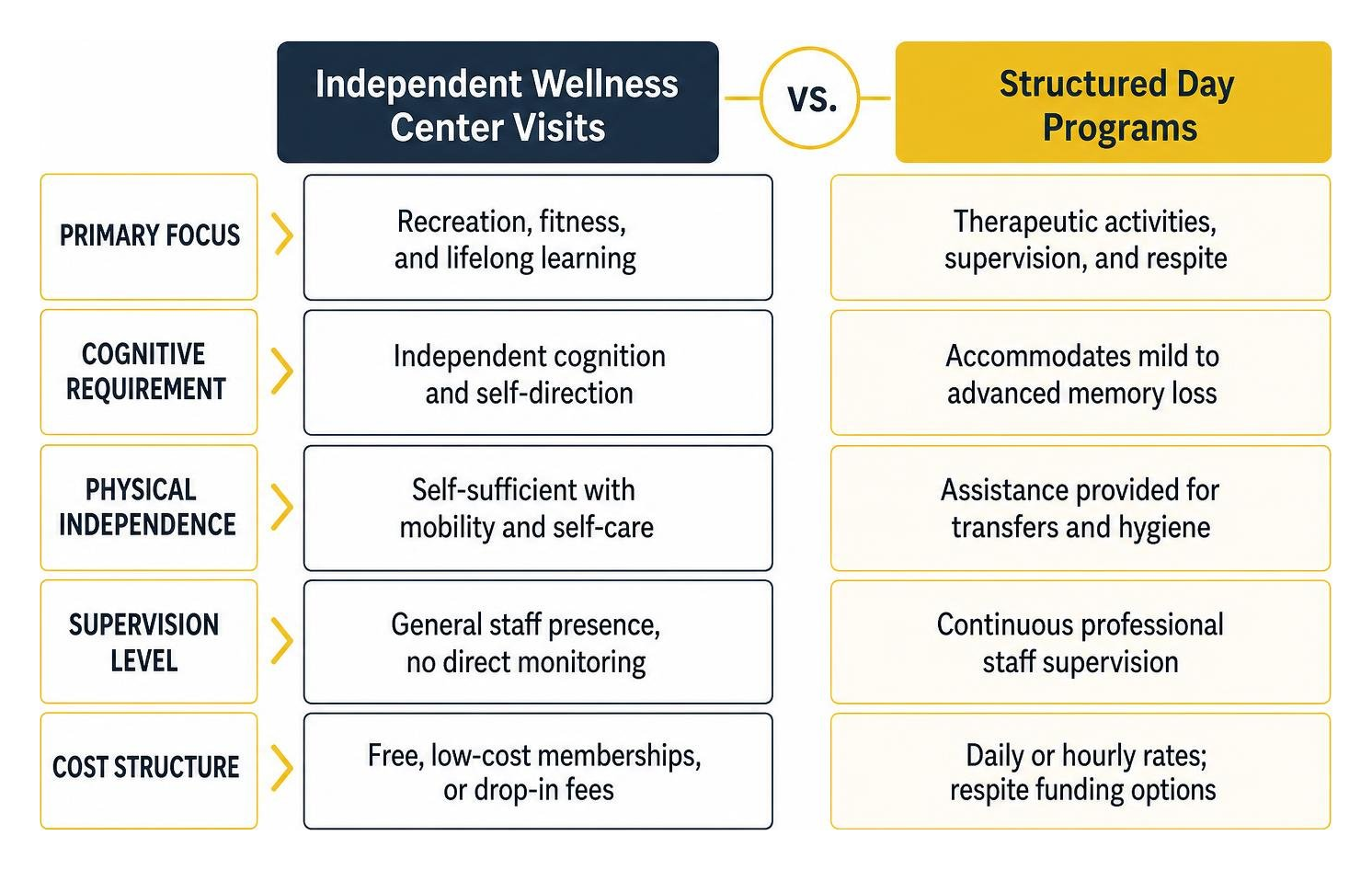
Adult day programs provide a secure, nurturing environment tailored for individuals living with Alzheimer's disease, dementia, or physical frailties. Rather than leaving individuals to navigate self-directed gym spaces or busy classrooms, adult day settings offer professional supervision, structured cognitive engagement, medication reminders, and personal care assistance. This gives family caregivers dependable respite while ensuring their loved ones stay active and safe.
Core Programs and Services for Whole-Person Health
Modern wellness programs adopt a holistic model designed to nurture the body, mind, and spirit. Visiting a comprehensive wellness center for older adults opens the door to a wide spectrum of evidence-based activities that make healthy aging both fun and accessible.
Physical Fitness and Fall Prevention Programs
Maintaining balance, muscle strength, and flexibility is critical for preserving independence. Wellness centers provide adapted fitness programs led by instructors trained in older adult physiology:
Low-Impact Aerobics & Chair Yoga: Gentle movement routines that improve joint range of motion, circulation, and heart health without straining vulnerable joints.
Tai Chi & Balance Coordination: Evidence-based balance training designed to reduce fall risks, enhance gait steadiness, and build core stability.
Resistance Equipment & Walking Groups: Age-friendly strength training machines, free weights, and indoor walking tracks that help preserve bone density, improve posture, and protect muscle mass.
Aquatic Fitness: Warm-water aerobics and lap swimming that relieve arthritis pain while providing full-body cardiovascular exercise and joint decompression.
Creative Arts, Lifelong Learning, and Social Connection
Cognitive vitality is just as vital as physical fitness. Wellness centers offer dynamic social and intellectual calendars that keep minds sharp and spirits high.
Engaging day programs for seniors and community centers feature hands-on arts such as pottery, watercolor painting, jewelry making, and quilting. Lifelong learning initiatives include computer and smartphone literacy classes, history lectures, language clubs, and book discussion groups. These structured group activities encourage deep social bonds, giving participants a welcoming space to share stories, celebrate holidays, and enjoy shared hobbies.
Nutrition, Support Groups, and Personal Health Counseling
Nutritional health and emotional wellness form the backbone of overall stability. Many municipal centers offer congregate lunch programs that provide hot, dietitian-approved meals in a community dining room, ensuring balanced nutrition and regular companionship. In addition to meal services, centers frequently host:
Chronic Disease Support Groups: Peer-led and expert-facilitated groups focused on diabetes management, heart health, and grief recovery.
Preventive Health Screenings: Routine blood pressure monitoring, glucose checks, hearing evaluations, and balance assessments that catch potential issues early.
Stress Reduction & Mindfulness: Meditation sessions, breathing workshops, and educational seminars on maintaining emotional equilibrium.
Caregiver Educational Workshops: Guidance on navigating aging transitions, understanding local resources, and balancing self-care for family members.
Access, Schedules, and Membership Options

Accessing senior wellness services across Utah County is straightforward, with local cities offering clean, well-equipped community hubs. For example, residents can take advantage of neighborhood activities through Senior Programs | Provo, UT and the Senior Center | Lehi City, both of which provide extensive monthly calendars packed with events.
Membership Options and Costs at a Senior Wellness Center
Senior centers pride themselves on broad accessibility and affordability. Many municipal centers are supported by local tax revenues and community grants, enabling them to offer free or low-cost access for residents aged 55 or 60 and older.
Annual Memberships & Day Passes: General facility memberships often range from nominal annual fees to flexible daily drop-in rates, making it simple to try out different activities before committing.
Insurance-Sponsored Fitness Programs: Popular programs like SilverSneakers® or Renew Active® often cover fitness center access and specialized classes entirely through participating Medicare Advantage plans.
Sliding Scale & Subsidized Fees: Need-based fee adjustments ensure that income constraints never prevent an older adult from accessing healthy meals, exercise classes, or educational courses.
Hours of Operation, Transportation, and Getting Started
Most senior wellness centers operate on a daytime schedule, commonly open Monday through Friday from 8:00 AM to 4:00 or 5:00 PM, with select locations offering extended evening or Saturday morning hours for fitness rooms.
Getting started typically involves visiting the facility, completing a simple registration form, and attending an initial equipment orientation to ensure safe use of fitness spaces. Many cities also coordinate local curb-to-curb van transportation to help non-driving older adults travel to and from the center safely and comfortably. When a senior requires continuous care or hands-on assistance throughout the day, exploring professional day care for elderly provides the necessary support and peace of mind.
Frequently Asked Questions About Senior Wellness
Do I need a doctor’s approval to join a wellness center?
General center admission and social activities rarely require a doctor's clearance. However, before participating in specialized fitness programs, strength training circuits, or intense exercise classes, centers often ask new members to complete a health history questionnaire or provide a standard physician clearance form. This ensures all physical activities match the individual's specific health capabilities.
What is the difference between a wellness center and senior day care?
The main difference lies in the level of care and supervision provided. A wellness center serves independent older adults who can manage their own schedules, medications, and mobility. In contrast, our senior day care guide 2026 explains that adult day programs are designed specifically for individuals who need active supervision, memory care support, or personal care assistance during daytime hours.
Are fitness classes and meals covered by insurance or Medicare?
Original Medicare (Parts A and B) does not cover wellness center memberships or meal programs. However, many Medicare Advantage (Part C) plans include fitness benefits that pay for facility access and exercise classes. Congregate meals at community centers are often subsidized by federal Older Americans Act funding, allowing seniors to enjoy balanced lunches for a small suggested donation.
Choosing the Right Wellness and Care Options for Your Loved One

Selecting the right environment for your loved one comes down to assessing their daily safety, cognitive health, and social preferences. If your parent is self-sufficient and looking to expand their social circle, a local wellness center offers an outstanding outlet for exercise and lifelong learning.
When cognitive changes, chronic health challenges, or safety concerns make unassisted visits difficult, our team at Aspen Senior Care is here to help. We provide award-winning in-home caregiving and an engaging, family-like senior day center tailored specifically for seniors needing extra care and memory support. Contact us today to learn more about our adult day programs and discover how we can help your family thrive across Utah Valley.