Wellness Center for Older Adults: Programs and Benefits
Why a Wellness Center for Older Adults Changes Everything About Aging
A wellness center for older adults is a community-based facility designed to help people aged 50 to 60+ stay healthy, active, and socially connected — without requiring the round-the-clock medical care of assisted living.
Here's what you need to know at a glance:
What it is: A community hub offering fitness, social programs, health education, and sometimes clinical support for older adults
Who it serves: Generally adults 50–60 and older who can function independently or with minimal assistance
Key benefits: Physical health, mental sharpness, reduced isolation, and relief for family caregivers
Cost: Often very affordable — some centers charge as little as $50–$60 per year for membership
How it differs from assisted living: Wellness centers support independent older adults; they are not residential care facilities
If you're an adult child trying to keep an aging parent safe, healthy, and engaged — while also managing your own job and family — a senior wellness center can be one of the most practical tools available to you.
These centers offer far more than a gym. Think brain games, art therapy, health screenings, caregiver counseling, and walking groups — all in one place, often inside a local community or recreation center.
The goal is simple: help older adults live better, longer, and with more independence.
What is a Wellness Center for Older Adults?
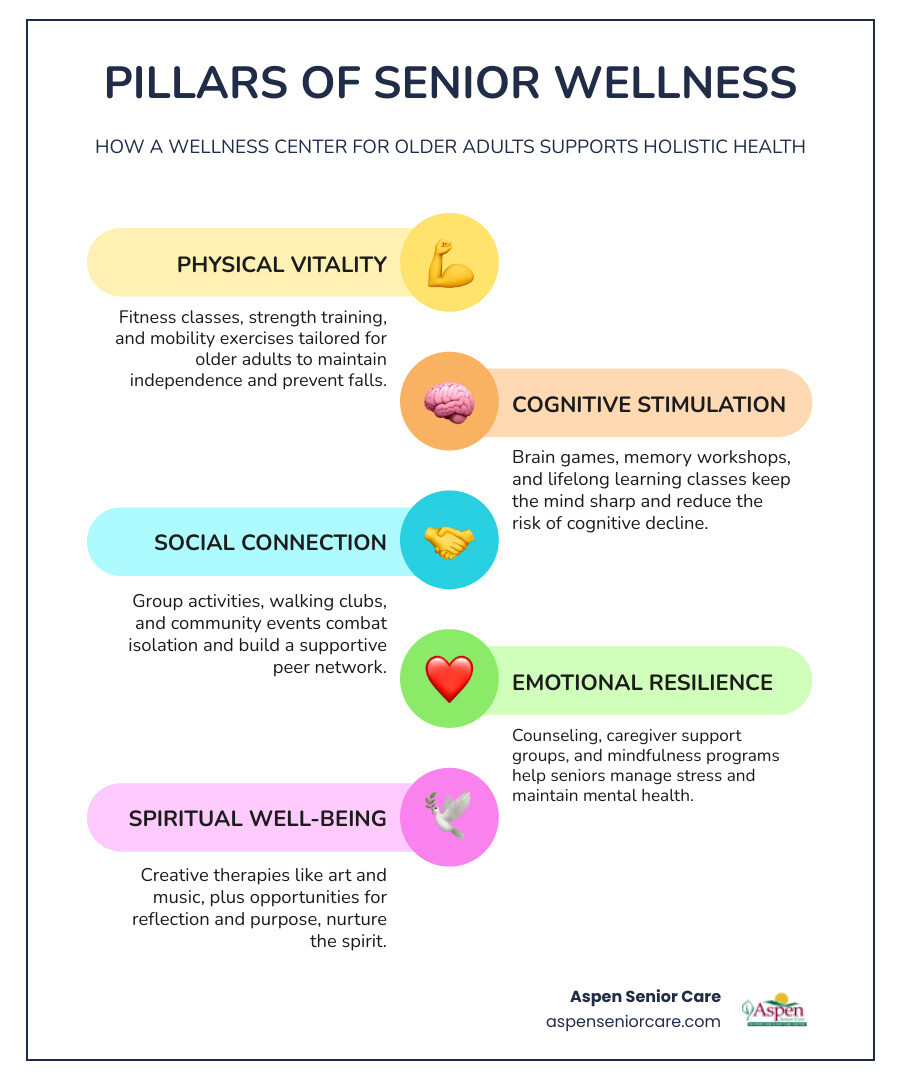
At its core, a wellness center for older adults is a proactive, community-focused space designed to help seniors thrive. Rather than focusing solely on managing illness, these centers prioritize preventive care, social integration, and holistic health. They serve as central hubs where older adults can access resources that support the key pillars of successful aging: physical vitality, intellectual stimulation, spiritual resilience, and social connection.
In places like Utah County, where family and community ties run deep, these centers offer a vital bridge. They allow our loved ones in Orem, Provo, Lehi, and surrounding areas to maintain their autonomy while staying deeply connected to their peers. Unlike traditional senior centers that might only offer a weekly game of bingo, modern wellness centers integrate evidence-based programs. This includes everything from strength training and balance classes to cognitive exercises and health screenings.
By focusing on "whole-person wellness," these facilities empower seniors to take charge of their health. This proactive approach reduces the risk of chronic illnesses, delays the need for more intensive long-term care, and helps seniors age in place safely in their own homes.
Key Services and Amenities in Senior Wellness Programs
When you step into a modern wellness center for older adults, you will quickly realize it is a far cry from the clinical, sterile environments of the past. These spaces are designed to be warm, energetic, and highly accessible. They feature a variety of amenities tailored specifically to the physical and cognitive needs of aging individuals.

Many modern centers feature state-of-the-art amenities, such as:
Supervised Fitness Rooms: Gyms equipped with senior-friendly strength training machines, cardiovascular equipment, and free weights, often requiring a safety orientation before use.
Therapy and Activity Pools: Warm-water pools equipped with handicap-accessible lifts to support low-impact joint therapy and water aerobics.
Teaching and Demonstration Kitchens: Spaces where seniors can participate in culinary classes, learning how to prepare nutritious, heart-healthy, and plant-forward meals.
Creative and Educational Studios: Dedicated rooms for pottery, painting, jewelry making, and technology education.
Quiet and Sensory Spaces: Meditation labyrinths, wellness gardens, or soundproof studios designed for relaxation, mindfulness, and sensory-rich therapy.
Physical and Cognitive Activities at a Wellness Center for Older Adults
A truly comprehensive wellness program recognizes that physical strength and cognitive sharpness go hand-in-hand. To support physical health, centers offer specialized exercise programs tailored to varying mobility levels. Low-impact options like chair aerobics, yoga, and tai chi help seniors improve their balance, flexibility, and core strength, which are essential for preventing falls.
For those managing specific neurological conditions, specialized interventions are incredibly impactful. For example, many forward-thinking programs incorporate targeted therapies such as "boxing for Parkinson's" or clinically recognized movement and voice protocols. If your loved one is navigating these challenges, you can explore how structured physical and vocal exercises—such as those offered through our Senior Day Center - Parkinsons programs—can help preserve fine and gross motor skills.
On the cognitive side, wellness centers offer robust brain fitness programs. Seniors can participate in structured brain games, memory exercises, and lifelong learning classes to keep their minds active. For families seeking more intensive cognitive support, specialized day programs offer dedicated care. Our Senior Day Center - Dementia and Senior Day Center - Alzheimer services are specifically tailored to provide compassionate, structured cognitive stimulation for seniors experiencing progressive memory loss.
Social and Creative Programs at a Wellness Center for Older Adults
While physical and mental exercises are crucial, social health is the secret ingredient to longevity. Wellness centers excel at creating spaces where seniors can build meaningful friendships and combat the epidemic of senior isolation.
Creative therapies are a major draw in these programs. Art classes—spanning watercolors, pottery, and mixed media—allow older adults to express themselves and maintain hand-eye coordination. Some advanced programs even utilize dedicated music spaces for songwriting, storytelling, and music therapy, which has been shown to support cognitive health in older adults according to research from the National Institute on Aging.
Additionally, wellness centers foster a sense of purpose through community volunteering, book clubs, and discussion groups. By engaging in these activities, seniors don't just pass the time; they build a supportive community where they feel valued, heard, and deeply connected.
Wellness Centers vs. Adult Day Care and In-Home Care
When exploring care options for an aging parent in Utah Valley, it is easy to get confused by the terminology. Is a wellness center the same as an adult day care? Where does in-home care fit in?
The primary difference lies in the level of independence required and the intensity of care provided.
Senior Wellness Centers: These are designed for older adults who are physically and cognitively independent. Members typically drive themselves (or arrange their own transport), navigate the facility safely on their own, manage their own personal care, and participate in self-guided or group activities.
Adult Day Care (Senior Day Centers): These programs provide a structured, supervised environment for seniors who cannot function fully independently due to physical or cognitive challenges. For example, at our Senior Day Center, we specialize in providing personalized, non-medical care, socialization, and activities for seniors who need a helping hand, particularly those requiring specialized Senior Day Center - Memory Care.
In-Home Care: Instead of the senior traveling to a facility, a professional caregiver comes directly to the senior's home. This is ideal for those who prefer to age in place but need assistance with daily tasks, light housekeeping, or specialized cognitive assistance.
To help you visualize these differences, we have put together a comparison framework:
Feature | Senior Wellness Center | Adult Day Care (Senior Day Center) | In-Home Care |
|---|---|---|---|
Target Audience | Highly independent seniors (50/60+) | Seniors needing physical or cognitive supervision | Seniors aging in place who need personalized help |
Care Level | No direct physical or medical care | Supervised activities, meals, and basic care assistance | One-on-one personal care and home support |
Dementia Support | Minimal (requires independence) | Highly specialized memory care and safety protocols | Personalized, in-home cognitive and daily support |
Socialization | Peer-led, high-capacity group activities | Structured, staff-led social programs and peer interaction | One-on-one interaction with a dedicated caregiver |
Setting | Community or municipal recreation center | Secure, professional day facility | The senior's private home |
The Benefits of Joining a Senior Wellness Center
Joining a wellness center for older adults can completely transform a senior's daily life. Rather than spending their retirement years watching television or feeling isolated at home, members are given a reason to get up, get dressed, and step out into the world.

The benefits of these programs ripple across every area of life:
Improved Physical Health: Regular participation in low-impact exercise classes, warm-water therapy, and strength training helps seniors maintain their mobility, manage chronic pain, and reduce their risk of falls.
Enhanced Mental Sharpness: Cognitive games, educational lectures, and creative arts stimulate the brain, building cognitive reserve and keeping the mind agile.
Emotional Resilience: Having a daily routine and a welcoming community significantly lowers the risk of depression and anxiety, which are common among isolated older adults.
A Renewed Sense of Purpose: Engaging in volunteer opportunities, mentoring programs, and creative projects gives seniors a meaningful way to contribute to their community.
Crucial Caregiver Relief: When a senior is safely engaged in a wellness program, family caregivers get a much-needed break to work, rest, or run errands. If you are caring for a loved one, accessing reliable respite care and utilizing Care Giver Resources is essential for preventing caregiver burnout.
How to Find, Join, and Fund a Wellness Center
If you are ready to explore wellness options for yourself or a loved one in Utah County, getting started is simpler than you might think.
Step 1: Research Local Community Resources
Many public wellness programs are housed directly within municipal recreation centers or senior centers in Orem, Provo, and surrounding cities. Check your local city government websites or community newsletters to see what active aging programs are available in your neighborhood.
Step 2: Understand Eligibility Criteria
Most community-based wellness centers cater to adults aged 50, 55, or 60 and older. Because these facilities typically do not provide direct supervision or medical care, participants must be able to navigate the building safely and manage their own personal care. If your loved one has advanced physical or cognitive limitations, a specialized adult day program or in-home care setting will be a safer and more supportive fit.
Step 3: Evaluate Cost and Membership Fees
Municipal wellness centers are incredibly budget-friendly. Annual membership fees for local residents often range from $50 to $60 per year, with slightly higher rates for non-residents. Some high-end, luxury residential wellness communities exist nationally, but for daily community participation, local municipal centers offer excellent, highly subsidized value.
Step 4: Schedule a Tour
Before joining, visit the facility in person. Check the cleanliness of the fitness rooms, observe the interactions between staff and members, and ask for a copy of their monthly activity calendar to see if the programs align with your loved one's interests.
Frequently Asked Questions About Senior Wellness
Who is eligible to attend a senior wellness center?
Generally, anyone aged 50 to 60 and older is welcome to join a community wellness center. The primary requirement is that participants must be fully independent. This means they must be physically and cognitively capable of navigating the facility, following safety instructions, responding to emergencies, and taking care of their own restroom and personal needs without staff assistance.
How do wellness centers support family caregivers?
Wellness centers support family caregivers by providing reliable, structured respite care. While your loved one is enjoying fitness classes, art workshops, or socializing with peers, you can take time for yourself, knowing they are in a safe, positive environment.
Additionally, many wellness hubs host professional support networks. For example, attending local Caregiver Support Groups allows family members to connect with peers, share coping strategies, and access professional guidance on navigating the emotional and physical challenges of caregiving.
What is the typical cost of a wellness center membership?
For community-based and municipal centers, the cost is remarkably low. Annual membership fees usually range from $50 to $60 for local residents. Private wellness clubs or luxury residential programs can be significantly more expensive, but local senior recreation centers are heavily subsidized to ensure that health, fitness, and social connection remain accessible to all seniors in the community.
Conclusion
A wellness center for older adults is an incredible resource for seniors who want to maintain their independence, boost their physical health, and build lasting friendships. By offering a holistic mix of physical fitness, cognitive exercises, and vibrant social activities, these centers make active, joyful aging an achievable reality.
However, we know that as our loved ones age, their care needs can change. If your parent or spouse is living with cognitive decline, dementia, or physical limitations that make independent wellness centers difficult to navigate, you don't have to walk this path alone.
At Aspen Senior Care, we provide award-winning, family-like, and highly personalized non-medical care across Utah Valley—including Orem, Provo, Lehi, American Fork, and surrounding areas. Whether you need the engaging, secure environment of our local day program or the dedicated support of our in-home caregivers, we are here to help your family thrive.
Ready to find the perfect balance of care and independence for your loved one? Contact Aspen Senior Care today to learn more about our specialized programs and schedule a tour of our senior day center.