
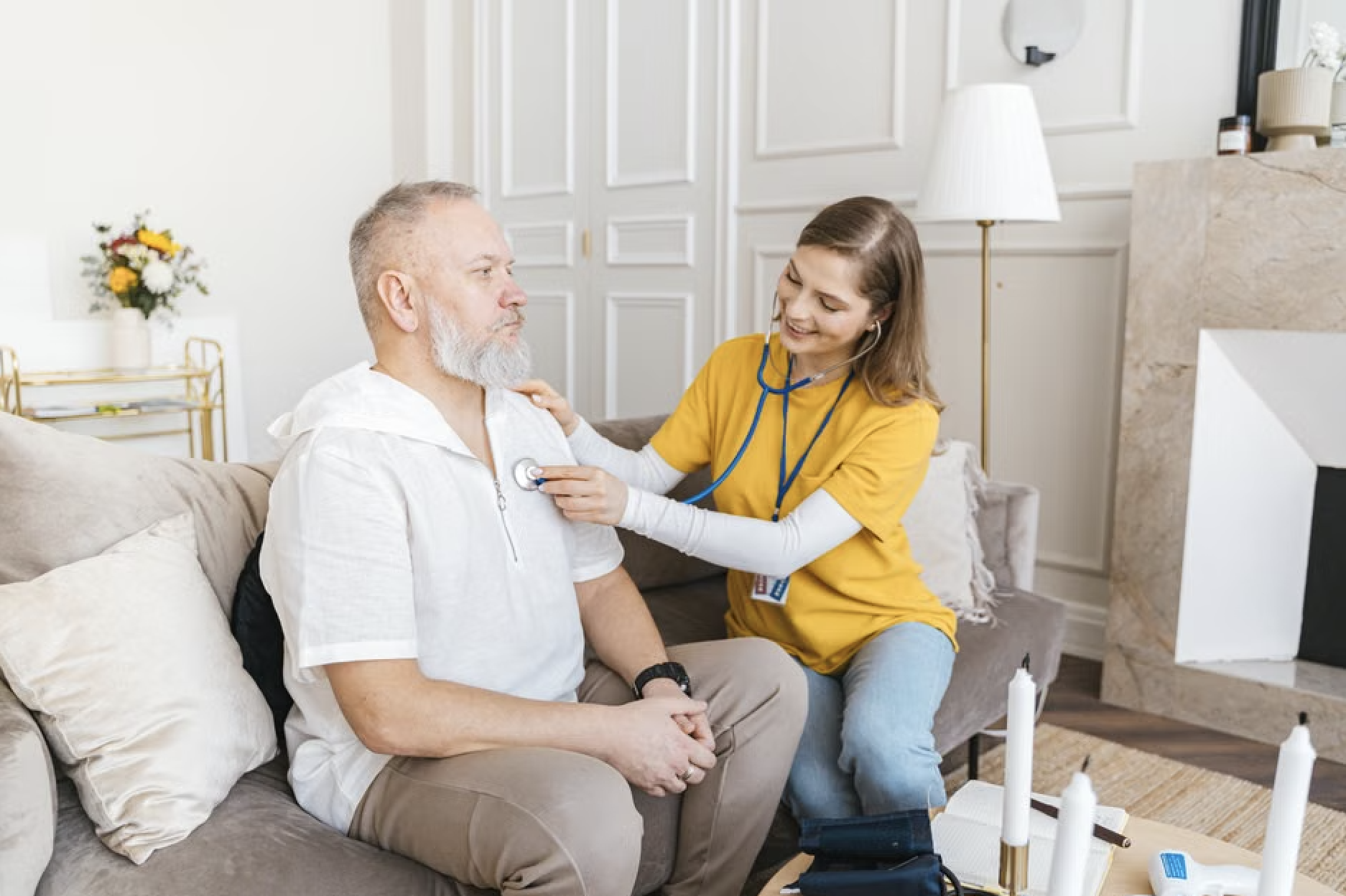
How to Choose the Right Salem In-Home Care Service for Your Family
Finding the Right Home Care in Salem for Your Family
If you're researching home care salem options for an aging parent, you're not alone — and you don't need to read an entire article to get started. Here's a quick look at what's available:
Quick Answer: Home Care Options in Salem
Type What It Includes Who It's For Non-medical home care Personal care, companionship, meal prep, light housekeeping Seniors needing daily living support Dementia & Alzheimer's care Routine-based supervision, cognitive engagement Seniors with memory loss Respite care Temporary relief for family caregivers Families needing a break Post-surgery support Mobility help, medication reminders, recovery assistance Adults recovering at home Veteran care VA-coordinated in-home support Eligible veterans and spouses
Caring for an aging parent is one of the most meaningful things you can do. It's also one of the hardest — especially when you're balancing work, kids, and your own life at the same time.
Most families don't realize how many home care options exist until a crisis forces the decision. By then, the pressure to choose quickly can lead to the wrong fit.
This guide walks you through exactly how to evaluate Salem in-home care services — so you can make a confident, informed choice for your family.
Understanding the Types of Home Care Salem Providers Offer
When looking for home care salem services, it is easy to get lost in the sea of medical jargon and care acronyms. The first step in your journey is understanding that home care is not a one-size-fits-all solution. It is a highly customizable spectrum of support designed to meet your loved one exactly where they are.

For families in Salem, Utah, the primary goal is often to help an aging parent maintain their independence while staying safe in the home they love. To understand how to achieve this, it helps to review a comprehensive In-Home Care Summary of what these services entail.
Generally, in-home support is divided into non-medical care (focused on daily living assistance and companionship) and specialized care (focused on chronic diseases and memory support). Let us break these down so you can identify the exact level of help your family needs in July 2026.
Understanding Non-Medical Home Care Services
Non-medical home care focuses heavily on helping seniors manage their Activities of Daily Living (ADLs) and Instrumental Activities of Daily Living (IADLs). These are the routine tasks that we often take for granted until they become difficult or dangerous to perform alone.
Our caregivers assist with things like safe bathing, dignified toileting, and mobility assistance around the home. Beyond physical care, we place a massive emphasis on companion care. After all, loneliness and social isolation can have devastating impacts on a senior's physical and mental well-being. Having a friendly face to share a conversation with, play a board game, or walk around the neighborhood makes a world of difference.
Here is a quick breakdown of what these essential non-medical services look like:
Service Category Key Tasks Included Primary Goal Personal Care Bathing, dressing, grooming, toileting, and mobility assistance Maintaining hygiene, safety, and personal dignity Companion Care Friendly conversation, reading, light hobbies, and outdoor walks Combating isolation and promoting mental well-being Household Help Light housekeeping, laundry, dishwashing, and organizing Keeping the home environment clean and hazard-free Nutrition Support Grocery shopping, customized meal planning, and preparation Ensuring the senior eats balanced, delicious meals Routine Reminders Prompting for medications, hydration, and appointments Keeping daily schedules on track safely
By focusing on daily independence and safety, non-medical care allows your loved one to remain the king or queen of their castle without the stress of managing a household alone.
Specialized Support for Chronic Conditions and Dementia Care
Sometimes, daily routine support isn't quite enough. If your loved one is dealing with progressive cognitive decline, Alzheimer's disease, or chronic illnesses like heart disease and diabetes, they require specialized care.
Dementia care requires a completely different approach than standard caregiving. It demands patience, specialized training, and an understanding of how to manage behavioral changes without causing distress. Seniors living with progressive dementia thrive on structured, routine-oriented care. Sudden changes can cause anxiety or confusion, which is why our caregivers are trained to keep days structured, calm, and engaging.
Additionally, chronic disease management and proactive fall prevention are vital parts of specialized care. A clean, clutter-free living environment is one of the best defenses against dangerous falls. By assessing the home environment continuously and helping seniors navigate their spaces safely, specialized caregivers help prevent unnecessary hospital visits and keep your loved one thriving at home.
Evaluating Coverage Areas and Eligibility Requirements
When choosing a provider, you need to ensure they actually serve your specific neighborhood and understand the unique local landscape.

Whether your family member lives near the beautiful Salem Pond or in the surrounding communities of Utah County, finding a local agency is key. We are proud to serve families throughout Utah Valley, including Orem, Provo, Lehi, American Fork, Pleasant Grove, Spanish Fork, Alpine, Cedar Hills, Salem, Eagle Mountain, Highland, Lindon, Saratoga Springs, and Payson.
Understanding the financial side of home care is just as critical as finding the right geographical fit. Many families wonder how to pay for these services. For a deep dive into the financial and logistical details, you can consult our In-Home Care Complete Guide 2026. Generally, non-medical home care is paid for through private pay, long-term care insurance, or specialized veteran programs.
Navigating Veteran Care and Financial Options for Home Care Salem Services
For our local heroes, navigating financial options can open up incredible resources. Veterans and their surviving spouses may be eligible for unique programs like the VA’s Aid & Attendance benefit. This program provides monthly financial assistance that can be used directly to cover the costs of in-home personal care and companion services.
Navigating the VA program can sometimes feel like trying to solve a Rubik's cube in the dark. That is why working with an agency experienced in coordinating with veteran programs is so valuable. Beyond VA benefits, families often utilize long-term care insurance policies, which frequently cover non-medical personal care once certain eligibility criteria are met.
For out-of-pocket costs, planning ahead and customizing a care plan based on the exact number of hours needed each week can help keep senior care highly affordable and predictable.
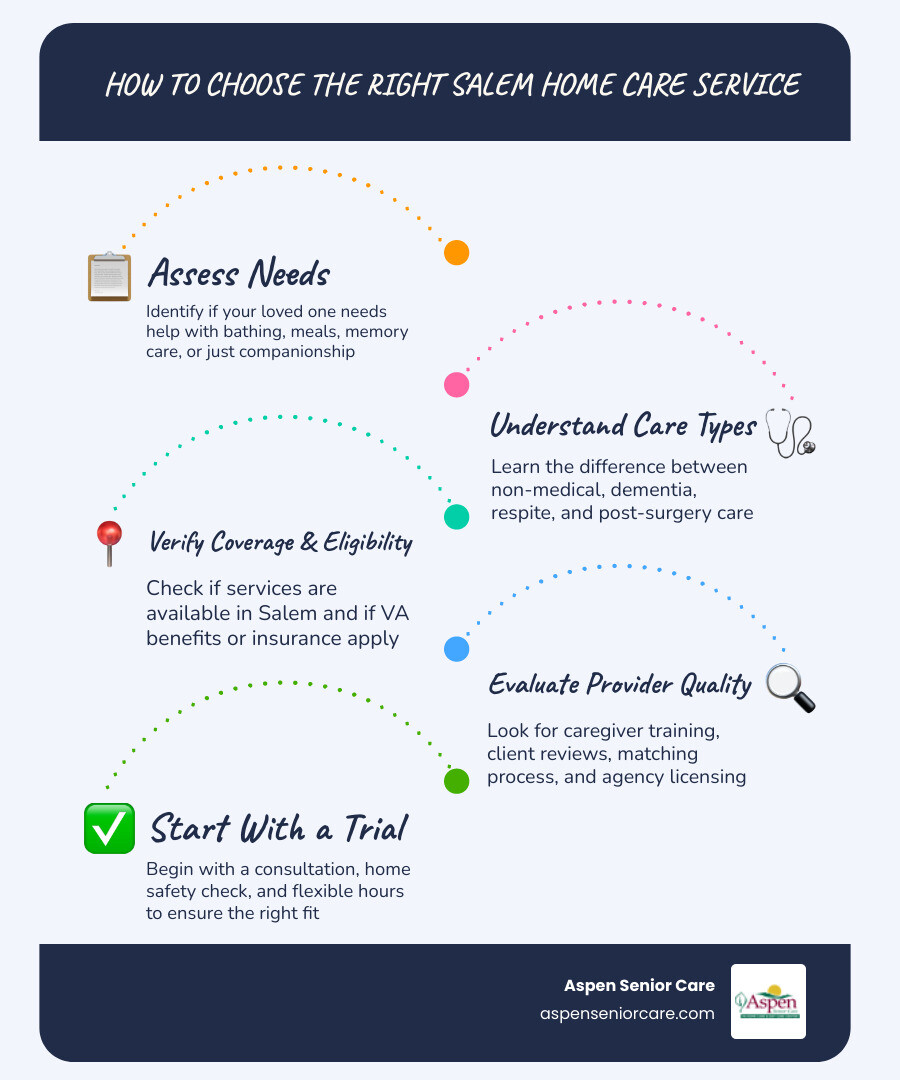
Key Factors to Look For When Selecting a Provider
Choosing a caregiver to enter your loved one's home is a deeply personal decision. You aren't just hiring a service; you are welcoming a new person into your family's private life.
When evaluating agencies for home care salem services, look beyond basic scheduling and focus on the quality of the human connection. Here are the core factors you should evaluate:
Caregiver Training and Education: Does the agency provide structured, ongoing training for its staff, particularly in specialized areas like dementia care?
Licensing, Insurance, and Bonding: For your peace of mind, ensure the agency is fully licensed, insured, and bonded. This protects your family and ensures professional standards are met.
Client Reviews and Reputation: Look for multi-year reviews from local families. What do they say about the reliability and compassion of the caregivers?
Personality Matching: A great caregiver does far more than check off a to-do list. They build deep, empathetic relationships. Look for agencies that match caregivers with seniors based on personality compatibility, hobbies, and mutual trust.
Preserving Dignity: Personal care tasks like bathing and toileting can be sensitive for seniors. Caregivers must be trained to provide discreet, respectful support that preserves your loved one's dignity.
To help you ask the right questions during your search, take a look at our guide on finding reliable In-Home Help.
How to Start the In-Home Care Process
Starting the home care journey doesn't have to be overwhelming. In fact, it should feel like a weight is being lifted off your shoulders.
The process typically begins with a free, no-obligation in-home consultation. This is a chance for us to sit down with you and your loved one in their comfortable, familiar surroundings. We will discuss their daily routine, physical needs, personality preferences, and any safety concerns in the home.
During this visit, we also perform a home safety assessment to identify simple modifications—like securing loose rugs or improving lighting—that can instantly make the home safer. From there, we collaborate with you to design a personalized care plan.
This plan is highly flexible. You can customize the care program dynamically, adjusting care hours as your loved one’s physical or cognitive needs change over time. Whether you need a few hours of respite care a week to give yourself a well-deserved break, or continuous 24/7 supervision for safety, the care plan is tailored to fit your life. For family caregivers who are feeling burnt out, reading our Caregiver Support Guide 2026 can offer invaluable coping strategies and support resources.
Frequently Asked Questions About Salem Care Services
What is the difference between companion care and personal care?
While both services help seniors live comfortably at home, they focus on different levels of support. Companion care is non-clinical and covers tasks like light housekeeping, meal preparation, running errands, and providing emotional connection and conversation. Personal care includes all the benefits of companion care but adds hands-on physical assistance. This includes help with mobility, transferring, bathing, dressing, toileting, and personal hygiene.
Do you need a doctor's referral for non-medical home care?
No, you do not need a doctor's referral to begin non-medical home care. It is entirely self-referred and family-directed. However, if your loved one is undergoing hospital discharge planning, we frequently coordinate directly with discharge planners, physicians, and physical therapists to ensure a seamless transition back to their Salem home.
Is 24/7 or around-the-clock care available for seniors?
Yes, absolutely. Many families utilize 24-hour care for seniors who need continuous supervision due to advanced dementia, fall risks, or post-surgery recovery. This ensures a caregiver is awake, alert, and ready to assist at any hour of the day or night, providing complete peace of mind for long-distance family members.
Conclusion
At Aspen Senior Care, we believe that the best care happens in the context of strong, loving relationships. We treat our clients like family, providing award-winning, personalized non-medical care across Salem, Utah, and the broader Utah Valley area. Whether you need specialized dementia support, companion care, or round-the-clock monitoring, we are here to support your family's unique journey.
If you are a family caregiver looking for mutual support and shared experiences, we invite you to learn about our Caregiver Support Groups.
Ready to take the next step or have a few questions? Please Contact Us In-Home Care today to schedule your free, friendly in-home consultation. You can also visit our dedicated Salem Location page to learn more about our local services and meet the team dedicated to keeping your loved one safe, happy, and thriving at home.