

Peace of Mind: How to Choose a Dementia Day Care Center Nearby
Finding a Dementia Day Care Center Near You: What Families Need to Know
If you're searching for a dementia day care center near me, here's a quick answer to help you get started:
How to find a dementia day care center near you:
Search the Alzheimer's Association's online directory at alz.org using your zip code
Contact your local Area Agency on Aging — they maintain updated lists of certified centers
Ask your loved one's doctor or neurologist for referrals to dementia-specific programs
Call 211 (United Way's helpline) for local community care resources
Check state health department listings for licensed adult day programs in your area
Caring for a parent or spouse with dementia is one of the hardest things a family can face. You want them to be safe, engaged, and treated with dignity — but you also have a job, a family, and your own health to think about.
That's where dementia day care centers come in.
These programs offer structured, supervised daytime care specifically designed for people living with Alzheimer's and other forms of dementia. Your loved one gets socialization, activities, and professional support. You get the breathing room to work, rest, or simply recharge.
Adult day programs can provide caregivers with 7 to 10 hours of daily respite — and research shows they can help reduce caregiver stress, anxiety, and burnout while improving the mood, sleep, and social engagement of people with dementia.
But not all centers are the same. Knowing what to look for — and what questions to ask — makes all the difference.

What is a Dementia Day Care Center and How Does It Work?
A dementia day care center is a specialized facility designed to support individuals experiencing cognitive decline while providing family caregivers with essential daytime respite. Unlike general senior centers, which focus primarily on independent older adults, a dementia-specific program offers structured environments tailored to those with memory impairment.
When a loved one experiences progressive cognitive decline, their ability to navigate unstructured environments decreases. A memory care day program steps in to bridge the gap between independent living and full-time residential care. These centers are designed from the ground up to minimize confusion and anxiety, using predictable routines, clear physical layouts, and comforting, home-like environments. To explore how these programs support seniors, you can read more about day programs for seniors.
In these centers, the daily schedule is carefully planned to stimulate cognitive function and promote physical coordination without causing sensory overload. Every element of the day—from arrival to meals, activities, and departures—is managed by trained professionals who understand the nuances of memory loss. For families in Utah County looking for specialized options, learning about Senior Day Center Memory Care can help clarify how these therapeutic environments function.
Comparing the Three Models of Adult Day Services
Not all adult day centers operate under the same philosophy or licensing. When searching for a dementia day care center near me in Utah Valley, you will typically encounter three distinct models. Understanding these models helps you determine which level of care aligns with your loved one's current needs.
Care Model | Primary Focus | Best Suited For | Typical Services Provided |
|---|---|---|---|
Social Model | Social interaction, nutrition, and basic recreation. | Seniors in the early stages of cognitive decline who are physically independent. | Supervised activities, group meals, light exercise, and crafts. |
Medical Model | Intensive health monitoring, therapeutic interventions, and personal care. | Individuals with advanced dementia or co-occurring physical health conditions. | Physical therapy, medication administration, nursing care, and intensive ADL support. |
Specialized Dementia Model | Targeted memory care, behavioral support, and secure environments. | Individuals at any stage of dementia, particularly those prone to wandering or behavioral changes. | Sensory stimulation, reminiscence therapy, secure indoor/outdoor areas, and dementia-certified staff. |
Key Services and Activities Offered
The heart of any high-quality memory care program lies in its daily activities. Rather than simply "passing the time," activities are designed as therapeutic interventions to improve mood, reduce agitation, and slow the functional decline associated with dementia.
Music and Art Therapy: Led by trained specialists, music therapy can tap into deep-seated memories and emotions, often prompting verbal communication and joy in individuals who are otherwise withdrawn.
Cognitive and Brain Games: Word puzzles, trivia, and memory matching games are adapted to each participant's cognitive level, fostering a sense of accomplishment.
Assistance with Activities of Daily Living (ADLs): Staff members provide discreet, dignified help with eating, mobility, and toileting.
Nutritious Meals and Snacks: Dietitian-approved meals are served in a social setting, which often encourages better nutritional intake.
Reminiscence Groups: Facilitators use historical photos, vintage items, and familiar music to encourage participants to share stories from their past, reinforcing their sense of identity.
For families seeking non-medical support that prioritizes socialization and safety, reviewing resources on non-medical adult daycare can help you understand what to expect from a social-dementia program.
When is the Right Time to Consider a Dementia Day Care Center Near Me?
Determining the exact moment to enroll a loved one in a day program is a highly personal decision. Many families wait until a crisis occurs—such as a fall, a wandering incident, or severe caregiver exhaustion—before looking for help. However, introducing a day program during the early to moderate stages of dementia yields much better outcomes.
Early enrollment allows your loved one to actively participate in the transition, build relationships with staff members, and establish a comfortable routine before their cognitive decline advances. It also prevents the profound social isolation that often accelerates the progression of dementia. To understand the different respite options available, you can read about day respite services.
Signs Your Loved One is Ready for a Dementia Day Care Center Near Me
If you are noticing any of the following signs in your daily life, it may be time to look for a dementia day care center near me in Orem, Provo, or the surrounding Utah Valley areas:
Increased Isolation: Your loved one spends most of the day watching television, sleeping, or showing a lack of interest in hobbies they once loved.
Safety Concerns: They cannot be left home alone safely due to risk of falling, leaving the stove on, or forgetting to eat and drink.
Wandering Behaviors: They exhibit restlessness, pace the floors, or attempt to leave the house to "go home" or "go to work."
Changes in Hygiene and Nutrition: You notice unwashed clothes, missed medications, or weight loss despite your best efforts to manage their care remotely.
Anxiety and Restlessness: They experience "sundowning"—increased confusion, agitation, and anxiety that worsens in the late afternoon and evening.
Supporting Caregivers and Preventing Burnout
Caregiving is a rewarding but physically and emotionally draining responsibility. Chronic caregiver stress can lead to clinical depression, anxiety, cardiovascular issues, and weakened immune systems.
Utilizing a dementia day program is not "giving up" or outsourcing your love; it is a vital strategy for sustainable caregiving. By utilizing day respite centres, you gain a reliable block of time—often 7 to 10 hours a day—to focus on your career, tend to your own medical needs, spend time with other family members, or simply rest. This regular break helps preserve the caregiver-carereceiver relationship, often delaying or entirely preventing the need for premature nursing home placement.
How to Find and Evaluate a Dementia Day Care Center Nearby
Finding the right center in Utah County requires a bit of research, but several excellent local resources can guide your search.
A wonderful starting point for families in our region is the MAG Senior Help Guide - Adult Day Centers, provided by the Mountain Association of Governments (MAG). This guide offers localized information on senior resources throughout Utah, Wasatch, and Summit counties. Additionally, directories like the Adult Day Care Centers | Lehi, UT and Adult Day Care Centers | Spanish Fork, UT listings can help you pinpoint physical locations close to your home.
For a deeper look into local options and how to navigate the selection process, check out our guide on Adult Day Programs for Dementia Near Me.
Essential Questions to Ask During Your Tour
Once you have identified a few potential centers, scheduling an in-person tour is essential. We recommend visiting during active program hours so you can observe the atmosphere, watch how staff interact with participants, and assess the overall cleanliness and safety of the facility.
Here is a list of essential questions to ask the program director during your visit:
Licensing and Certification: Is the center licensed by the state of Utah, and do the staff members hold specialized dementia care certifications?
Staffing Ratios: What is the staff-to-participant ratio? (Look for ratios that exceed the standard requirements, ideally 1:6 or better for dementia care).
Emergency Protocols: How are medical emergencies handled, and are staff members CPR and first-aid certified?
Wandering Prevention: What security measures (such as delayed-exit doors, keypad locks, or enclosed courtyards) are in place to protect seniors who wander?
Behavioral Management: How does the staff handle agitation, confusion, or catastrophic reactions? What is their philosophy on person-centered care?
Attendance and Fees: Is there a minimum weekly attendance requirement? What is the cancellation policy for illnesses?
Transportation: Is transportation to and from the center available, and what are the associated costs?
Helping Your Loved One Adjust to a New Dementia Day Care Center Near Me
It is completely normal for an individual with dementia to resist attending a day program initially. Change can be frightening, and cognitive decline makes adjusting to new environments challenging.
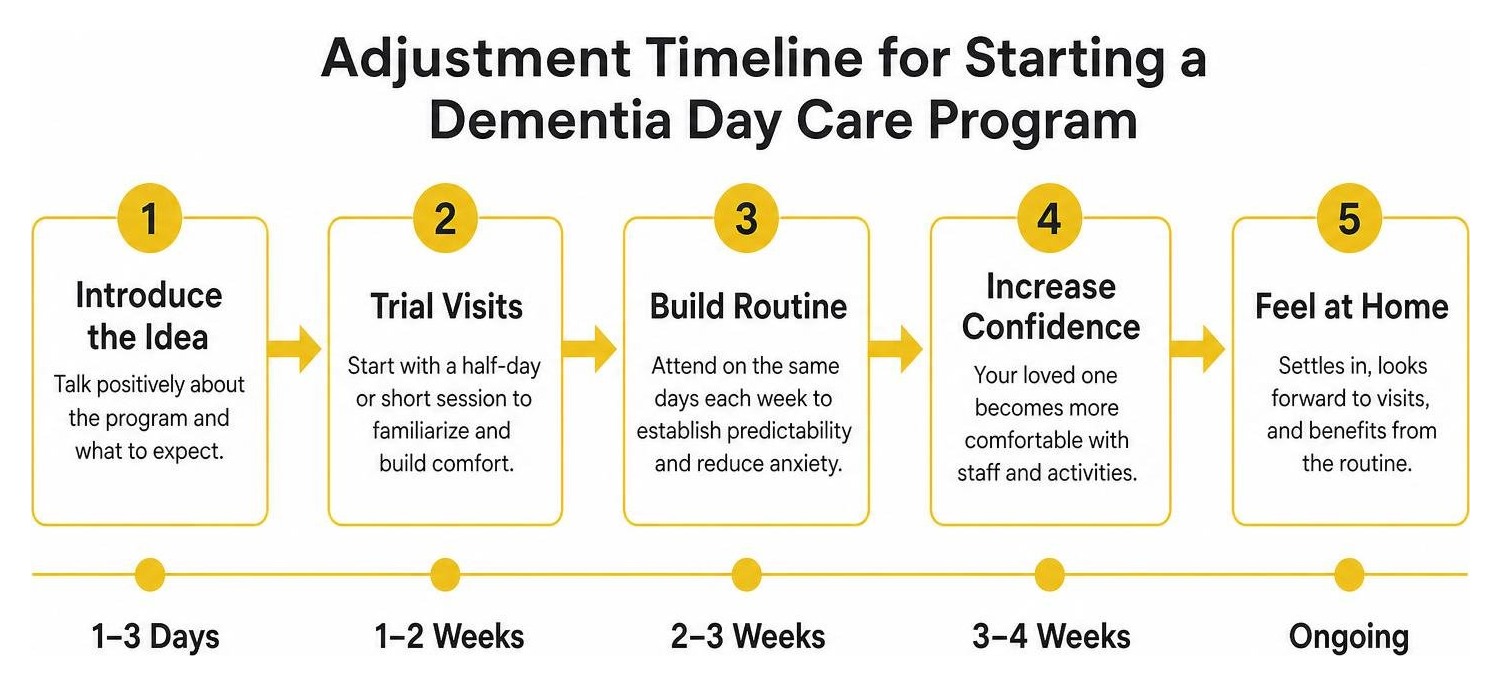
To make the transition as smooth as possible, consider these expert-backed strategies:
Start with Trial Visits: Begin with a half-day or a single short session to let your loved one get used to the sights, sounds, and faces of the center.
Establish a Consistent Routine: Consistency is key in memory care. Send your loved one on the same days each week so the program becomes a natural part of their weekly rhythm.
Give It Time: It typically takes three to four weeks of consistent attendance for a senior with dementia to fully adjust and begin looking forward to their days at the center.
Use Positive Phrasing: Avoid using terms like "day care," which can feel patronizing to an adult. Instead, refer to the center as "the club," "the volunteer center," or "the senior school." Focus on the activities they enjoy, such as "going to listen to the live music today."
Understanding the Costs and Financial Assistance Options
Cost is a major consideration for families exploring care options. Fortunately, adult day services represent one of the most cost-effective forms of long-term care available, especially when compared to the high cost of 24/7 in-home caregiving or assisted living facilities.
The cost of adult day care varies depending on the model (social vs. medical), the level of care required, and your geographic location. To get a detailed breakdown of what to expect financially, read our article on How Much Does Adult Day Care Cost.
To cover these costs, families can utilize several different financial avenues:
Private Pay: This is the most common payment method. Many families pool resources or use the senior's retirement savings to fund day services.
Long-Term Care Insurance: Many modern long-term care policies cover adult day services. Be sure to contact your provider to verify their specific reimbursement criteria and licensed facility requirements.
Veterans Benefits (VA): Veterans or their surviving spouses may qualify for financial assistance through the VA's Aid and Attendance benefits or Community Care programs, which frequently cover adult day health services.
Medicaid Waivers: In Utah, certain Medicaid waiver programs (such as the Aging Waiver) help cover the cost of adult day care for qualified low-income individuals who meet nursing-facility-level-of-care criteria.
Sliding Scales and Scholarships: Some non-profit or community-based centers offer needs-based scholarships or sliding fee scales to make care accessible to families facing financial hardship.
Managing Specialized Needs and Behavioral Challenges
A high-quality dementia day care center near me must be fully equipped to handle the unique behavioral and physical challenges associated with moderate to late-stage dementia.
Wandering: Centers should feature secure, delayed-entry/exit doors, magnetic locks, and fully fenced, secure outdoor gardens so participants can walk safely without feeling restricted.
Incontinence Care: Staff should be trained to handle incontinence with the utmost dignity, implementing scheduled bathroom reminders and assisting with personal hygiene care as needed.
Behavioral Management: When individuals with dementia display agitation, anxiety, or aggression, trained staff use non-pharmacological techniques like redirection, sensory stimulation, validation therapy, and quiet-room relaxation to de-escalate the situation.
If your loved one has developmental challenges alongside cognitive decline, or requires highly specialized support, reading about day programs for special needs adults can provide additional context on how facilities adapt to diverse care requirements.
Frequently Asked Questions About Dementia Day Care

What is the difference between a standard adult day center and a dementia day care center?
While standard adult day centers focus on general socialization, peer interaction, and recreational activities for relatively independent seniors, a specialized Dementia Day Care Center offers a secure, wander-resistant environment, a higher staff-to-participant ratio, and staff certified in memory care. The activities are specifically designed to accommodate cognitive decline, focusing on sensory stimulation, physical safety, and behavioral management.
How long does it typically take for a person with dementia to adjust to a day program?
On average, it takes about three to four weeks of consistent attendance (at least two days per week) for an individual with dementia to adapt to the new routine. Initial anxiety or resistance is common, but with patience, transition strategies, and consistent schedules, most participants come to view the center as a safe, enjoyable space.
Does Medicare cover the cost of dementia day care?
Generally, traditional Medicare (Part A and Part B) does not cover the cost of adult day care services, as these programs are categorized as non-medical social support or long-term care. However, some Medicare Advantage (Part C) plans may offer limited adult day care benefits as supplemental coverage. It is always best to check directly with your specific plan coordinator.
Conclusion

Choosing to enroll your loved one in a dementia day care center is a profound act of love. It provides them with a vibrant, supportive community where they can experience meaningful days, engage in therapeutic activities, and retain their independence for as long as possible. Simultaneously, it grants you the essential peace of mind and physical rest required to be the best caregiver you can be.
At Aspen Senior Care, we understand that every family's journey with dementia is unique. Serving Utah Valley—including Orem, Provo, Lehi, American Fork, Pleasant Grove, Spanish Fork, and the surrounding areas—we are dedicated to providing award-winning, family-like personalized support. Whether you need specialized in-home caregiving or a structured daytime program, we are here to walk alongside you every step of the way.
Ready to explore how daytime memory care can transform your family's daily life? Explore our adult day care services today to schedule a tour or speak with one of our compassionate care coordinators.