

Why Memory Day Care is the Best Thing Since Sliced Bread for Dementia Care
What is Memory Day Care and How Does It Compare to In-Home Care?
Memory day care is a specialized, non-residential care service designed specifically for older adults living with Alzheimer’s disease, frontotemporal dementia, Lewy body dementia, Parkinson’s, and other memory challenges. Unlike standard senior centers that cater to fully independent retirees, these programs operate in secure, purpose-built settings that blend physical assistance, cognitive stimulation, and holistic social engagement.
The primary mission of memory day care is simple: to support aging in place. Most seniors thrive best when they can sleep in their own beds each night, surrounded by the comfort of family and familiar home routines. However, staying home all day with a sole family caregiver can unintentionally lead to sensory deprivation, social isolation, and rapid caregiver burnout. Participating in specialized memory care services during daylight hours provides the structured routine individuals with cognitive impairment need to remain balanced, grounded, and emotionally secure.
To help you determine what fits your family's dynamic best, here is a breakdown of how adult day programs compare to direct in-home care services:
Feature | Memory Day Care Programs | In-Home Dementia Care |
|---|---|---|
Primary Setting | Secure, specialized daytime facility | Senior's private home |
Social Environment | Rich group socialization and peer community | One-on-one companionship with a caregiver |
Cognitive Activities | Structured group music, art, crafts, and games | Individualized brain games, walks, and reading |
Supervision & Safety | Monitored exits, professional staff oversight, low client ratios | Direct, private one-on-one safety supervision |
Caregiver Respite | Full daytime block of uninterrupted free time | Flexible hourly coverage or overnight shifts |
Cost Structure | Cost-effective daily or multi-day package rates | Hourly caregiving rates |
Dual Benefits for Seniors and Family Caregivers
A common misconception is that daytime memory care is merely a supervisory holding pen. In reality, modern programs act as dynamic community centers that deliver profound mental and physical health benefits to both sides of the caregiving equation.
For seniors, joining a specialized dementia daycare counteracts the pervasive loneliness that often accompanies neurological decline. As dementia progresses, maintaining spontaneous conversations with old friends becomes difficult, frequently leading individuals to withdraw inward. In an adult day program, activities are carefully calibrated so that every participant experiences success, acceptance, and shared laughter without feeling tested or embarrassed. Structured daily interaction helps maintain verbal abilities, lifts mood, and promotes healthier nighttime sleep by expending energy purposefully during daytime hours.
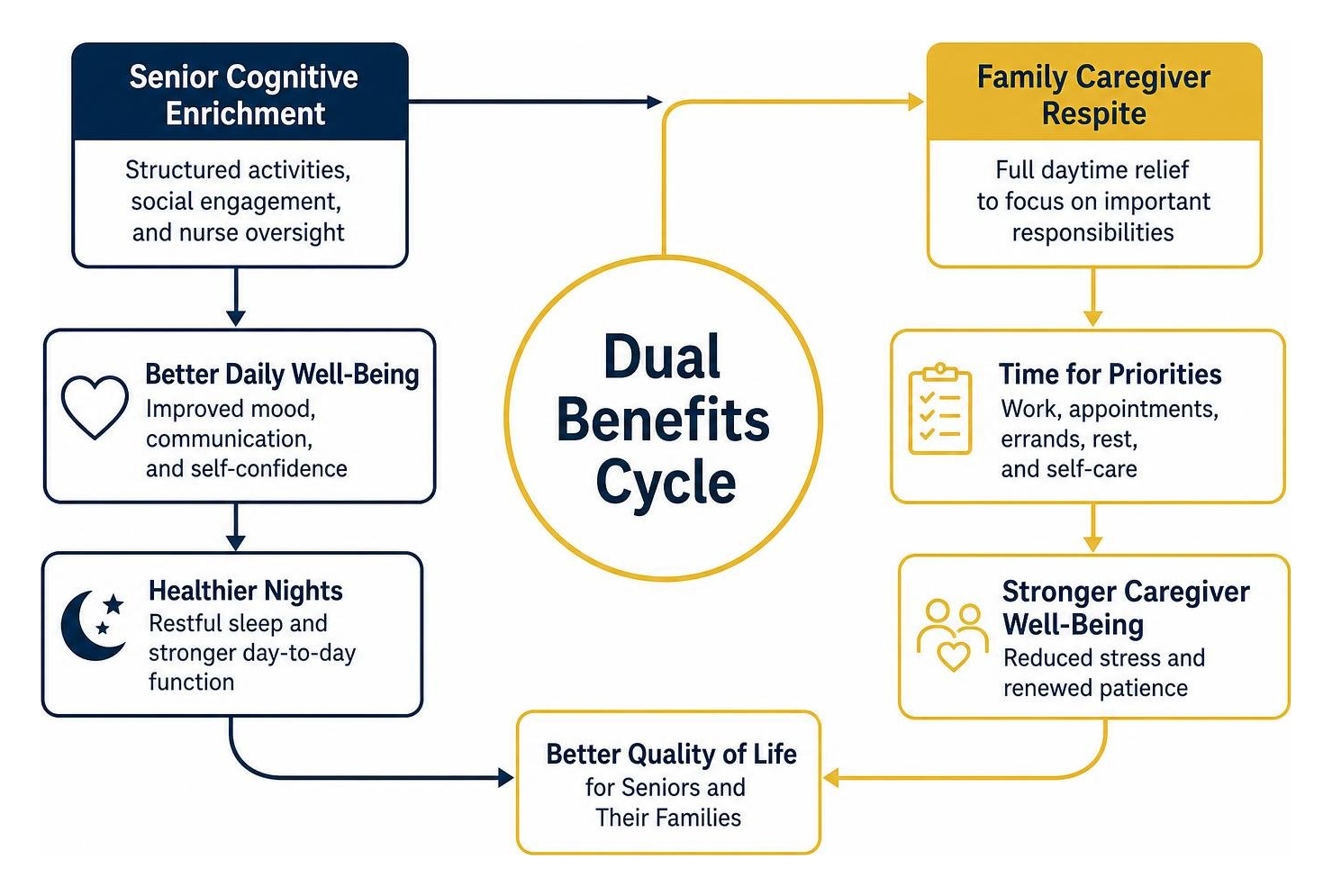
For family caregivers, memory day programs provide indispensable emotional relief. Caring for a spouse or parent with progressive memory loss is a round-the-clock physical and emotional marathon. When you utilize daytime respite, you regain the uninterrupted hours necessary to manage a job, attend medical appointments, run household errands, or simply rest. This respite prevents the chronic exhaustion that leads to premature institutional placements and allows you to return to your loved one in the evening refreshed, patient, and emotionally present.
Signs It Is Time to Consider Memory Day Care
Cognitive decline rarely occurs overnight; it unfolds in subtle, accumulating shifts. Families across Utah Valley often ask how to recognize the tipping point where at-home care is no longer sufficient. Look for these clear indicators that your loved one would benefit from dementia day support:
Increased Forgetfulness and Disorientation: Misplacing everyday items constantly, asking repetitive questions within minutes, or struggling to follow familiar sequential tasks like meal preparation.
Wandering or Exit-Seeking Behavior: Pacing anxiously near exterior doors, attempting to "go to work," or demonstrating confusion about their physical surroundings.
Daytime Restlessness and Sleep Inversion: Napping excessively during the day and wandering the house at night, signaling an unmet need for daytime mental and physical stimulation.
Social Withdrawal and Apathy: Giving up longtime hobbies, avoiding family gatherings, or sitting in front of a television for hours without genuine engagement.
Caregiver Exhaustion: Feelings of irritability, anxiety, physical depletion, or resentment creeping into daily caregiving duties.
Noticeable Mood or Behavioral Changes: Agitation, sadness, paranoia, or increased anxiety during the late afternoon (often referred to as sundowning).
Day Programs vs. In-Home Dementia Care
Deciding between memory day centers and in-home care is rarely an "either-or" decision—many families find success combining both approaches.
While day centers offer dynamic social environments and shared therapeutic programming, private home care delivers personalized assistance with intimate activities of daily living like morning showers, dressing, and customized bedtime routines. Exploring in-home cognitive support can bridge the gap on days when a loved one stays home, creating a flexible, comprehensive care ecosystem that keeps seniors living safely within their communities for years longer than otherwise possible.
Therapeutic Activities, Safety, and Modern Innovations
Maintaining cognitive function, motor skills, and self-worth requires more than passive supervision. Modern memory day care programs utilize evidence-informed therapeutic routines that tap into preserved emotional memory and creative expression. Even when short-term memory fades, the neurological pathways governing music appreciation, rhythmic movement, artistic expression, and sensory comfort often remain vibrant.
At Aspen Senior Day Center, our daily schedule is intentionally structured to maximize engagement while preventing cognitive fatigue. Every activity within our dedicated Alzheimer's care program serves a specific therapeutic purpose.
Cognitive Engagement and Specialized Therapies
Effective memory care centers implement diverse, multi-sensory routines to foster a lively, purposeful environment:
Music Therapy and Sing-Alongs: Familiar melodies from a participant’s youth can instantly bypass cognitive roadblocks, unlocking buried memories, sparking joyful singing, and reducing agitation.
Expressive Art Therapy: Open-ended painting, sculpting, and crafting provide an outlet for non-verbal emotional expression without the pressure of "getting it right."
Reminiscence and Trivia Games: Guided conversations around vintage photographs, classic historical events, and nostalgic household items stimulate long-term recall and encourage shared storytelling.
Gentle Movement and Seated Fitness: Chair yoga, gentle stretching, balloon volleyball, and indoor walking maintain joint mobility, balance, and physical stamina.
Pet Therapy: Gentle, supervised interactions with therapy animals provide instant comfort, lower blood pressure, and elicit unconditional affection.
Engagement-Based Care and Brain Fitness: Structured brain fitness exercises are tailored to current cognitive capabilities, maintaining neural pathways without inducing frustration.
Safety Measures, Monitored Environments, and Low Staffing Ratios
Safety is the absolute cornerstone of effective memory care. Individuals experiencing memory loss often lack situational awareness and can easily wander into hazardous situations if an environment is unmonitored.
Professional memory day centers utilize secure, monitored perimeters with discreetly secured exits, ensuring participants can move about freely without risk of elopement. Hallways, restrooms, and activity lounges are designed without confusing dead-ends, glare-heavy flooring, or tripping hazards.
Equally important is the direct supervision model. Since 2010, Aspen Senior Day Center has maintained a low 4:1 caregiver-to-client ratio across our Utah Valley facilities. This close ratio ensures that every senior receives continuous, compassionate attention. Staff members are thoroughly trained in gentle redirection techniques, verbal de-escalation, and hands-on mobility assistance. Furthermore, experienced care coordinators provide consistent wellness monitoring, safe medication reminders, and close communication with your family's personal physicians.
Emerging Technologies: Sensory Rooms and Companion Robotics
The landscape of dementia care continues to evolve through thoughtful technological advancements designed to soothe and stimulate:
Sensory Regulation Spaces: Specialized relaxation areas equipped with soft, adjustable lighting, gentle acoustic soundscapes, and tactile elements help regulate the central nervous system when a participant feels overwhelmed or overstimulated.
Companion Robotics: Interactive therapeutic robotic pets respond to touch, vocal inflection, and movement with realistic purrs or gentle tail wags, offering soothing companionship for individuals experiencing anxiety without any of the risks of live animals.
Curated Interactive Streaming: Specialized digital libraries offering memory-recall media, serene virtual nature journeys, and seated movement routines provide personalized cognitive engagement tailored to individual life histories.
How to Choose the Right Center and Transition Smoothly

Selecting an adult day center is an important decision for your family. Taking time to visit facilities, observe staff interactions, and view a center's photo gallery can help you gain a clear sense of the community atmosphere, cleanliness, and daily activities before enrolling.
Evaluating the Cost and Coverage of Memory Day Care
One of the most practical benefits of memory day care is its cost-effectiveness compared to round-the-clock residential facility placement or 24/7 care arrangements. Day center services are typically billed at predictable daily rates or through flexible multi-day packages.
When planning your care budget, explore these common payment and assistance options:
Long-Term Care (LTC) Insurance: Most comprehensive LTC policies include benefits for licensed adult day care services. Our administrative staff regularly assists families with daily logs and documentation for reimbursement claims.
Veterans Aid & Attendance Pension: Eligible wartime veterans and surviving spouses can often utilize the VA Aid & Attendance pension benefit to cover day center expenses.
Private Pay Packages: Tiered attendance packages (such as two, three, or five days per week) allow families to balance respite needs with household budgets.
Key Selection Criteria: Staffing, Licensing, and Care Ratios
When vetting prospective adult day programs for dementia near me, look beyond brochures and evaluate daily operational standards directly.
Ask these essential questions during your initial site tour:
What is the direct caregiver-to-client ratio? (Look for low ratios, such as 4:1, to ensure attentive oversight).
What specific dementia communication training do staff receive? (Ensure staff understand validation therapy and redirection rather than confrontational reality orientation).
What wellness and safety protocols are in place? (Dedicated care coordinators and trained staff ensure consistent health monitoring and wellness checks).
How are wandering and agitation handled? (The facility should use secure perimeters and gentle de-escalation methods).
How are meals and hydration managed? (Ask about nutritious dining, accommodations for swallowing difficulties, and regular hydration prompts).
Smooth Transitions, Trial Days, and Transportation Support
Introducing a loved one with memory loss to a new environment requires patience and gentle encouragement. It is completely normal for a senior to express initial reluctance or confusion about attending.
To ensure a comfortable transition, start with a scheduled trial day. A trial visit allows your loved one to participate in a few hours of activities, share a meal, and meet our team at a relaxed pace, while giving our staff the opportunity to learn their personal preferences, background, and communication style.
Consistency is key during the first few weeks. Frame the center positively—refer to it as a "social club," "volunteering community," or "seniors' luncheon" rather than a care facility. Establishing a predictable morning routine helps ease anxiety.
For many families, managing midday logistics can be challenging. To assist, our senior day center offers reliable, door-to-door transportation services across Utah Valley—including Provo, Orem, Lehi, American Fork, Pleasant Grove, and Lindon. Having trusted, familiar staff handle pickup and drop-off relieves daily commute stress and establishes a comforting, predictable routine for your loved one.
Frequently Asked Questions About Memory Care Programs
Can someone with moderate to advanced dementia attend memory day care?
Yes. Many participants in memory day centers live with moderate stages of Alzheimer’s or related dementias. Programs are structured to accommodate cognitive deficits, communication challenges, and physical mobility needs (including assistance with walkers and wheelchairs). However, participants must generally be free from acute medical instability or unmanageable physical aggression that could jeopardize community safety.
How does long-term care insurance or VA assistance cover day care costs?
Most modern Long-Term Care policies cover licensed adult day services once eligibility criteria (such as needing help with two or more Activities of Daily Living) are verified. The Veterans Aid & Attendance program provides a monthly pension stipend above the standard VA pension to help cover daytime care costs for qualified veterans and surviving spouses. Our staff works closely with families to provide the attendance logs and care summaries required by insurers.
What happens if a participant becomes anxious or wanders during the day?
Staff members trained in dementia care understand that wandering and anxiety are expressions of unmet needs, such as fatigue, overstimulation, hunger, or a need for the restroom. Rather than using physical restraints or harsh corrections, caregivers employ gentle redirection, offer a quiet sensory space, or invite the individual into a calming, purposeful task (like folding towels, listening to a favorite song, or enjoying a light snack).
Conclusion
Navigating the challenges of Alzheimer’s or dementia can feel overwhelming, but you do not have to walk this road alone. Providing compassionate, dignified care for an aging family member while managing your own health, career, and family life is a delicate balance.
Memory day care bridges this gap, offering a vibrant, safe community where seniors enjoy purposeful days filled with laughter and mental engagement, while family caregivers receive the restorative respite they need.
At Aspen Senior Care, we have proudly served Utah Valley families since 2010. Whether you live in Orem, Provo, Lehi, American Fork, Pleasant Grove, Spanish Fork, or surrounding communities, our dedicated team is here to walk alongside you. Explore our adult day care services to discover how a structured, joyful day program can help your entire family thrive.