
The Ultimate Checklist for Choosing Quality Adult Day Services
Understanding Types and Levels of Adult Day Services
To choose quality adult day services, start by matching the program to your loved one’s care level, then verify staff ratios, safety, and medical scope, tour the facility in person, and review daily costs and payment options. Adult day programs provide a structured, supportive setting where older adults spend their daytime hours engaging with peers, enjoying nourishing meals, and receiving personal care. Meanwhile, family caregivers gain predictable respite to work, run errands, or simply recharge.
Across more than 7,500 day facilities nationwide, participants—whose average age falls between 77 and 79 years old—benefit from structured daily engagement that prevents the isolation often tied to cognitive and functional decline.
Core Models of Adult Day Services
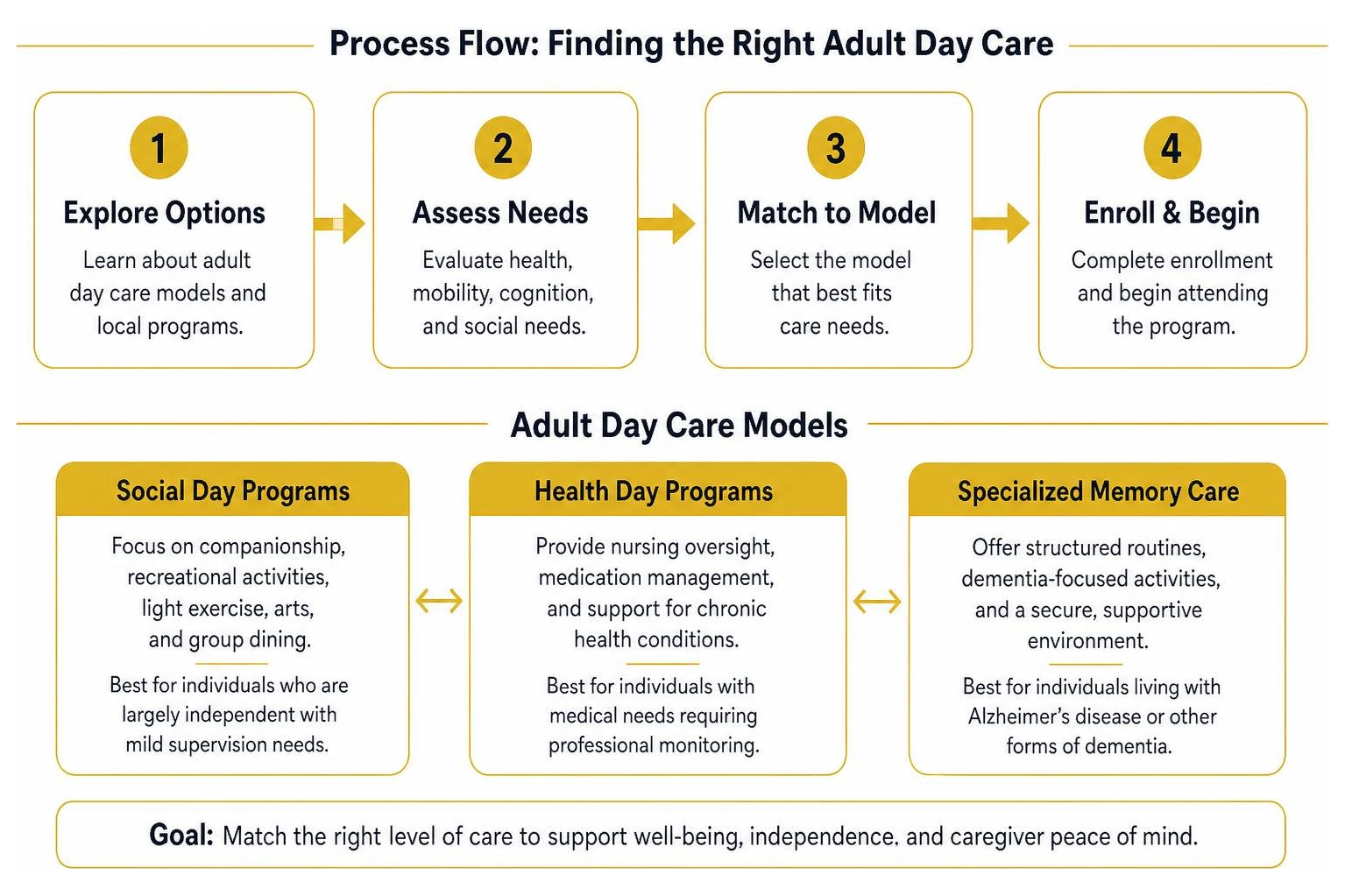
Not all daytime programs are identical. Depending on your family member’s health, mobility, and cognitive baseline, you will encounter three primary formats:
Social Adult Day Programs: These centers emphasize companionship, recreational activities, light physical exercise, arts, and group dining. They are ideal for older adults who are largely independent but feel isolated at home or need mild supervision.
Adult Day Health Care (ADHC): These programs integrate social recreation with medical monitoring, physical therapy, occupational therapy, and skilled nursing.
Memory Care and Dementia-Focused Day Programs: Designed specifically for individuals living with Alzheimer’s disease or other forms of dementia, these environments provide secured spaces, predictable sensory schedules, and staff trained in non-pharmacological behavioral redirection. Families seeking specialized memory support often rely on specialized dementia daycare to maintain safety and cognitive stimulation.
You can also explore broad state-level care options from the California Department of Aging to understand how states regulate and structure these complementary levels of care, from social programs to therapeutic memory cafes.
Licensing, Staff Ratios, and Medical Scope
When assessing program safety, examine licensing requirements and daily staffing models. Standard social programs focus on activities of daily living (ADLs), such as cueing for meals and offering mobility assistance. In contrast, health-focused models employ registered nurses (RNs) or licensed practical nurses (LPNs) capable of managing medications, administering insulin, and tracking vitals.
A critical metric of quality is the staff-to-client ratio. Leading daytime programs maintain tight ratios—often between 1:4 and 1:6—to ensure each attendee receives personalized attention and immediate support. Enrolling your loved one in a dedicated senior day center ensures they remain engaged in therapeutic recreation while maintaining their dignity and physical well-being throughout the week.
Comparing Senior Day Programs and In-Home Care
Choosing between daytime community programs and one-on-one care at home depends on your family's daily schedule, budget, and social preferences. Both options promote aging in place, yet they serve distinct day-to-day functions.
Feature | Adult Day Services | In-Home Caregiving |
|---|---|---|
Primary Focus | Peer socialization, group recreation, daytime respite | 1-on-1 assistance, personal routine in familiar home |
Cost Structure | Predictable daily or half-day flat rate | Hourly rates based on care intensity and duration |
Social Engagement | High; structured group games, crafts, music, outings | Individualized; companion activities inside the home |
Medical Oversight | Center-dependent (ADHC provides skilled nursing) | Depends on caregiver level (non-medical vs. home health) |
Scheduling | Core daytime hours (e.g., 8:00 AM – 5:00 PM) | Highly flexible (hourly, overnight, 24/7 coverage) |
Many families discover that combining both approaches provides the ideal balance. For instance, an older adult might attend a daytime center three days a week for active group stimulation and rely on in-home caregivers on alternate days for targeted personal care and evening support.
Cost Breakdown and Budgeting in 2026
Affordability is one of the strongest advantages of daytime community care. The estimated national median cost for adult day care sits around $103 per day (or approximately $2,232 per month for full-time weekday attendance). Compared to full-time assisted living or around-the-clock home care, daytime centers deliver substantial savings.
To project your monthly expenses accurately, explore our guides on how much adult day care costs alongside our detailed breakdown of adult day care pricing factors. Daily rates can vary based on whether your loved one requires specialized memory support, dietary accommodations, or extended operational hours.
Financial Assistance and Insurance Coverage
Several public and private payment options can help offset out-of-pocket costs:
Long-Term Care Insurance (LTCI): Many comprehensive policies reimburse daily center attendance once functional benefit triggers (such as needing help with two or more ADLs) are certified.
Veterans Benefits: Eligible veterans may qualify for the VA Community Adult Day Health Care program or use their Aid and Attendance pension to cover care fees.
Medicaid and HCBS Waivers: Home and Community-Based Services (HCBS) waivers frequently fund day services as a cost-effective alternative to institutional nursing home placement.
Respite Care Vouchers: Caregiver support grants and local programs frequently provide short-term funding for day respite services, allowing family caregivers to prevent chronic burnout.
The Ultimate Checklist for Evaluating Day Centers
Touring a facility in person is the most reliable way to assess whether its environment, culture, and safety practices align with your loved one's personality and daily needs.
Use this practical checklist during your center visits:
Environment, Safety, and Staff Qualifications
[ ] Physical Security: Are exterior doors secured or monitored with keypad access to prevent wandering, while maintaining a welcoming, non-institutional atmosphere?
[ ] Accessibility: Is the facility fully ADA-compliant, featuring grab bars, zero-threshold entryways, and spacious, accessible restrooms?
[ ] Staff Credentials: Are team members trained in CPR, first aid, safe transfer techniques, and dementia communication?
[ ] Cleanliness and Air Quality: Is the center clean, bright, odor-free, and well-ventilated?
[ ] Staff-to-Participant Ratio: Does the program maintain a low ratio (such as 1:6 or better) so staff can respond promptly to individual needs?
When evaluating a reputable adult day center, observe how staff interact with participants. Look for genuine warmth, eye contact, patient active listening, and gentle encouragement.
Nutrition, Daily Programming, and Specialized Support
[ ] Nutritional Accommodations: Does the kitchen accommodate specific dietary restrictions, such as diabetic, low-sodium, pureed, or gluten-free meals?
[ ] Varied Activity Calendars: Are activities mentally stimulating, physically engaging, and tailored to diverse cognitive levels? Look for music therapy, seated yoga, sensory crafts, and reminiscence discussions.
[ ] Quiet Rest Areas: Is there a comfortable, quiet space where participants can rest if they experience sensory overload or fatigue?
[ ] Transportation: Does the center offer wheelchair-accessible transport to and from home, or partner with reliable local paratransit providers?
If your family member has a neurodegenerative condition, ensure the community offers comprehensive senior day center memory care tailored to their cognitive stage.
Eligibility, Referrals, and Enrollment Procedures
Enrolling in a day program involves several clear steps to ensure the team can safely support your loved one's specific physical, medical, and emotional needs.

The intake process generally follows four key milestones:
Initial Inquiry and Assessment: A care coordinator reviews functional capabilities, mobility, communication styles, and medical history.
Medical Clearance: Your loved one’s physician completes a basic physical exam form, verifies vaccinations/TB status, and details medication orders.
Personalized Plan of Care: The center's multidisciplinary team designs an individualized plan covering dietary preferences, personal care assistance, cognitive goals, and favorite hobbies.
Trial Days: The participant attends for a half-day or full-day session to adjust to the environment and meet new peers.
Qualifying for State-Sponsored Adult Day Services
State-funded programs often require standardized functional assessments. In Washington State, for instance, eligibility and care coordination for Medicaid-funded day care and day health are formally governed by Chapter 12 adult day services guidelines, utilizing the Comprehensive Assessment Reporting Evaluation (CARE) system to determine service authorization.
Similarly, programs operating under state aging departments—such as the framework outlined in the Illinois Department on Aging service guidelines—require applicants to meet specific age (typically 60+), residency, and functional need criteria. Almost 90% of state-supported day service participants in these regions fall between the ages of 60 and 90, demonstrating how vital community-based daytime programs are for delaying residential placement.
Transitioning Your Loved One Smoothly
Adapting to a new social routine takes time, especially for seniors experiencing memory loss. You can make this transition smoother with a few simple strategies:
Introduce the Program Positively: Frame the center as a social club, volunteer activity, or community gathering rather than "day care."
Start Gradually: Begin with two half-days or partial sessions per week before increasing to full-day attendance.
Send Familiar Comforts: Pack a favorite sweater, a family photo album, or preferred snacks during the first few weeks.
Establish a Consistent Morning Routine: Predictable departure times reduce morning anxiety and build a reassuring sense of structure.
Families seeking reliable daytime support in our region can connect with our local Utah County adult day programs to tour our facility, meet our team, and schedule a trial visit.
Frequently Asked Questions About Day Programs
What is the national median cost of daytime senior care?
Across the country, the median daily cost for adult day care is approximately $103 per day, or about $2,232 per month for full-time weekday attendance. Exact rates depend on the level of care required (social vs. skilled health care), geographic region, and specialized memory support services.
What is the difference between social day care and adult day health care?
Social day care programs focus primarily on companionship, recreational activities, group dining, and basic supervision. Adult Day Health Care (ADHC) incorporates everything in a social program while adding skilled nursing oversight, medication administration, physical and speech therapies, and intensive health monitoring by licensed medical staff.
How do I determine if my loved one is ready for a day center?
Your loved one may benefit from a day program if they spend most of the day isolated, express feelings of loneliness, show signs of cognitive decline, or need supervision while you work. It is also an appropriate choice if you, as a caregiver, are experiencing elevated stress, sleep deprivation, or career disruptions due to caregiving responsibilities.
Conclusion
Finding the right care for an aging parent or spouse is an act of love that should never come at the expense of your own health and well-being. Quality daytime care provides a safe, vibrant setting where your loved one can forge meaningful friendships, participate in therapeutic activities, and maintain their sense of purpose—all while returning home to sleep in their own bed each night.
At Aspen Senior Care, we provide award-winning, family-like support designed to meet your family's unique routine. Whether you need daytime social engagement or personalized in-home caregiving throughout Utah Valley, we are here to walk this journey with you.
Discover how our comprehensive adult day care services can bring balance, joy, and peace of mind back to your family's daily life. Schedule a tour with our caring team today!