

Why Day Care for Disabled Adults Is a Game Changer for Caregivers
When Caregiving Feels Like Too Much: What Day Care for Disabled Adults Can Do
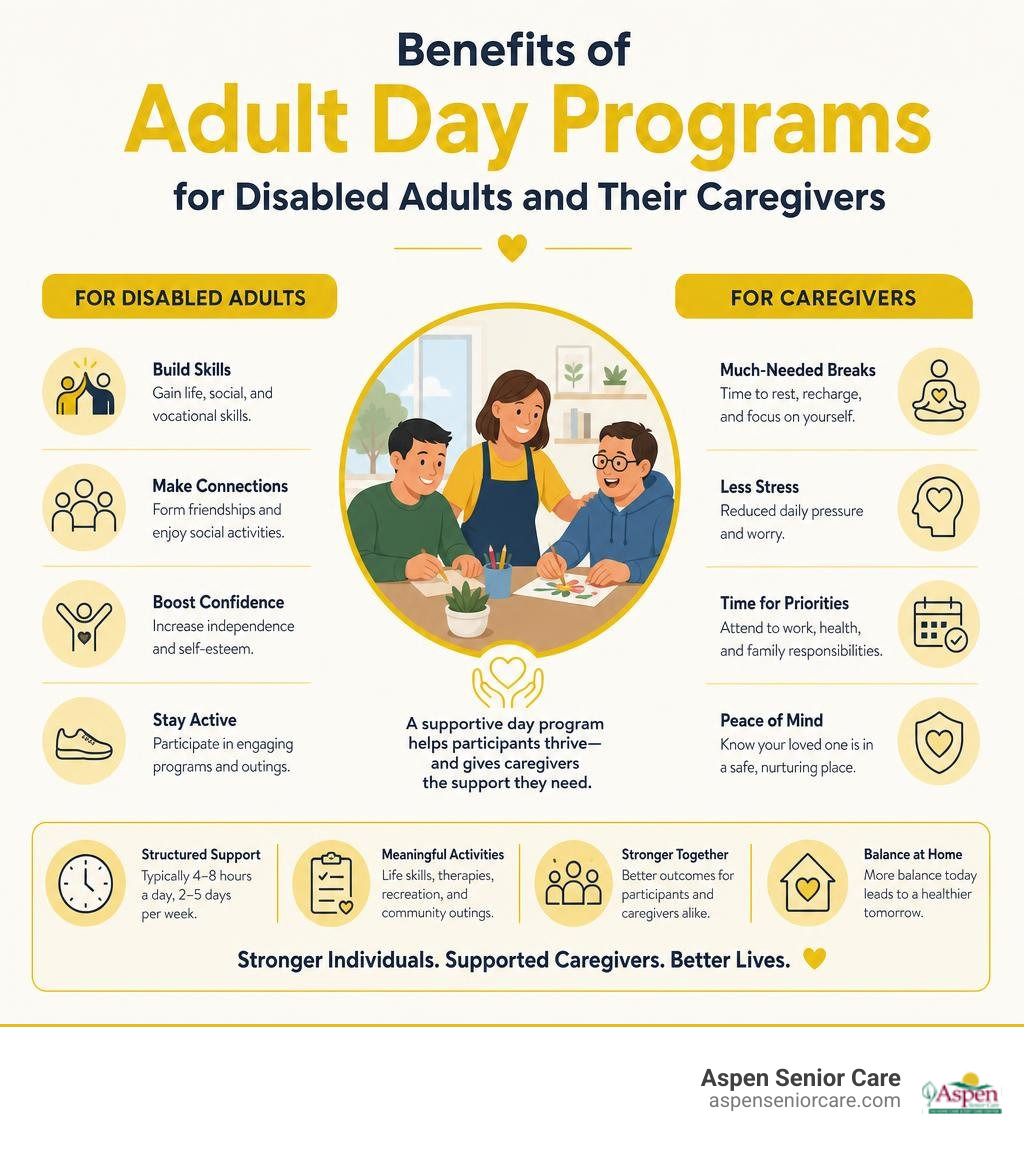
Day care for disabled adults is a structured, community-based program where adults with intellectual, developmental, or physical disabilities spend part of their day in a supervised setting — building skills, socializing, and staying active — while their family caregivers get a much-needed break.
Here's a quick overview of what these programs offer:
Who they serve: Adults 18 and older with developmental disabilities, intellectual disabilities, autism, Down syndrome, or other chronic disabling conditions
What happens there: Life skills training, socialization, recreational activities, therapies, community outings, and vocational skill-building
When they run: Typically 4–8 hours per day, 2–5 days per week
What they cost: Roughly $40–$100 per day privately, or potentially covered through Medicaid waivers
Who benefits: Both the participant and the caregiver at home
If you're caring for an adult family member with a disability, you already know how relentless it can feel. Work, personal health, family responsibilities — they don't pause because caregiving demands are high. And the guilt of needing a break? That's real too.
The good news is that day programs for disabled adults aren't just a babysitting solution. They're structured environments where participants work toward personal goals, form friendships, and gain independence — sometimes in ways that aren't possible at home.
For caregivers in Utah Valley juggling jobs and family life, this kind of support can be the difference between burnout and balance.
Understanding Day Care for Disabled Adults vs. Senior Care
When many people hear the term "adult day care," they immediately picture elderly seniors playing bingo or reminiscing about the good old days. While senior centers are incredibly valuable, day care for disabled adults serves a distinct population with completely different goals.
These programs are designed for individuals age 18 and over who live with intellectual disabilities, developmental disabilities (such as autism or Down syndrome), traumatic brain injuries, or other chronic disabling conditions. The primary focus here is not just safe supervision, but active engagement, skill acquisition, and community integration.
In the professional care world, these specialized environments are often referred to as "day habilitation programs." While senior programs focus on maintaining current cognitive and physical functions, disability day programs are deeply rooted in development, growth, and helping participants live as independently as possible.
If you are trying to determine which care setting is right for your family, you can learn more about senior day centers and how they compare to specialized disability services.
Key Differences in Day Care for Disabled Adults
The defining feature of a high-quality program for disabled adults is its commitment to active treatment and personalized development. Rather than simply passing the time, participants work on custom-tailored goals designed to improve their quality of life. This includes:
Skill-building: Learning how to manage personal hygiene, cook simple meals, clean, and navigate the community.
Life skills: Practicing money management, emergency safety protocols, and functional communication.
Active treatment: Consistent, structured interventions designed to help individuals acquire new behaviors and maintain their physical abilities.
For families in Utah, state-level organizations provide extensive support and oversight for these developmental paths. You can explore the Utah State Development Center resources to understand the state's standards for developmental care, active treatment, and long-term support systems.
Traditional Senior Day Care vs. Disability Day Programs
To help you visualize how these two care models differ, let's look at their core components side-by-side:
Feature Traditional Senior Day Care Disability Day Programs (Day Habilitation) Target Population Older adults, typically seniors facing age-related decline Adults age 18+ with developmental, intellectual, or physical disabilities Primary Goal Maintenance of health, cognitive stimulation, and safety Skill acquisition, independence, and vocational readiness Core Programming Dementia care, memory games, low-impact exercise Pre-vocational training, life skills, active community outings Therapeutic Focus Memory care, physical therapy for mobility maintenance Behavior therapy, sensory integration, speech and occupational therapy Attendance Pattern Often flexible, ranging from a few hours to full days Typically structured around consistent weekly schedules (2–5 days)
While some facilities, such as the Aspen Senior Day Center, focus specifically on senior care, Alzheimer's support, and Parkinson's care, they share a common mission with disability day programs: providing a safe, enriching environment that gives family caregivers much-needed peace of mind.
Core Services and Activities Offered in Disability Day Programs
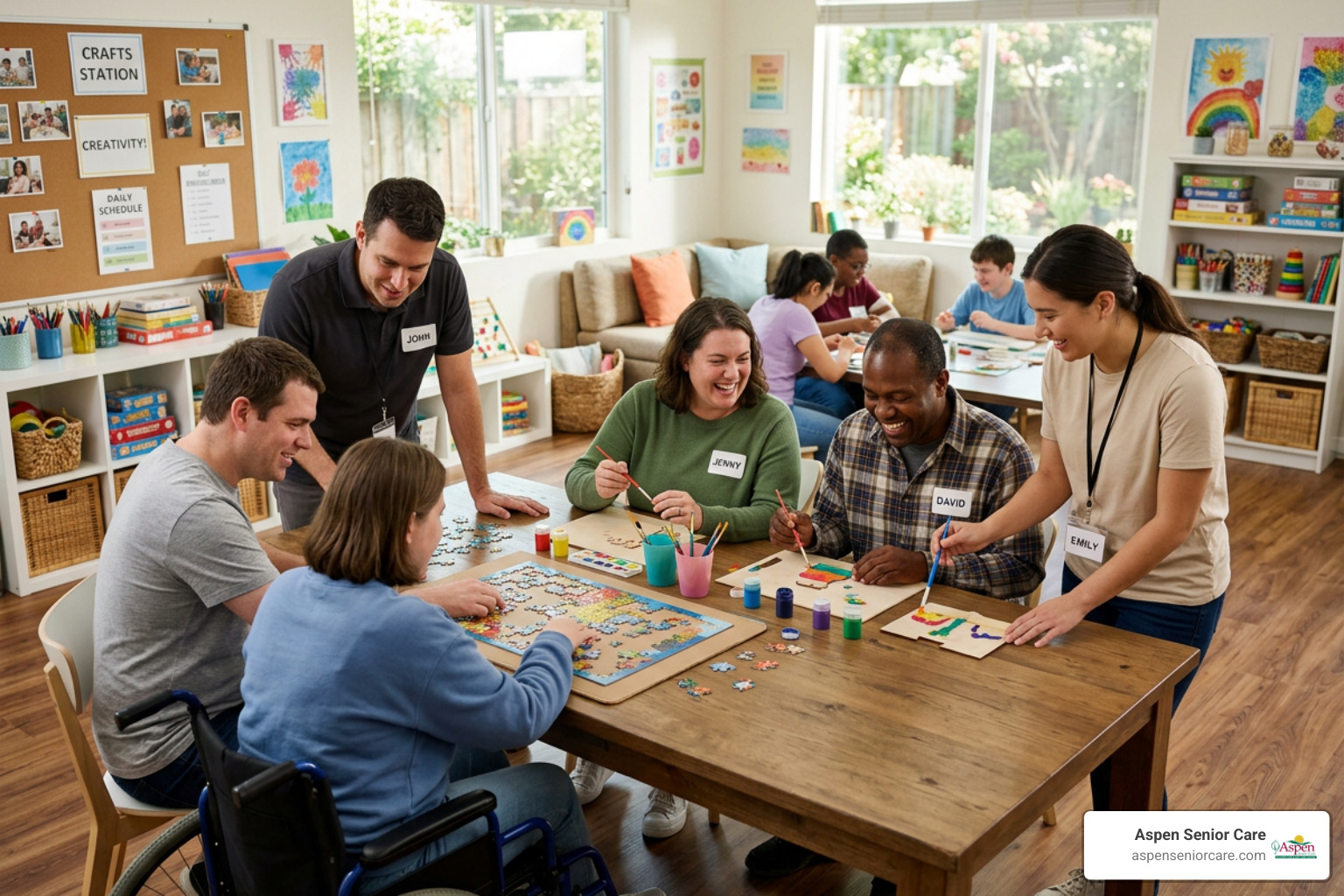
A great day program is a buzzing hub of activity. It should never feel like a sterile waiting room. Instead, it should look and feel like a dynamic community center where participants are encouraged to explore their interests, make friends, and push the boundaries of what they thought they could achieve.

From physical fitness to creative arts, the activities are carefully structured to promote both physical and mental well-being. If you are exploring how these daily schedules are structured to benefit participants, you can explore day respite services to see how professional respite care blends seamlessly with active daily programming.
Life Skills and Vocational Training
For many young adults transitioning out of the school system, a day program is their primary stepping stone toward employment and independent living. Programs often offer structured pre-vocational training, which teaches essential job-seeking and workplace skills, such as:
Following multi-step instructions and completing tasks independently.
Practicing professional communication with supervisors and coworkers.
Learning specific trades, such as horticulture, basic retail operations, food service, or office administration.
Many organizations partner with local businesses to offer supported employment opportunities, allowing participants to earn a paycheck while receiving on-the-job coaching. For families looking to transition their loved ones into competitive work environments, the Utah State Office of Rehabilitation vocational programs offers incredible resources, counseling, and training pathways designed to help individuals with disabilities find meaningful employment.
Therapeutic and Health Services
In addition to social and vocational activities, many day programs integrate professional therapeutic services directly into their daily schedules. This holistic approach ensures that participants receive the physical and emotional support they need to thrive. These services often include:
Music and Art Therapy: Creative outlets that promote self-expression, motor skills, and emotional regulation.
Sensory Rooms: Specially designed spaces equipped with soothing lights, weighted blankets, aromatherapy, and calming music to help individuals manage sensory overload.
Medication Management: Licensed staff or registered nurses who supervise and administer daily medications, ensuring health needs are met safely.
In Utah, these therapeutic and developmental standards are heavily guided by the Utah Division of Services for People with Disabilities, which ensures that licensed programs maintain high quality-of-care standards, respect individual rights, and focus on person-centered progress.
Eligibility, Costs, and Funding Options
Navigating the financial side of day care for disabled adults can feel overwhelming, but understanding your options can save your family thousands of dollars each year.
While the private out-of-pocket costs can seem daunting at first glance, there are numerous federal, state, and local programs designed to help offset these expenses. Before you make any decisions, it is highly recommended to research the baseline financial landscape by reading up on how much does adult day care cost? to establish a realistic budget.
Navigating Medicaid Waivers and Government Assistance
The most common way families fund long-term day services is through Home and Community-Based Services (HCBS) Medicaid waivers. These waivers are designed to help individuals with disabilities receive care in their homes and communities rather than in institutional settings.
While specific waiver names can vary by state — such as the Home and Community-based Services (HCS), Community Living Assistance and Support Services (CLASS), Texas Home Living (TxHmL), or Deaf-Blind Multiple Disabilities (DBMD) waivers found in other regions — Utah utilizes its own specialized Medicaid waivers managed by the Division of Services for People with Disabilities (DSPD).
Because these waivers often have long waiting lists, it is critical to begin the application process as early as possible. For step-by-step guidance on navigating these waitlists, finding local providers, and understanding your rights, the Utah Parent Center adult resources is an invaluable local advocate that helps families master the transition into adult service systems.
Private Pay and Alternative Funding for Day Care for Disabled Adults
If your loved one does not qualify for a Medicaid waiver, or if you are currently on a waiting list, you may need to look at alternative funding sources.
Private Pay: On average, paying privately for adult day services costs approximately $17,000 per year. According to estimates from organizations like Easter Seals, daily private rates typically range from $40 to $100 per day, depending on the level of specialized care and medical supervision required.
Veterans Administration (VA): If the participant is a veteran or the dependent of a veteran, the VA frequently offers adult day health care benefits that can cover the majority of program costs.
Local County Grants: Many local government associations offer respite care grants to help family caregivers take a break without facing financial hardship.
For residents living in Utah, Wasatch, and Summit counties, the Mountainland Association of Governments caregiving guide provides localized directories, respite funding opportunities, and caregiver support resources tailored directly to our community.
How to Choose the Right Program for Your Loved One
Choosing a day program is a deeply personal decision. The right center should feel like a second home — a place where your loved one is celebrated, kept safe, and given room to grow.
Because every individual's needs are unique, it is essential to visit multiple locations, observe the daily interactions, and ask detailed questions about their operational philosophies. If you are looking for local, high-quality care options in our area, you can check out our Orem caregiver respite options to see what a compassionate, family-oriented care model looks like in practice.
Essential Questions to Ask During Site Visits
When you tour a potential day care facility, don't be afraid to dig into the details. Here are several critical questions to ask the program directors:
What are your staff-to-client ratios? Lower ratios ensure that your loved one will receive the personal attention and safety supervision they require.
How do you handle personal care and toileting assistance? Ensure the facility has dignified, private spaces and trained staff to assist with activities of daily living.
What transportation services are available? Ask if they provide door-to-door transportation, or if they offer accessible vehicles for community outings.
Are your staff members trained in specialized care? Verify if the team has experience handling specific behavioral challenges, physical disabilities, or medical needs.
To help guide your search, you can refer to the National Adult Day Services Association FAQs for national quality standards and guidelines on what to look for in a high-quality adult day care program.
Addressing Gaps and Challenges in Adult Day Services
While day programs are incredibly beneficial, the system is not without its challenges. One of the most significant hurdles families face is the "cliff" that occurs when an individual with a disability turns 22 and ages out of the school system. Suddenly, the structured daily routine of school disappears, leaving families scrambling to find placement in adult programs that may have multi-year waitlists.
Additionally, geographic availability can be a major issue, particularly for families living in rural areas or smaller towns outside of major metropolitan hubs. Finding a program that offers both physical accessibility and specialized medical or behavioral support close to home can be incredibly difficult.
When local facility-based day programs aren't a perfect fit due to distance, waitlists, or severe medical needs, families often turn to personalized home-based care. You can learn about in-home adult day care alternatives to see how in-home caregiving can deliver structured, engaging activities and reliable respite care right in the comfort of your own living room.
Frequently Asked Questions about Day Care for Disabled Adults
What is the difference between day habilitation and adult day care?
Day habilitation focuses primarily on active treatment, skill-building, and helping individuals with developmental or intellectual disabilities acquire the daily living and social skills needed to live independently. Traditional adult day care, on the other hand, focuses more heavily on supervision, safety, social activities, and health monitoring, often for older seniors or individuals with age-related cognitive decline.
How many hours a day do these programs typically operate?
Most adult day programs operate between 4 to 8 hours per day, typically during standard business hours (Monday through Friday). Participants can attend anywhere from 2 to 5 days per week, depending on their individual care plans, family schedules, and funding availability.
Can adults with severe medical needs attend day programs?
Yes, many specialized programs offer "medically fragile" tracks or Adult Day Health Care (ADHC) services. These programs employ registered nurses and trained medical assistants who can provide specialized nursing care, manage complex medications, and implement a highly customized individual plan of care. Always verify a facility's medical staffing levels during your initial tour.
Conclusion
Caring for an adult with a disability is a journey of incredible love, but it is also one that requires immense physical and emotional energy. You do not have to walk this path entirely on your own.
At Aspen Senior Care, we are dedicated to providing the award-winning, family-like support that Utah Valley families need to thrive. Whether you are looking for highly personalized non-medical care, specialized dementia support, or reliable caregiver respite, our compassionate team is here to help you find the perfect balance.
We proudly serve families across Utah County, including Orem, Provo, Lehi, American Fork, Pleasant Grove, Spanish Fork, Alpine, Cedar Hills, Salem, Eagle Mountain, Highland, Lindon, Saratoga Springs, and Payson. Let us help you and your loved one experience the best care possible, every single day.
Ready to take a breath and explore your options? Explore Aspen's Adult Day Care Services today, or reach out to our team to design a personalized care plan that fits your family's life.