
No Place Like Home: Navigating Senior Care in Eagle Mountain UT
When Home Is the Best Place to Be: Senior Care in Utah County's Eagle Mountain, UT
Families searching for senior care in Utah County Eagle Mountain UT have more options than many realize — from professional in-home caregivers to local community programs and specialized memory support.
Here is a quick look at what's available:
Care Type What It Covers Best For Non-medical home care Bathing, meals, housekeeping, companionship Daily living support at home Respite care Temporary relief for family caregivers Preventing caregiver burnout Memory care support Dementia and Alzheimer's specialized help Cognitive decline management Home health care Skilled nursing, therapy (doctor-prescribed) Post-surgery or medical recovery Hospice care Pain management, end-of-life comfort Terminal illness support Community programs Meals, fitness, socialization, transportation Independent seniors needing light support
Balancing a job, your own family, and the care of an aging parent is genuinely hard. You might notice that mom's fridge has expired food in it, or that dad has missed his medications again. Maybe you're exhausted and stretched too thin.
You are not alone — and help is closer than you think.
Eagle Mountain is one of Utah County's fastest-growing communities, and the demand for quality senior care here is growing with it. Over 117 home care agencies serve the Eagle Mountain area. Care from a professional agency can often begin within 24 to 48 hours of a first consultation.
This guide walks you through every option, every cost, and every local resource — so you can make a confident decision for your family.

Navigating Senior Care Utah County Eagle Mountain UT: Available Services

When exploring senior care in Utah County Eagle Mountain UT, it is important to understand the landscape of available services. Every senior's journey is unique; some may only need a friendly visitor a few hours a week, while others require specialized support for chronic conditions.
In Eagle Mountain, care services generally fall into three main categories: non-medical in-home care, medical home health, and hospice care.
Non-Medical In-Home Care: This is the most common starting point for families. It focuses on helping seniors with everyday tasks so they can remain safely in their own homes. Services include companion care, personal care, light housekeeping, meal preparation, medication reminders, and transportation. You can read more about how these services fit together in our In Home Care Summary.
Medical Home Health Care: Unlike non-medical care, home health care must be prescribed by a physician. It involves clinical medical care delivered by licensed professionals, such as registered nurses (RNs) or physical therapists. This is ideal for seniors recovering from surgery, managing a serious injury, or adjusting to a new medical diagnosis.
Hospice Care: When recovery is no longer the primary goal, hospice care focuses on providing comfort, dignity, and pain management for seniors near the end of life. Hospice services can be delivered wherever the senior calls home, whether that is a private residence in Eagle Mountain or an assisted living community in Lehi or American Fork.
By coordinating non-medical care alongside clinical home health or hospice teams, families can establish a seamless continuum of care that supports both physical recovery and daily quality of life.
Understanding Non-Medical Home Care and Activities of Daily Living (ADLs)
Non-medical home care is specifically designed to assist seniors with Activities of Daily Living (ADLs) and Instrumental Activities of Daily Living (IADLs). ADLs represent the fundamental self-care tasks we take for granted in our youth, including:
Bathing and Grooming: Ensuring seniors can maintain personal hygiene safely to prevent skin infections or accidental slips in the shower.
Dressing and Toileting: Assisting with clothing and managing incontinence with dignity and respect.
Transferring and Mobility: Helping seniors move safely from a bed to a wheelchair or walk around their home to minimize fall risks.
IADLs, on the other hand, are the tasks required to maintain a household. These include meal preparation, light housekeeping (such as laundry and dusting), running errands, and managing transportation to medical appointments. By taking over these physical burdens, professional caregivers help seniors preserve their independence and enjoy their lives in a familiar environment where life feels comfortable.
Respite Care and Support for Family Caregivers
Many family members naturally step into the role of primary caregiver when a parent or spouse begins to struggle. While this is an act of deep love, it can quickly lead to physical and emotional exhaustion—often referred to as caregiver burnout.
Respite care provides temporary, professional caregiving relief. Whether you need a few hours a week to run errands, a full weekend to rest, or overnight support to ensure your loved one is safe while you sleep, respite care can be customized to fit your schedule. Utilizing respite care is not a sign of giving up; rather, it is a vital step in maintaining your own health so you can continue to be the supportive family member your loved one needs.
Recognizing the Signs: When is it Time for Professional Help?

It is common for seniors to downplay their struggles to avoid becoming a burden or losing their independence. However, waiting for a crisis—such as a serious fall or a medical emergency—to make a decision about senior care can limit your options.
By keeping a watchful eye on subtle behavioral and household red flags, you can step in before a crisis occurs. Look for these common indicators:
The Refrigerator Test: Open the fridge. Are there multiple items of expired, moldy, or spoiled food? This is a primary sign that a senior is struggling to manage nutrition, grocery shopping, or meal preparation.
Declining Hygiene: Noticeable changes in personal hygiene, such as unwashed hair, body odor, or wearing the same clothes for several days, suggest that bathing and laundry have become too difficult or dangerous.
Mobility Struggles and Falls: Unexplained bruises, difficulty standing up from a chair, or a sudden reluctance to walk up stairs indicate an increased risk of falls.
Cognitive and Medication Issues: Missed doctor appointments, unread mail piling up, or forgotten medication doses point to cognitive decline that requires structured daily support.
Caregiver Exhaustion: If you find yourself constantly stressed, losing sleep, or feeling overwhelmed by your caregiving duties, it is time to seek professional reinforcement.
How to Choose the Best Senior Care Utah County Eagle Mountain UT Has to Offer
Selecting the right care provider is a deeply personal decision. When researching agencies for senior care in Utah County Eagle Mountain UT, it is important to look beyond basic services and evaluate safety, trust, and compatibility.
First, verify that the agency is fully licensed, bonded, and insured. Ask about their hiring practices: Do they perform rigorous background checks on all employees? What kind of ongoing training do their caregivers receive?
Second, look for providers that emphasize personalized caregiver matching. A caregiver should not just be a helper; they should be a trusted companion who shares similar personality traits and interests with your loved one.
Finally, ensure the agency creates highly customized care plans that can adapt dynamically as your loved one's physical or cognitive situation changes. For families living in the western hills of Utah County, finding a local team that understands the geography of the area is essential. You can learn more about finding local, trusted support on our In Home Care/Locations/Eagle Mountain page.
Specialized Dementia and Memory Care Support
Seniors experiencing cognitive decline from Alzheimer's disease, dementia, or Parkinson's require specialized support. Because cognitive changes alter how a person perceives the world, traditional caregiving methods may not always be effective.
Professional memory care focuses on meeting seniors where they are in their cognitive journey. Caregivers trained in specialized dementia support use positive communication techniques, establish calming daily routines, and implement strict safety protocols to prevent wandering.
According to Scientific research on dementia care, maintaining a structured environment and engaging in familiar, cognitive-stimulating activities can significantly improve the quality of life for those living with memory loss. Utilizing caregivers who understand the progression of cognitive decline ensures that your loved one remains safe, calm, and mentally engaged at home.
Financial Planning and Care Costs in Utah County
Understanding the financial side of senior care is essential for long-term planning. In Eagle Mountain, UT, the cost of care is highly dependent on the type of service and the number of hours required.
The average hourly rate for non-medical in-home care in Eagle Mountain is $33 per hour, which directly aligns with the Utah state average and is slightly lower than the national average of $34 per hour. Overnight and weekend care typically averages around $35 per hour.
To help you compare your options, here is a breakdown of average senior care costs in the Eagle Mountain area:
Care Option Average Unit Cost Estimated Monthly Cost Part-Time Home Care (20 hours/week) $33 / hour $2,860 / month Full-Time Home Care (44 hours/week) $33 / hour $6,287 / month Assisted Living Facility (Residential) Flat monthly rate $3,944 / month Memory Care Facility (Residential) Flat monthly rate $4,060 / month
Note: Data represents average regional estimates for the 2026 calendar year.
The Cost of Senior Care Utah County Eagle Mountain UT vs. Facility Care
When looking at the numbers, many families assume that moving a loved one to an assisted living or memory care facility is automatically the most cost-effective choice. However, for seniors who only need moderate assistance, staying at home is often significantly more affordable.
With part-time home care (around 20 hours per week), a senior can receive targeted help with bathing, grocery shopping, and meal preparation for approximately $2,860 a month. This is over $1,000 less per month than the average local assisted living facility, and it allows the senior to remain in the comfort and familiarity of their own home.
Furthermore, home care is highly customizable. You only pay for the exact hours of support your loved one needs, making it a flexible, budget-friendly solution that preserves both independence and financial assets.
Local Community Resources for Eagle Mountain Seniors
One of the best ways to support an aging loved one in Eagle Mountain is to connect them with local community resources. Staying socially active and physically engaged is vital for preventing senior isolation and cognitive decline.
The Eagle Mountain Senior Center: Located right in the heart of the community, the Senior Center welcomes local residents aged 55 and older. It offers a warm, inviting environment where seniors can build meaningful relationships. Weekly activities include:
Strength & Balance Classes: Held on Thursdays from 11:00 to 11:45 a.m., these classes help seniors maintain physical mobility and prevent falls.
The Lunch Bunch: On the first Thursday of the month, seniors gather to socialize and enjoy a meal at a local restaurant.
Computer and Tech Safety Classes: Dedicated sessions designed to help older adults comfortably navigate modern technology and avoid online scams.
Free Nutritional Meals: Nutritious lunches are served every Wednesday and Thursday (excluding the first Thursday of the month).
Utah Department of Health and Human Services (DHHS): The state offers several public programs designed to assist seniors, including the Utah Caregiver Support Program (UCSP). This program has no low-income requirements and provides family caregivers with access to respite care, counseling, and supplemental supplies like bathroom grab bars.
Area Agency on Aging: Administered locally through the Mountainland Association of Governments, this agency coordinates vital services such as Meals on Wheels for homebound seniors and subsidized transportation for medical and pharmacy trips.
Combining these excellent public resources with private in-home care allows families to build a comprehensive, well-rounded support system for their loved ones.
Frequently Asked Questions About Eagle Mountain Senior Care
How quickly can in-home senior care services begin?
In most cases, non-medical in-home care can be initiated rapidly—often within 24 to 48 hours of your initial consultation. The general process follows a structured path to ensure safety and compatibility:
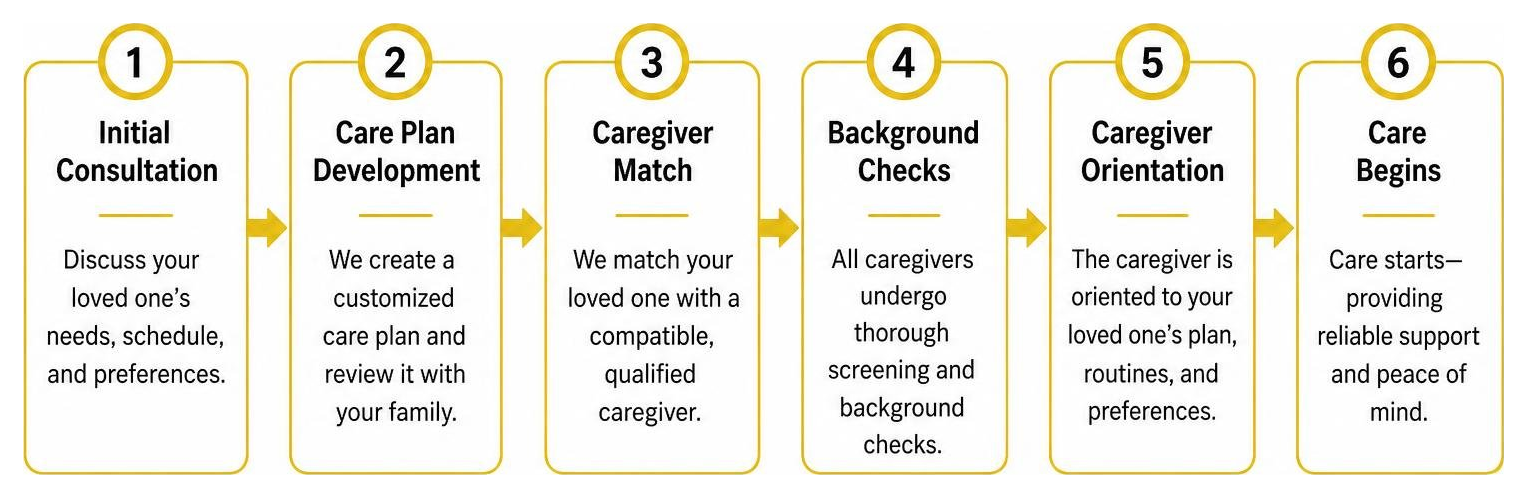
If your family is facing an unexpected situation, such as a sudden hospital discharge or a primary caregiver emergency, reputable agencies can expedite this timeline to ensure your loved one transitions home safely without any gaps in support.
Can long-term care insurance or VA benefits help pay for care?
Yes. While traditional health insurance and Medicare typically do not cover non-medical home care, there are several alternative financial resources available:
Long-Term Care Insurance (LTCi): If your loved one has a long-term care policy, it will often cover non-medical in-home care services. Navigating these policies can be complex, but professional care agencies can directly assist you with filing, managing, and activating your claims to ease the financial burden.
Veterans Administration (VA) Benefits: Veterans and their surviving spouses may qualify for specific programs, such as the VA Aid and Attendance benefit. This program provides monthly financial assistance that can be applied directly toward paying for in-home caregiving services.
Private Pay: Many families utilize personal savings, home equity, or family contributions to fund care hours on a flexible, as-needed basis.
What is the difference between home care and adult day programs?
While both services provide essential respite for family caregivers and non-medical support for seniors, they differ in environment and structure:
In-Home Care: Caregivers travel directly to the senior's home. This option is highly personalized, offering one-on-one attention and allowing the senior to remain in their most familiar, comfortable environment.
Adult Day Programs: Seniors travel to a professional, secure facility during daytime hours. These programs are highly cost-effective and offer structured group activities, physical exercise, and supervised socialization. This is an exceptional option for seniors with moderate dementia who thrive on social interaction but require a safe, monitored environment. If you are interested in exploring this option in the Utah Valley area, you can learn more about our specialized Senior Day Center.
Conclusion
At Aspen Senior Care, we believe that there is truly no place like home. For over 20 years, we have been privileged to serve families across the Utah Valley, providing award-winning, family-like personal care and specialized memory support. Our mission is to go beyond expectations, matching your loved one with background-checked, highly trained caregivers you can trust.
Whether you are looking for a few hours of companion care, specialized support for Alzheimer's, or a vibrant daytime social environment, we are here to walk this journey with you.
To learn more about our values and history, visit our about page. When you are ready to discuss your family's unique needs, please contact us directly.
We invite you to take the first step today: Schedule a free consultation at our Senior Day Center or arrange a complimentary in-home safety assessment for your loved one in Eagle Mountain.