
How Alzheimers Day Care Can Save Your Sanity and Support Your Loved One
When Caregiving Feels Like Too Much: What Alzheimers Day Care Can Do for Your Family
Alzheimer's day care gives people living with dementia a safe, structured place to spend the day — while their family caregiver gets a much-needed break.
Here's a quick overview of what you need to know:
What it is: A supervised daytime program designed for people with Alzheimer's or other dementias, typically open 5–10 hours a day, Monday through Friday
Who it helps: Both the person with dementia (through social activities, meals, and care) and their family caregiver (through respite time)
What it costs: Fees vary widely; many programs offer sliding-scale pricing, and some state subsidy programs cover 20% to 100% of costs for eligible families
How to access it: Contact a local center directly — many require a physician-documented dementia diagnosis to enroll
If you're caring for a parent with Alzheimer's in Utah Valley, you already know how exhausting it can be. Work, family, sleep — something always gives. And the worry never really stops.
You're not alone. Alzheimer's disease is currently the sixth leading cause of death in the United States — and millions of families are managing its day-to-day impact largely on their own.
The good news? You don't have to do it all yourself. Adult day programs built specifically for people with dementia exist to share that load — giving your loved one meaningful engagement and giving you real breathing room.
This guide walks you through everything: what these programs look like, what they cost, and how to find the right fit for your family.
What is Specialized Alzheimers Day Care?
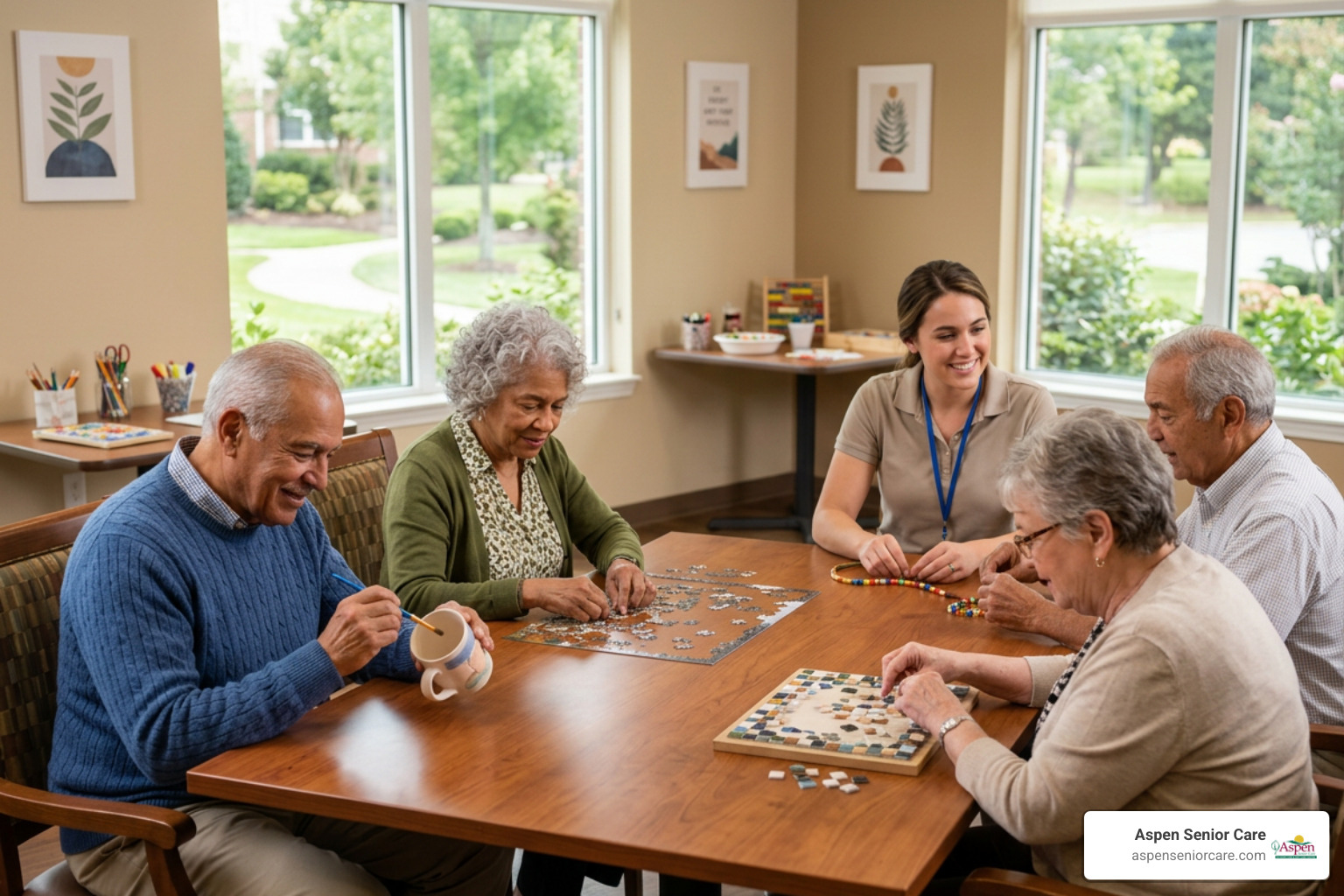
When we talk about specialized alzheimers day care, we are referring to a professional, community-based service designed specifically to meet the needs of adults living with cognitive decline. Unlike general senior care services, a specialized Senior Day Center or Dementia Day Care program focuses entirely on creating a warm, welcoming, and secure environment tailored to those living with memory loss.
These centers are not just "babysitting" services. They provide structured, person-centered programs that promote socialization, physical movement, and cognitive exercise. At the same time, they implement robust safety measures, such as secured entryways and exits, to prevent wandering and ensure that every participant is supervised by highly trained staff.
Standard Adult Day Care vs. Specialized Memory Care
It is common for families to wonder how specialized memory care centers differ from standard adult day programs. While standard programs are wonderful for seniors who need light socialization or basic physical assistance, they often lack the resources, environmental design, and training required to support individuals with moderate-to-severe cognitive decline.
Here is how the two care models compare:
Feature Standard Adult Day Care Specialized Memory Care Day Care Primary Focus General socialization and basic physical assistance for seniors. Targeted cognitive engagement, behavior management, and safety. Staff Training General caregiving, CPR, and basic eldercare. Specialized training in dementia care, redirection, and validation. Environment Open layout, may not have secured exits. Secured perimeters, keypad entries, and layouts designed to prevent confusion. Activities Large group games, lectures, and general crafts. Small-group, failure-free activities tailored to cognitive levels. Behavior Management Limited resources for handling agitation, wandering, or sundowning. Proactive routines and sensory tools designed to de-escalate anxiety.
The Proven Benefits of Day Programs for Dementia
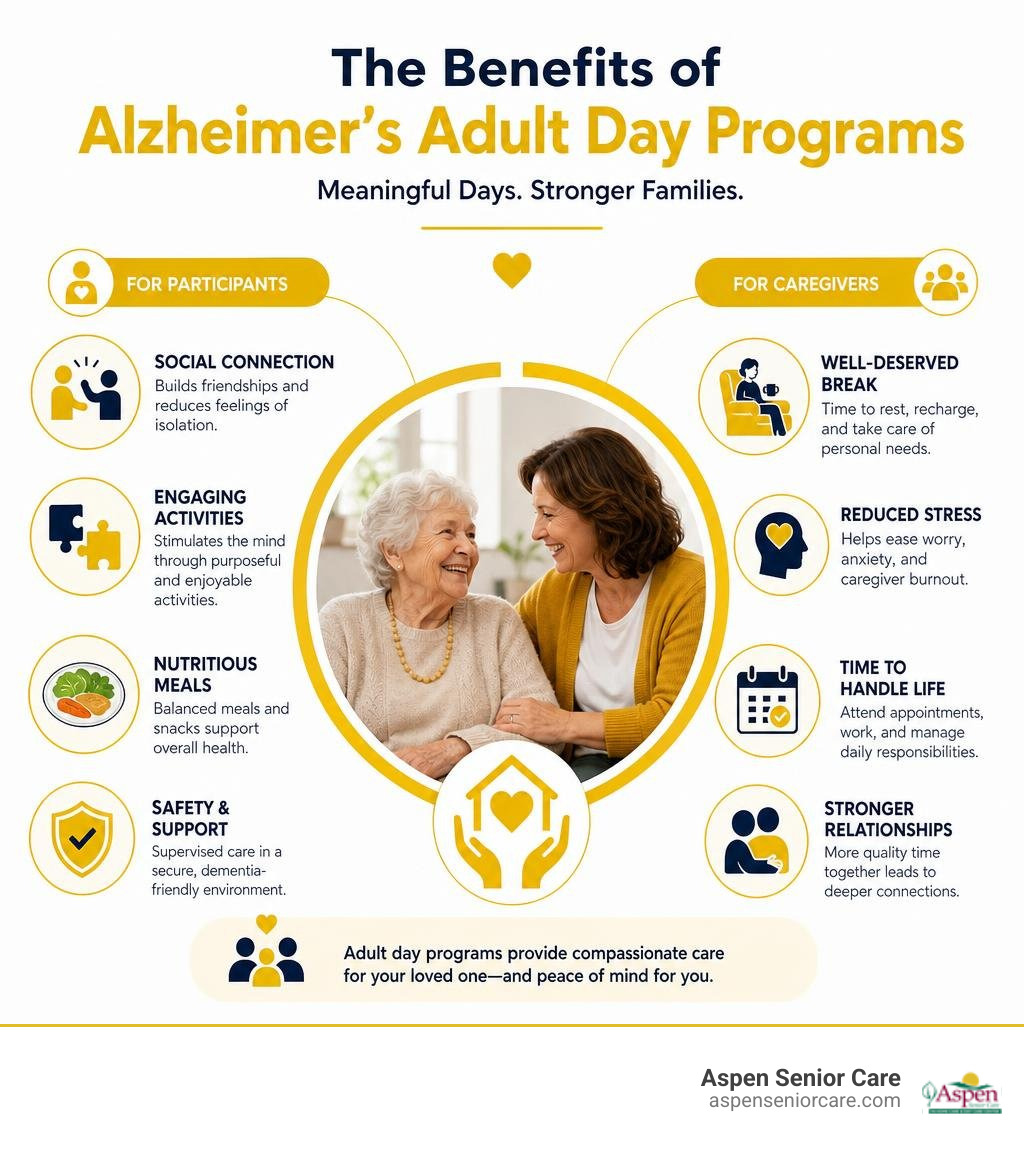
Enrolling a loved one in a specialized day program provides a dual benefit: it gives the primary caregiver a guilt-free break to recharge and offers the participant a renewed sense of purpose.
For the person living with dementia, isolation can accelerate cognitive decline. In a specialized day center, they are surrounded by peers and engaging in activities that stimulate their minds. In fact, a landmark study published in International Psychogeriatrics on the association between attending specialized day care centers and the quality of life of people with dementia revealed that attending these centers is significantly associated with higher self-reported quality of life (QoL). This is especially true for individuals who have shallow or no awareness of their memory loss, as the positive, failure-free environment boosts their mood and confidence.
Additionally, peer-reviewed clinical research compiled in this PMC article emphasizes how structured community-based interventions reduce the speed of functional decline, helping seniors remain in their homes longer and delaying the need for expensive residential nursing care.
Key Services Provided in Alzheimers Day Care
Specialized memory care centers use evidence-based psychosocial interventions to support their participants. According to a comprehensive scoping review on psychosocial interventions in day care, these programs generally group their daily activities into five key categories to maximize cognitive and physical health:
Social Interventions: Facilitated group discussions, intergenerational programs, and cooperative games that foster a sense of belonging.
Memory and Cognitive Activities: Reminiscence therapy (using old photos, music, or familiar objects to trigger pleasant memories) and life-review programs.
Physical and Sensory Stimulation: Chair yoga, walking groups, sensory gardens, and tactile projects like working with clay or wood.
Nature-Based Activities: Courtyard strolls, outdoor gardening, and observing nature to reduce stress levels.
Animal-Assisted and Creative Therapies: Visits from therapy dogs, painting, and music therapy sessions where participants sing or play simple instruments.
These centers also provide a hot, nutritious lunch and healthy snacks throughout the day, accommodating specific dietary needs and assisting those who need help eating.
How Day Centers Help Manage Sundowning and Behavioral Changes
Sundowning is a state of increased confusion, anxiety, and agitation that occurs in the late afternoon or early evening. It affects up to 45% of people with dementia, placing a heavy emotional burden on family caregivers at the end of the day.
Specialized day centers are highly effective at managing sundowning. By keeping participants physically active and mentally engaged during the morning and early afternoon, they establish a consistent daily routine. This structured energy expenditure helps stabilize the body's internal clock, reducing evening confusion and promoting better sleep quality at night. When behavioral changes or agitation do occur, staff members use specialized sensory therapy, quiet rooms, and gentle redirection techniques to de-escalate the situation safely.
Costs, Subsidies, and Financial Guidelines
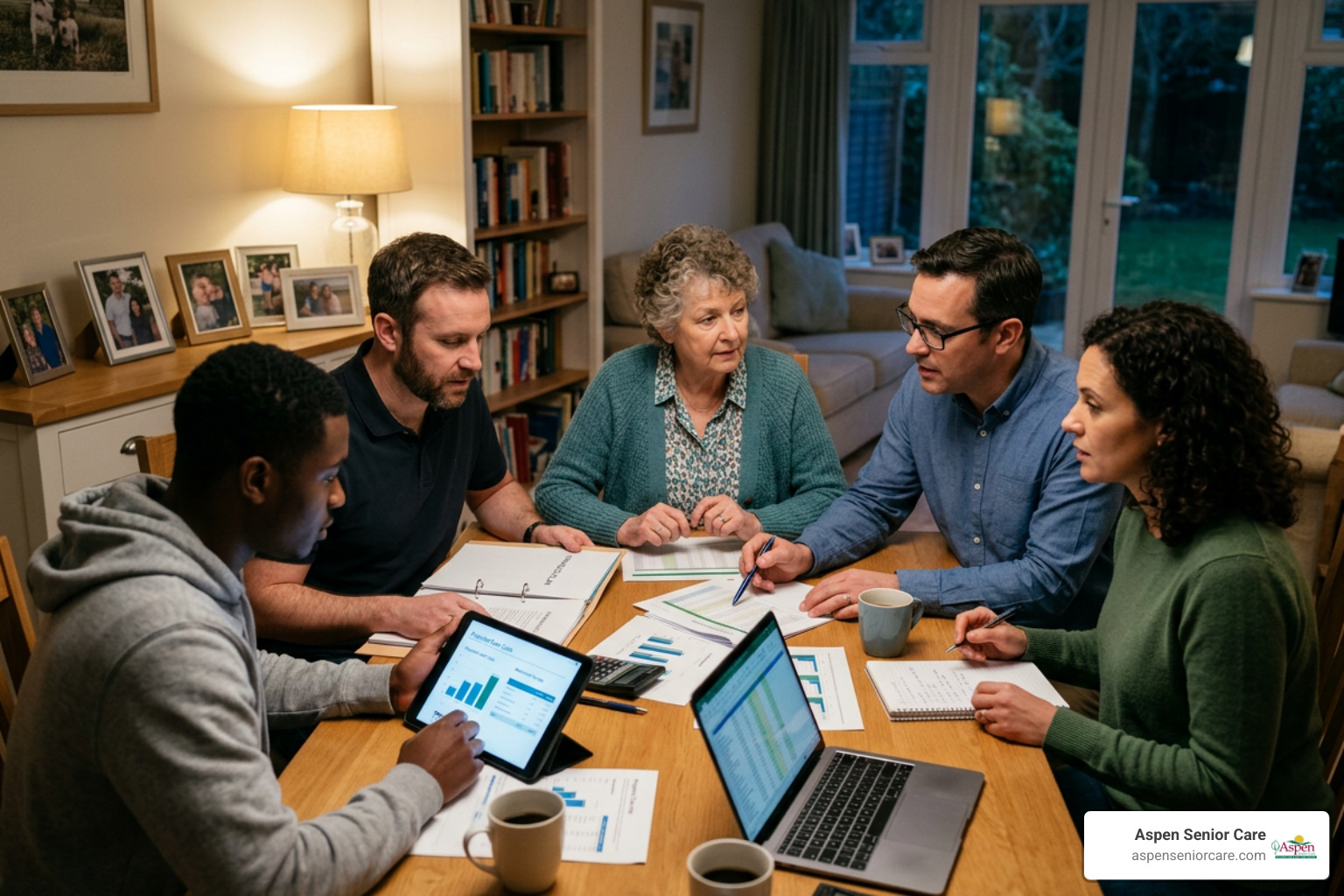
Understanding the financial side of memory care is crucial for long-term planning. Because day programs operate on a daytime-only schedule, they are significantly more cost-effective than 24-hour in-home care or residential assisted living.
Most specialized day centers charge a daily or hourly rate. To cover these costs, families typically rely on a combination of:
Private Pay: Paying out-of-pocket, sometimes utilizing sliding-scale fees offered by centers based on family income.
Long-Term Care Insurance: Some policies cover adult day services; it is best to check your specific policy details.
Veterans Benefits: The VA often provides allowances or directly covers adult day health care for eligible veterans.
Medicaid and State Subsidies: Many states offer home and community-based services (HCBS) waivers that pay for adult day care to delay institutionalization.
For local families navigating these options, the Utah caregiver resources provided by the Mountainland Association of Governments (MAG) offer an excellent starting point for finding local county-level subsidies and caregiver support programs.
Eligibility Requirements for Subsidized Programs
State and county-subsidized programs often have specific guidelines to ensure assistance goes to those who need it most. While guidelines vary by specific program, typical requirements include:
Medical Diagnosis: A physician-documented diagnosis of Alzheimer's disease or a related neurocognitive disorder.
Age and Residency: Usually restricted to individuals aged 18 or older who reside in the local service county.
Caregiver Status: The individual must live in the community and receive daily, uncompensated care from a family member or friend.
Income and Asset Thresholds: Programs designed for low-to-moderate-income families require documentation of assets and monthly income to determine the subsidy percentage, which can cover anywhere from 20% to 100% of the daily cost.
How to Choose the Right Alzheimers Day Care Center
Choosing the right center is a highly personal decision. You want to find a place that feels like a second home—a warm, lively space where your loved one is treated with dignity.
If you are looking for local care in Utah County, we invite you to explore our specialized Memory Care Day Center at the Aspen Senior Day Center. We have designed our center specifically to provide a vibrant, family-like atmosphere for seniors living with dementia.
When searching for local adult care options in communities like Orem, Provo, or looking through directories for The BEST Daycares Near Me in Lehi, UT, The BEST Daycares Near Me in American Fork, UT, or The BEST Daycares Near Me in Pleasant Grove, UT, always schedule an in-person tour. Observing a center in action is the best way to evaluate its environment, staff interaction, and overall energy.
Essential Questions to Ask During Your Visit
To help you evaluate a potential day care facility, take this checklist of questions with you on your tour:
Staffing and Training: Are your staff members specifically trained in dementia care and behavior redirection? What is your staff-to-participant ratio?
Safety Protocols: How do you secure the building to prevent wandering? How do you handle emergency medical situations?
Daily Activities: Are activities tailored to different stages of cognitive decline? Do you offer failure-free, sensory-stimulating programs?
Dietary Accommodations: Do you provide nutritious meals and snacks? Can you accommodate specific dietary restrictions or physical assistance with eating?
Transportation: Is curb-to-curb transportation available, and are the drivers trained in assisting individuals with memory loss?
Trial Days: Do you offer a free trial day so my loved one can experience the environment before we commit to a schedule?
Frequently Asked Questions About Dementia Day Programs
How long does it take for a person with dementia to adjust to day care?
It is entirely normal for individuals with dementia to experience some initial anxiety or resistance when starting a new program. In most cases, it takes about three to four weeks of consistent attendance (usually 2 to 3 days per week) for a participant to adjust to the new routine, bond with the staff, and begin looking forward to their visits.
Are meals and transportation typically provided?
Yes. Most high-quality memory day centers provide at least one hot, nutritious meal and multiple snacks throughout the day. Many centers also offer curb-to-curb transportation or can help families coordinate with local senior transit options to make the daily commute as seamless as possible.
What is the difference between day care and in-home care?
Adult day care is a group-based social program hosted at a secure facility, which is perfect for seniors who thrive on peer interaction and structured group activities. In-home care, on the other hand, involves a professional caregiver coming directly to your home to provide personalized, one-on-one assistance.
If you feel your loved one would benefit more from one-on-one support in the comfort of their own home, you can Learn about In-Home Care for Alzheimer's or explore our specialized In-Home Care for Dementia options.
Conclusion
Caring for a loved one with Alzheimer's is a beautiful act of love, but it is not a journey you should walk alone. Taking care of your own physical and mental health is the most important thing you can do to remain a strong, compassionate caregiver. Utilizing specialized adult day care is not "giving up"—it is a proactive step that supports your loved one's independence while giving you the essential rest you deserve.
At Aspen Senior Care, we are dedicated to standing beside Utah Valley families. We provide award-winning, family-like, personalized non-medical care with specialized dementia support designed to bring peace of mind to your entire household. Whether you reside in Orem, Provo, Lehi, American Fork, Pleasant Grove, Spanish Fork, Alpine, Cedar Hills, Salem, Eagle Mountain, Highland, Lindon, Saratoga Springs, or Payson, we are here to help.
Ready to take a breath and explore your options? Contact Us to learn more about our programs, or Discover our comprehensive Adult Day Care Services to schedule a tour of our beautiful Orem center today.